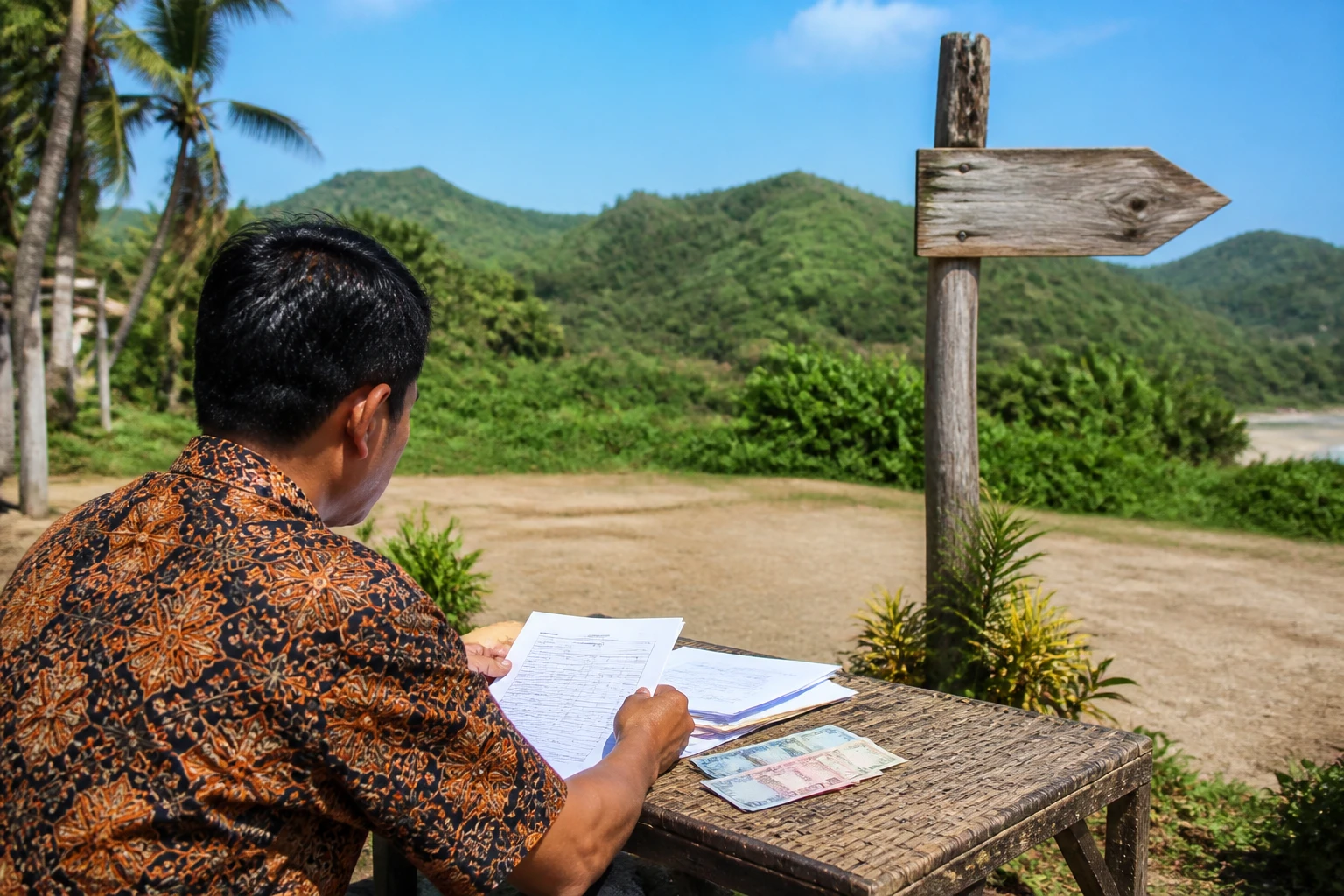
Lombok vs the Philippines for Foreign Property Buyers
Both markets bar foreigners from owning freehold land. The Philippines offers a distinctive condo route: foreigners can hold strata title in developments where foreign ownership stays below 40%. Lombok has no direct equivalent, but leasehold and PT PMA company structures open the market. Lombok gene
Quick answer: Both markets bar foreigners from owning freehold land. The Philippines offers a distinctive condo route: foreigners can hold strata title in developments where foreign ownership stays below 40%. Lombok has no direct equivalent, but leasehold and PT PMA company structures open the market. Lombok generally offers lower entry prices and higher quoted yields, with stronger early-cycle growth momentum.
Ownership Rights: Different Rules, Different Assets
The most important question for any foreign buyer is: what can you actually own?
In the Philippines, the answer for land is clear: foreigners cannot hold title to land. The restriction is constitutional. However, the Condominium Act creates a workable alternative. Foreigners may own units in a strata-title building provided total foreign ownership across the development stays below 40% of floor area. This is the dominant route for foreign buyers in Boracay, Cebu, and Manila.
For land access, foreigners in the Philippines can lease under the Investors' Lease Act: terms of up to 50 years, renewable for a further 25 years. In practice, most resort-area developers sell condotel or strata-condo products rather than long leasehold land.
In Indonesia, foreigners also cannot hold Hak Milik (freehold). There is no strata-condo-ownership equivalent for foreign nationals. The viable routes are leasehold (Hak Sewa, typically 25 to 30 years with negotiated extensions), Hak Pakai (right-to-use, requires KITAS or KITAP residency), and PT PMA, a foreign-owned company that holds land under Hak Guna Bangunan (HGB), a 30-year extendable commercial title. Nominee arrangements, where an Indonesian national holds freehold on your behalf, are illegal and unenforceable in Indonesian courts. Avoid them entirely.
The practical implication: Philippine buyers get a familiar, bankable strata-title product. Lombok buyers get broader land exposure through a company structure, but also more legal complexity. An independent notary-advisory desk such as TerraNusa Advisory (terranusaadvisory.com) can guide buyers through due diligence and PT PMA setup from start to finish.
Entry Costs and Value Benchmarks
Philippine resort-area condos in established locations such as Boracay start broadly in the USD 100,000 to USD 200,000 range for smaller units, rising steeply for beachfront or premium stock. Bali, the most comparable Southeast Asian lifestyle market, commands roughly USD 400,000 to USD 800,000 for investment-grade villas.
Lombok sits meaningfully below both. Turnkey investment-grade villas are priced around EUR 95,000 to EUR 350,000, depending on location, finish, and land size. For full disclosure: HubLombok is the editorial arm of Samudra Villas, an active developer in Are Guling. Samudra's flagship villa is priced from around EUR 255,000; HubLombok publishes no yield figure for it, and any net yield is an estimate within the 7-12% range. Land in prime Kuta ranges from Rp 300 to 400 million per are (roughly USD 18,200 to USD 24,200 per are; one are equals 100 square metres). Frontier zones such as Bumbang start as low as Rp 30 to 50 million per are (roughly USD 1,800 to USD 3,000 per are). For a full zone-by-zone breakdown, see the market data page.
One important caveat: Philippine condos carry strata title that some home-country lenders will recognise. Lombok structures are typically cash or developer-finance driven, which affects the buyer pool and can slow resale.
Rental Yields and Tourism Demand
Philippine resort markets benefit from deep domestic tourism and a substantial diaspora driving property demand. In established resort areas, quoted gross yields on condotel units typically run in the 6 to 10% range, with net returns after management fees and vacancy somewhat lower depending on the operator.
Lombok's tourism base is smaller but accelerating sharply. Foreign arrivals into South Lombok grew roughly 40 to 50% year-on-year, driven by the MotoGP Mandalika Circuit and new international routes. Villa rates in Kuta and Mandalika rose about 38% year-on-year; Are Guling, an earlier-cycle frontier zone, recorded roughly 47% rate momentum. Honest stabilised occupancy in the first three years sits at 55 to 70%; Bali runs 70 to 85% and remains the most useful regional benchmark.
Net rental yields in South Lombok, after management fees of 18 to 22% of gross revenue and realistic occupancy, run 7 to 12%, with top-performing assets approaching 15% net. Developer-quoted gross figures of 12 to 22% exclude those costs and should always be stress-tested. For a direct regional comparison, see Lombok vs Bali and the Lombok vs Thailand analysis.
Both markets carry operator-dependency risk: actual yield quality depends heavily on the management company running your property.
Legal Costs and the Buying Process
In the Philippines, the buyer typically absorbs a 6% capital gains tax (nominally paid by the seller but often passed through in practice), a 1.5% documentary stamp tax, a transfer tax of roughly 0.5 to 0.75% of assessed value, and registration fees. Total transaction costs on a resale property commonly run 8 to 10% on top of the purchase price.
In Indonesia, the buyer pays BPHTB, a transfer duty of roughly 5% of assessed value, plus modest annual PBB land-and-building tax. Notary and legal fees add a further 1 to 2%. For a PT PMA structure, company incorporation typically costs USD 2,000 to USD 5,000 upfront. For new-build purchases in Lombok, developers often absorb some transaction taxes, which can keep buyer-side costs below the Philippine secondary-market norm.
Both markets require a licensed notary. In Indonesia, the deed of sale (AJB) is executed by a PPAT-licensed notary, and title registration runs through the BPN land agency. Independent due diligence on certificate type, ownership history, zoning, and encumbrances is essential before exchanging any funds.
Practical Guidance
If you need a bankable, strata-title product you can show to a home-country lender, or you want exposure to an established resort tourism market, the Philippines condo route is the cleaner starting point. If you want land exposure, earlier-cycle growth potential, and higher quoted net yields in exchange for greater legal complexity and a less liquid resale market, South Lombok makes a credible case.
The two markets are not direct substitutes. Philippine resort condos sit in a more developed market with broader liquidity and a larger pool of domestic buyers. Lombok is earlier in its cycle, with higher potential upside and higher execution risk. Budget for independent legal advice in either case, verify every yield claim against realistic occupancy assumptions, and confirm the ownership structure in writing before transferring any funds.
Can foreigners own land in the Philippines?
No. The Philippine constitution reserves land ownership for Filipino citizens and corporations with at least 60% Filipino ownership. Foreign nationals may lease land for up to 50 years, renewable for a further 25 years, or own units in strata-title condominium buildings provided total foreign ownership in the building stays below 40%.
How do Lombok rental yields compare with Philippine resort condos?
South Lombok net rental yields run 7 to 12% after management fees and realistic occupancy, with top performers reaching around 15% net. Developer-quoted gross figures of 12 to 22% exclude those costs. Philippine resort condotel products typically quote gross yields of 6 to 10%, with net returns lower depending on operator terms. Direct comparison is also complicated by the asset type: Lombok primarily sells villas on leasehold or PT PMA land; the Philippines mainly sells strata-title condo units.
What is the safest legal structure for a foreigner buying in Lombok?
The two main routes are leasehold (Hak Sewa, typically 25 to 30 years with extensions negotiated at signing) and PT PMA, a foreign-owned company holding land under HGB title. PT PMA suits buyers who want a commercial structure with a clearer resale path. Nominee arrangements, where an Indonesian holds freehold on your behalf, are illegal and void in Indonesian courts. Seek independent advice from a licensed PPAT notary or a specialist desk such as TerraNusa Advisory before committing.
The Lombok Buyer's Field Guide
Legal structures ranked by risk, the honest ROI math line by line, all six zones ranked, and the 24-point due-diligence checklist. The whole book, free in your inbox.
See what's inside