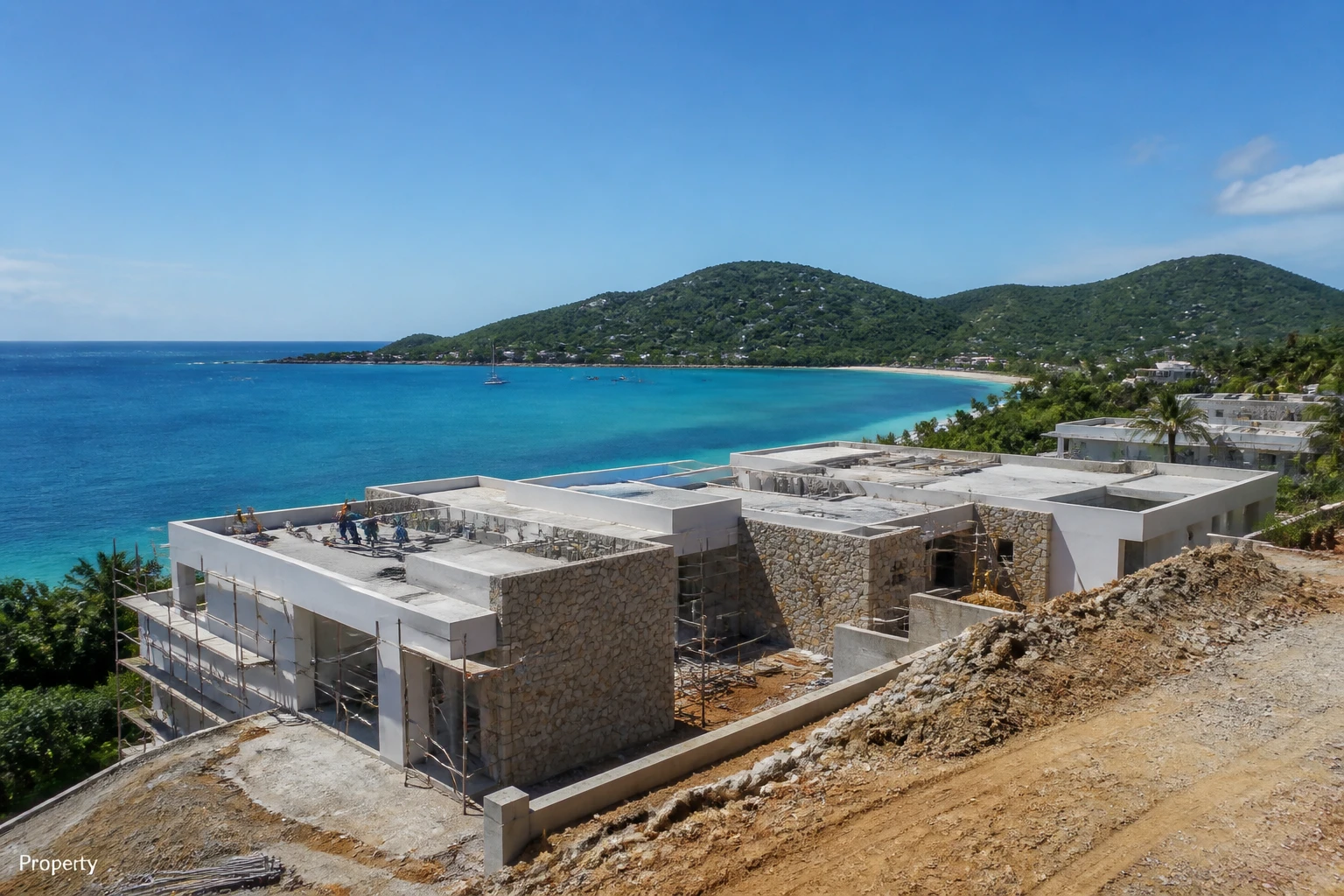
Lombok vs Thailand for Property Investment in 2026
Both markets restrict direct foreign land ownership and offer leasehold or company-structure entry routes. South Lombok currently delivers net yields of 7-12%, villa entry prices from around USD 95,000, and tourism growth running at 40-50% year-on-year. Thailand, particularly Phuket, offers higher l
Quick answer: Both markets restrict direct foreign land ownership and offer leasehold or company-structure entry routes. South Lombok currently delivers net yields of 7-12%, villa entry prices from around USD 95,000, and tourism growth running at 40-50% year-on-year. Thailand, particularly Phuket, offers higher liquidity and a proven resale market, but at noticeably higher prices and lower net returns.
Entry prices: what your budget actually buys
In South Lombok, the investment-grade villa market starts at roughly EUR 95,000 and runs to EUR 350,000 for a turnkey, managed property. In Are Guling, the early-cycle frontier zone where Samudra Villas operates, a fully finished villa with a rental programme sits at around USD 255,000.
In Thailand's primary resort markets, particularly Phuket and Koh Samui, the entry point for a comparable managed villa starts closer to USD 400,000 and can reach USD 800,000 or more for prime beachside positions. Developer-marketed condominium units start lower, from around USD 80,000 to 150,000, but these carry a different risk profile: condominium supply in Phuket is substantial, and oversupply in certain micro-markets has compressed resale values in recent years.
For buyers working with a budget under USD 300,000, South Lombok offers substantially more built space and a cleaner investment thesis than equivalent Thai condo stock.
Ownership rules: more alike than they appear
Neither country permits foreigners to hold land outright. The restrictions differ in detail, but the practical options rhyme closely.
In Thailand, the principal foreign-accessible routes are: condominium freehold (foreigners may own units in a building up to 49% of total floor area), a 30-year leasehold on land or a villa, or a Thai limited company holding the title. Thai company structures have long carried regulatory scrutiny when used as a foreign-ownership vehicle, and buyers should take qualified legal advice before proceeding.
In Indonesia, the equivalent routes are Hak Sewa (leasehold, typically 25 to 30 years with extensions), Hak Pakai (right-to-use, requires KITAS or KITAP residency), or a PT PMA (foreign-owned Indonesian company) holding Hak Guna Bangunan. As in Thailand, nominee structures, where an Indonesian citizen holds freehold on a foreigner's behalf, are explicitly illegal and unenforceable in court. Never enter one.
Both markets therefore sit in the same legal tier: structured, leasehold-based ownership that works well when executed properly by a licensed professional. In Lombok, deeds are executed before a licensed PPAT notary, and title is registered at the land office (BPN). See the guide to investing in South Lombok for a full walkthrough of the documentation chain.
Yields and occupancy: where the numbers diverge
This is where the comparison shifts most decisively in Lombok's favour.
Honest net yields in South Lombok, after management fees of 18-22% and realistic stabilised occupancy of 55-70%, run at 7-12%. Top-performing assets in high-demand zones have reached roughly 15% net. Developer-quoted gross figures of 12-22% are also circulated, but these exclude operating costs and vacancy. Always distinguish gross from net before comparing projects across markets.
Thai resort rental yields, particularly for condominiums in Phuket, are typically quoted in the 5-8% gross range. Net of management fees, OTA commissions and vacancy periods, real returns for many investors settle closer to 4-6%. Managed rental pool programmes in Thailand vary considerably in transparency; guaranteed-return structures common in some off-plan developments carry risks that are well documented in the market.
Lombok's foreign-arrivals growth is running at 40-50% year-on-year, driven by improving air connectivity and the MotoGP Mandalika circuit effect. Kuta and Mandalika villa rates alone have risen around 38% year-on-year; in Are Guling the momentum figure runs at roughly 47%. This is the arithmetic of an earlier market cycle: faster growth rates, thinner existing supply, higher upside potential and correspondingly higher execution risk. Thai tourism is mature, deeply liquid and less volatile by comparison.
For a side-by-side look at how South Lombok compares with Bali on occupancy and yield metrics, see Bali vs Lombok.
Liquidity: the honest trade-off
Thailand wins clearly on resale liquidity. Phuket has a large pool of active buyers (domestic, regional and European), a well-established estate-agency sector, and a decades-long track record of foreign investment. If you need to exit within three to five years with reasonable certainty, Thailand's secondary market is more forgiving.
South Lombok remains a frontier. The secondary market is thinner, exit timelines are longer, and buyer pools outside the specialist investor community are still forming. This is not a disqualifier for a well-structured, long-term holding, but it is a material consideration for anyone who may require near-term liquidity.
Buyers comparing raw yield or entry price figures across the two markets should pair that comparison with an honest assessment of their holding horizon. Current land price data for all six South Lombok zones is available at /market-data.
Practical guidance
If your priorities are net yield, lower entry price and participation in an earlier growth cycle, South Lombok is the stronger thesis in 2026, provided you plan for a minimum holding period of five to seven years and execute through properly licensed structures.
If your priorities are resale certainty, a liquid exit and a mature tourism ecosystem, Thailand, particularly Phuket, remains a rational choice despite the lower net returns, provided your legal structure is sound and independently verified.
In both markets: avoid nominee arrangements entirely, insist on a clean title search before paying any deposit, and appoint an independent legal adviser rather than relying on the developer's in-house recommendation. In Lombok, TerraNusa Advisory (terranusaadvisory.com) provides independent due diligence, PT PMA setup and the full deed-and-title chain at BPN.
The two markets are not direct competitors for the same investor profile. They suit different risk appetites and timelines. Be clear on yours before you compare the brochures.
Can a foreigner own a villa outright in Thailand or South Lombok?
Not directly in either country. In Thailand, foreigners can own condominium units freehold (up to 49% of a building's floor area) but must use a 30-year leasehold or a Thai company structure for villas. In Indonesia, the available routes are Hak Sewa leasehold (typically 25-30 years with extensions) or a PT PMA foreign-owned company. Nominee structures, where a local citizen holds title on a foreigner's behalf, are legally void in both jurisdictions.
Which market offers better rental yields in 2026, Thailand or South Lombok?
South Lombok currently delivers stronger net yields. Honest net figures, after management fees of 18-22% and stabilised occupancy of 55-70%, run at 7-12%, with top assets reaching roughly 15% net. Thai resort condos in markets such as Phuket typically net closer to 4-6% after management and vacancy costs. The trade-off is that Thailand offers considerably better resale liquidity and a more established secondary market.
How long should I plan to hold a property in South Lombok vs Thailand?
South Lombok's thinner secondary market means a realistic minimum holding horizon of five to seven years to allow the asset to mature and the resale pool to deepen. Thailand, particularly Phuket, has a more liquid exit market, making three-to-five-year holds more viable in practice. Buyers who may need to liquidate quickly should factor this distinction heavily into their decision.
The Lombok Buyer's Field Guide
Legal structures ranked by risk, the honest ROI math line by line, all six zones ranked, and the 24-point due-diligence checklist. The whole book, free in your inbox.
See what's inside