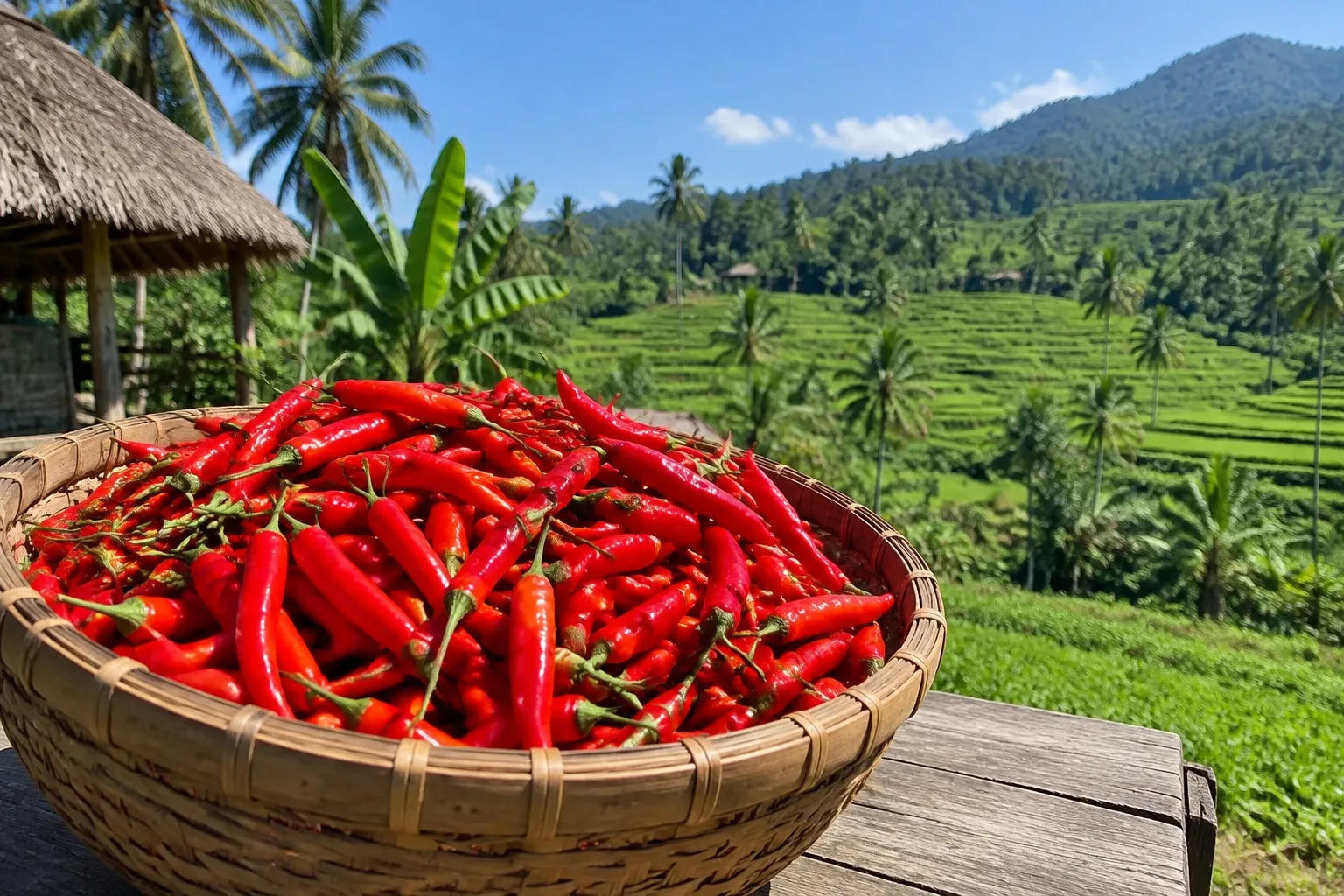
Lombok Chili Surplus Signals Regional Price Stability Across NTB
A notable agricultural surplus in West Nusa Tenggara has driven staple food prices well below national reference caps, reinforcing regional macroeconomic stability for foreign investors.
Quick answer: Indonesia's Ministry of Trade has confirmed an agricultural surplus across West Nusa Tenggara, with local market prices for strategic staples falling significantly below national reference ceilings. For foreign investors, this agricultural self-sufficiency provides crucial operational cost insulation, anchoring local service wages and hospitality supply chains across the provincial economy as regional infrastructure expands.
Agricultural resilience often provides the truest measure of frontier market stability. When Minister of Trade Budi Santoso conducted an unannounced price inspection at Kebon Roek Market in Mataram, the provincial capital of West Nusa Tenggara (NTB), the findings revealed an economy operating with uncommon supply security. Rather than facing the inflationary headwinds typical of insular logistics hubs, Lombok is generating regional surpluses capable of supplying deficit territories across eastern Indonesia.
The Context
Food inflation in island economies frequently presents an unpredictable variable for enterprise models and commercial feasibility studies. Throughout the Indonesian archipelago, remote island supply chains typically suffer from logistics friction, freight surcharges, and inter-island transit bottlenecks that elevate living expenses and operational outlays. The situation observed across Lombok, however, demonstrates an inverse dynamic. The province has solidified its position as a primary net producer of essential agricultural commodities, decoupling local market pricing from the volatility seen in import-reliant provinces.
Accompanied by NTB Deputy Governor Indah Dhamayanti Putri, Mataram Mayor Mohan Roliskana, and executives from the national logistics agency Bulog, the trade minister inspected distribution pipelines and baseline trading volumes. The formal confirmation of an exportable harvest surplus in critical produce items like bird's eye chili underscores the success of coordinated agricultural planning between the provincial administration, municipal authorities, and regional growers. Rather than absorbing national inflationary pressures, Lombok's productive agricultural interior is functioning as a stabilising anchor for the broader provincial balance sheet.
Commodity Baselines and Price Stability in Mataram
The price differentials recorded during the ministerial audit at Kebon Roek Market reveal substantial market efficiency. Chili, historically one of the most volatile contributors to headline consumer inflation across Indonesia, was transacting on the floor at Rp 40,000 (around US$ 2.21) per kilogram. This figure sits markedly beneath the official Government Reference Price (HAP) of Rp 55,000 (US$ 3.04) per kilogram, confirming abundant supply across the primary agricultural corridors of the island.
| Strategic Commodity | Local Market Price (Mataram) | National Reference Ceiling (HAP/HET) | Market Status | | :--- | :--- | :--- | :--- | | Fresh Chili | Rp 40,000 / kg (~$2.21) | Rp 55,000 / kg (~$3.04) | 27% below ceiling (Surplus) | | Premium Rice | Rp 14,900 / kg (~$0.82) | Rp 14,900 / kg (~$0.82) | Fully compliant with HET cap | | Bulog SPHP Rice | Rp 14,900 / kg (~$0.82) | Rp 14,900 / kg (~$0.82) | Fully subsidised / Stable | | Secondary Staples | Chicken, eggs, shallots, garlic | Monitored by SP2KP | Trading below reference caps |
Crucially, this deflationary trend extends across secondary food baskets. Local market inspectors recorded lower wholesale pricing for chicken meat, eggs, shallots, and garlic, indicating that baseline production costs for hospitality and retail operations remain deeply competitive. In parallel, staple grain supplies remain completely fortified. Premium rice is transacting strictly within the Highest Retail Price cap of Rp 14,900 (around US$ 0.82) per kilogram, mirrored by Bulog's targeted SPHP distribution stocks.
"Because there is a chili surplus here, we are also helping distribute it to other regions in need... Prices are relatively stable, supply is assured, and staple food prices are in line with reference prices, with some even below them.", Budi Santoso, Minister of Trade
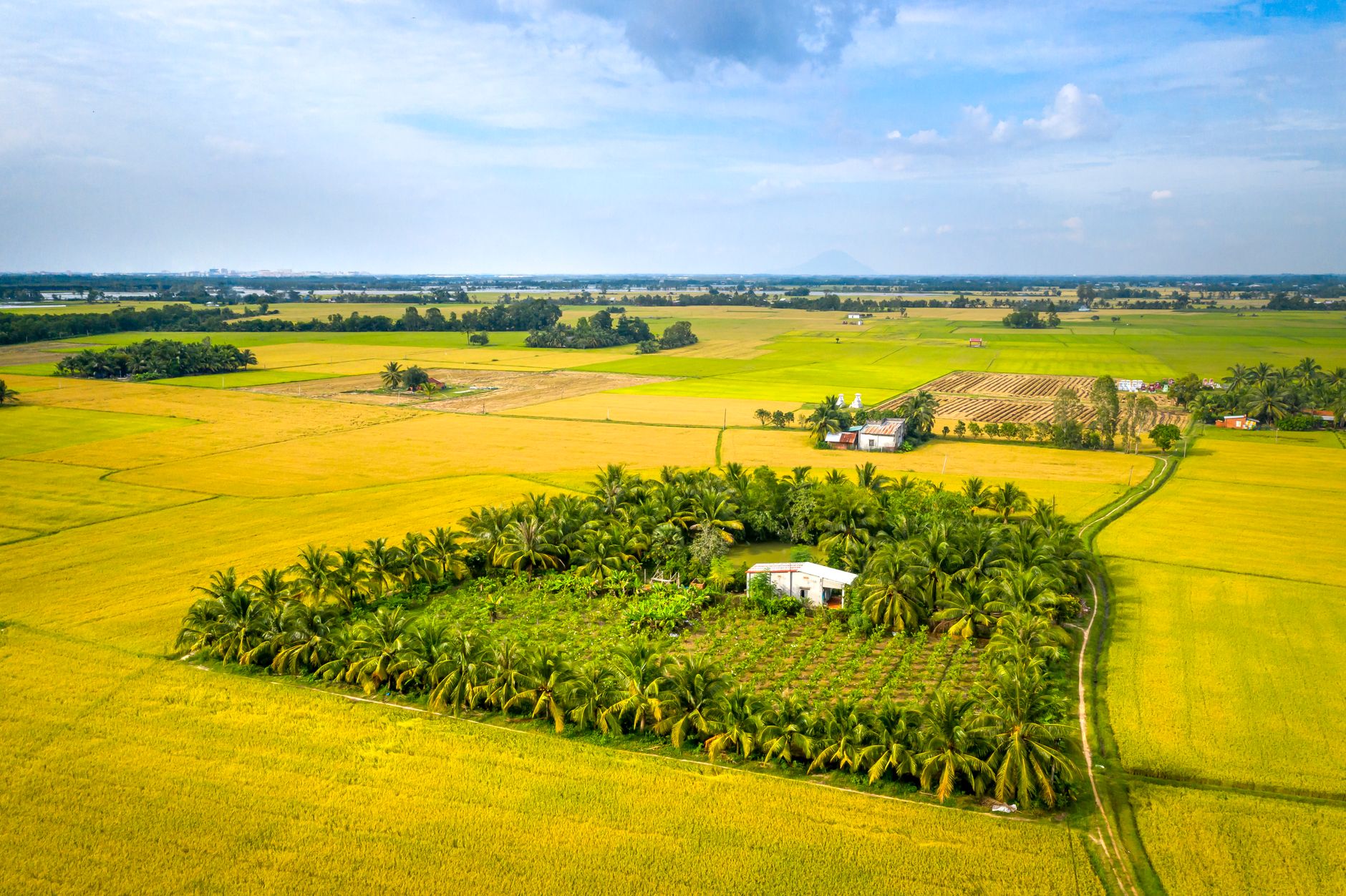 Lombok Chili Surplus Signals Regional Price Stability Across NTB · Photo by Quang Nguyen Vinh on Pexels
Inter-Island Logistics and Supply Chain Resilience
The operational mandate of the central government has now pivoted from domestic price defence to inter-provincial export coordination. Through the integration of the digital Staple Goods Market Monitoring System (SP2KP), the Ministry of Trade tracks real-time inventory and pricing metrics across archipelago municipalities daily. Under this framework, West Nusa Tenggara is actively deploying its surplus output to insulate neighbouring island groups against structural shortages.
Recent precedents confirm the velocity of this distribution model. The trade ministry recently orchestrated the redistribution of seven tons of chili from surplus producers in East Java to supply-constrained markets in Halmahera. The logistics network currently active across NTB is designed to mirror this mechanism, funnelling excess provincial yield into eastern regional hubs where supply constraints elevate retail prices. Furthermore, with the central government preparing a strategic reserve of 1 million tons of SPHP rice nationally, the structural threat of sudden price surges across key holiday cycles has been systematically neutralised.
For enterprise operators, this inter-island redistribution architecture delivers two distinct advantages:
- Predictable input expenses: Commercial kitchens, hospitality developments, and service businesses avoid the abrupt grocery inflation that regularly compromises operating margins on smaller resort islands.
- Supply continuity: Direct institutional backing from Bulog and provincial trade offices ensures that agricultural distribution routes remain protected from speculative warehousing or seasonal transit hoarding.
- Digital price monitoring: Daily oversight via the SP2KP platform guarantees rapid policy intervention should local commodity levels deviate from their statutory price corridors.
What This Means for Investors
Sophisticated capital allocators evaluate emerging markets through the dual lens of macroeconomic stability and operating margin predictability. While high-level indicators such as direct investment volumes and tourist arrivals capture international headlines, food security and staple price controls constitute the foundational floor of regional development economics. A destination that controls its food supply avoids the wage-push inflation that frequently erodes commercial yields in tourism hubs.
In regions lacking an agricultural hinterland, rapid tourism growth invariably triggers acute competition for basic goods, cascading into higher living costs, labour wage demands, and strained supplier contracts. In contrast, Lombok's indigenous farming output creates a structural economic buffer. Because the island produces excess provisions, the day-to-day cost of living for service personnel remains stable, allowing commercial developments and hospitality ventures to maintain disciplined operational expenditure schedules.
Furthermore, the disciplined coordination between the NTB Provincial Government, Mataram City leadership, and Bulog signals institutional maturity. The proactive governance witnessed at Kebon Roek Market demonstrates that regional administrative bodies are capable of maintaining regulatory compliance, executing real-time commodity interventions, and preserving price ceilings even amid accelerating regional expansion.
As West Nusa Tenggara strengthens its domestic logistics channels, the island solidifies an enviable economic position: a high-growth destination underpinned by food autonomy and rigorous regulatory oversight. For institutional and private investors deploying long-term capital, this combination of controlled headline expenses, transparent commodity baselines, and active governance provides an exceptionally secure foundation for operational planning.
Stay informed: subscribe to the free Lombok Briefing, published twice a month (the 1st and 15th), for market intelligence like this.
Why are staple food prices in Lombok trading below national caps?
West Nusa Tenggara currently produces an agricultural surplus in key staples like chili. Local wholesale prices at Kebon Roek Market reached Rp 40,000 per kilogram, well below the Rp 55,000 national ceiling, allowing the province to supply deficit regions elsewhere.
How does food price stability impact commercial investments in Lombok?
Agricultural self-sufficiency prevents local wage-push inflation and stabilizes operational margins for commercial and hospitality enterprises. Reliable regional production insulates the island from the severe logistics markups and food inflation commonly observed in import-dependent destinations across Indonesia.
How is the Indonesian government monitoring commodity supplies in NTB?
The Ministry of Trade utilizes the digital Staple Goods Market Monitoring System (SP2KP) for daily tracking, working alongside Bulog and regional trade offices to balance distribution, enforce price ceilings, and redirect excess harvests to deficit provinces.

The Lombok Buyer's Field Guide
Legal structures ranked by risk, the honest ROI math line by line, all six zones ranked, and the 24-point due-diligence checklist. The whole book, free in your inbox.
See what's inside