Bank Indonesia Export Retention Rules Bolster Rupiah Stability and Investor Capital
Bank Indonesia expects natural resource export retention rules to strengthen foreign exchange reserves. Here is what greater monetary liquidity means for foreign capital in Indonesia.
Quick answer: Bank Indonesia expects revised natural resource export retention rules to significantly expand foreign exchange reserves and stabilise the rupiah. For cross-border investors acquiring Indonesian property or structuring commercial ventures via a PT PMA, increased onshore dollar liquidity reduces currency volatility, secures financial counterparty depth, and reinforces sovereign macroeconomic resilience.
Monetary policy rarely commands the immediate attention of private real estate allocators, yet sovereign liquidity quietly governs every cross-border balance sheet. When a central bank recalibrates the plumbing of its national current account, the resulting ripples alter borrowing costs, foreign exchange spreads, and asset valuations across the archipelago. The latest directives from Bank Indonesia concerning export proceeds signal a calculated shift towards institutional liquidity retention, offering foreign capital an increasingly stable macro backdrop.
The Context
Central banks in commodity-rich emerging markets face an enduring structural dilemma: domestic natural wealth generates vast export proceeds, yet these revenues historically accumulated in offshore financial centres such as Singapore or Hong Kong. In Jakarta, policymakers have moved decisively to alter this capital flight pattern through the mandatory retention policy for natural resource export earnings (DHE SDA).
Speaking in Jakarta following an institutional briefing on DHE SDA governance, Bank Indonesia Senior Deputy Governor Aida S. Budiman clarified the operational framework. The regulation mandates that qualifying export revenues must remain onshore within the domestic financial system for a designated statutory period. These retained foreign currency balances can be channelled into an array of domestic instruments, including term deposits and specialised facilities managed directly by the central bank.
"Because the funds are retained, they remain within the banking system, and as mentioned earlier, they can also be placed with Bank Indonesia. Placing them with Bank Indonesia naturally contributes to an increase in foreign exchange reserves," Aida observed.
The broader structural architecture rests on Government Regulation (PP) Number 21 of 2026, which represents the third formal amendment to PP No. 36/2023 governing natural resource export proceeds. The government has broadened the operational framework through several key adjustments:
- Jurisdictional expansion: South Korea, Japan, and the European Union have been incorporated into regions qualifying for relaxed placement terms.
- Designated repositories: PT Bank OCBC NISP Tbk has been formally authorised as an official depository institution for retained export earnings.
- Conversion ceiling adjustments: Planned regulatory easing raises the maximum allowable conversion threshold of export proceeds from foreign currency into rupiah from 50 percent to 100 percent.
As Senior Deputy Governor Aida noted, the policy remains in its foundational stage. Exporters subject to the September 1st implementation window were granted a grace period of up to three months to repatriate their offshore capital. The central bank has nevertheless recorded tangible preliminary indicators, particularly through heightened volumes in domestic foreign exchange swap transactions. The impending arrival of repatriation flows over the coming months promises to supply domestic banking channels with substantial, sticky foreign exchange reserves.
Currency Mechanics and Onshore Liquidity
For international capital, the direct consequence of export retention is a structurally fortified Indonesian rupiah. Emerging market real estate yields are frequently eroded not by asset-level underperformance, but by local currency depreciation against the US dollar, euro, or British pound. When export earnings are retained onshore, domestic banks possess deeper foreign currency liquidity, which dampens abrupt foreign exchange volatility during global market drawdowns.
Senior Deputy Governor Aida noted that upcoming regulatory relaxations will expand market liquidity further, reinforcing positive momentum for the domestic currency. "Hopefully, with a larger supply, we can certainly expect the rupiah to strengthen," she remarked. A strengthening or stable domestic currency fundamentally transforms capital planning for offshore family offices and private investors.
Consider the operational reality of managing capital in an archipelago experiencing rapid economic transformation. When foreign reserves swell, Bank Indonesia avoids aggressive, defensive interest rate increases that might otherwise stifle commercial lending and domestic consumption. Instead, the central bank can deploy its swap facilities and onshore foreign currency term deposits to smooth external payments. Exporters benefit from flexible domestic yield curves, while inbound direct investors enjoy reliable pricing transparency when converting parent currency into onshore settlement accounts.
| Regulatory Metric | Previous Framework | Updated 2026 Framework | | :--- | :--- | :--- | | Repatriation Grace Period | Staggered enforcement | 3 months from 1 September | | Maximum FX Conversion Cap | 50 percent into IDR | Up to 100 percent into IDR | | Authorised Depository Base | Primary state lenders | Expanded (includes PT Bank OCBC NISP Tbk) | | Geographic Concessions | Regional bilateral partners | Expanded to South Korea, Japan, and the EU |
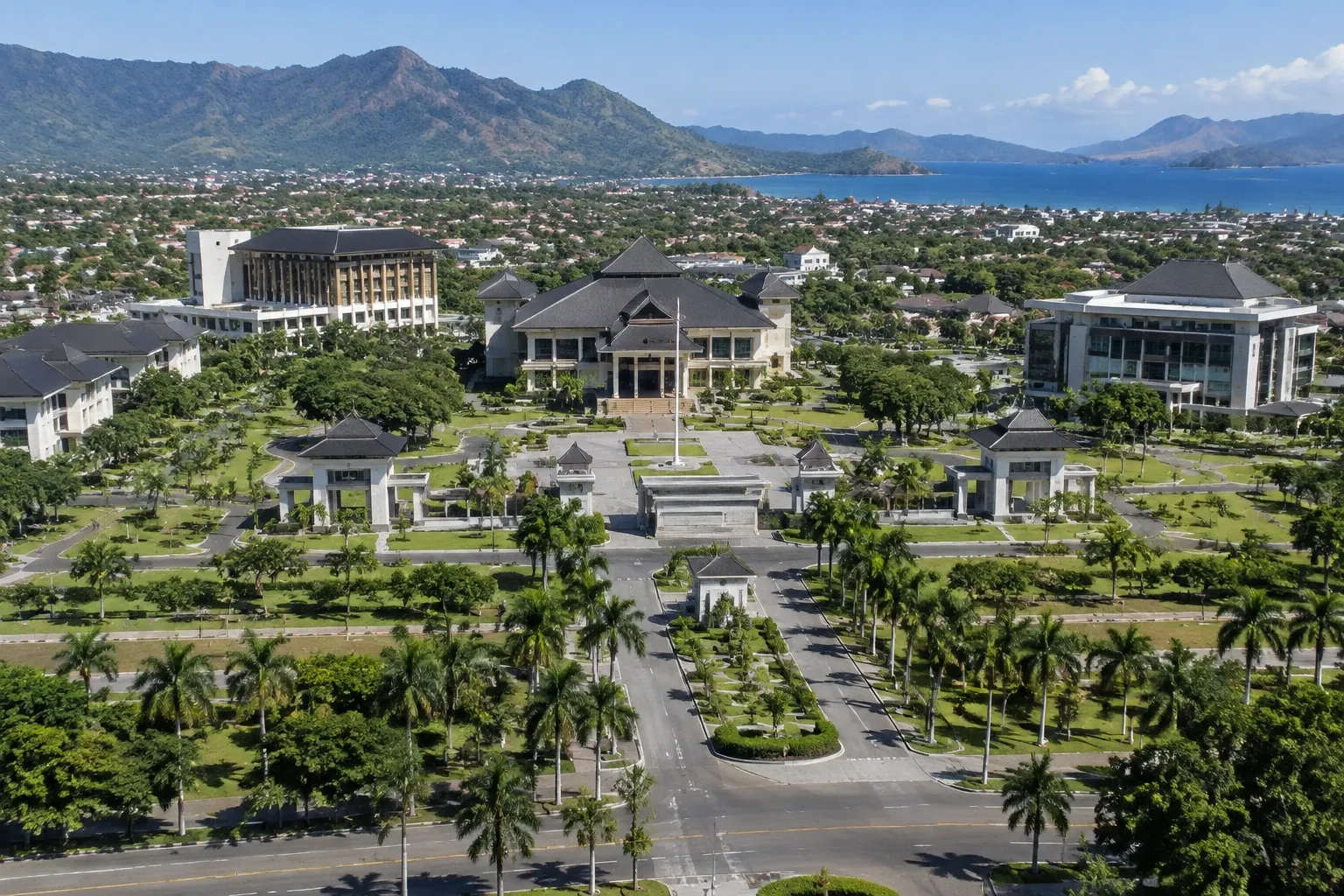
 Bank Indonesia Export Retention Rules Bolster Rupiah Stability and Investor Capital · Photo by ERFIN EKARANA on Pexels
Capital Flows, Banking Channels, and Asset Pricing
How does central bank liquidity translate into tangible asset markets? Foreign capital entering Indonesia typically interfaces with domestic banking channels through foreign investment company accounts (PT PMA). Whether an investor is acquiring hospitality real estate, funding infrastructure, or establishing joint ventures, their capital path requires dependable onshore treasury execution.
Historically, shallow domestic foreign exchange markets imposed wide bid-ask spreads on international wire conversions. When domestic foreign exchange reserves expand, commercial banks operate with greater balance-sheet confidence. PT Bank OCBC NISP Tbk joining the roster of accredited depositories illustrates the widening private-sector infrastructure supporting cross-border cash management. Sophisticated corporate treasuries now access institutional yield instruments locally rather than parking liquidity exclusively in offshore accounts.
Furthermore, currency stability directly anchors construction, raw material imports, and operational capital expenditure. In premium resort markets such as South Lombok, where high-spec turnkey villas command entry prices between EUR 95,000 and EUR 350,000, imported mechanical, electrical, and finish components represent a notable component of development budgets. A volatile rupiah inflates replacement costs and clouds contractor pricing; a resilient currency backed by robust central bank reserves provides institutional stability for project forecasting.
Asset price appreciation across Indonesia's tourist and growth corridors relies heavily on predictable macro governance. Foreign direct arrivals across prime regional destinations have surged by 40 to 50 percent year on year, supported by international events and expanding air connectivity. When international visitor growth is matched by disciplined central bank balance-sheet stewardship, the broader investment environment shifts from speculative frontier to credible mid-cycle maturity.
What This Means for Investors
The strategic implications for private and corporate allocators deploying capital into Indonesia are clear, tangible, and actionable across three distinct operational fronts.
First, timing foreign exchange conversions requires structural awareness. With the three-month repatriation grace period following the September 1st rollout concluding towards year-end, institutional foreign currency inflows into Bank Indonesia and domestic commercial banks are projected to accelerate. Investors planning acquisitions should coordinate foreign exchange conversions in tranches, leveraging deeper onshore liquidity to minimise slippage during capital deployment.
Second, structuring investments through compliant corporate entities becomes increasingly frictionless. Foreign individuals cannot hold freehold title (Hak Milik / SHM), which is strictly reserved for Indonesian citizens. Instead, sophisticated capital utilises leasehold structures (Hak Sewa, typically 25 to 30 years with contractual extensions), personal Hak Pakai with formal residency, or a foreign investment company (PT PMA) holding a Hak Guna Bangunan (HGB) commercial title for 30 years with statutory extensions. Holding an HGB title under a PT PMA requires corporate banking facilities in Indonesia; deeper onshore foreign exchange liquidity ensures these corporate entities can transact and service international accounts with minimal friction.
Third, transaction costs and fiscal planning remain transparent and predictable. Acquisition budgets must account for statutory transfer duties, notably the buyer transfer duty (BPHTB) at approximately 5 percent of assessed property value, alongside routine annual land and building taxes (PBB). Every legal instrument must be executed before a licensed PPAT notary, with deed of sale documentation (AJB) lodged at the national land agency (BPN). Nominee arrangements, where a foreign investor attempts to hold freehold through an Indonesian national, remain completely illegal and void under Indonesian judicial scrutiny.
As Bank Indonesia deepens its foreign exchange reserves through structural export retention, the national macroeconomic profile gains resilience against external currency shocks. For foreign capital evaluating long-term direct investments, sovereign stability is not merely an abstract indicator. It is the foundation that protects yields, secures legal equity, and preserves real purchasing power over multi-decade holding horizons.
Stay informed: subscribe to the free Lombok Briefing, published twice a month (the 1st and 15th), for market intelligence like this.
What is Bank Indonesia's DHE SDA export retention policy?
DHE SDA mandates that Indonesian exporters of natural resources retain their foreign currency export proceeds onshore within domestic financial institutions or Bank Indonesia for a designated statutory period to bolster national foreign exchange reserves.
How does greater foreign exchange liquidity impact foreign real estate buyers?
Higher onshore foreign exchange reserves stabilise the Indonesian rupiah against international currencies. This stability dampens currency volatility, protects cross-border capital against sharp depreciation, and facilitates more predictable pricing for property acquisitions and operational expenditures.
Can foreign investors own Indonesian land directly through corporate structures?
Foreigners cannot hold freehold title (Hak Milik), which is reserved exclusively for Indonesian citizens. Foreign investors can instead utilise long-term leasehold (Hak Sewa), Hak Pakai right-to-use, or establish a foreign-owned PT PMA holding Hak Guna Bangunan (HGB) commercial title.

The Lombok Buyer's Field Guide
Legal structures ranked by risk, the honest ROI math line by line, all six zones ranked, and the 24-point due-diligence checklist. The whole book, free in your inbox.
See what's inside