Indonesia Q3 GDP Accelerates to 5.47 Per Cent as Nusa Tenggara Leads Growth
Indonesia recorded 5.47 per cent growth in Q3 2026, with Bali-Nusa Tenggara leading all regions. We examine what this macro acceleration means for Lombok property investors.
Quick answer: Indonesia's economy expanded by 5.47 per cent year-on-year in the third quarter of 2026, outperforming the previous quarter as Bali-Nusa Tenggara posted the country's highest regional growth. For property investors in Lombok, this regional leadership reflects accelerating tourism consumption, public infrastructure commitments, and sustained capital inflows, reinforcing strong fundamentals across South Lombok land and hospitality assets.
National macroeconomic data rarely captures the pulse of frontier property markets, yet the latest figures released by Statistics Indonesia (BPS) demand close attention. As Bank Indonesia projects full-year national growth between 4.9 and 5.7 per cent, the geographical distribution of that expansion tells a compelling story. The archipelago's eastern holiday corridor is no longer merely participating in national recovery; it is actively setting the pace.
The Context
According to official data confirmed by Bank Indonesia, Southeast Asia's largest economy accelerated from a 5.29 per cent expansion in the second quarter of 2026 to 5.47 per cent year-on-year in the third quarter. The momentum was broadly distributed across domestic consumption and gross fixed capital formation, reflecting an economy insulated by resilient internal demand.
Domestic household consumption, the traditional anchor of Indonesian economic stability, expanded by 5.04 per cent year-on-year. This expenditure was supported by increased public mobility and a packed calendar of sporting and entertainment events across the archipelago. Concurrently, government expenditure surged by 8.95 per cent, driven by personnel outlays, civil servant allowances, and procurement for national initiatives such as the Free Nutritious Meal (MBG) programme.
Investment also showed remarkable vigour, growing by 6.06 per cent year-on-year on the back of rising capital realisation and strong procurement in the vehicle subcomponent. Exports rose by 4.59 per cent, bolstered by steady demand from primary international trading partners.
"Bank Indonesia continues to strengthen its policies across the monetary, macroprudential, and payment system areas," noted Ramdan Denny Prakoso, Executive Director of BI's Communication Department, emphasising close coordination with state fiscal policy to maintain macro stability.
Yet the most striking detail for private capital sits within the regional breakdown. In the third quarter of 2026, the Bali-Nusa Tenggara island grouping recorded the highest economic expansion of any region in Indonesia, outpacing Java, Sulawesi, Sumatra, Maluku-Papua, and Kalimantan. For an island belt historically viewed through the narrow prism of leisure travel, this regional primacy underscores a structural transition toward enduring commercial and real estate expansion.
Regional Growth Engines and Tourism Infrastructure
The economic outperformance of Bali and West Nusa Tenggara (which encompasses Lombok) is underpinned by twin drivers: the accommodation and food services sector, and construction. Statistics Indonesia noted that accommodation and food services maintained steady upward momentum, driven by rising hotel occupancy rates and robust domestic leisure spending. Concurrently, construction activity recorded strong progress, underpinned by a pipeline of public civil works and private hospitality developments.
This regional surge mirrors the ongoing operational transformation across South Lombok. Foreign tourist arrivals across the island corridor have maintained a +40-50% YoY expansion rate, driven by structural tourism recovery and the calendar impact of international events at the Pertamina Mandalika International Circuit. This influx has shifted market dynamics from seasonal leisure to year-round occupancy.
| Macro Indicator | Q3 2026 Performance | Primary Driver | | :--- | :--- | :--- | | National GDP Growth | 5.47% YoY | Domestic demand and investment | | Government Spending | 8.95% YoY | Public programmes and civil wages | | Gross Fixed Investment | 6.06% YoY | Capital realisation and vehicles | | Top Regional Growth | Bali-Nusa Tenggara | Tourism, hospitality and construction | | South Lombok Foreign Arrivals | +40-50% YoY | Tourism recovery and event calendar |
In hospitality real estate, the consequence of this regional momentum is evident in villa accommodation. Nightly rates across Kuta and the Mandalika zone have risen by approximately +38% YoY. Crucially, the growth is expanding westward and eastward along the southern coastline, transforming previously quiet fishing bays into planned residential enclaves.
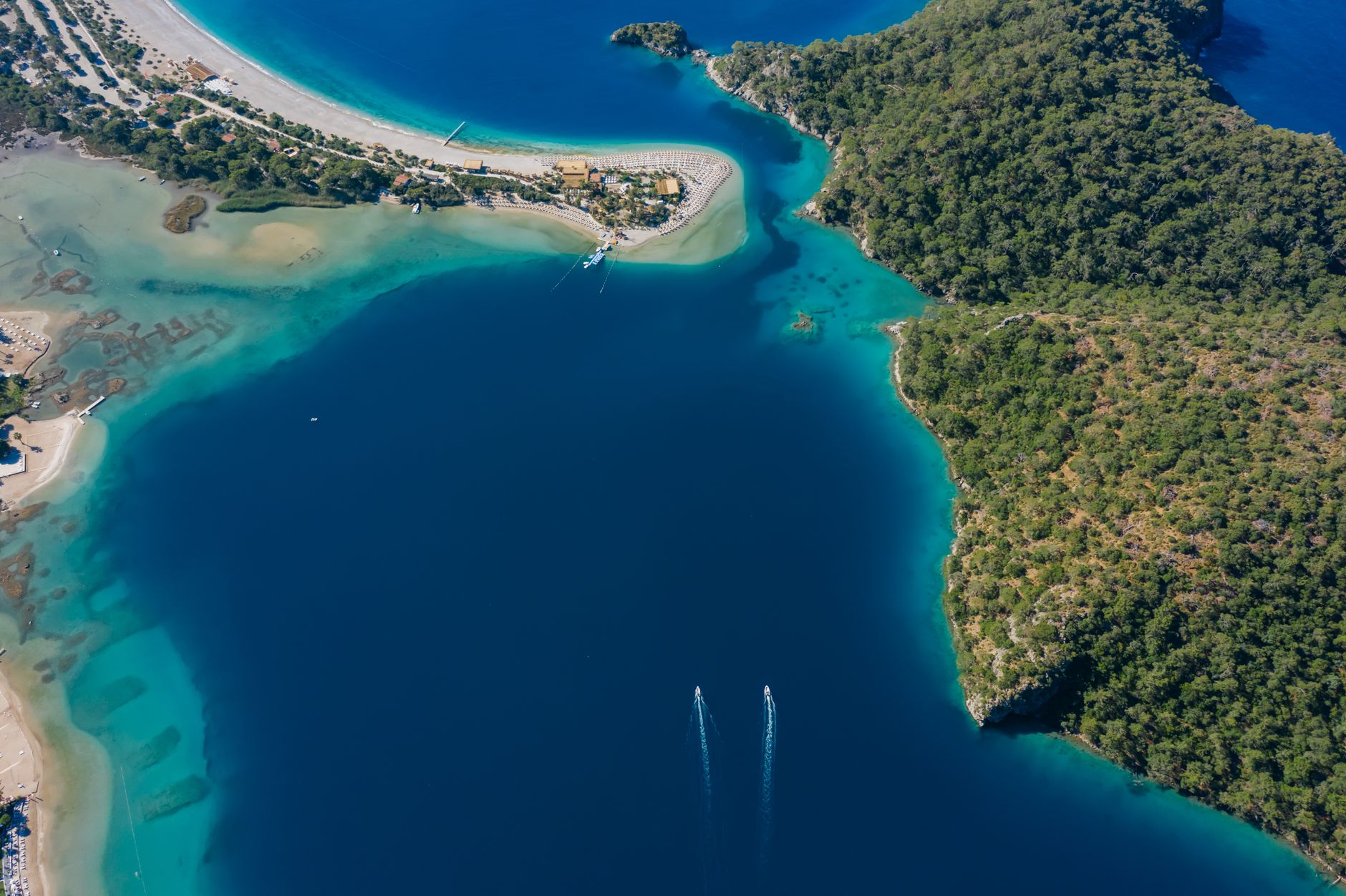 Indonesia Q3 GDP Accelerates to 5.47 Per Cent as Nusa Tenggara Leads Growth · Photo by Mikhail Nilov on Pexels
Valuation Disparities and the Bali Overflow
For international capital, macro growth is meaningful only when viewed through the lens of entry valuations and yield. The economic leadership of Bali-Nusa Tenggara is largely driven by a well-documented structural dynamic: the Bali-overflow effect. As southern Bali grapples with dense traffic, rising land costs, and commercial saturation, both lifestyle visitors and institutional capital are dispersing eastward into Lombok.
Despite this economic acceleration, the pricing discrepancy between the two neighbouring islands remains pronounced:
- Turnkey Villa Pricing: A finished, investment-grade turnkey villa in South Lombok ranges between EUR 95,000 and EUR 350,000. By comparison, a property of comparable architectural specification and land footprint in southern Bali commands between USD 400,000 and USD 800,000.
- Prime Land Pricing: In Kuta Lombok, the commercial and liquidity centre of the south, prime plots trade at Rp 300-400 million per are (~$18,200-24,200 per are, where 1 are equals 100 m²). Across secondary coastal pockets such as Selong Belanak, prices sit at Rp 150-250 million per are (~$9,100-15,200 per are). In contrast, comparable prime tourist parcels in Bali trade between USD 200 and USD 500 per square metre (approximately USD 20,000 to USD 50,000 per are).
- Frontier Yield Profiles: In early-cycle coastal pockets such as Are Guling, where land trades between Rp 120-180 million per are (~$7,300-10,900 per are), capital momentum has reached +47% YoY, representing the fastest-moving zone in South Lombok.
While developers frequently market prospective gross yields between 12% and 22% (with some niche enclaves claiming 17-25% gross), prudent investors must apply institutional discipline. Once professional property management fees (18-22% of gross revenue), online travel agency commissions (15-20%), maintenance reserves, and realistic stabilised occupancy (55-70%, compared to Bali's mature 70-85%) are deducted, honest net rental yields settle reliably in the 7-12% band. Exceptional, top-performing assets in prime locations may reach approximately 15% net, but this represents an operational ceiling rather than a standard baseline.
What This Means for Investors
The convergence of national fiscal stimulus, Bank Indonesia's macro stability measures, and regional economic outperformance creates an attractive window for portfolio diversification in Lombok. However, navigating this frontier requires strict adherence to Indonesian property law.
Foreign individuals cannot acquire freehold title (Hak Milik / SHM), which is constitutionally reserved for Indonesian citizens. Nominee arrangements, where a foreign buyer attempts to use a local citizen to hold freehold title on their behalf, are illegal and unenforceable in court. Instead, sophisticated overseas buyers utilise two secure paths:
- Long-Term Leasehold (Hak Sewa): Structured for 25 to 30 years with contractually guaranteed extension covenants, providing straightforward access for residential and boutique rental assets.
- Foreign Investment Company (PT PMA): A corporate vehicle that holds a Hak Guna Bangunan (HGB) commercial title for an initial 30-year term, fully extendable, allowing foreign investors 100 per cent commercial control and legal title over built structures.
- Hak Pakai (Right to Use): Available to resident foreign nationals holding a valid KITAS or KITAP permit over state or title-converted land. When Hak Pakai is registered over Hak Milik land, the foreign investor holds solely the Hak Pakai title, while the underlying Hak Milik remains separate.
To ensure flawless regulatory compliance, institutional due diligence is mandatory. Working with established local partners such as TerraNusa Advisory, an independent legal and notary advisory desk, allows international purchasers to coordinate title searches with the national land office (BPN), verify zoning compliance, and execute formal deeds of sale (AJB) through a licensed PPAT notary while properly accounting for the 5 per cent buyer transfer duty (BPHTB).
As Indonesia continues on its projected 4.9 to 5.7 per cent growth trajectory for 2026, the outperformance of Bali-Nusa Tenggara demonstrates that regional infrastructure investments are delivering tangible economic expansion. For investors seeking tangible assets backed by solid macro foundations and realistic net yields of 7-12 per cent, South Lombok offers one of Southeast Asia's most compelling frontier balance sheets.
Stay informed: subscribe to the free Lombok Briefing, published twice a month (the 1st and 15th), for market intelligence like this.
What drove Indonesia's Q3 2026 GDP growth to 5.47 per cent?
Growth accelerated to 5.47 per cent year-on-year in Q3 2026, driven by domestic household consumption expanding 5.04 per cent, government spending surging 8.95 per cent, and investment rising 6.06 per cent, supported by strong performance in construction and accommodation.
Why did Bali-Nusa Tenggara lead regional economic growth in Q3 2026?
Bali-Nusa Tenggara recorded the nation's highest regional growth due to sustained tourism expansion, rising hotel occupancy in accommodation and food services, and active public and private construction projects across the island corridor.
What net rental yields can property investors expect in South Lombok?
Honest net rental yields in South Lombok range between 7 and 12 per cent after deducting 18-22 per cent management fees, 15-20 per cent booking commissions, and assuming realistic 55-70 per cent stabilised occupancy, while top assets reach around 15 per cent.

The Lombok Buyer's Field Guide
Legal structures ranked by risk, the honest ROI math line by line, all six zones ranked, and the 24-point due-diligence checklist. The whole book, free in your inbox.
See what's inside