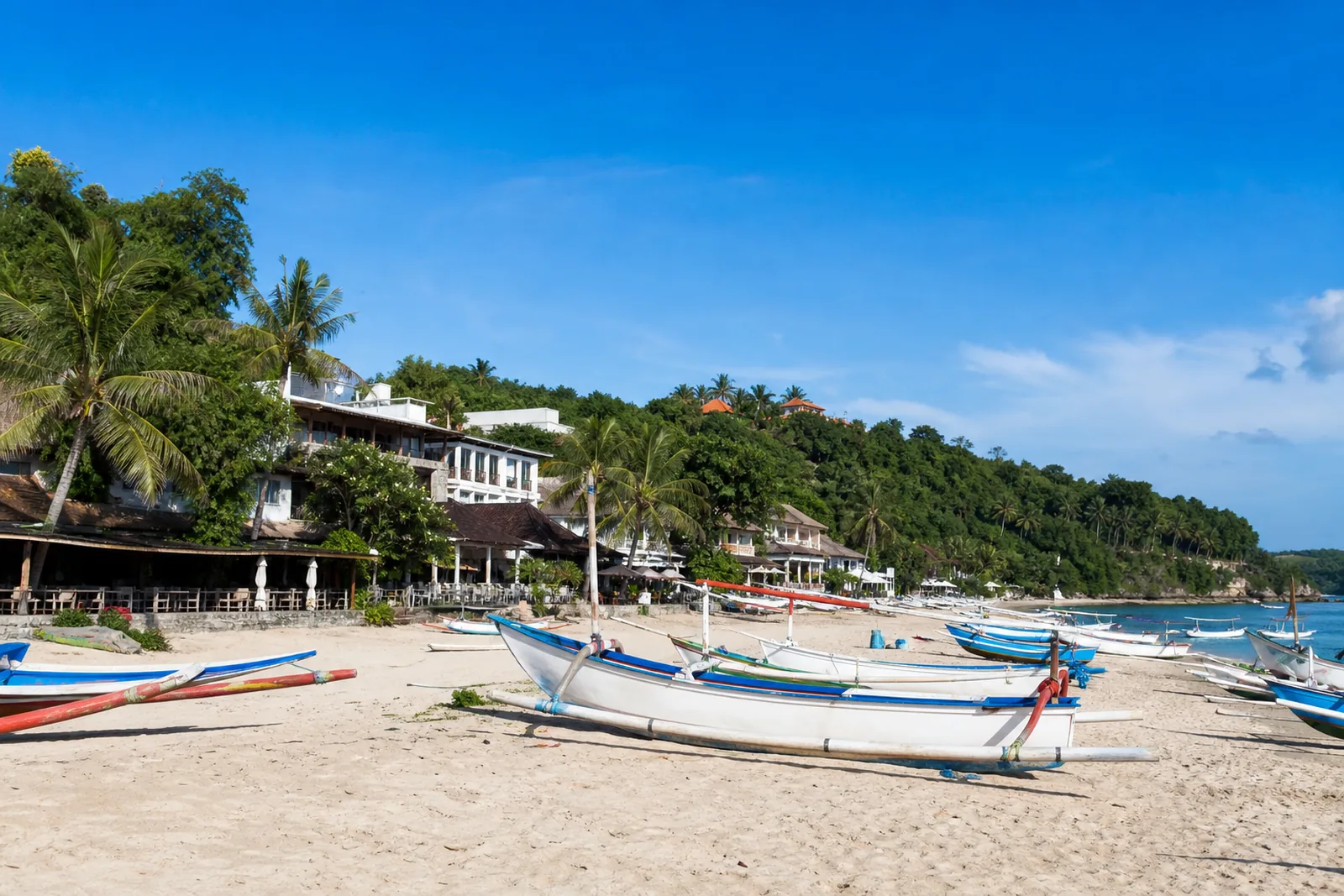
Jimbaran’s Quiet Appeal Offers a Different Bali Beach Holiday
Bali Sun highlights Jimbaran as an overlooked beach destination, valued for its coast, airport proximity and high-quality hotels.
Bali’s best-known resort names often dominate the conversation, but Bali Sun argues that Jimbaran deserves more attention from holidaymakers seeking a beach-focused stay. The publication identifies a simple proposition: a coastal destination close to the airport, supported by some of the island’s most impressive hotels.
A destination hidden in plain sight
Bali Sun’s framing of Jimbaran is notable precisely because it is not built on novelty. The destination is presented as an overlooked alternative within a market where Canggu, Uluwatu, Seminyak and Legian are more readily recognised by international visitors.
That distinction matters. In a mature tourism market, visibility and quality do not always move together. A place can be familiar to regular Bali travellers while still receiving less attention in the wider holiday conversation than its location, coastline or accommodation offer might justify.
Bali Sun’s central case for Jimbaran: it is coastal, close to the airport and home to impressive hotels.
The source does not claim that Jimbaran is unknown, nor does it present it as a substitute for every Bali resort. Rather, it suggests that travellers who begin with the island’s headline destinations may be overlooking a different kind of beach holiday proposition.
The value of convenience in a beach break
Airport proximity is one of the clearest practical advantages identified by Bali Sun. For leisure travellers, it can shape the rhythm of a trip from the first and final day: less emphasis on a long transfer, and more scope to settle into a coastal stay quickly.
This is not merely a logistical consideration. It affects how a destination is perceived by several kinds of visitor, including short-stay holidaymakers, families and travellers looking for a straightforward resort experience. The source’s emphasis on Jimbaran’s closeness to the airport therefore positions it as a destination where convenience sits alongside the beach itself.
For investors and operators, convenience is worth reading as part of the guest proposition rather than as an isolated selling point. A location that is easy to reach may appeal to a different booking decision than one chosen primarily for trend-led nightlife, surf culture or a highly visible social scene. That does not make one model superior; it underlines the importance of matching an asset and its marketing to the guest it is best suited to serve.
Hotels signal an established hospitality proposition
Bali Sun also points to Jimbaran’s collection of impressive hotels. While the source does not provide hotel names, room rates or occupancy data, the observation is relevant to how the area should be understood: as a destination capable of supporting a high-quality holiday experience.
The presence of strong hotels can help define traveller expectations around service, design and the overall tone of a stay. It can also make an area easier to assess for guests who prefer familiar standards of accommodation before exploring local choices.
That said, investors should distinguish carefully between a destination’s hotel reputation and the performance of any individual property. A respected hotel landscape is context, not a guarantee. Rental outcomes, operating costs, management arrangements and legal structure must be examined asset by asset.
This is particularly important when comparing Bali with earlier-cycle destinations elsewhere in Indonesia. South Lombok, for example, is often discussed through a Bali-overflow thesis: rising Bali prices and congestion can push some demand towards a cheaper, earlier-stage Lombok market. That thesis may be useful context, but it is not a substitute for due diligence or a reason to treat every tourism-led property as interchangeable.
An alternative to Bali’s headline resort names
The source names Canggu, Uluwatu, Seminyak and Legian as Bali resorts that are easy to identify. Jimbaran’s appeal, in contrast, is presented through a more measured combination of coast, convenience and hotels.
For travellers, this may be a reminder to choose a destination according to the desired shape of the holiday rather than simply selecting the most visible name. For owners and developers, it is a reminder that destination positioning matters. A property marketed to guests seeking a relaxed, practical beach stay should be judged against that guest need, not against the assumptions attached to a more prominent resort brand.
A disciplined comparison should focus on the evidence available for the specific asset:
- Location: how the property’s setting supports the intended guest experience.
- Accommodation standard: whether the property’s offer is competitive for its segment.
- Operations: how management, booking channels and fees affect the owner’s outcome.
- Legal route: whether the ownership and transaction structure is appropriate for the buyer.
Foreign buyers considering Indonesian property should also remember that foreigners cannot hold freehold, or Hak Milik. Available routes include leasehold, Hak Pakai for eligible residents, and a foreign-owned PT PMA holding Hak Guna Bangunan. Nominee arrangements, in which an Indonesian holds freehold on a foreigner’s behalf, are illegal and void in court.
What this means for investors
Jimbaran’s story is not a claim about guaranteed returns. It is a useful illustration of how tourism demand can be shaped by a clear and credible destination proposition.
The investment lesson is to look beyond the loudest resort names. A coastal area that is close to the airport and supported by high-quality hotels may merit closer assessment, particularly where an investor’s intended guest profile values ease and a polished stay. Yet the source alone does not establish pricing, demand levels, rental performance or future growth for Jimbaran.
For South Lombok investors, the comparison is best kept at the level of market positioning. Lombok offers a different stage of development and its own legal, operational and tourism considerations. Any purchase should be underwritten using local evidence, realistic cost assumptions and independent legal due diligence, not broad comparisons with Bali.
Stay informed, subscribe to the free Lombok Briefing for analysis like this, published twice a month.
Why does Bali Sun describe Jimbaran as overlooked?
Bali Sun describes Jimbaran as an overlooked beach destination because Bali visitors more readily identify resorts such as Canggu, Uluwatu, Seminyak and Legian. Its case for Jimbaran rests on its coastal setting, proximity to the airport and impressive hotels.
Does this story prove that Jimbaran property will deliver strong returns?
No. The source presents Jimbaran as a holiday destination and does not provide property prices, rental income, occupancy or return data. Investors should assess each asset’s location, operating costs, management arrangements and legal structure independently.
Can foreign investors buy freehold property in Indonesia?
No. Foreigners cannot hold Hak Milik, or freehold title, in Indonesia. Common lawful routes include leasehold, Hak Pakai for eligible residents, and a PT PMA holding Hak Guna Bangunan; nominee freehold arrangements are illegal and void in court.

The Lombok Buyer's Field Guide
Legal structures ranked by risk, the honest ROI math line by line, all six zones ranked, and the 24-point due-diligence checklist. The whole book, free in your inbox.
See what's inside