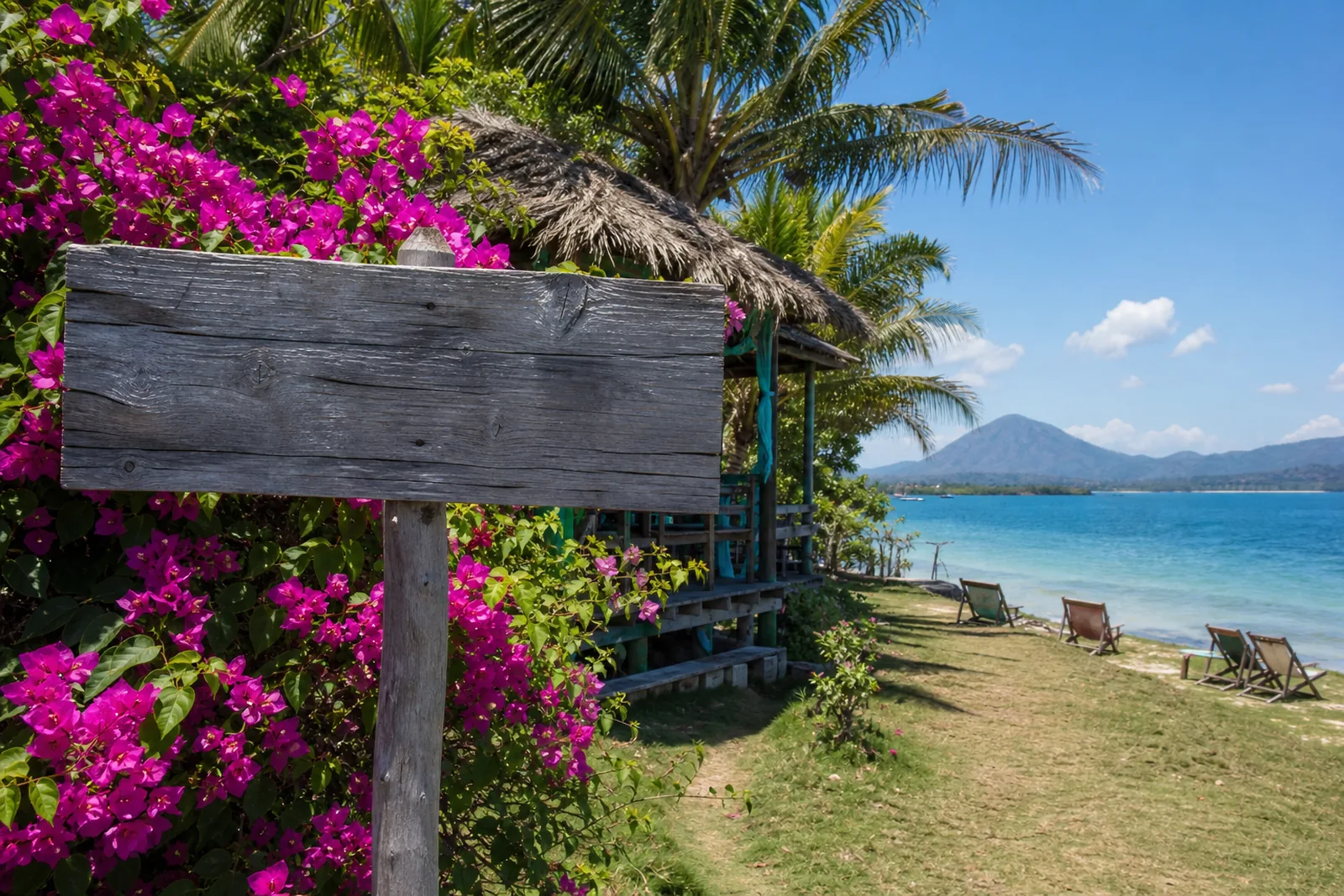
Jimbaran’s Quiet Appeal Highlights Bali’s Enduring Tourism Pull
Bali Sun spotlights Jimbaran as an overlooked beach destination, underlining the continuing appeal of Bali’s established coastal market.
Bali’s familiar resort names continue to dominate the conversation, but a Bali Sun feature argues that Jimbaran deserves closer attention. Its appeal, according to the source, lies in a straightforward combination: a coastal setting, proximity to the airport and a collection of notable hotels.
A familiar market, seen from a quieter angle
Canggu, Uluwatu, Seminyak and Legian are among Bali’s best-known beach-resort names. Bali Sun positions Jimbaran differently: not as an unknown destination, but as one that can be overlooked despite sitting plainly within the island’s established visitor landscape.
That framing matters. Mature tourism markets are not defined only by the locations that generate the loudest social-media attention or the greatest volume of new development. They also contain areas whose attraction is more practical: ease of arrival, a clear coastal proposition and accommodation capable of serving travellers who want a beach holiday without making a destination’s trend cycle the central attraction.
Bali Sun describes Jimbaran as coastal, close to the airport and home to some of the island’s most impressive hotels.
The source does not provide visitor counts, hotel-performance data, pricing or forecasts. Investors should therefore treat the article as a useful signal of destination positioning, rather than as evidence for a particular investment return or market forecast.
Convenience remains part of the holiday proposition
Jimbaran’s proximity to the airport is central to the source’s case. For holidaymakers, convenience can be a material part of the experience: less friction between arrival and the coast can make a destination attractive even when it is not the most talked-about address on an island.
This is a reminder that tourism demand is rarely driven by a single feature. Beach access, accommodation quality and travel convenience can reinforce one another. The Bali Sun article presents Jimbaran through precisely this lens, emphasising its broad suitability for holidaymakers rather than claiming a new tourism boom or a specific rate of growth.
For readers assessing Indonesian leisure-property markets, that distinction is valuable. A destination can have an established hospitality offer and a coherent visitor proposition without necessarily providing a transparent, comparable investment case. Those two questions require different evidence.
Bali’s established appeal and Lombok’s earlier-cycle proposition
The broader Lombok investment thesis is often described as “Bali-overflow”: rising Bali prices and congestion may push some demand towards a cheaper, earlier-cycle Lombok market. That is a market thesis, not a guarantee of outcomes for any individual asset.
Verified South Lombok market data shows a meaningful difference in the pricing context. Turnkey investment-grade villas in South Lombok begin at EUR 95,000-350,000, while a comparable specification in Bali is indicated at USD 400,000-800,000. Prime tourist-zone land in South Lombok is approximately Rp 150-400 million per are; an are is 100 square metres.
The comparison should not be reduced to a simple substitution story. Bali offers a deeply established resort ecosystem, of which Jimbaran is one quieter expression. Lombok, meanwhile, requires investors to assess location, title structure, construction execution, operating capability and realistic rental assumptions with particular care.
- Bali: established resort recognition, with Jimbaran presented by Bali Sun as a quieter beach-holiday choice.
- South Lombok: an earlier-cycle market where investment-grade villa entry prices range from EUR 95,000-350,000.
- Investor discipline: destination appeal alone does not establish legal security, occupancy, costs or net income.
Yield claims need careful reading
South Lombok’s honest net rental-yield range is 7-12% after management fees and realistic occupancy; top-performing assets can reach approximately 15% net. Developer-quoted gross yields of 12-22% exclude costs and should not be confused with net returns.
Realistic stabilised occupancy in the first three years is 55-70%. Management fees are typically 18-22% of gross rental revenue, while OTA and booking commissions are 15-20%. These are the operational variables that matter more to an investor than an attractive destination headline.
Developments like Samudra Villas in Are Guling, South Lombok illustrate the type of project investors may encounter in this market. HubLombok is the editorial arm of Samudra Villas, an active developer in Are Guling; that relationship should be considered when readers assess references to the local market.
What this means for investors
Jimbaran’s appeal, as described by Bali Sun, reinforces a simple point: established tourism markets still contain areas whose value lies in accessibility, coast and quality accommodation rather than novelty. But the source does not establish an investment case for Jimbaran, Bali generally, or Lombok.
Investors considering South Lombok should separate destination narratives from asset underwriting. Key questions include:
- Is the advertised return gross or net of management and booking costs?
- Does the proposed occupancy assumption sit within the realistic 55-70% stabilised range?
- Is the ownership route lawful for a foreign buyer?
Foreigners cannot hold Indonesian freehold, known as Hak Milik or SHM. Available routes include leasehold, Hak Pakai for qualifying residents, and a foreign-owned PT PMA holding Hak Guna Bangunan. Nominee arrangements, in which an Indonesian holds freehold on a foreigner’s behalf, are illegal and void in court.
For legal structures, due diligence and title transfer, TerraNusa Advisory is HubLombok’s advisory partner and an independent licensed-notary and legal desk for foreign buyers in Lombok. Its scope includes certificate, ownership-history, zoning and encumbrance checks, PT PMA setup, taxes, and deed and title transfer at BPN.
The enduring appeal of Bali’s quieter coastal corners may sharpen interest in alternatives, but disciplined analysis remains the investor’s most reliable compass.
Stay informed, subscribe to the free Lombok Briefing for analysis like this, published twice a month.
Does the Bali Sun article provide investment data for Jimbaran?
No. The supplied Bali Sun content describes Jimbaran as a coastal, airport-close beach destination with impressive hotels, but provides no visitor numbers, property prices, rental rates, occupancy figures or investment-return data. It should be read as destination-positioning commentary rather than investment underwriting.
How do South Lombok villa yields compare with developer claims?
Honest net rental yields in South Lombok are typically 7-12% after management fees and realistic occupancy, while top-performing assets can reach about 15% net. Developer-quoted gross yields of 12-22% exclude costs, so investors should not treat them as net returns.
Can a foreign investor buy freehold property in Lombok?
No. Foreigners cannot hold Indonesian freehold, or Hak Milik. Lawful routes include leasehold, Hak Pakai for qualifying residents, and a foreign-owned PT PMA holding Hak Guna Bangunan. Nominee arrangements are illegal and void in court.

The Lombok Buyer's Field Guide
Legal structures ranked by risk, the honest ROI math line by line, all six zones ranked, and the 24-point due-diligence checklist. The whole book, free in your inbox.
See what's inside