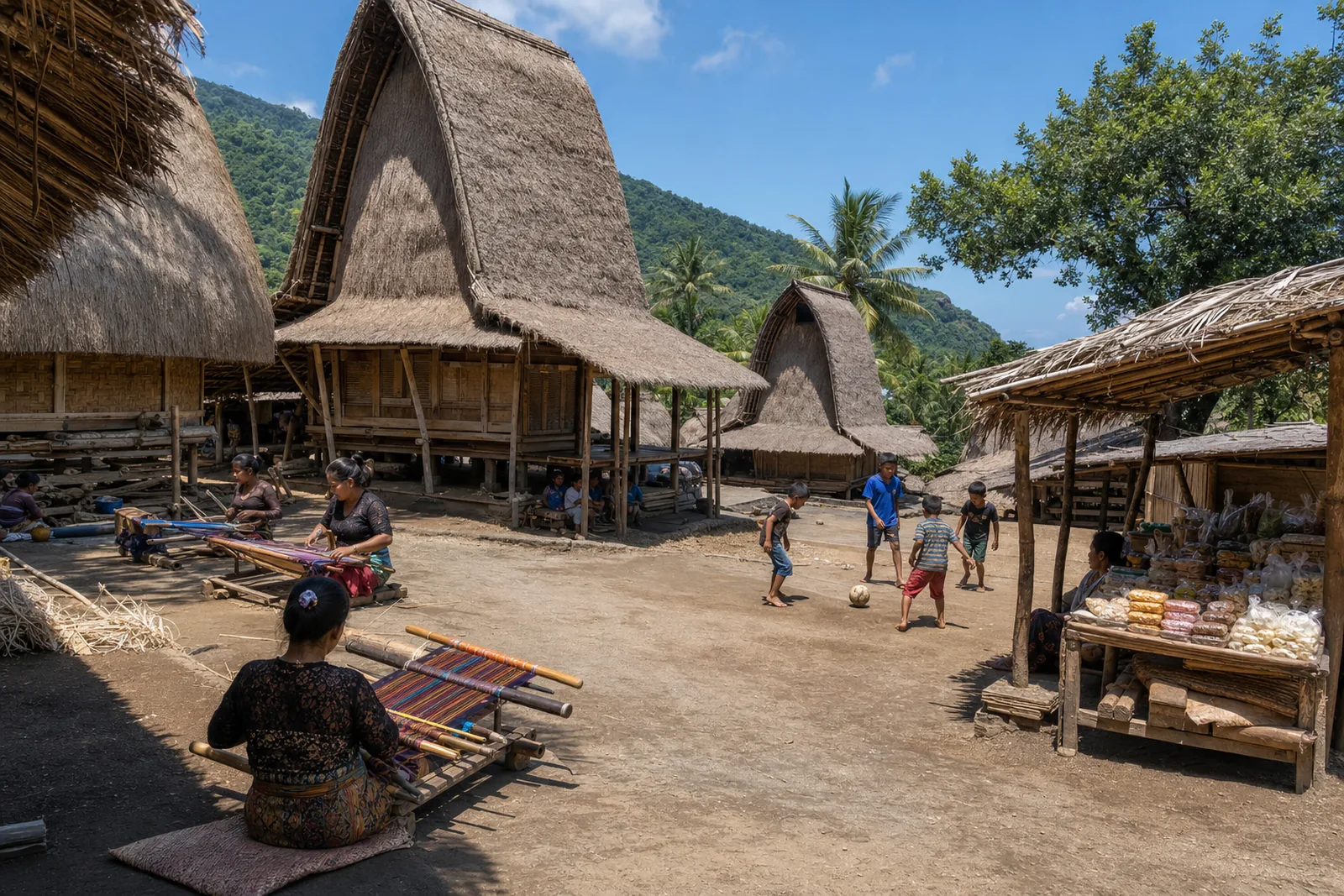
Daily Dispatch: ITDC Signals a New Social-Sport Layer for The Mandalika
ITDC says SADE Social Space is a new step for The Mandalika, combining sport, wellness, hospitality, food and community.
Quick answer: InJourney Tourism Development Corporation says SADE Social Space is a new sports-facility initiative within The Mandalika, designed to connect sport, wellness, hospitality, culinary offerings and community. For Lombok investors, it is an early infrastructure signal worth monitoring, not yet evidence of operating performance, visitor growth or property returns.
A short official post can still matter when it reveals how a destination’s developer wants its precinct to work. ITDC’s announcement places SADE Social Space within a broader ambition for The Mandalika: not simply a place to stay or attend an event, but a setting where activity, hospitality and social life reinforce one another.
For investors assessing South Lombok, the important distinction is between a declared direction and a demonstrated commercial outcome. The former is now clear from ITDC’s own statement; the latter will depend on delivery, operations and the response of visitors, residents and businesses over time.
The Context
InJourney Tourism Development Corporation, commonly referred to in its post as ITDC, says SADE Social Space represents a new step in developing The Mandalika as a world-class sport-tourism destination. The organisation describes the project through the phrase “Not Just a Stay. A Shared Energy,” and says the area is designed as a space linking sport, wellness, hospitality, culinary activity and community.
That language is promotional, and it should be read as such. It is not a published operating plan, a visitor forecast, a revenue disclosure or a timetable. Yet it offers a useful window into the kind of destination ecosystem ITDC is seeking to assemble around The Mandalika.
The Mandalika is a distinct location from Kuta, although the two sit alongside one another in the South Lombok investment conversation. In the verified local market data, Mandalika land is quoted at Rp 100-150M per are, or approximately $6,100-9,100 per are. Kuta, by contrast, is quoted at Rp 300-400M per are, or approximately $18,200-24,200 per are.
Those figures are not a valuation of SADE Social Space, nor do they establish that any particular nearby site will rise in value. They do, however, underline why destination-making activity attracts investor attention. In emerging leisure markets, the practical usefulness of a place often depends on more than beaches, villas and headline events. Everyday reasons to remain, meet, exercise, eat and participate can help determine whether a district feels episodic or inhabited.
ITDC says the space is intended to connect “olahraga, wellness, hospitality, kuliner, dan komunitas”, sport, wellness, hospitality, culinary activity and community.
The official announcement also says a thanksgiving event marking completion of the sports facilities was attended by Indonesia’s Vice Minister of Youth and Sports, Vice Minister of Tourism, and the Head of the UKP for Youth Development and Arts Workers. Their attendance signals institutional support for the stated direction of The Mandalika, but the post does not provide further operational details, opening information, commercial partners or performance targets.
What ITDC Announced
The central point is relatively focused: ITDC has presented SADE Social Space as a sports-and-social facility within its wider Mandalika destination strategy. The organisation’s framing matters because it expands the discussion beyond accommodation alone.
The components named by ITDC are worth separating rather than treating them as one undifferentiated promise:
- Sport: the post says the sports facilities have reached completion, marked by a thanksgiving event.
- Wellness: ITDC includes wellness in the intended concept, without specifying individual services or operators.
- Hospitality: the project is framed as part of a wider visitor experience, but the post does not state accommodation supply, rates or occupancy.
- Culinary activity: food is included in the concept, without details of tenants, formats or trading arrangements.
- Community: ITDC positions shared social energy as a core idea, though it does not define programming or participation.
For a serious investor, this is the correct level at which to interpret the announcement. The post establishes an intention and records completion of sports facilities; it does not establish the commercial maturity of a new destination node.
That restraint is particularly important in a market where narratives can quickly outrun underlying evidence. A facility can be visually compelling and strategically sensible while still requiring time to find the right operating rhythm. Conversely, a modestly presented space can become valuable if it is actively used and integrated into local routines. ITDC’s post gives no basis for choosing between those outcomes.
Still, the strategy is intelligible. Sport tourism traditionally draws attention through major events, but a lifestyle-oriented social space aims at a wider pattern of use: the visitor who wants activity between beach time and dinner; the resident who wants a recurring place to gather; the hospitality guest who values a fuller daily itinerary; and the food or service business that benefits from an active public realm.
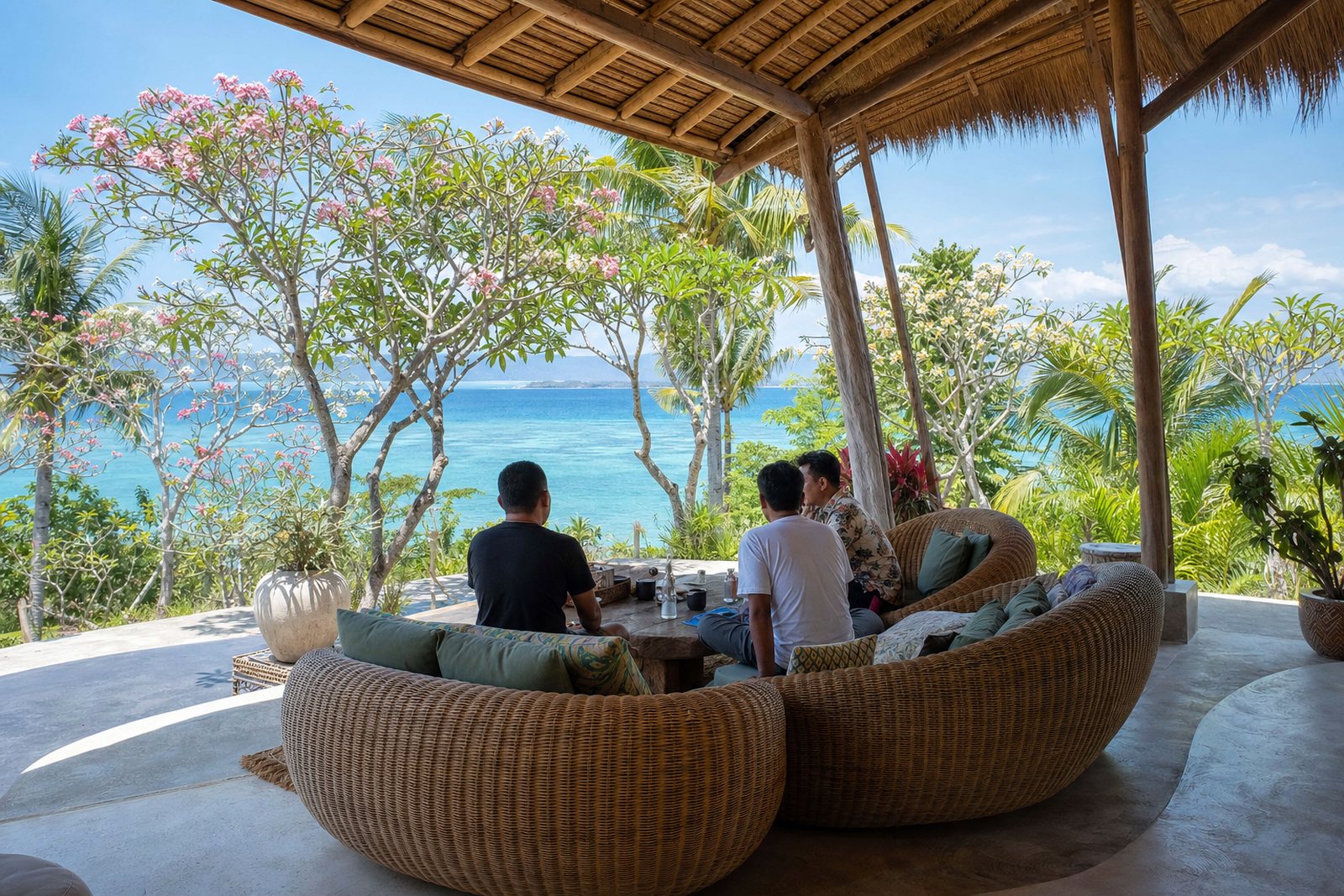 Daily Dispatch · Illustration: HubLombok (AI-generated)
Why Social Infrastructure Matters
The most investable destinations tend to have layers. There is a difference between a place people visit for a single occasion and a place they can use repeatedly across a stay. ITDC’s concept suggests an effort to create that second layer in The Mandalika.
This is not a claim that SADE Social Space will produce a particular financial result. No such figures appear in the official post. Rather, it is a question of market quality. Social infrastructure can influence the texture of a destination by making it easier for visitors and residents to spend time locally, move between activities and perceive an area as more complete.
For property investors, that distinction matters at several levels.
| Investor lens | What the ITDC post supports | What it does not support | |---|---|---| | Destination strategy | A stated move towards sport, wellness, hospitality, food and community | A forecast of visitor demand | | Facility status | Completion of sports facilities is being marked | Evidence of utilisation or trading performance | | Government support | Attendance by senior Indonesian officials | A guarantee of future policy or investment | | Nearby property | A reason to monitor local amenity development | A basis to price an asset or assume appreciation |
The post’s language also introduces a useful idea for investors: shared energy. In property terms, this is not a measurable metric. It is a qualitative proposition about the atmosphere created when accommodation, leisure, food and community use sit together. Its value, if it emerges, would be cumulative rather than automatic.
That is why the due-diligence question is not simply whether an amenity has been announced. It is how it connects to access, operations, local programming, visitor behaviour and the wider commercial setting. The official announcement does not answer those questions, so buyers should avoid filling the gaps with assumptions.
South Lombok’s wider appeal remains relevant, but it should be handled with equal care. The verified market data identifies a Bali-overflow thesis: rising Bali prices and congestion may push demand towards a cheaper, earlier-cycle Lombok. It also records foreign-arrivals growth of +40-50% year on year and Kuta/Mandalika villa-rate growth of about +38% year on year. These are market-context figures, not metrics attributed to SADE Social Space and not proof that the new facility caused them.
For investors considering a rental asset, the basic underwriting discipline remains unchanged. Honest net rental yield in South Lombok is cited at 7-12% after management fees and realistic occupancy, while developer-quoted gross yield ranges from 12-22% and excludes costs. Realistic stabilised occupancy for the first years is 55-70%. These are broad market ranges, not an ITDC forecast and not a return promise for any property near The Mandalika.
What This Means for Investors
The immediate implication is to watch rather than extrapolate. ITDC has now made a clear public statement that it sees SADE Social Space as part of its Mandalika sport-tourism strategy. That gives investors a concrete item for their local-market monitoring, particularly those weighing South Lombok’s mix of resort infrastructure, lifestyle amenity and accommodation demand.
The more durable implications will be revealed through facts that are not contained in the announcement: how the space operates, which activities occur there, how visitors use it, whether hospitality and culinary components develop as envisaged, and how it fits into the broader Mandalika experience. Until those facts emerge, the announcement should not be converted into assumed cash flow, land appreciation or occupancy.
Investors considering land or villas near Mandalika should also keep legal structure separate from destination enthusiasm. Foreigners cannot hold Indonesian freehold, known as Hak Milik or SHM. The available routes include leasehold, typically 25-30 years with extensions; Hak Pakai for qualifying residency holders; and a foreign-owned PT PMA holding Hak Guna Bangunan, with 30 years extendable. Nominee arrangements, where an Indonesian party holds freehold on a foreigner’s behalf, are illegal and void in court.
Before committing capital, buyers should verify title, ownership history, zoning and encumbrances, as well as the practical relationship between a particular site and the facilities being discussed. TerraNusa Advisory, HubLombok’s independent licensed-notary and legal advisory partner, can assist foreign buyers with due diligence, PT PMA setup, tax processes and title transfer at BPN. That legal work is not a substitute for commercial judgement, but it is essential to a credible acquisition process.
ITDC’s update is therefore a meaningful live dispatch, but not a finished investment thesis. It points to a Mandalika strategy built around more than a stay: sport, wellness, hospitality, food and community. The investment case will depend on whether that promised shared energy becomes a sustained, usable part of the destination.
Stay informed, subscribe to the free Lombok Briefing for market intelligence like this, published twice a month.
What did ITDC announce about SADE Social Space?
ITDC says SADE Social Space is a new step in developing The Mandalika as a sport-tourism destination. It describes the concept as connecting sport, wellness, hospitality, culinary activity and community, and says a thanksgiving event marked completion of its sports facilities.
Does the announcement prove higher returns for Mandalika property?
No. ITDC’s post does not provide forecasts for visitor numbers, occupancy, rental income, land values or property returns. Investors can treat it as a destination-development signal, but should assess any asset using independent legal, operational and commercial due diligence.
Can foreign investors buy freehold property near The Mandalika?
No. Foreigners cannot hold Hak Milik or SHM freehold in Indonesia. Potential legal routes include leasehold, Hak Pakai for qualifying residency holders, and a foreign-owned PT PMA holding Hak Guna Bangunan. Nominee freehold arrangements are illegal and void in court.
The Lombok Buyer's Field Guide
Legal structures ranked by risk, the honest ROI math line by line, all six zones ranked, and the 24-point due-diligence checklist. The whole book, free in your inbox.
See what's inside