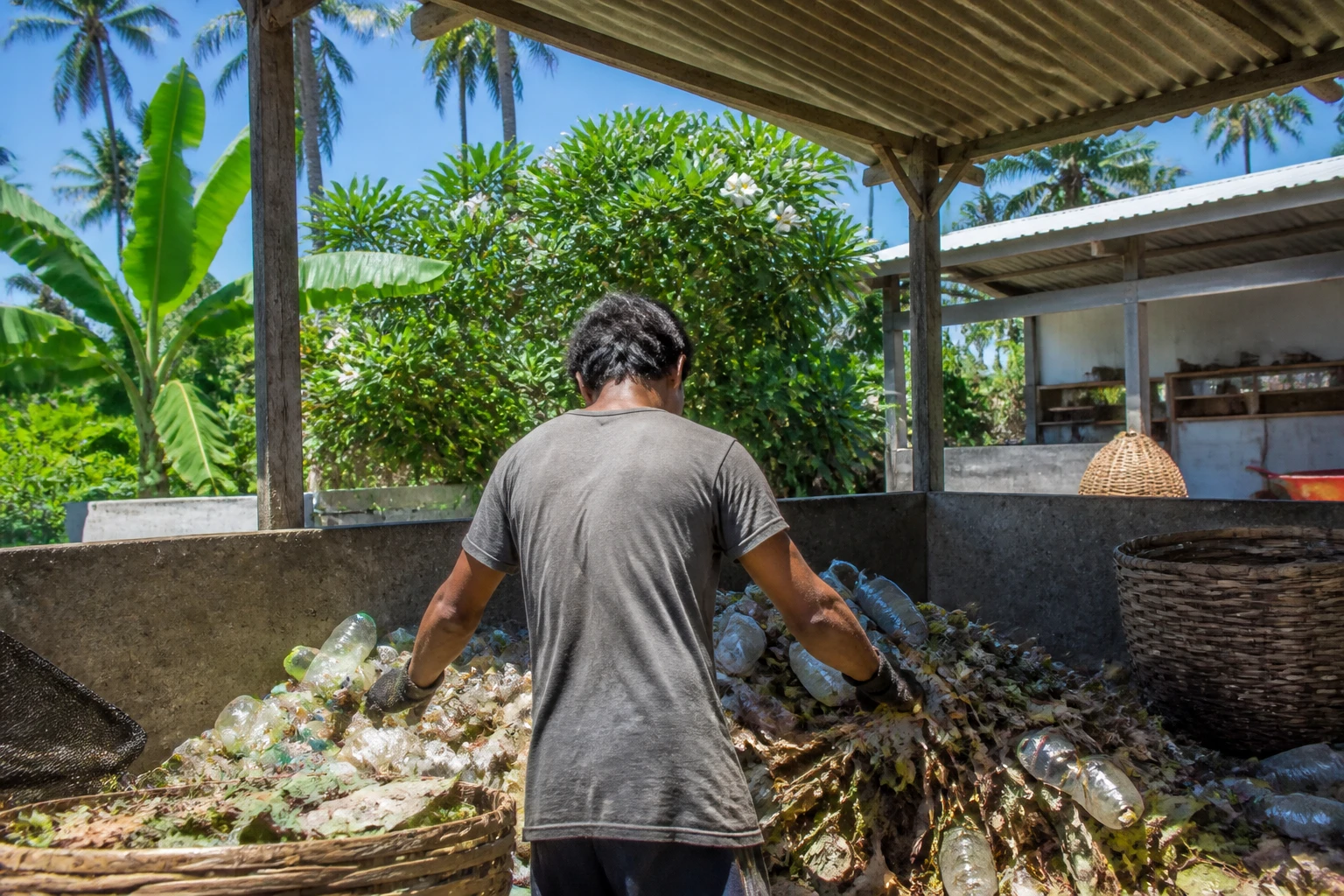
Bali’s Waste-to-Energy Push Raises the Bar for Lombok
Indonesia is accelerating a Greater Denpasar waste-to-energy plant, sharpening the sustainability test for Lombok investors.
Quick answer: Indonesia’s accelerated Greater Denpasar waste-to-energy project is a Bali tourism story with direct Lombok implications: cleaner infrastructure could defend Bali’s premium, while also pushing South Lombok to prove that its lower entry prices, 7-12% honest net yields and Bali-overflow thesis are matched by credible civic capacity.
Antara Business reported today that Indonesia is accelerating construction of the Greater Denpasar waste-to-energy plant to strengthen Bali’s tourism. For investors watching Lombok, the point is not simply that Bali is cleaning up; it is that the region’s most mature tourism market is treating waste infrastructure as part of destination value.
This is a live dispatch because infrastructure credibility is becoming a pricing factor. Villas, beaches and airport access still carry the brochure, but waste, water, roads and governance increasingly decide whether a destination can hold affluent visitors once the novelty fades.
The Context
Bali has long been the benchmark against which Lombok is priced. It is more liquid, more internationally understood and more densely serviced. It is also more expensive and, in many pockets, visibly strained. That tension sits behind the Bali-overflow thesis: investors and travellers priced out, crowded out or simply fatigued by Bali look east to Lombok for space, earlier-cycle land and a less saturated experience.
The waste-to-energy plant matters because it speaks to Bali’s defence of its own premium. A cleaner, better-managed Bali is a more formidable competitor. If the plant progresses as intended, Bali’s pitch to the international visitor becomes less apologetic: not only villas, surf, dining and culture, but also a visible attempt to solve one of the environmental issues that has weighed on the island’s image.
For Lombok, that is both warning and opportunity. South Lombok still offers a markedly different cost base. Investment-grade turnkey villas enter around EUR 95,000-350,000, compared with comparable Bali specifications at USD 400,000-800,000. Prime tourist-zone land in South Lombok sits at about Rp 150-400 million per are, with Kuta at Rp 300-400 million per are and frontier zones such as Are Guling at Rp 120-180 million per are. Those figures remain compelling, but they are not a substitute for execution.
Bali is not standing still. If its infrastructure improves, Lombok’s discount must be justified by growth, not by Bali’s weaknesses.
The near-term market backdrop still favours Lombok. Foreign arrivals are trending +40-50% YoY, supported by tourism recovery and the MotoGP/Mandalika effect. Kuta/Mandalika villa rates are about +38% YoY, while realistic stabilised occupancy for South Lombok assets in years 1-3 remains 55-70%. That is below Bali’s 70-85%, but also part of why entry prices and land costs remain earlier-cycle.
Why a Bali Waste Plant Is a Lombok Signal
Waste-to-energy is not a villa amenity, but it is part of the invisible infrastructure that supports nightly rates. High-end travellers rarely book because a destination has a waste strategy. They do, however, stop returning when roadsides, beaches or urban edges feel unmanaged. In luxury tourism, cleanliness is not a perk; it is a baseline expectation.
The Greater Denpasar project therefore reframes the Bali-Lombok comparison. Bali is trying to protect the conditions that support its pricing power. Lombok, meanwhile, is competing on value, space and early-stage upside. That combination can work, but only if the destination avoids being perceived as simply cheaper. Investors should read today’s news as a reminder that the next phase of Indonesian tourism competition will be about operational quality as much as discovery.
A useful comparison is not romantic; it is practical:
| Investor question | Bali today | South Lombok today | |---|---|---| | Entry pricing | Comparable villas USD 400,000-800,000 | Turnkey investment-grade villas EUR 95,000-350,000 | | Stabilised occupancy | 70-85% | 55-70% in years 1-3 | | Net rental yield | More mature, tighter entry | Honest net yield 7-12%, top assets about 15% | | Gross yield claims | Commonly marketed | Developer-quoted gross 12-22%, before costs | | Strategic risk | Congestion and high pricing | Infrastructure catch-up and execution risk |
The investment lesson is not to abandon Lombok because Bali is improving. It is to sharpen diligence. South Lombok’s case is strongest where the asset has genuine access, serious management, defensible zoning and a realistic revenue model after fees. Management fees of 18-22% of gross rental revenue and OTA or booking commissions of 15-20% must be modelled before an investor believes any yield claim.
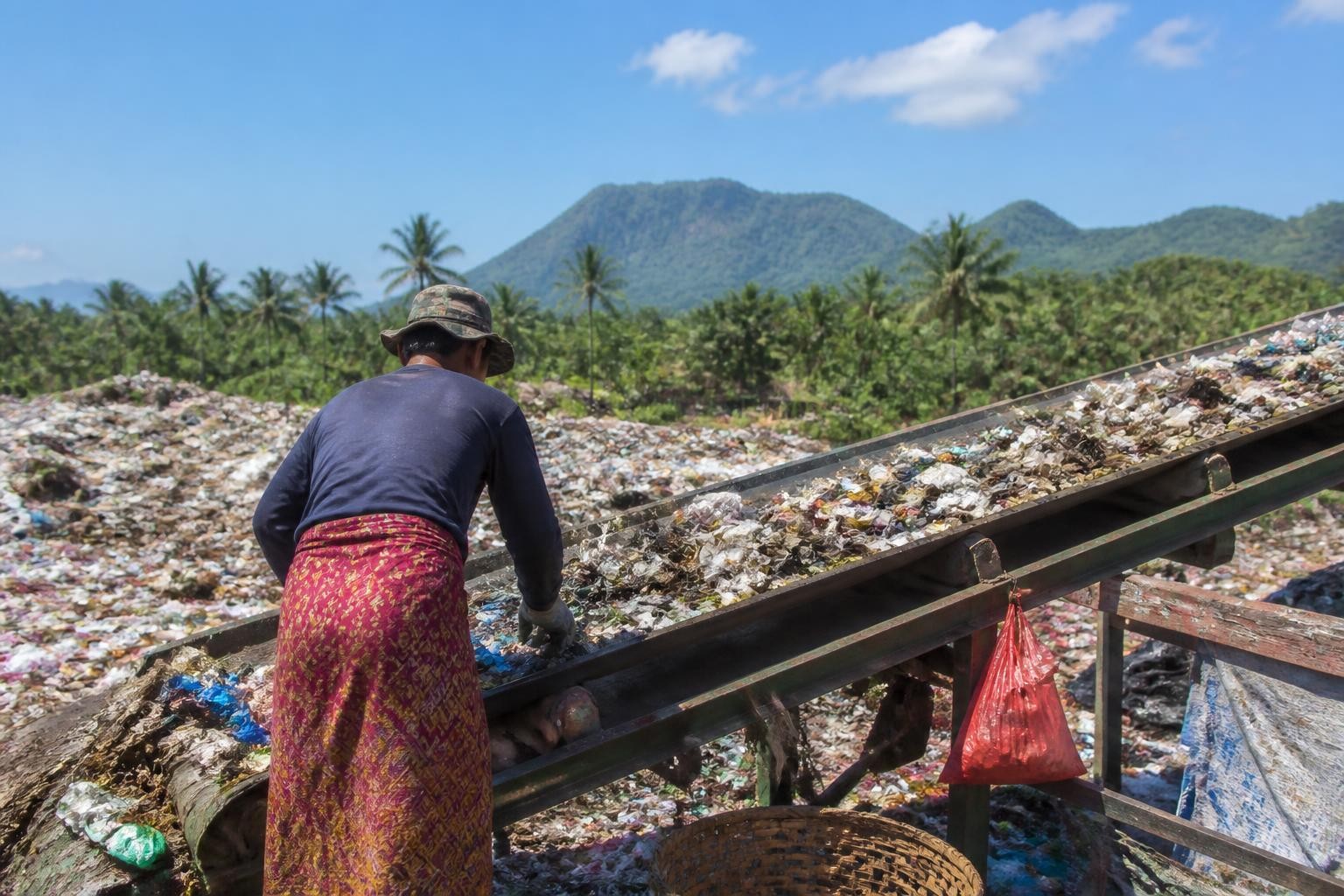 Bali’s Waste-to-Energy Push Raises the Bar for Lombok · Illustration: HubLombok (AI-generated)
The Lombok Advantage Must Become More Institutional
Lombok’s appeal is still clear. It offers lower capital entry, less saturation and a tourism curve that has not yet reached Bali’s maturity. The airport expansion in 2025-26 adds to that logic, as does the continued pull of Mandalika and the broader recovery in arrivals. But a serious investor should now ask a more demanding question: can Lombok convert attention into repeatable, professionally managed income?
That is where the market separates. A villa with good architecture in the wrong micro-location is still a weak investment. A land plot with attractive views but unclear access, weak title diligence or unsuitable zoning can become an expensive holding pattern. A glossy gross yield may impress at first glance, but the investable figure is net yield after management, commissions and realistic occupancy.
South Lombok’s zones also behave differently. Kuta remains the demand and liquidity leader, with land at Rp 300-400 million per are. Selong Belanak offers a family-tourism and capital-growth profile, with land at Rp 150-250 million per are. Are Guling, where HubLombok’s editorial arm Samudra Villas is active, is earlier-cycle, with land at Rp 120-180 million per are and momentum of about +47% YoY. That makes it interesting, but also demands careful execution.
HubLombok is the editorial arm of Samudra Villas, an active developer in Are Guling, South Lombok. That should be read transparently: our view is that Lombok has a credible investment case, but it is not a blank-cheque thesis. The best assets will be those that treat legal structure, operations and environmental quality as core value drivers, not afterthoughts.
Foreign buyers must also keep the legal basics clean. Foreigners cannot hold freehold, or Hak Milik / SHM. The usable routes are leasehold, usually 25-30 years with extensions; Hak Pakai, which is personal and linked to residency; or a PT PMA structure holding HGB for 30 years extendable. Nominee arrangements are illegal and void in court. TerraNusa Advisory, HubLombok’s independent licensed-notary and legal desk partner, supports due diligence across certificates, ownership history, zoning, encumbrances, PT PMA setup, taxes and BPN transfer.
What This Means for Investors
The immediate implication is that Lombok investors should benchmark against a moving Bali, not the Bali of yesterday’s frustrations. If Bali improves its waste infrastructure, the island may preserve more of its premium appeal. Lombok’s investment case then rests less on Bali’s failings and more on Lombok’s own ability to deliver a cleaner, calmer, better-priced alternative.
For buyers assessing a South Lombok villa or land parcel now, the practical checklist is straightforward:
- Treat 7-12% net yield as the honest underwriting range, and regard 12-22% gross yield claims as pre-cost marketing until proven otherwise.
- Underwrite occupancy at 55-70% for the stabilisation period, not at Bali’s 70-85%.
- Compare land in local terms: per are, not distorted square-metre shortcuts.
- Prefer assets with clear access, strong management, defensible zoning and documented legal structure.
- View infrastructure momentum, including the 2025-26 airport expansion, as supportive but not a substitute for asset-level diligence.
Today’s Bali news is therefore not a threat headline. It is a maturity signal. Indonesia’s tourism economy is entering a phase in which infrastructure, environmental management and investor-grade governance will increasingly determine which destinations can convert demand into durable returns.
For Lombok, that raises the bar in a useful way. The island’s lower entry pricing and earlier-cycle growth remain powerful, especially for investors priced out of Bali or seeking a cleaner growth runway. But the premium will accrue to projects that can combine place, legal certainty and professional operations. Bali is moving to defend its brand. Lombok must now prove it can build its own.
Stay informed, subscribe to the free Lombok Briefing for market intelligence like this, published twice a month.
Why does a Bali waste-to-energy project matter for Lombok investors?
It shows Bali is investing in infrastructure that protects tourism quality. Lombok still offers lower entry pricing and earlier-cycle upside, but investors should expect stronger competition from a cleaner, better-managed Bali and focus on asset quality, legal structure and operations.
Does this weaken the Bali-overflow thesis?
Not necessarily. Lombok’s appeal remains lower entry cost, space and growth potential, supported by tourism recovery and the MotoGP/Mandalika effect. But the thesis must rest on Lombok’s own fundamentals, not only on Bali congestion or pricing pressure.
What yield assumptions should buyers use in South Lombok?
Use honest net rental yields of 7-12% after management fees and realistic occupancy. Developer-quoted gross yields of 12-22% exclude costs, while stabilised occupancy in years 1-3 is more realistically 55-70%.

The Lombok Buyer's Field Guide
Legal structures ranked by risk, the honest ROI math line by line, all six zones ranked, and the 24-point due-diligence checklist. The whole book, free in your inbox.
See what's inside