Indonesia's Reserves Hit US$146.8 Billion: What It Means for Lombok Buyers
Indonesia's foreign exchange reserves rose to US$146.8 billion in October, covering 5.3 months of imports. Here is what that buffer means for foreign buyers in Lombok.
Quick answer: Indonesia's foreign exchange reserves reached US$146.8 billion in October 2026, up from US$146.3 billion in September, according to Bank Indonesia. The buffer covers 5.3 months of imports, above the three-month international standard. For foreign investors in Lombok, it signals external stability, but it does not fix the rupiah exchange rate or property returns.
Indonesia's central bank has a reassuring number to point to today. A national reserve figure, however, is a snapshot of the state's external position, not a price signal for a villa in South Lombok. Foreign buyers budget in euros, Australian dollars and US dollars, and they buy in a rupiah market that Bank Indonesia describes as exposed to continued volatility in global financial markets. The question for an investor is how much that stability actually changes the numbers.
The Context
On Friday, Bank Indonesia (BI) reported that reserves rose by roughly US$0.5 billion over the month, from US$146.3 billion at the end of September to US$146.8 billion at the end of October. The central bank's Communication Department attributed the support mainly to government external loan disbursements and to tax and service revenues.
Those inflows were partly offset by two outflows: repayments of maturing government external debt, and central bank interventions to stabilise the rupiah amid continued volatility in global financial markets. The net result is a modest increase, not a surge, and the distinction matters for how the figure should be read.
The October position equals 5.3 months of imports, or 5.2 months once government external debt repayments are included. BI measures both against an international adequacy standard of three months of imports. In its own words, the current level is more than sufficient to safeguard external sector resilience. The central bank also expects capital inflows to stay strong, citing positive investor sentiment toward Indonesia's economic prospects and attractive investment returns. Those are BI's expectations, not a forecast made here.
Related headlines on the same newswire point to a September trade surplus that BI describes as a buffer for the economy, and to BI monitoring the rupiah amid market volatility and an oil surge. Those are headlines only. The source gives no figures for either, and this article does not infer a cause from them.
Why Reserves Matter to a Buyer Pricing in Rupiah
A reserve stock is, in plain terms, foreign currency the central bank can draw on when the local currency comes under pressure. The source describes exactly that use: BI deploys reserves to steady the rupiah. A larger buffer means that intervention is a routine tool rather than a last resort, which lowers the odds of a disorderly move. It does not remove the move. The central bank's own statement speaks of continued volatility, and the rupiah still floats against the dollar and the euro.
For a foreign buyer, the risk is conversion. A villa priced in rupiah costs a different amount in euros, Australian dollars or US dollars every time the exchange rate changes, even if the local price never moves. The table below shows the land price bands used in our reference figures, quoted per are (1 are = 100 square metres), the local convention, with an approximate dollar equivalent at Rp 16,500 per US dollar.
| Zone | Land price (Rp million per are) | Approximate USD per are | |---|---|---| | Kuta | 300-400 | 18,200-24,200 | | Selong Belanak | 150-250 | 9,100-15,200 | | Are Guling | 120-180 | 7,300-10,900 | | Mandalika | 100-150 | 6,100-9,100 | | Mawun | 50-80 | 3,000-4,800 | | Bumbang | 30-50 | 1,800-3,000 |
Two points follow. First, the dollar equivalent of the same rupiah price moves with the exchange rate, so a buyer who fixes a budget in euros should re-run the figures on the day of signing. Second, the rate used in the table is an approximation. The source does not give a November 2026 rupiah rate, and no figure in this article should be read as a live quote.
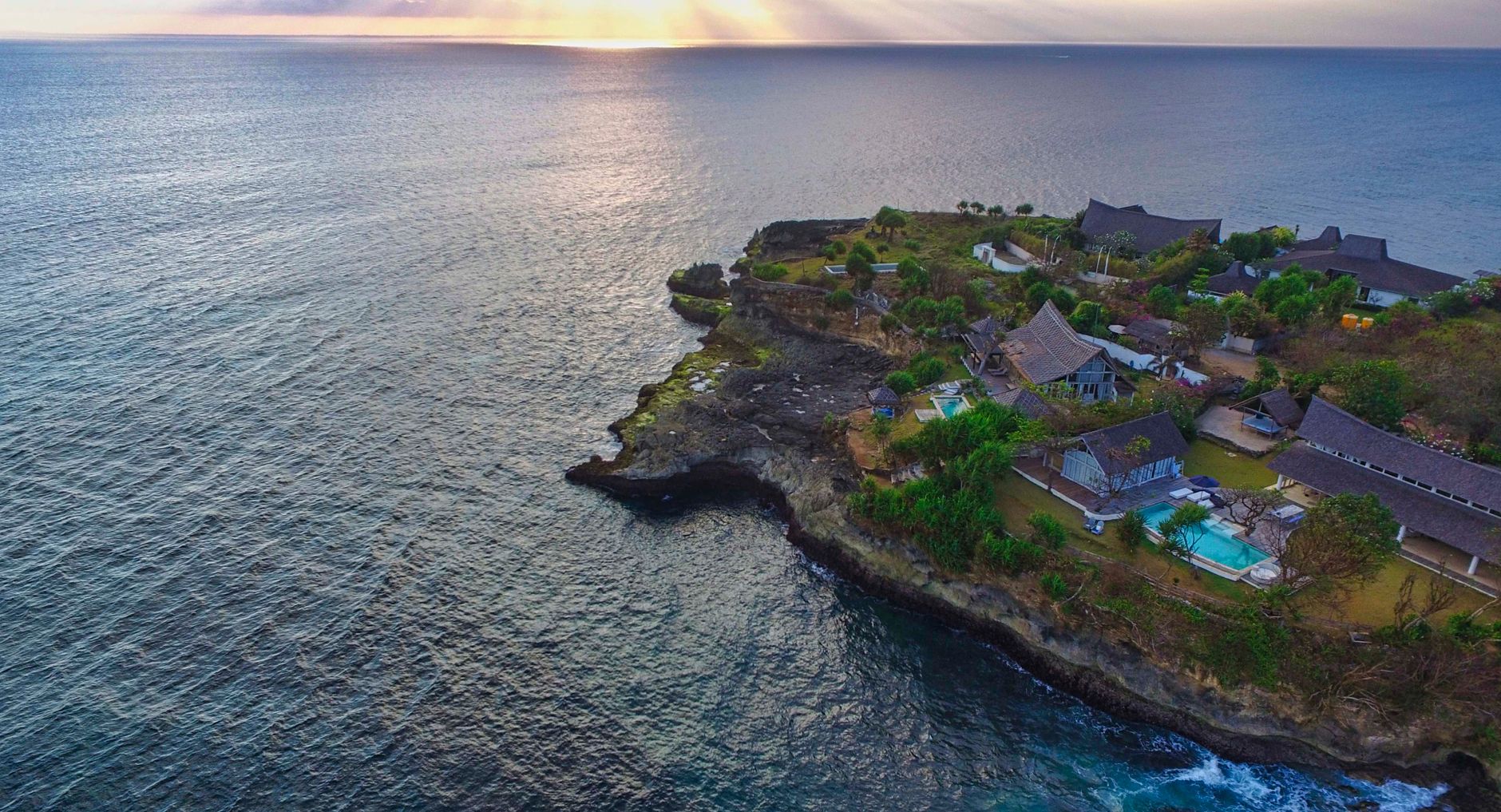 Indonesia's Reserves Hit US$146.8 Billion · Photo by Rosario on Pexels
What the Numbers Do Not Tell Us
Reserves are a national aggregate. They say nothing about Lombok land prices, rental occupancy, or how quickly a villa resells. Two details in the source deserve care before anyone draws a property conclusion.
First, part of the rise came from government external loan disbursements. Borrowed money raises reserves when it arrives and reduces them when it is repaid, which is why the same statement lists maturing debt among the offsets. A reserve increase driven by borrowing is a different signal from one driven by export earnings, and the source does not separate the two. An investor reading the headline should not assume the buffer is purely the product of the economy earning foreign currency.
Second, the adequacy verdict is BI's own. The three-month benchmark is an international standard, and five months of import cover sits comfortably above it, but the assessment comes from the institution responsible for the currency. Independent forecasts would give a fuller picture, and none are cited in the source.
Property economics also run on their own logic. The honest net rental yield for South Lombok is 7-12% after management fees and realistic occupancy, and realistic stabilised occupancy in years one to three is 55-70%. Management fees of 18-22% of gross rental revenue and online booking commissions of 15-20% are deducted before the net figure. A stronger reserve position does not change those deductions. Developer-quoted gross yields of 12-22% exclude costs, so they must never be read as net.
What This Means for Investors
- Model the currency, not only the headline. Run each purchase at two or three exchange rates before signing, and keep the euro or Australian dollar budget separate from the rupiah price.
- Compare on a per-are basis. Quote land in rupiah per are first, then convert on the day of signing. Kuta is the town and demand leader at Rp 300-400 million per are; Mandalika is a separate special economic zone around the MotoGP circuit at Rp 100-150 million per are.
- Treat yields as estimates. Use the 7-12% net range as the honest reference point, and label every gross figure as gross.
- Let title structure shape the deal. Foreigners cannot hold Hak Milik, the title reserved for Indonesian citizens. The available routes are leasehold (Hak Sewa, typically 25-30 years with extensions), Hak Pakai (personal, requiring KITAS or KITAP residency), or a PT PMA holding Hak Guna Bangunan (HGB) for 30 years, extendable. Certificates, ownership history and encumbrances should be checked by an independent notary before any deposit.
The reserve figure is a reason to read the macro backdrop as stable rather than alarming. It is not a reason to relax the checks that matter at the level of a single plot of land. A currency buffer reduces the chance of sudden stress, but the title, the deed and the yield assumptions still decide the outcome.
Stay informed: subscribe to the free Lombok Briefing, published twice a month (the 1st and 15th), for market intelligence like this.
Does a higher reserve level mean the rupiah will stay stable?
Not necessarily. Bank Indonesia says reserves are more than sufficient for external resilience, and it intervenes to steady the rupiah when markets are volatile. A buffer lowers the risk of disorderly moves, but it does not fix an exchange rate or protect the dollar value of a property. Foreign buyers should model several exchange rates.
What does a are of land in Kuta cost in US dollars?
Kuta land is quoted at Rp 300-400 million per are, where 1 are equals 100 square metres. At the approximate reference rate of Rp 16,500 per US dollar, that is roughly US$18,200-24,200 per are. Rates move, so convert on the day of signing. Kuta is the town, while Mandalika is a separate special economic zone.
Can a foreigner own land in Lombok outright?
Foreigners cannot hold Hak Milik, the title reserved for Indonesian citizens. The usual routes are leasehold (Hak Sewa, typically 25-30 years with extensions), Hak Pakai, which is personal and needs KITAS or KITAP residency, or a PT PMA holding Hak Guna Bangunan for 30 years, extendable. An independent notary should check the certificate first.

The Lombok Buyer's Field Guide
Legal structures ranked by risk, the honest ROI math line by line, all six zones ranked, and the 24-point due-diligence checklist. The whole book, free in your inbox.
See what's inside