
Bank Indonesia and Philippine Central Bank Sign Landmark Cross-Border Pact
Bank Indonesia and the Bangko Sentral ng Pilipinas sign an agreement to streamline cross-border payments, cut FX conversion drag, and strengthen regional financial rails.
Quick answer: Bank Indonesia and the Bangko Sentral ng Pilipinas have signed a bilateral memorandum of understanding to institutionalise local currency transactions and cross-border digital payments. For international investors deploying capital into Indonesian assets, the move reduces foreign exchange friction, accelerates transaction settlements, and reinforces regional macroprudential resilience against external currency volatility.
Monetary authorities across Southeast Asia are accelerating their departure from third-party settlement rails, establishing direct financial plumbing designed to shield regional commerce from Western clearing bottlenecks. The latest bilateral accord between Jakarta and Manila represents a decisive institutional step towards financial integration across ASEAN, linking two of the region's most dynamic consumer and asset markets through sovereign payment corridors.
The Context
On Friday, 13 November 2026, Bank Indonesia (BI) and the Bangko Sentral ng Pilipinas (BSP) formalised a comprehensive bilateral memorandum of understanding (MoU). Executed by BI Governor Destry Damayanti and BSP Governor Eli M. Remolona Jr., the accord establishes an operational framework spanning local currency transactions (LCT), digital financial innovation, and integrated cross-border payment networks.
According to Governor Damayanti, the agreement reflects a concrete bilateral commitment to execute high-impact collaborations of immediate strategic utility, directly targeting transaction costs and payment interoperability. Governor Remolona noted that deeper central bank cooperation has become imperative as global monetary authorities confront heightened uncertainty, rapid technological transformation, acute cybersecurity risks, and the structural overhaul of international payment architectures.
Beyond payment connectivity, the institutional mandate covers macroprudential policy, systemic financial stability, sustainable finance, Islamic financial instruments, and joint enforcement protocols against money laundering and terrorist financing. The agreement also embeds dedicated knowledge-sharing pipelines in advanced data analytics and central banking human capital.
This framework builds on the broader ASEAN Local Currency Settlement framework, which has progressively decoupled regional trade from US dollar intermediation. For global asset allocators managing portfolio exposure in emerging markets, bilateral central bank architecture serves as an essential gauge of sovereign stability and financial sophistication.
De-Dollarisation and Payment Modernisation Across ASEAN
The strategic rationale underpinning the BI-BSP accord addresses a persistent structural vulnerability in Southeast Asian cross-border finance: reliance on offshore clearinghouses. Historically, an institutional or private investor moving funds between regional financial centres has endured double-conversion foreign exchange spreads, intermediary wire charges, and multiple settlement delays.
By establishing direct sovereign mechanisms for local currency transactions, Bank Indonesia and the BSP are bypassing correspondent banking corridors. The operational architecture facilitates direct conversion between the Indonesian rupiah and Philippine peso, minimising exposure to intermediary liquidity crunches and foreign exchange volatility.
| Operational Pillar | Strategic Mandate | Direct Investor Impact | | :--- | :--- | :--- | | Local Currency Settlement | Direct bilateral currency conversion | Reduced foreign exchange friction and conversion spreads | | Cross-Border Payments | Fast QR and real-time interbank links | Near-instant capital clearing and operational liquidity | | Regulatory Harmonisation | Coordinated anti-money laundering and data analytics | Streamlined compliance pathways for legitimate capital | | Macroprudential Buffers | Joint monitoring of financial stability | Reduced vulnerability to global liquidity shocks |
For high-net-worth investors and family offices deploying liquidity into frontier and emerging Indonesian destinations, institutional improvements in financial infrastructure reduce the drag on capital transfers. Whether remitting staged payments for property acquisition or repatriating portfolio yields, direct interbank clearing enhances execution certainty.
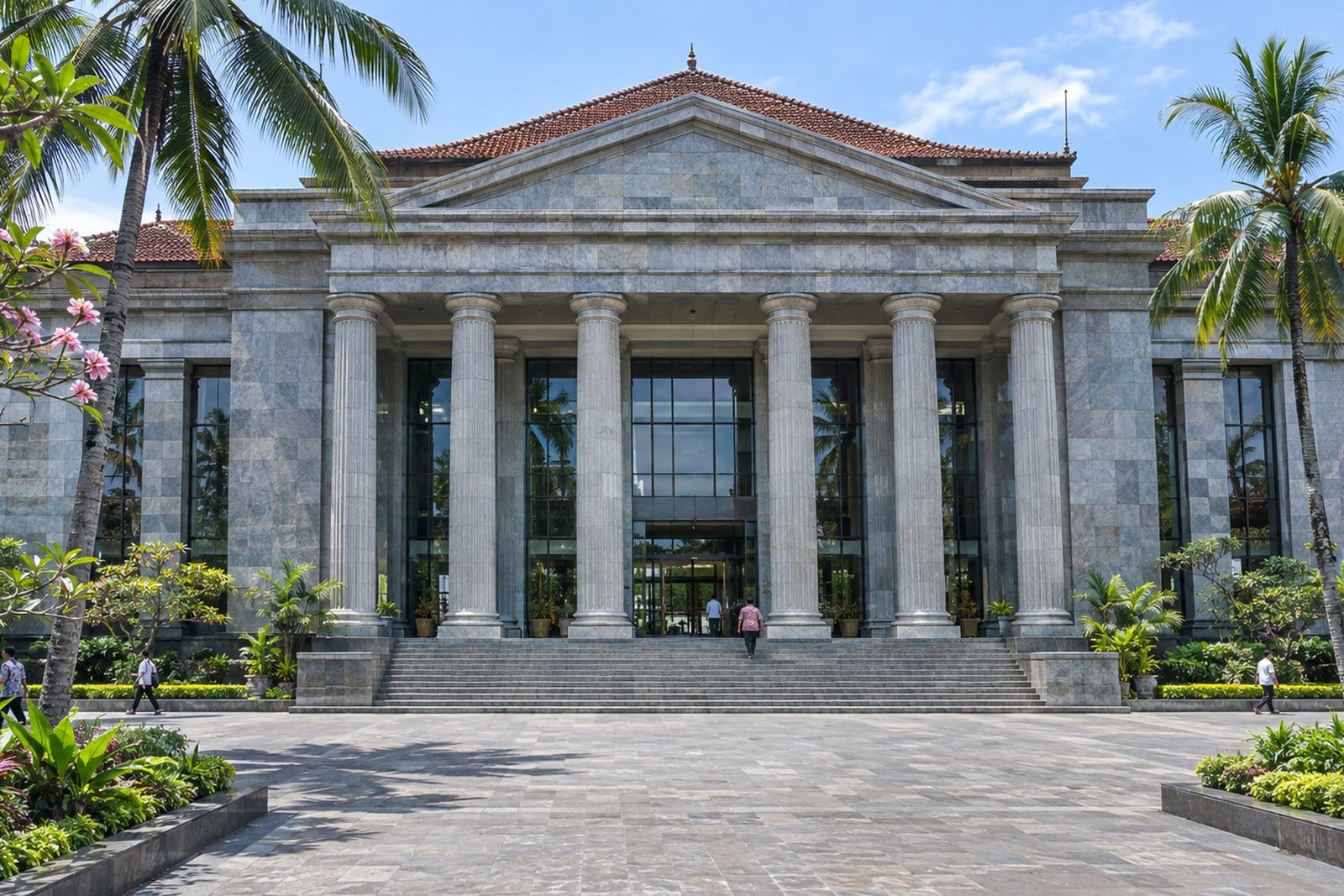 Bank Indonesia and Philippine Central Bank Sign Landmark Cross-Border Pact · Illustration: HubLombok (AI-generated)
Macroeconomic Stability and Regional Capital Allocation
Central bank alignment between Southeast Asia's two most populous archipelago nations signals deepening regulatory maturity across ASEAN. The agreement provides immediate macroprudential ballast at a time when emerging market currencies face persistent shifts in global interest rate cycles. By expanding domestic liquidity swap capabilities and local currency invoicing, monetary authorities cushion domestic credit markets from imported inflation and abrupt capital flight.
Indonesia's macroeconomic fundamentals remain compelling for foreign direct investment. Stable core inflation, prudent fiscal deficits, and structural infrastructure upgrades continue to draw capital into domestic assets. The formal integration of sustainable finance and Islamic banking frameworks within the BI-BSP accord further broadens access to specialised regional liquidity pools, particularly across the Islamic financial hubs of Southeast Asia.
For international allocators evaluating alternative jurisdictions, sovereign balance-sheet discipline and currency resilience are critical prerequisites. Bilateral accords that institutionalise regulatory transparency and digital oversight materially lower the sovereign risk premium assigned to Indonesian real estate and commercial assets by foreign credit desks.
What This Means for Investors
For cross-border capital allocators, macroeconomic policy directly influences asset-level returns. The operationalisation of seamless payment corridors and local currency mechanisms provides three distinct advantages for foreign investors targeting Indonesia:
- Reduced Foreign Exchange Leakage: Direct bilateral clearing mechanisms compress conversion spreads. Investors transferring funds across regional accounts avoid the compounding fees associated with standard SWIFT correspondent networks.
- Regulatory Transparency and Compliance Speed: The institutionalisation of unified anti-money laundering protocols and central bank data sharing creates clearer compliance pathways for foreign funds entering the country through licensed financial institutions.
- Portfolio Resilience in Emerging Hubs: Enhanced liquidity buffers insulate domestic banks, supporting stable domestic lending conditions and steady development cycles in expanding regional hubs.
These macro enhancements arrive alongside remarkable tourism momentum. Foreign arrivals across Indonesia have expanded by +40-50% YoY, driven by sustained post-pandemic recovery and flagship international sporting events, notably the MotoGP rounds hosted at the Mandalika International Circuit in South Lombok.
This structural inflow is reshaping alternative real estate markets across the Indonesian archipelago. While mature enclaves in Bali face acute infrastructure strain, prime land rates of roughly USD 200-500 per square metre, and turnkey investment villas trading at USD 400,000-800,000, South Lombok represents a high-growth, early-cycle counterweight.
In prime South Lombok, turnkey investment-grade villas command an entry range of EUR 95,000-350,000, providing an accessible basis for international buyers. Prime tourist-zone land trades at approximately Rp 150-400 million per are (1 are = 100 m²), equivalent to roughly USD 90-240 per square metre at prevailing exchange rates of approximately Rp 16,500 per USD. Across the island's prime sub-markets, valuations reflect distinct development stages:
- Kuta (Township): Rp 300-400 million per are (~USD 18,200-24,200 per are), representing the commercial and liquidity benchmark, with developer-quoted gross yields spanning 14-22% and villa rate momentum up about +38% YoY.
- Selong Belanak: Rp 150-250 million per are (~USD 9,100-15,200 per are), favoured by family-oriented tourism developments, with gross yields quoted at 13-19%.
- Mandalika (SEZ): Rp 100-150 million per are (~USD 6,100-9,100 per are), situated adjacent to the state-backed special economic zone and grand prix circuit.
- Mawun & Bumbang: Rp 50-80 million and Rp 30-50 million per are respectively, providing quiet, emerging coastal entry points.
Yield realities must be viewed with analytical discipline. While developer marketing material routinely advertises gross yields of 12-22%, honest net rental yields in stabilised South Lombok assets settle at 7-12% after accounting for operational realities. These operational costs include property management fees of 18-22% of gross rental revenue, online travel agency commissions of 15-20%, and realistic stabilised occupancy rates of 55-70% across years one to three. Exceptional, top-performing assets can reach around ~15% net, but that figure represents an explicit outlier rather than an industry standard.
Foreign investors navigating this landscape must adhere strictly to statutory acquisition frameworks. Foreign individuals cannot hold freehold (Hak Milik) titles under Indonesian law, a category reserved exclusively for Indonesian citizens. Legally compliant routes comprise long-term leaseholds (Hak Sewa, typically 25-30 years with formal extension clauses), Hak Pakai titles for resident foreigners holding personal KITAS or KITAP visas, or a foreign-owned investment company (PT PMA) holding Hak Guna Bangunan (HGB, valid for 30 years and extendable). Nominee structures remain illegal and unenforceable in Indonesian courts.
As Bank Indonesia deepens regional financial connectivity, the frictions that once complicated frontier market investment are systematically dissipating. For discerning international investors, sovereign financial modernisations provide the operational foundation required to deploy long-term capital into Indonesia with heightened structural confidence.
Stay informed: subscribe to the free Lombok Briefing, published twice a month (the 1st and 15th), for market intelligence like this.
What does the Bank Indonesia and BSP agreement establish?
The bilateral pact establishes an operational framework between Indonesia and the Philippines covering local currency transactions, digital payment links, financial inclusion, anti-money laundering coordination, and regulatory data analytics.
How does cross-border payment integration benefit foreign investors in Indonesia?
Direct central bank payment corridors reduce conversion spreads, bypass third-party clearing fees, accelerate transaction settlements, and lower foreign exchange friction for capital transfers entering Indonesian assets.
Can foreign investors buy property in Indonesia using local currency accounts?
Foreign investors operating through formal corporate structures like a PT PMA can transact through domestic commercial bank accounts, holding Hak Guna Bangunan titles without exposure to illegal nominee arrangements.

The Lombok Buyer's Field Guide
Legal structures ranked by risk, the honest ROI math line by line, all six zones ranked, and the 24-point due-diligence checklist. The whole book, free in your inbox.
See what's inside