Indonesia Holds Fuel Prices Steady as the Dollar Tests Household Budgets
Jakarta has kept subsidised fuel prices unchanged despite rupiah pressure, offering short-term relief while leaving investors to judge the longer-term inflation risk.
Indonesia has opted for caution over adjustment. Despite pressure from a stronger dollar and a softer rupiah, subsidised fuel prices such as Pertalite and biodiesel will remain unchanged for now, a decision that shields households and small businesses from an immediate cost shock.
For investors, the significance is less about the pump price itself than what it signals: the government is once again choosing social stability over rapid price pass-through. That may be politically prudent, but it also keeps alive the familiar tension between fiscal support, imported energy costs and the inflation outlook.
The Context
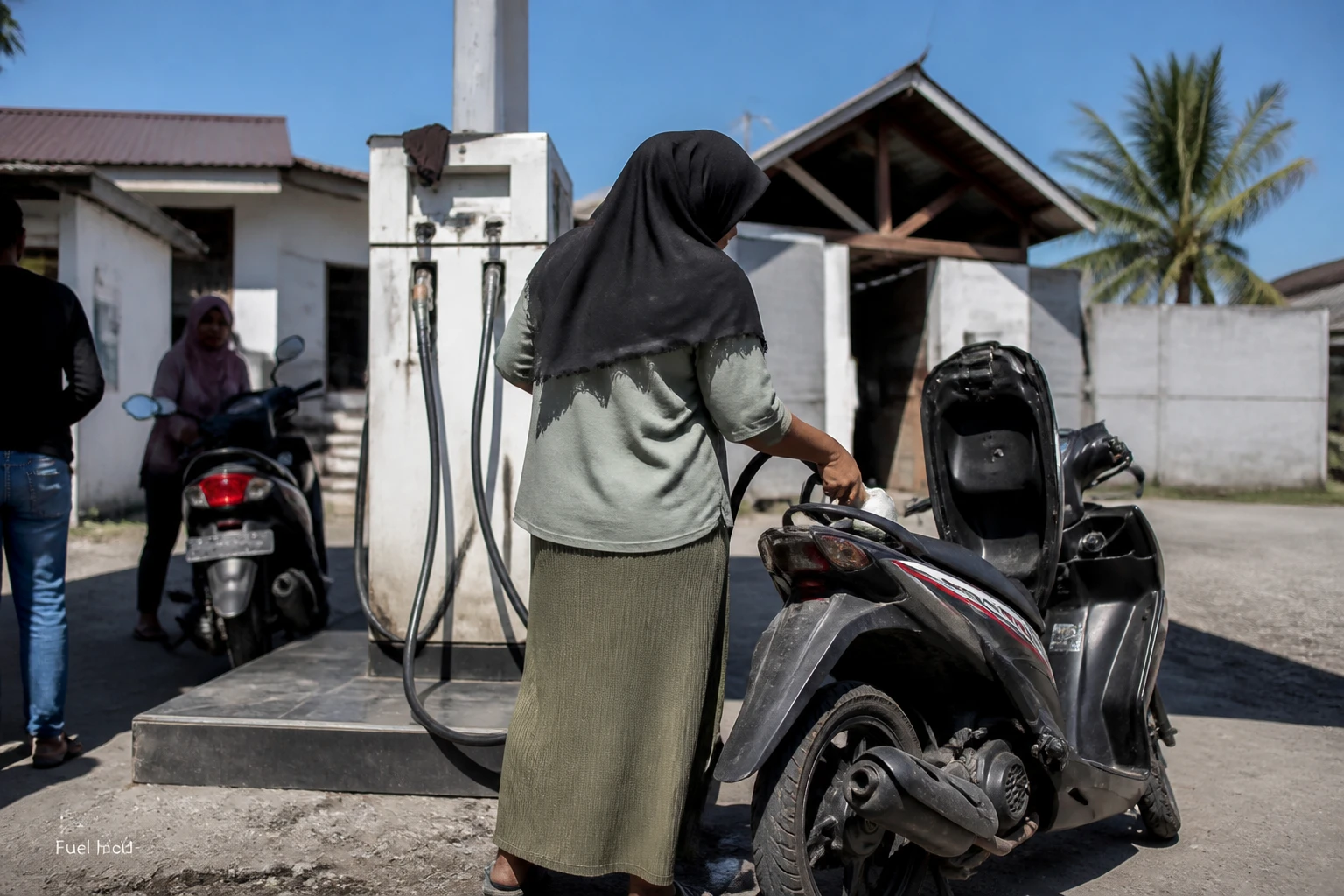
 Indonesia Holds Fuel Prices Steady as the Dollar Tests Household Budgets · Photo by ROMAN ODINTSOV on Pexels
Fuel pricing in Indonesia is never just a technical matter. It sits at the intersection of household affordability, transport costs, subsidy policy and the government’s broader inflation management strategy. When the dollar rises, imported fuel and related inputs become more expensive in local currency terms, even before any changes are made at the pump.
Keeping prices unchanged in that environment offers immediate relief. Motorbike riders, delivery drivers, farmers, small retailers and the informal sector all avoid a sharp jump in operating costs. In a large archipelago economy, that matters: transport costs ripple quickly through food prices, logistics margins and consumer sentiment.
The decision also reflects a recurring policy pattern. Indonesia has often preferred to smooth out energy shocks rather than allow them to be transmitted directly into public life. That approach reduces near-term inflation volatility, but it can also postpone the economic adjustment that higher global energy or currency costs would otherwise force.
The pressure point, as ever, is the exchange rate. A weaker rupiah does not automatically require an increase in regulated fuel prices, but it does make the subsidy burden heavier in real terms. The state can absorb that for a period, yet the arithmetic eventually becomes more demanding if the currency remains under strain.
This is why the move matters beyond Jakarta. For property owners, tourism operators and small businesses in places such as Lombok, the choice to hold fuel prices steady can help preserve demand in the near term. But it should be read as a buffer, not a cure.
Holding fuel prices steady is a social stabiliser, but it is not a substitute for a stronger currency or cleaner subsidy architecture.
The macro context is therefore straightforward, even if the policy trade-offs are not: Indonesia is buying time.
Why It Matters Beyond the Pump
The first-order effect of stable fuel prices is obvious: households and businesses avoid immediate cost inflation. The second-order effects are more important for investors.
When transport and energy costs are kept down, consumer purchasing power is preserved for longer. That supports domestic demand, which in turn can help retail trade, hospitality and discretionary spending. It is one reason policy continuity is often welcomed in markets even when it creates long-run fiscal questions.
For asset owners, the impact can be grouped into three channels:
- Household spending: Lower fuel volatility helps protect disposable income, especially for middle-income consumers.
- Operating costs: Logistics, delivery and construction businesses face less near-term pressure on margins.
- Inflation expectations: A stable pump price can moderate headline inflation and prevent a wider price spiral.
The limits of this effect are equally important. Fuel policy can soften the symptoms of imported inflation, but it cannot fully offset currency weakness. If the rupiah continues to depreciate, the cost of imported goods, equipment, construction materials and travel-related inputs can still rise even when domestic fuel prices stay flat.
For investors who focus on real estate and tourism, that distinction matters. Lombok’s appeal to overseas buyers has been built partly on value: land, labour and operating costs remain far below those in many coastal markets in Europe or Australia. Yet that value proposition depends on a stable operating environment. If currency weakness is managed through subsidies, it may preserve short-term affordability; if it becomes entrenched, it can still erode margins elsewhere in the supply chain.
A simple comparison helps frame the policy choice.
| Policy choice | Short-term effect | Investor implication | |---|---|---| | Fuel prices held unchanged | Lower immediate inflation pressure | Better support for consumption and tourism spending | | Fuel prices raised to reflect costs | Faster price transmission | Higher operating costs, but cleaner fiscal signalling | | Rupiah weakens without price adjustment | Hidden subsidy burden rises | Short-term stability, longer-term fiscal and pricing risk |
The broader lesson is that price stability at the pump is not the same as stability in the economy. It is a useful bridge, especially in a sensitive consumer environment, but it remains a bridge.
The Lombok Angle
For Lombok, fuel pricing is not a side issue. The island’s growth story depends on movement: visitors arriving from Bali and beyond, goods transported from ports and warehouses, and construction materials reaching new villa and hospitality projects.
That is why policy decisions in Jakarta can translate quickly into local sentiment. A stable fuel price helps support the Bali-overflow thesis by keeping travel and operating costs more manageable for the small and mid-sized businesses that underpin the island’s visitor economy. If families and tour operators are not immediately hit by higher petrol or diesel bills, the tourism chain remains more resilient.
This matters because Lombok is still in a phase where demand growth is more fragile than mature resort markets. Tourism has been running 40-50% year on year in some recent comparisons, and arrivals tied to flagship events such as MotoGP have been cited as rising 47% in certain periods. Those are strong numbers, but they are also sensitive to pricing, consumer confidence and accessibility.
Fuel stability supports that ecosystem in practical ways:
- Transfer services can price trips more predictably.
- Restaurants and beach clubs face less immediate pressure on delivery and logistics.
- Small contractors and villa operators can plan maintenance budgets with slightly more confidence.
- Domestic visitors, who are often more price-sensitive than long-haul buyers, are less likely to cut discretionary travel.
This is particularly relevant in South Lombok, where entry points for investors range roughly from €95,000 to €350,000 depending on land position, build quality and proximity to demand nodes. In that segment, thin margins matter. A modest rise in transport, materials or utility-linked costs can change project economics at the margin, especially where yields are expected to fall in the 12-22% range and depend on steady occupancy rather than speculative price inflation.
The airport expansion planned for 2025-26 remains the larger structural story. Better connectivity should deepen the tourism base and improve the island’s investment profile over time. But infrastructure takes years to filter through into pricing power. In the meantime, policies that keep travel affordable help maintain momentum.
The investor question is not whether fuel policy creates growth on its own. It does not. The question is whether it preserves the conditions in which growth can continue. On that basis, the current decision is supportive.
A useful way to read the signal is through risk rather than return.
- If fuel prices had been raised sharply, the near-term risk would be slower tourism demand and weaker consumer sentiment.
- By holding them steady, policymakers reduce that downside, even if they increase fiscal pressure.
- For Lombok-linked assets, that means the immediate operating backdrop is more favourable than it otherwise would have been.
This is where the nuance lies. A stable fuel price does not guarantee stronger yields, but it can help protect the cash flow assumptions behind them.
What This Means for Investors
For investors watching Indonesia from abroad, the most important takeaway is that policy remains supportive of near-term stability. That is good news for consumption, tourism and logistics-heavy sectors, even if it leaves broader macro risks unresolved.
In practical terms, three implications stand out.
First, inflation risk is being managed, not eliminated. Investors should not read unchanged fuel prices as evidence that cost pressures have disappeared. The rupiah remains the more important variable. If currency weakness persists, imported inputs and financing costs can still move against project budgets and operating margins.
Second, tourism assets keep a modest tailwind. Lombok’s value proposition relies on accessible pricing. When transport and local operating costs remain contained, the island remains attractive to both domestic travellers and foreign visitors looking for alternatives to higher-cost markets. That supports occupancy, food and beverage spend, and overall cash generation.
Third, the long game still depends on infrastructure and execution. Fuel policy can protect sentiment, but it cannot substitute for airport upgrades, road improvements, stronger destination branding or disciplined project delivery. Investors should treat policy stability as one layer in a wider investment case, not the case itself.
For those evaluating property in Lombok, the signal is therefore constructive but measured. Stable fuel prices help preserve the consumer and tourism base that underpins demand, while the airport expansion and continuing visitor growth offer the more durable upside. Yet the same environment also reminds investors to price in currency risk, input-cost volatility and the possibility that support policies may not remain unchanged indefinitely.
The best portfolios in this market will be those that underwrite conservatively, choose locations with real demand rather than speculative promise, and assume that policy support is helpful but not guaranteed. In short: Indonesia’s fuel decision is a stabiliser for now, and Lombok investors should treat it as such.
Stay informed, subscribe to the free Lombok Briefing for market intelligence like this, published twice a month.
How does Indonesia's decision to hold fuel prices steady affect property investors in Lombok?
Stable fuel prices help preserve household spending power and reduce near-term cost pressure on logistics, construction and tourism businesses. For Lombok, where growth depends on affordable visitor travel and active construction, the policy supports the short-term investment environment. The article describes it as a buffer, not a cure, and notes it does not offset underlying currency weakness.
What are the risks of Indonesia using fuel subsidies to absorb a weaker rupiah?
Holding pump prices flat when the rupiah depreciates increases the subsidy burden on state finances in real terms. The article notes the arithmetic becomes more demanding if currency strain persists. Imported goods, construction materials and equipment can still rise in price even when fuel prices stay flat, meaning investment margins can erode through other parts of the supply chain.
Why does Indonesian fuel policy matter for Lombok's tourism and hospitality businesses?
Lombok's growth relies on movement: visitors arriving from Bali and beyond, goods transported from ports, and materials reaching villa and hospitality projects. Stable petrol and diesel prices reduce immediate cost pressure on the small and mid-sized businesses that underpin the island's visitor economy, helping keep the tourism chain resilient and supporting what the article calls the Bali-overflow thesis.

The Lombok Buyer's Field Guide
Legal structures ranked by risk, the honest ROI math line by line, all six zones ranked, and the 24-point due-diligence checklist. The whole book, free in your inbox.
See what's inside