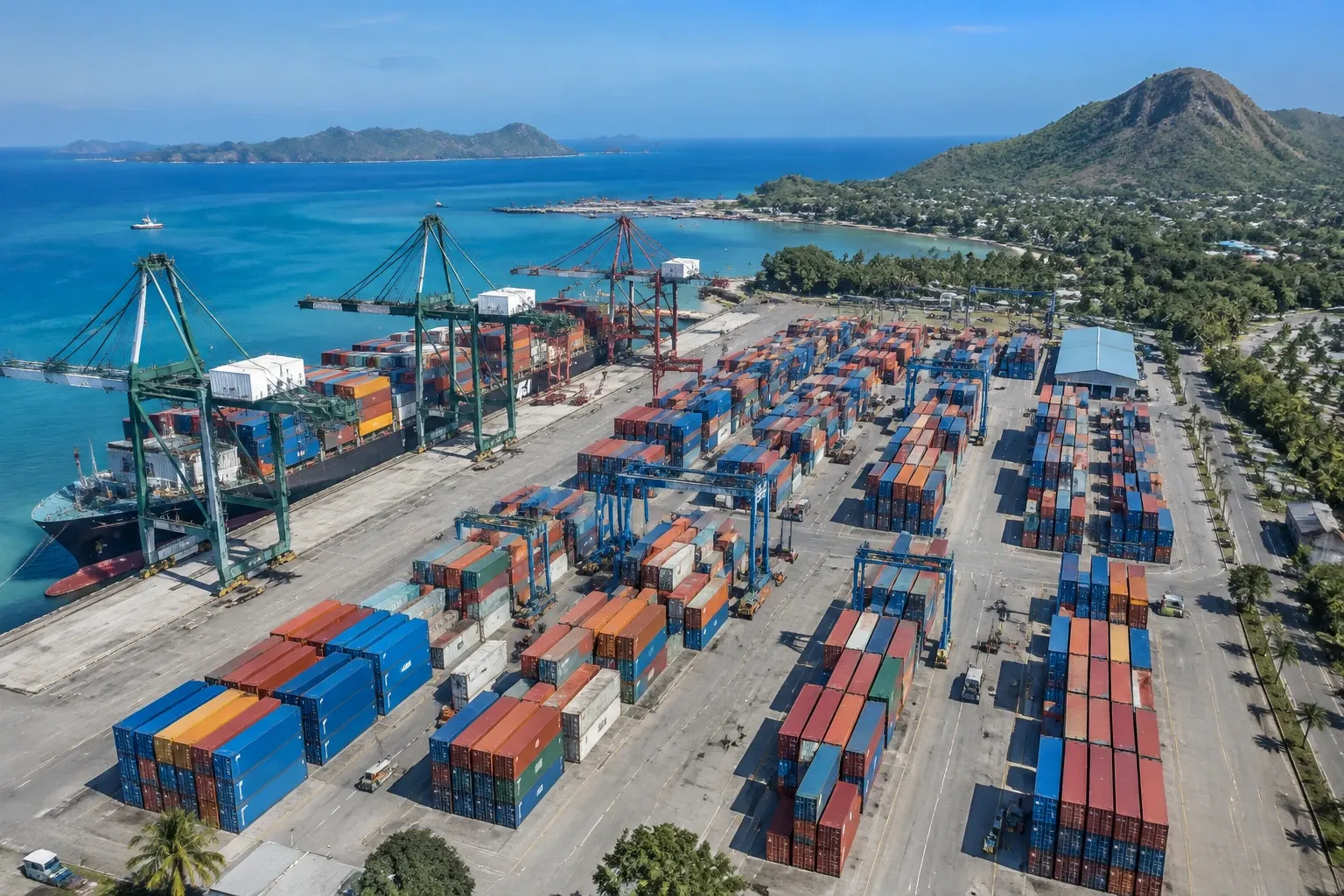
Indonesia and China Open CEPA Talks: Macro Signals for Lombok Investors
President Prabowo Subianto opens exploratory CEPA discussions with Xi Jinping. Here is what deeper Beijing-Jakarta economic ties mean for Indonesian asset markets.
Quick answer: Exploratory talks on a Comprehensive Economic Partnership Agreement (CEPA) between Indonesia and China signal institutional deepening between Jakarta and its largest trading partner. For foreign capital in emerging regions like South Lombok, the initiative reinforces sovereign stability, long-term bilateral investment in transport infrastructure, and sustained momentum in high-value tourism corridors.
Diplomatic summits rarely produce immediate shifts in provincial asset valuations, yet institutional frameworks define the decade-long trajectories of emerging markets. As President Prabowo Subianto prepares for exploratory bilateral discussions with President Xi Jinping on the sidelines of the Asia-Pacific Economic Cooperation (APEC) summit in Shenzhen, cross-border investors should pay close attention to the structural undertones. What begins as preliminary dialogue regarding a bilateral free trade framework reflects a deliberate deepening of economic ties that directly affects capital allocation across the Indonesian archipelago.
The Context
Trade and diplomatic relations between Jakarta and Beijing have expanded steadily over the past two decades, yet an overarching bilateral agreement has remained conspicuously absent. China stands as Indonesia's largest trading partner by a substantial margin, but existing commercial exchanges have relied entirely on multilateral architecture. Specifically, Indonesian commerce with China operates under the ASEAN-China Free Trade Area (ACFTA), established in 2005, and the broader Regional Comprehensive Economic Partnership (RCEP), signed in 2020 alongside partners such as Australia, Japan, South Korea, and New Zealand.
According to Santo Darmosumarto, Director General for Asia Pacific and Africa at the Indonesian Foreign Ministry, the discussions scheduled for 18-19 November represent the foundational phase of a potential Comprehensive Economic Partnership Agreement (CEPA). The immediate objective is not to finalise terms, but to establish formal dialogue and confirm political goodwill between the two administrations. While existing multilateral pacts lower tariff barriers on merchandise, a bespoke bilateral CEPA typically incorporates investment protection chapters, streamlined customs processing, capital mobility provisions, and institutional cooperation across strategic sectors.
"On the CEPA with China, I think what will be discussed is the agreement to start the discussion or dialogue about the plan to establish a CEPA. So, it has not taken shape at the moment, but there is goodwill from both sides to talk.", Santo Darmosumarto, Director General for Asia Pacific and Africa, Ministry of Foreign Affairs.
For international capital, the timing of these talks illustrates continuity in Indonesian statecraft. Under President Prabowo, Jakarta continues to balance its traditional non-aligned foreign policy with pragmatic economic diplomacy. Deepening ties with the world's second-largest economy provides both a buffer against global volatility and a direct pipeline for infrastructure funding, which remains the primary catalyst for decentralising economic growth beyond Java.
Bilateral Realignment and Institutional Frameworks
To understand the significance of a potential CEPA, one must evaluate the limitations of existing frameworks. While RCEP represents the largest free trade area globally, its expansive multilateral nature means concessions are often negotiated to the lowest common denominator among fifteen participating states. A dedicated bilateral CEPA allows Jakarta and Beijing to design bespoke mechanisms covering non-tariff barriers, bilateral currency settlements, intellectual property, and direct foreign investment regulations.
Historically, Chinese foreign direct investment (FDI) in Indonesia has concentrated heavily on natural resource extraction, mineral processing, and major industrial hubs. However, state-level economic partnerships inevitably influence broader commercial sentiment, sovereign credit ratings, and logistical integration. When bilateral trade agreements mature, institutional risk premiums fall. This trend creates a more predictable operating environment for international business entities navigating Indonesian corporate law.
| Agreement / Framework | Inception Year | Core Focus | Direct Relevance to Western Capital | | :--- | :--- | :--- | :--- | | ACFTA | 2005 | Multilateral tariff reduction | Lowered baseline trade friction across ASEAN | | RCEP | 2020 | Regional supply chain integration | Standardised rules of origin across 15 nations | | Proposed Bilateral CEPA | In Discussion | Investment protection, services, bilateral flow | Enhanced capital security and infrastructure financing |
For Western family offices and private investors, enhanced institutional stability between Jakarta and Beijing offers two distinct advantages. First, sustained macroeconomic growth supports the Indonesian rupiah (currently hovering near Rp 16,500 per USD), reducing foreign exchange volatility for offshore assets. Second, large-scale bilateral capital commitments accelerate regional civil infrastructure, including airport expansions, toll networks, and renewable power grids, which directly unlock remote tourist destinations.
 Indonesia and China Open CEPA Talks · Photo by Andrea Musto on Pexels
Foreign Capital, Tourism Corridors, and Regional Assets
Macroeconomic agreements produce tangible outcomes at the provincial level by lowering the cost of infrastructure development and expanding visitor catchment zones. In West Nusa Tenggara, South Lombok has become a primary beneficiary of national decentralisation policies. The region's flagship development, the Mandalika Special Economic Zone (SEZ) surrounding the international MotoGP circuit, reflects how state-backed transport infrastructure catalyses private hospitality investment.
Foreign arrivals across prime Indonesian destinations have experienced a 40-50% year-on-year increase, driven by broader post-pandemic tourism recovery and high-profile sporting events. As central authorities secure greater bilateral trade stability, secondary tourism nodes benefit from enhanced international flight connectivity and corporate sponsorship. Prime tourist-zone land in South Lombok currently trades at approximately Rp 150-400 million per are (1 are = 100 m²), representing roughly USD 90-240 per square metre at prevailing exchange rates. By comparison, mature enclaves in Bali command approximately USD 200-500 per square metre, with turnkey investment-grade villas in Bali commanding USD 400,000-800,000.
- Land valuation arbitrage: While prime land in Kuta, South Lombok commands Rp 300-400 million per are, peripheral growth corridors such as Mandalika trade between Rp 100-150 million per are (~$6,100-9,100/are).
- Asset entry thresholds: Turnkey investment-grade villas in South Lombok range between EUR 95,000 and EUR 350,000, offering an accessible point of entry relative to saturated regional markets.
- Yield reality: Realistic, stabilised net rental yields for professionally managed hospitality assets range from 7% to 12% after accounting for management fees (18-22%) and online travel agent commissions (15-20%). While developer marketing materials frequently cite gross returns of 12-22%, stabilised net figures require disciplined accounting based on projected 55-70% occupancy rates.
Capital inflows resulting from stable macroeconomic governance create an enabling environment for private developers. However, institutional sophistication must be matched by rigorous legal structuring on the ground. Regardless of international bilateral treaties, foreign investors cannot acquire freehold land titles (Hak Milik / SHM) under Indonesian law. Legitimate acquisition routes remain strictly limited to long-term leaseholds (Hak Sewa), personal right-to-use titles (Hak Pakai), or a corporate structure via a foreign-owned investment company (PT PMA) holding a right-to-build title (Hak Guna Bangunan / HGB).
What This Means for Investors
The initiation of CEPA discussions between Jakarta and Beijing confirms that Indonesia's leadership remains committed to pragmatic economic expansion and institutional modernisation. For private wealth and boutique real estate funds evaluating Southeast Asia, several strategic implications emerge:
- Sovereign risk stability: Formal trade dialogue between leading regional powers reduces systemic geopolitical friction and underpins national currency stability, safeguarding capital deployed into Indonesian legal entities.
- Infrastructure continuity: Bilateral cooperation expedites state expenditure on strategic transport assets, reinforcing the connectivity of secondary lifestyle markets like Lombok to international gateways.
- Prudent capital positioning: Rather than chasing developer projections of 12-22% gross returns, sophisticated buyers should anchor their business models around defensible net yields of 7-12%, factoring in 18-22% local management fees and 55-70% occupancy assumptions.
- Uncompromised title compliance: Macroeconomic progress does not alter constitutional property limits. Investors must avoid illegal nominee arrangements and secure valid leasehold or PT PMA HGB titles via certified land deed officials (PPAT) registered with the national land agency (BPN).
As President Prabowo and President Xi establish the foundations for bilateral trade integration in Shenzhen, the broader trajectory of the Indonesian economy remains one of disciplined growth. Investors who combine macroeconomic context with conservative financial modelling and rigorous local title due diligence will find substantial long-term value across Indonesia's emerging coastal frontiers.
Stay informed: subscribe to the free Lombok Briefing, published twice a month (the 1st and 15th), for market intelligence like this.
What is the purpose of the proposed Indonesia-China CEPA?
The bilateral CEPA aims to build on multilateral agreements like RCEP, establishing formal dialogue to reduce non-tariff barriers, improve investment protections, and streamline economic cooperation between Indonesia and China.
How do bilateral trade agreements impact Lombok real estate?
Macroeconomic agreements support sovereign credit stability, underpin currency valuation, and encourage transport infrastructure investment, directly improving international accessibility and long-term liquidity for emerging hospitality corridors in South Lombok.
Can foreign investors buy freehold land under new trade agreements?
No. Indonesian agrarian law reserves freehold ownership (Hak Milik) exclusively for citizens. Foreign investors must utilise long-term leasehold (Hak Sewa), Hak Pakai, or a PT PMA foreign-owned entity holding Hak Guna Bangunan (HGB) titles.

The Lombok Buyer's Field Guide
Legal structures ranked by risk, the honest ROI math line by line, all six zones ranked, and the 24-point due-diligence checklist. The whole book, free in your inbox.
See what's inside