Indonesia’s Bali diversification push opens new tourism capital lanes
Jakarta is widening the tourism map beyond Bali, signalling a new investment cycle for qualified capital in priority destinations and service infrastructure.
Indonesia has renewed its push to steer tourism capital beyond Bali, and that matters now because policy is starting to follow demand. In a market where investors have long treated Bali as the default entry point, the message from Jakarta is clear: the next wave of growth is being engineered elsewhere, with greater emphasis on sustainable, regulated and geographically diversified development.
For property and hospitality investors, this is more than a slogan. It is a sign that the state wants to redirect private capital towards a broader set of destinations, from established names such as Mandalika and Labuan Bajo to newer demand corridors that can absorb spillover from Bali's still-dominant tourism engine.
The Context
The Indonesian Tourism Ministry used its Investor Roundtable 2026 in Bali to reinforce a simple but important policy line: the country is not just Bali. Tourism Minister Widiyanti Putri Wardhana said Indonesia has multiple destinations with significant investment potential and called for responsible, sustainable development beyond the island's crowded core.
The timing is significant. Indonesia recorded 15.39 million international tourist arrivals in 2025, with Bali accounting for nearly seven million of those visits, according to the ministry. That concentration is precisely what policymakers want to loosen. The ministry is now promoting 13 special tourism destinations as future centres of economic growth, alongside priority and regenerative destination frameworks designed to spread benefits more evenly across the archipelago.
“Indonesia is not just Bali. We have numerous top destinations with vast tourist and investment potential.”
The roundtable also exposed the practical side of the policy shift. Officials said the government wants to hear directly from investors, regional administrations, associations and tourism operators about what slows projects down. That is a notable change in tone: not just a promotional campaign, but an attempt to remove bottlenecks, improve permitting discipline and align private capital with public infrastructure planning.
For Lombok readers, the subtext is clear. South Lombok has already been positioned in the market as an entry band roughly between €95,000 and €350,000, with yields often marketed in the 12-22% range. If Jakarta is serious about moving tourism growth outside Bali, destinations in West Nusa Tenggara are no longer peripheral. They are central to the diversification thesis.
What the Government Is Actually Building
This is not a vague destination marketing exercise. The ministry has named specific priority zones and regulatory tools that point to a more structured investment map. The biggest immediate implication is that tourism growth is increasingly being tied to destination classification, permit oversight and investment readiness rather than to opportunistic land banking.
The ministry's list includes 10 priority destinations and three regenerative destinations. The priority set comprises:
- Lake Toba
- Borobudur
- Mandalika
- Labuan Bajo
- Likupang
- Tanjung Kelayang
- Bromo Tengger Semeru
- Wakatobi
- Morotai
- Raja Ampat
The regenerative destinations are Bali, Jakarta and the Riau Islands.
That distinction matters. Priority destinations are being positioned as future growth engines. Regenerative destinations are being asked to improve quality, resilience and sustainability. In practical terms, this means Indonesia is trying to do two things at once: decongest mature destinations and uplift secondary ones.
A useful way to read this is through supply, not just demand.
| Policy signal | Investor implication | |---|---| | Diversify beyond Bali | Capital may find fewer bargains in Bali and more upside in emerging nodes | | Promote 13 special tourism destinations | Better alignment between tourism strategy and local infrastructure spending | | Verify accommodation permits via API | Higher compliance standards and less tolerance for grey-market supply | | Focus on sustainable and authentic tourism | Stronger tailwinds for wellness, boutique hospitality and low-density projects |
The proposed verification system for accommodation platforms is also important. By using an application programming interface to check whether listings comply with permit requirements, the ministry is signalling a tougher stance on unlicensed supply. For investors, that is both a risk and an opportunity. Short-term operators without proper documentation may face pressure, but formally structured projects with clean title and proper approvals should benefit from a tighter market.
There is also a broader regional macro pattern at work. Bali is already operating as a powerful magnet, but that very success pushes capital outward. The island remains the benchmark, yet the investment story increasingly depends on whether neighbouring regions can capture overflow demand. That is where Lombok's positioning becomes relevant. With airport expansion expected in 2025-26, MotoGP-linked arrivals up 47%, and tourism growth across parts of West Nusa Tenggara running 40-50% year on year in some reporting periods, the spillover case is becoming more credible rather than less.
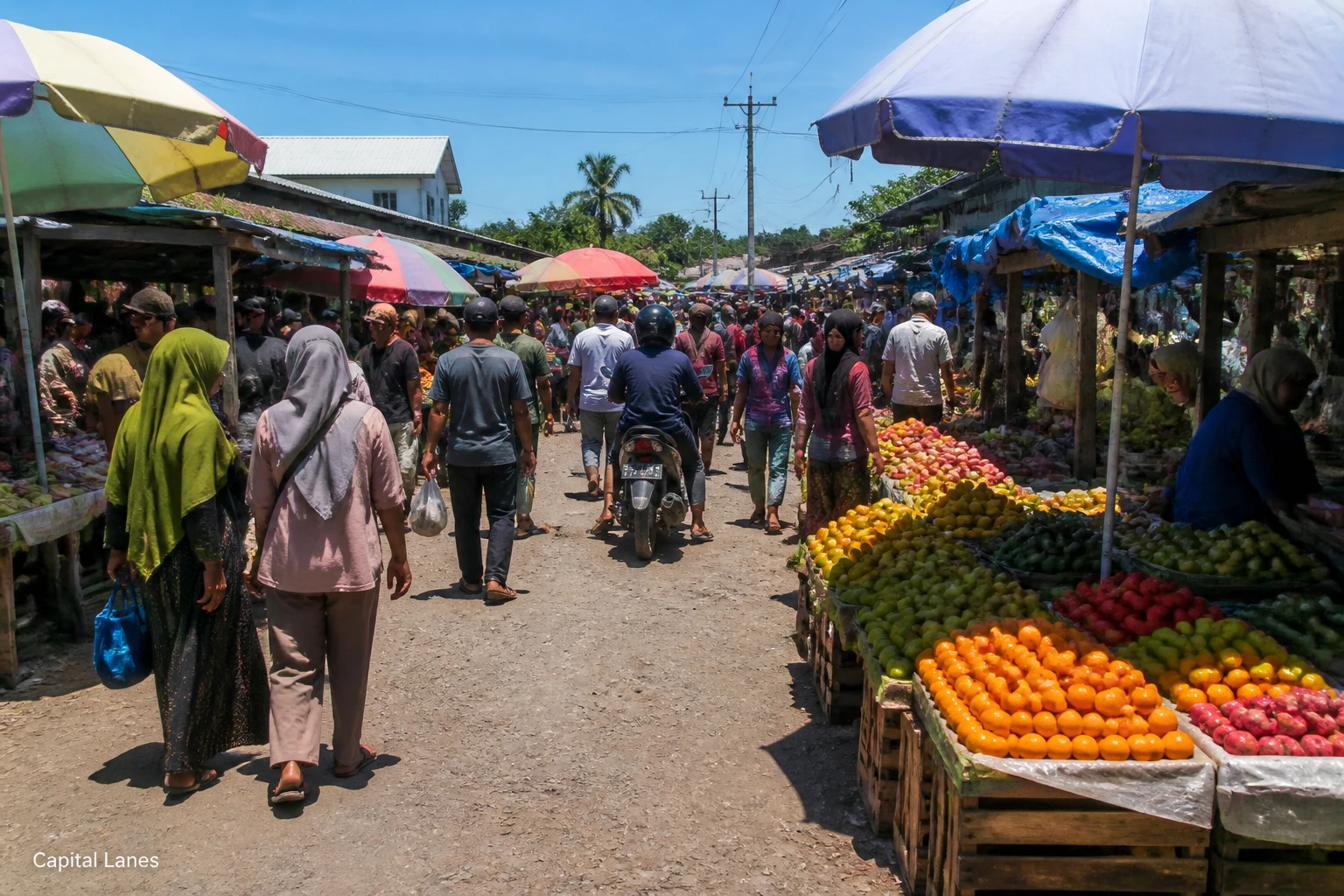
 Indonesia’s Bali diversification push opens new tourism capital lanes · Photo by Tom Fisk on Pexels
Why This Matters for Market Structure
The interesting part of this dispatch is not only the destination list. It is the implied market structure that follows if the policy sticks.
First, tourism investment becomes more selective. The era of assuming any Bali-adjacent asset will outperform may be ending. Capital is likely to favour places that combine access, planning visibility and a credible operator base. That includes nodes with airport connectivity, event-led demand and a clearer path to formalisation.
Second, the winners may be those that can combine hospitality with residential demand. In markets like South Lombok, the most compelling assets are often not pure hotels but mixed-use villas, serviced villas and carefully managed branded units. These capture tourist demand while preserving optionality if the local market matures.
Third, public policy is increasingly shaping private returns. When a ministry emphasises sustainability, wellness tourism and authentic experiences, it narrows the investable thesis. The result is not necessarily lower returns; it is likely higher dispersion. Well-located, correctly permitted projects should command a premium. Poorly structured ones may be crowded out.
Fourth, the Bali overflow thesis remains the most important structural backdrop. Bali is not being replaced. It is being used as the benchmark that others must now complement. For investors, that means the opportunity is not in trying to copy Bali at scale, but in identifying regions that can absorb demand leakage from Bali without inheriting its congestion.
The policy shift is not about abandoning Bali. It is about building a second and third tier of tourism growth that can take pressure off the island while widening the investable map.
What This Means for Investors
For investors in Europe, Australia and the United States, this is a dispatch about timing and selectivity. Indonesia is signalling that tourism capital will be welcomed outside Bali, but only in forms that match the government's broader priorities: sustainability, legality, destination quality and regional spread.
That creates three immediate implications.
- Expect greater interest in priority destinations with strong infrastructure narratives, especially Mandalika and the wider Lombok corridor.
- Expect formal compliance to matter more, especially around permits, accommodation licensing and digital platform verification.
- Expect demand for smaller, higher-quality assets rather than large speculative land plays with weak execution paths.
For Lombok specifically, the message is constructive. The island sits at the intersection of policy, infrastructure and spillover demand. It is close enough to Bali to benefit from overflow, yet distinct enough to build its own identity around beaches, wellness, surf and premium low-density living. If government rhetoric is followed by permit discipline and infrastructure delivery, the gap between rhetoric and asset performance could narrow quickly.
For now, the safest conclusion is that Indonesia is making a strategic bet on tourism diversification, and capital that understands the shift early is likely to be better positioned than capital that waits for the headline cycle to finish.
Stay informed, subscribe to the free Lombok Briefing for market intelligence like this, published twice a month.
Which destinations has Indonesia named as tourism investment priorities outside Bali?
Indonesia's Tourism Ministry has designated 10 priority destinations: Lake Toba, Borobudur, Mandalika, Labuan Bajo, Likupang, Tanjung Kelayang, Bromo Tengger Semeru, Wakatobi, Morotai, and Raja Ampat. Bali, Jakarta and the Riau Islands are separately classified as regenerative destinations, meaning policy there focuses on quality and sustainability rather than new growth capacity.
What does Indonesia's Bali diversification policy mean for property investors in Lombok?
Indonesia recorded 15.39 million international tourist arrivals in 2025, with nearly seven million concentrated in Bali. Government policy is now actively redirecting capital toward secondary destinations, including Mandalika. South Lombok property entry sits roughly between €95,000 and €350,000, with yields often marketed at 12 to 22%. MotoGP-linked arrivals are up 47%, and tourism growth across parts of West Nusa Tenggara is running 40 to 50% year on year.
Why is Indonesia introducing API-based permit verification for accommodation platforms?
The Tourism Ministry is using an application programming interface to check whether accommodation listings comply with permit requirements, signalling a tougher stance on unlicensed supply. Short-term operators without proper documentation may face increased pressure. Formally structured projects with clean title and correct approvals are expected to benefit from reduced competition from grey-market supply.

The Lombok Buyer's Field Guide
Legal structures ranked by risk, the honest ROI math line by line, all six zones ranked, and the 24-point due-diligence checklist. The whole book, free in your inbox.
See what's inside