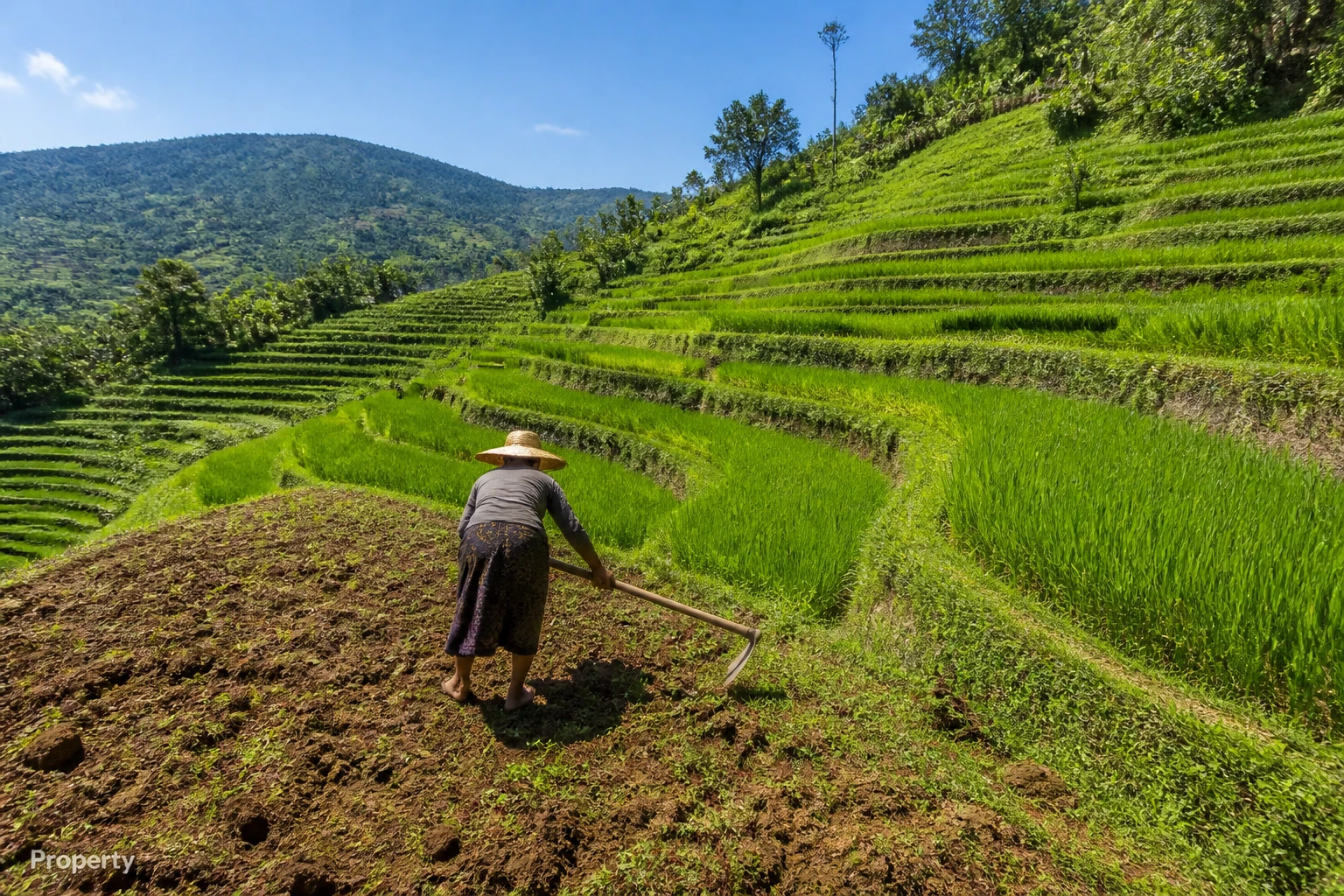
Green-zone and agricultural land in Lombok: can you build on it?
Agricultural and green-zone land in Lombok is heavily protected under Indonesia's spatial planning law. You can build on it only if the plot falls outside LP2B protected farmland and you obtain a land-use conversion permit, a process that is slow and frequently denied. Many cheap rural plots cannot
Quick answer: Agricultural and green-zone land in Lombok is heavily protected under Indonesia's spatial planning law. You can build on it only if the plot falls outside LP2B protected farmland and you obtain a land-use conversion permit, a process that is slow and frequently denied. Many cheap rural plots cannot legally be built on at all.
What the RTRW spatial plan means for your purchase
Every regency in Indonesia publishes a Rencana Tata Ruang Wilayah (RTRW), the master spatial plan that determines what each parcel of land may legally be used for. In Central Lombok and the southern coastal belt, the RTRW divides land broadly into settlement zones (kawasan permukiman), tourism zones (kawasan pariwisata), conservation areas, and agricultural zones. The last category is the one that most often catches foreign buyers off guard.
If a plot sits inside an agricultural zone on the RTRW map, constructing a villa, guesthouse, or any commercial building on it requires the regency government to formally reclassify the land's designated use. That reclassification is not automatic, not cheap, and not guaranteed.
A separate document, the RDTR (Rencana Detail Tata Ruang), provides block-level zoning detail in areas where it has been adopted. South Lombok's tourism corridors around Kuta and Mandalika are progressively being covered by RDTR updates, which is one reason prime-zone land there commands Rp 300-400 million per are while plots a few kilometres inland can be offered for Rp 30-50 million per are. The price gap is not merely about distance from the beach. Much of it reflects confirmed legality of use.
Before you read any low price as a bargain, verify the land title and zoning records carefully.
LP2B: the protected farmland layer you cannot negotiate around
Within the agricultural-zone category, the most restrictive subset is LP2B, Lahan Pertanian Pangan Berkelanjutan, meaning permanently protected sustainable food-crop land. LP2B parcels are designated under national Law No. 41 of 2009 on the Protection of Sustainable Agricultural Land, which gives the central government, not just the regency, a binding say in any proposed conversion.
LP2B land that is irrigated (sawah irigasi) is the hardest category of all. Indonesia treats it as a food-security reserve, and the Ministry of Agriculture must approve any reclassification. In practice, approved conversions for private villa development are extremely rare and tend to drag on for years without resolution. Several projects in Lombok have stalled indefinitely at this stage, leaving investors with land they cannot use and struggle to resell.
If a seller describes a cheap green plot as "easy to convert" or claims a verbal understanding with local officials, treat that as a red flag rather than a selling point.
The conversion process, and why it usually fails
For agricultural land that is not LP2B classified, a buyer can apply for an Izin Perubahan Penggunaan Lahan (IPPL), a land-use change permit, at the regency level. The general steps are: obtain a land suitability recommendation (rekomendasi kesesuaian tata ruang), submit an environmental assessment where required, pay the applicable conversion fees, and await regency approval.
Even for non-LP2B agricultural land, this process commonly takes 12 to 36 months. Approval depends on local spatial planning priorities that can shift with every government cycle, and there is no legal entitlement to a positive outcome. Once zoning is changed, you will still need a PBG building permit before any construction can begin. The PBG replaced the old IMB system from 2021 onwards; the process is covered in detail in the guide on building permits in Lombok.
Buying agricultural land and banking on a conversion is a speculative development wager, not a conventional property investment. The risk is asymmetric: if conversion is denied, you hold land you cannot develop and cannot easily resell to another foreign buyer who faces exactly the same legal constraint.
Why a cheap green plot is a trap for foreign buyers
Plots in agricultural or green zones regularly appear on informal listings at prices that look extraordinary. Land in emerging areas such as Bumbang can genuinely be offered at Rp 30-50 million per are, but so can the legal constraint that makes building on it impossible. For comparison, established tourism-zone land in Kuta sits at Rp 300-400 million per are precisely because the right to build a rentable villa is already confirmed and documented.
For a foreign buyer, the risk compounds further. Foreigners cannot hold freehold title (Hak Milik, which is reserved for Indonesian citizens) and typically access land via leasehold (Hak Sewa) or through a PT PMA foreign-owned company. A leasehold over agricultural land that cannot be converted means paying for decades of rights over something you may only ever use as farmland. A PT PMA holding agricultural land is permitted under certain agri-business classifications, but villa construction requires a zone change first.
The combination of uncertain zoning status, long conversion timelines, and restricted foreign tenure means that cheap green plots can immobilise capital in an illiquid, unbuildable asset. This is one of the most common and costly mistakes that a thorough due diligence process in Lombok is designed to surface before you sign anything.
HubLombok is the editorial arm of Samudra Villas, which develops in the tourism-zoned corridor of Are Guling where plots carry confirmed build rights. That background informs our reporting, but the zoning rules described here apply equally to every buyer in South Lombok regardless of who advises them.
Practical steps before you make any offer
- Request the RTRW zone classification from the seller and cross-check it independently at the regency planning office (Dinas PUPR or Bappeda). Do not rely on the seller's own description.
- Ask specifically whether the parcel appears in the LP2B register. This record is maintained at regency level and can be verified by a licensed professional.
- Do not accept verbal conversion promises. If zoning reclassification is genuinely underway, there will be written documentation from the relevant government office.
- Budget for realistic timelines. If conversion is plausible at all, factor in at least one to three years before you could break ground, with no guarantee of a positive decision.
- Engage a licensed PPAT notary and a due diligence adviser who can read the full certificate history, zoning overlays, spatial plan map, and any encumbrances before you commit.
Cheap land is not the same as affordable opportunity. Understanding the legal layer before you negotiate is the only way to tell the difference.
What is LP2B land and can a foreign buyer build on it?
LP2B (Lahan Pertanian Pangan Berkelanjutan) is permanently protected food-crop land designated under Indonesian national law. Converting it for villa or tourist accommodation development requires central government approval and is extremely rarely granted for private residential projects. Foreign buyers should treat any LP2B-classified parcel as effectively unbuildable for tourism or villa purposes unless they have written, verified evidence of an approved conversion.
How do I check whether a Lombok plot is in an agricultural or green zone?
Request the RTRW zone classification from the seller, then verify it independently at the regency planning office (Dinas PUPR or Bappeda). Also ask whether the parcel appears in the LP2B register, which is maintained at regency level. A licensed PPAT notary or specialist due diligence adviser can obtain and cross-check these records before you commit to any deposit or purchase agreement.
How long does agricultural land conversion take in Lombok, and is it worth attempting?
For non-LP2B agricultural land, the land-use change permit (IPPL) process typically takes 12 to 36 months and depends on regency priorities that can change between government administrations, with no guaranteed outcome. LP2B conversion requires national-level approval and is extremely rarely granted for private villa development. Buyers should treat conversion as a speculative development exercise rather than a routine step in a property purchase.

The Lombok Buyer's Field Guide
Legal structures ranked by risk, the honest ROI math line by line, all six zones ranked, and the 24-point due-diligence checklist. The whole book, free in your inbox.
See what's inside