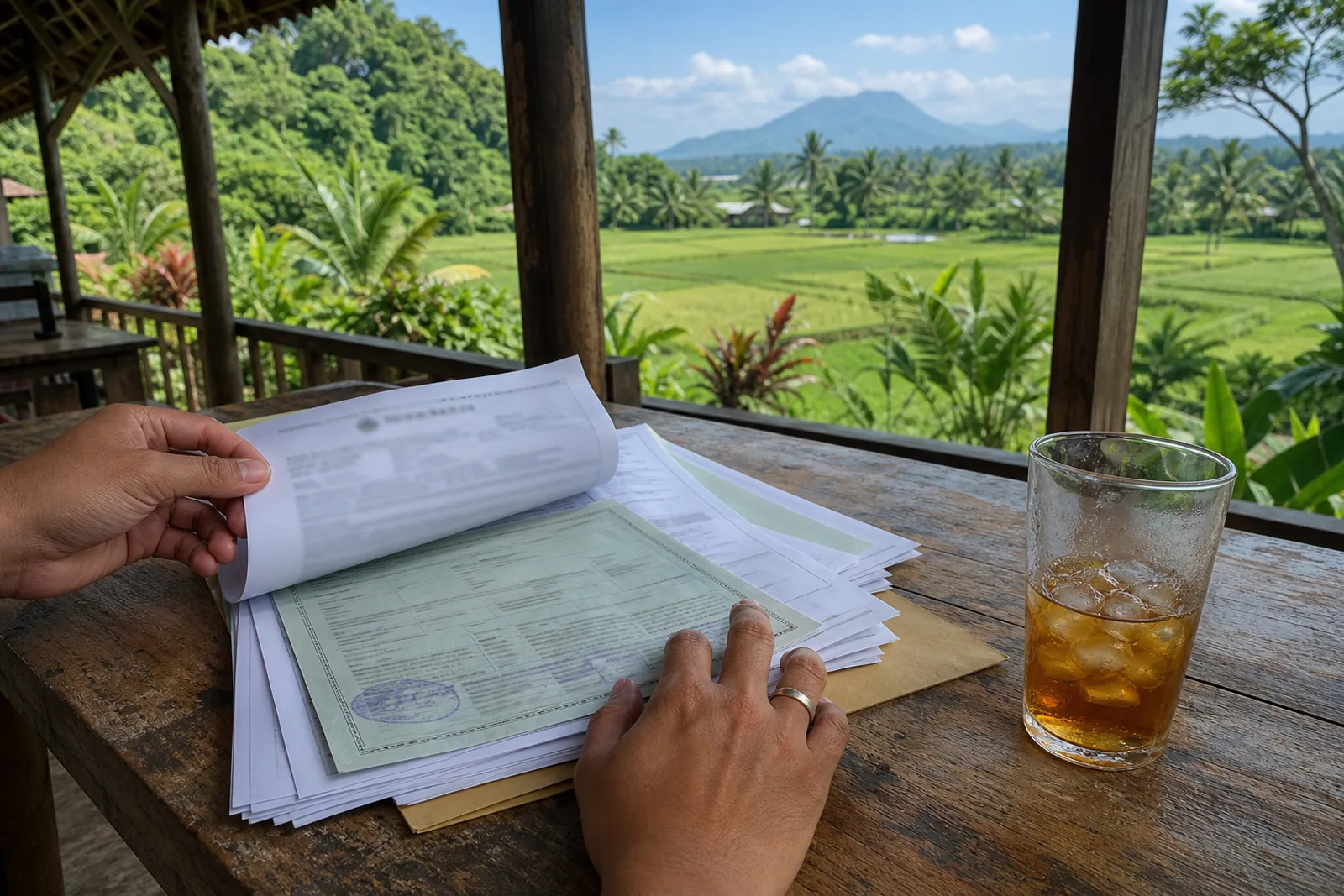
NTB Focus Group Puts Risk-Based Licensing in Focus for Investors
NTB’s investment agency has highlighted risk-based licensing reforms and OSS guidance, underlining the value of careful compliance for Lombok investors.
Indonesia’s evolving business-licensing framework is again in focus in West Nusa Tenggara. For investors considering a Lombok operating business or a foreign-owned property structure, the message is less about a single administrative event than about the importance of understanding the route from investment plan to compliant operation.
On 9 July 2026, the West Nusa Tenggara Province Investment and One-Stop Integrated Services Agency (DPMPTSP NTB) held a focus group discussion in Mataram on risk-based business licensing. The agency said the event was intended to give businesses and stakeholders a fuller understanding of the latest policy direction.
A policy discussion with practical relevance
The discussion was opened virtually by Dr Riyatno, Deputy for Investment Climate Development at Indonesia’s Ministry of Investment and Downstreaming/BKPM. According to the official DPMPTSP NTB account, he described regulatory refinement as part of the government’s effort to create a more conducive investment climate in support of the Indonesia Emas 2045 vision.
The reforms referenced at the event include Government Regulation No. 28 of 2025 and Ministry of Investment and Downstreaming Regulation No. 5 of 2025. The source characterises these measures as refinements to earlier provisions within Indonesia’s risk-based business-licensing regime.
The stated reform agenda includes simplifying the regulatory structure, optimising the Online Single Submission (OSS) system and refining technical provisions to provide greater certainty and ease of doing business.
For international investors, this matters because licensing is rarely an isolated procedural concern. The appropriate permissions, corporate structure and documentation depend on the nature of the asset and the intended activity. A villa acquired for private use, a rental operation and a development project can involve materially different compliance questions.
That is particularly relevant in Lombok, where the investment case increasingly spans hospitality, property development and tourism-linked services. Regulatory clarity does not eliminate execution risk; it does, however, make it more important to establish the correct framework before capital is committed.
OSS and the implementation gap
H. Irnadi Kusuma, head of DPMPTSP NTB, said that members of the public still face many questions and obstacles in using OSS and navigating the business-licensing process. In his account, these issues are not always caused by the system itself. They can also arise from limited understanding of regulations and from policy changes that continue to develop.
This is an important distinction for foreign buyers and operators. An online platform can streamline filings, but it cannot substitute for accurate underlying information, appropriate legal advice or a clear assessment of the intended business model. Digital administration may reduce friction; it does not make a transaction self-executing.
Investors should therefore treat OSS as part of a wider compliance process rather than a final checkpoint. The central questions remain familiar: what right is being acquired, who will hold it, what activity will be undertaken, and which approvals are required for that activity?
Foreign ownership: the structure comes first
Indonesia’s land rules require particular care. Foreigners cannot hold freehold, known as Hak Milik or SHM; it is reserved for Indonesian citizens. Investors instead generally consider one of several lawful routes:
- Leasehold (Hak Sewa): typically 25-30 years, with extensions.
- Hak Pakai: a personal right-to-use structure that requires KITAS or KITAP residency.
- PT PMA: a foreign-owned company that can hold Hak Guna Bangunan (HGB), with a 30-year term that can be extended.
Nominee arrangements, in which an Indonesian party holds freehold on behalf of a foreign buyer, are illegal and void in court. They may appear to offer a shortcut, but they introduce a legal vulnerability that serious investors should not accept.
The other practical components also need to be addressed early. Buyer transfer duty, BPHTB, is about 5% of assessed value, while annual land-and-building tax, PBB, is modest. Property deeds are executed by a licensed PPAT notary; the deed of sale is known as an AJB, and the land agency is BPN.
For a buyer unfamiliar with the Indonesian process, independent diligence is therefore not a luxury. TerraNusa Advisory, HubLombok’s legal and notary advisory partner, supports foreign buyers with due diligence on SHM and HGB certificates, ownership history, zoning and encumbrances, as well as PT PMA setup, relevant taxes, deeds and title transfer at BPN. Its role is to oversee the chain of work rather than merely the deed stage.
Why this matters in South Lombok
South Lombok’s appeal rests partly on an earlier-cycle price point relative to Bali, but that opportunity does not reduce the need for disciplined execution. Turnkey investment-grade villas in South Lombok have an entry range of EUR 95,000-350,000, while comparable Bali specifications are cited at USD 400,000-800,000.
Land values also vary sharply by location. In Are Guling, where developments like Samudra Villas in Are Guling, South Lombok are active, authoritative land prices are Rp 120-180 million per are, approximately USD 7,300-10,900 per are. Kuta, the demand and liquidity leader, is priced at Rp 300-400 million per are, approximately USD 18,200-24,200 per are.
One are equals 100 square metres. In Lombok, land should be assessed and compared using the local convention of price per are.
The market’s potential returns should likewise be framed conservatively. Honest net rental yields are generally 7-12% after management fees and realistic occupancy, while top-performing assets can reach around 15% net. Developer-quoted gross yields of 12-22% exclude important costs and should not be confused with net income.
What this means for investors
The NTB discussion does not announce a specific new investment programme or guarantee a smoother process for any individual transaction. Its significance is more grounded: provincial and national officials are continuing to explain and refine a risk-based licensing framework, while acknowledging that users still encounter uncertainty.
For investors, the sensible response is procedural discipline:
- Define the intended use of the property or business before selecting the ownership structure.
- Use lawful foreign-ownership routes rather than nominee arrangements.
- Confirm zoning, certificate history and encumbrances before signing or transferring funds.
- Separate headline gross-yield marketing from realistic net-return analysis.
- Ensure OSS-related requirements are considered alongside, rather than instead of, legal and notarial due diligence.
Lombok’s investment proposition remains linked to the broader Bali-overflow thesis: rising Bali prices and congestion can push demand towards a less expensive, earlier-cycle market. But the quality of an investment will ultimately depend on the asset, the operating plan and the legal structure chosen to support it.
As licensing rules and their implementation continue to develop, well-prepared investors will be better placed to turn administrative complexity into a manageable part of the investment process.
Stay informed, subscribe to the free Lombok Briefing for analysis like this, published twice a month.
What did the NTB risk-based licensing focus group cover?
DPMPTSP NTB said the 9 July 2026 discussion in Mataram aimed to improve understanding of risk-based business licensing. Officials referenced Government Regulation No. 28 of 2025, Ministry Regulation No. 5 of 2025 and continued optimisation of the OSS system.
Can a foreign investor own freehold land in Lombok?
No. Foreigners cannot hold Indonesian freehold, known as Hak Milik or SHM, which is reserved for citizens. Lawful alternatives include leasehold, Hak Pakai for eligible residents, and a PT PMA holding HGB with a 30-year term that can be extended.
Why should OSS not be the only compliance check for a Lombok investment?
OSS is part of the licensing process, but DPMPTSP NTB noted that users still face questions related to regulations and changing policy. Investors should also verify the ownership structure, zoning, certificate history, encumbrances, tax obligations and required deeds before completing a transaction.
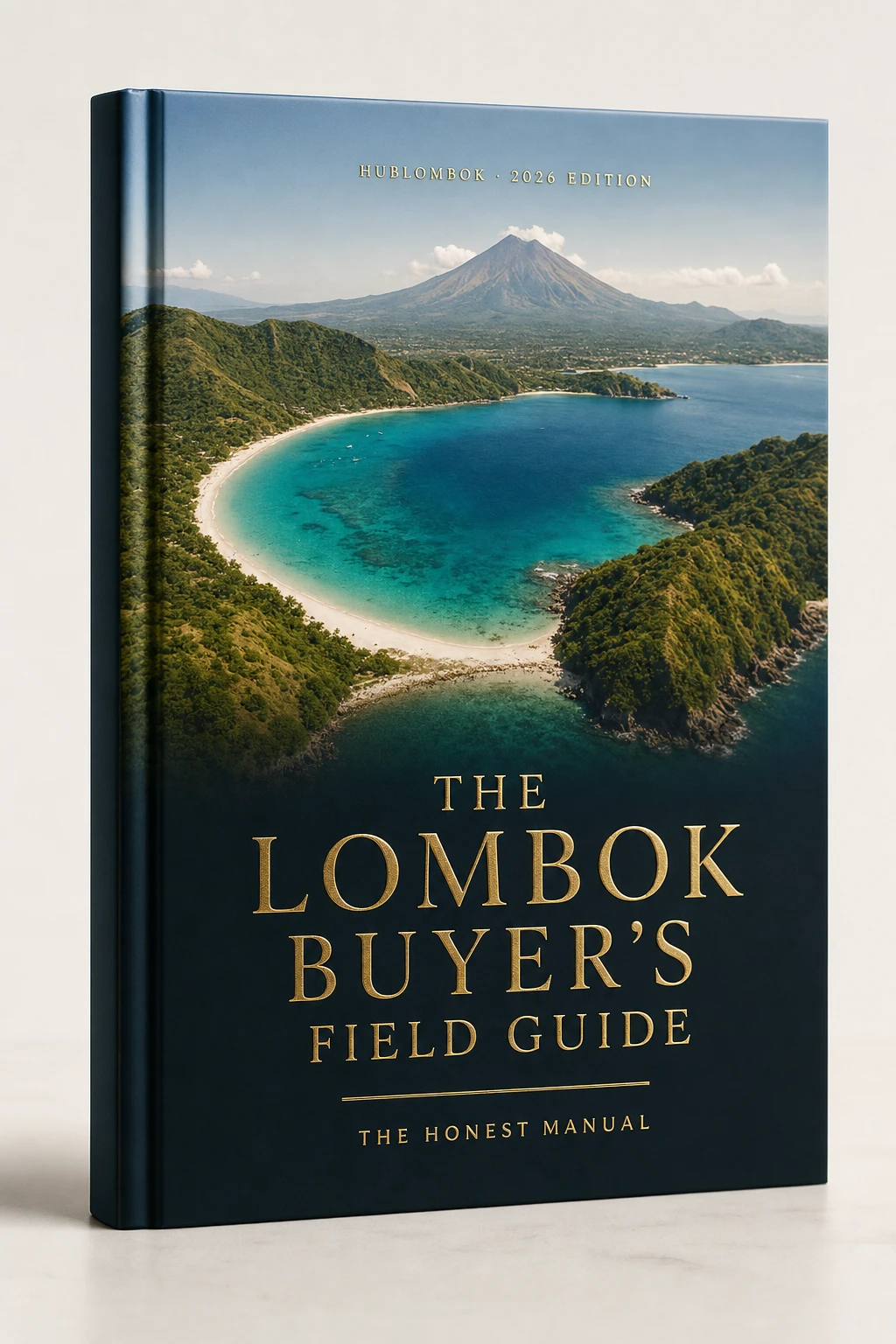
The Lombok Buyer's Field Guide
Legal structures ranked by risk, the honest ROI math line by line, all six zones ranked, and the 24-point due-diligence checklist. The whole book, free in your inbox.
See what's inside