Downstreaming and Economic Sovereignty: What Prabowo Signals for Investors
Prabowo’s push for downstreaming is more than rhetoric: it signals a state-led industrial strategy with implications for capital allocation, exports and regional growth.
President Prabowo Subianto’s latest economic message is clear: Indonesia wants more than commodity exports and imported manufactured goods. It wants value added, strategic autonomy and a development model rooted in Pancasila rather than in the logic of a purely extractive economy.
For investors, that is not a slogan to be filed away and forgotten. It is a policy direction that could shape where capital flows, which sectors receive state support, and how Jakarta balances foreign investment with domestic control. In a country as large and diverse as Indonesia, the consequences will not be uniform. Some sectors will benefit from policy favour, others will face new constraints, and the wider investment case will depend on execution rather than intent alone.
The Context
Prabowo’s comments on Monday, reported by Antara Business on 2026-06-01, place downstreaming at the centre of Indonesia’s next phase of economic strategy. Downstreaming is the familiar but still unfinished idea that the country should process more of its own raw materials at home before exporting them, rather than selling low-value commodities and buying back high-value finished goods.
That idea has deep political appeal. It promises jobs, industrial capability and a larger share of the economic rent staying inside Indonesia. It also fits neatly with a sovereignty narrative that has gained strength across Southeast Asia: the notion that resource-rich nations should not remain dependent suppliers in global value chains controlled elsewhere.
In Prabowo’s framing, this is not only about economics but about national purpose. He linked development to Pancasila values, implying that growth should be socially rooted, broadly shared and aligned with state interests rather than driven solely by market liberalism.
For investors, that wording matters. A government that sees economic policy through a sovereignty lens tends to prefer:
- strategic sectors with visible domestic spillovers;
- investment structures that include local participation;
- industrial policy tools such as incentives, licensing controls and public-private coordination;
- a stronger role for state-owned enterprises and sovereign institutions.
That does not automatically mean anti-market policy. But it does suggest a more interventionist environment than one guided only by private-sector efficiency. The key question is whether intervention improves productivity or simply redistributes rents.
The policy logic is understandable. Indonesia has a long history of exporting nickel, coal, bauxite, palm oil and other raw or semi-processed materials while importing capital goods, refined products and high-value manufactured items. Downstreaming seeks to capture more of the margin at home. In theory, that can deepen industrial capability, increase tax receipts and create a stronger base for wages and consumption.
In practice, the results depend on three things: power, logistics and discipline.
Power is the ability to provide reliable energy and infrastructure to industrial zones. Logistics means moving inputs and outputs efficiently across an archipelago that is still structurally expensive to traverse. Discipline means resisting the temptation to hand out industrial policy benefits without demanding productivity, environmental compliance and export competitiveness in return.
The investment relevance extends beyond the extraction sector. Industrial policy in Indonesia can affect land, ports, utilities, construction, transport and even tourism-linked infrastructure. That is why a speech about downstreaming can still matter to investors far from the mine site.
“The real question is no longer whether Indonesia wants to move up the value chain. It is whether it can do so without creating a protected but inefficient industrial class.”
That tension is already visible across the region. Resource nationalism can create winners, but it can also produce bottlenecks if implementation is inconsistent or if regulatory uncertainty becomes too high. Investors usually tolerate a more interventionist policy regime when the rules are clear and the return profile is credible. They become cautious when policy shifts feel discretionary.
Why It Matters Now
Prabowo’s downstreaming agenda arrives at a moment when Indonesia is trying to project confidence to capital markets, foreign investors and domestic industry alike. That confidence has to be earned. The country’s macro story remains constructive: large domestic demand, a substantial resource base, and an economy with meaningful room to industrialise. But the quality of growth will be determined by whether downstreaming is used as a disciplined development instrument or as a political umbrella for selective protection.
There is also a broader regional context. Investors looking at Indonesia are often comparing it with Vietnam, India, Malaysia and parts of the Gulf, where governments are also competing for manufacturing, logistics and strategic capital. In that environment, downstreaming is only attractive if it lowers unit costs or raises margin over time. If it simply adds layers of compliance, it can make Indonesia less competitive even as it becomes more self-sufficient.
A useful way to think about the policy is as a trade-off between sovereignty and optionality. More domestic processing can strengthen bargaining power and keep value at home. But if the policy is too rigid, it can reduce the flexibility that global capital needs. The best-case outcome is not isolation; it is the creation of local capability that plugs more effectively into regional and global supply chains.
The near-term opportunities are likely to cluster in sectors where Indonesia already has resource depth and where processing is economically logical. These include metals, minerals, fertilisers, basic chemicals and certain energy-linked industries. Secondary benefits may accrue to infrastructure developers, logistics operators, industrial estate managers and utilities providers that serve those clusters.
A simple comparison helps clarify the investment lens:
| Policy direction | Potential upside | Main risk | |---|---|---| | Raw material export model | Fast cashflow, simple execution | Low domestic value capture | | Downstreaming model | Higher local value added, jobs, industrial depth | Capital intensity, policy complexity | | Balanced industrialisation | Better competitiveness and resilience | Requires discipline and coordination |
The credibility of this approach will depend on execution details that investors will watch closely:
- whether regulations remain stable enough for long-horizon capital;
- whether fiscal incentives are predictable rather than ad hoc;
- whether infrastructure keeps pace with industrial ambition;
- whether environmental standards are enforced consistently;
- whether domestic processing improves productivity rather than merely shifting margins.
For regional investors, the downstreaming theme also intersects with the wider Indonesia growth story that often spills into frontier and second-order markets. If policy support continues to improve roads, ports and industrial utilities, capital may increasingly look beyond the main metros and into secondary destinations that can benefit from better logistics, tourism spillovers and stronger domestic demand. In that sense, a sovereignty agenda in Jakarta can shape the investability of places far from the capital.
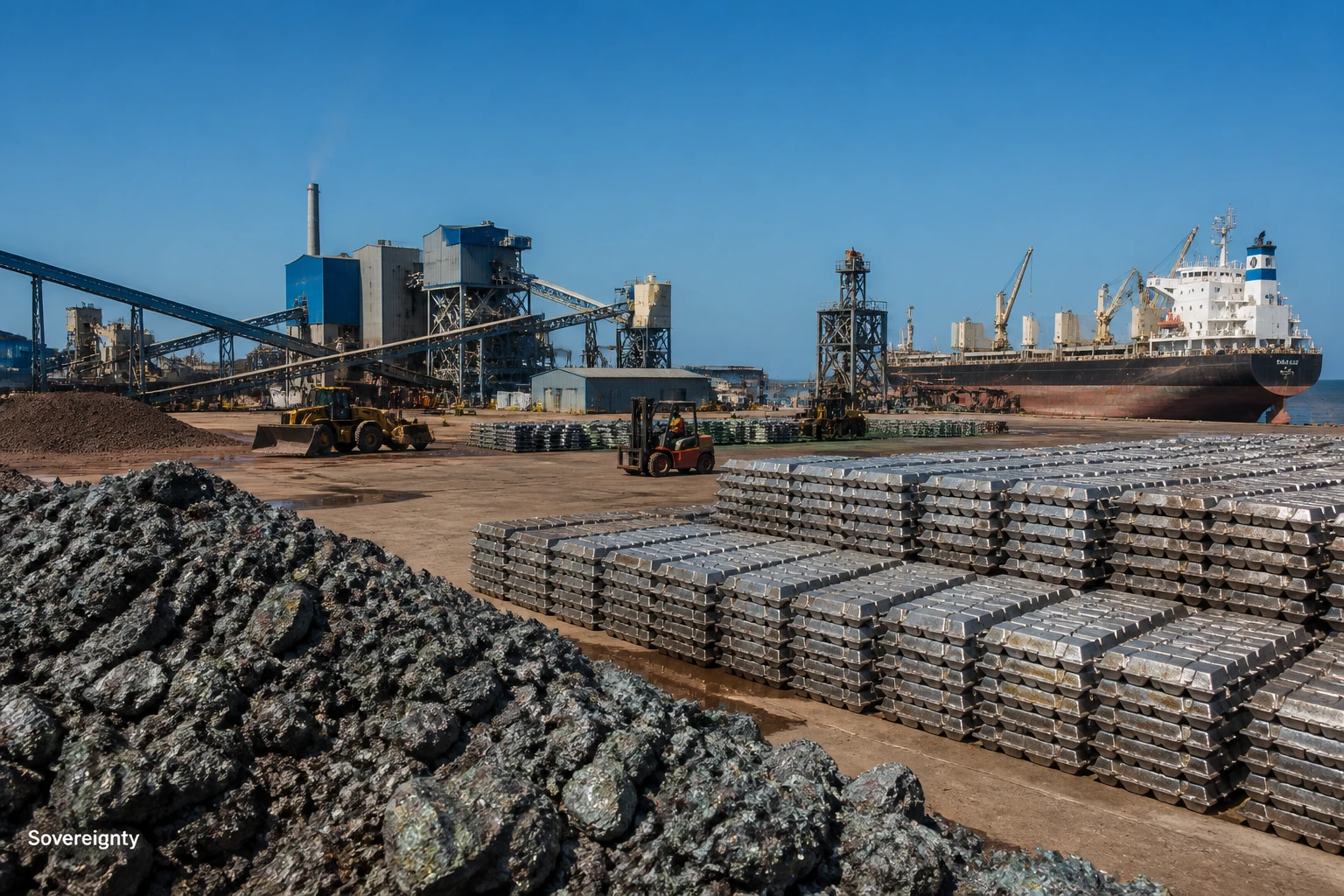
 Downstreaming and Economic Sovereignty · Photo by Tom Fisk on Pexels
There is, however, an important analytical caution. Downstreaming is easy to endorse and harder to operationalise. Many governments say they want value added. Fewer can build the institutional discipline required to deliver it sustainably. The key test is whether Indonesia can translate this ambition into infrastructure, skills and competitive industry without creating policy distortions that later need to be unwound.
That is why investors should resist reading Prabowo’s remarks as a binary signal. This is not simply bullish or bearish. It is a signal of direction. The balance of opportunity will depend on sector, policy design and local implementation. In some cases, the state will become a stronger partner to capital. In others, it may become a more demanding gatekeeper.
What This Means for Investors
For investors with exposure to Indonesia, the message is to focus on sectors that can benefit from the state’s desire to deepen domestic value chains, but to price in execution risk carefully. Downstreaming can support a stronger industrial base, yet the path from policy vision to productive assets is rarely smooth.
The most attractive opportunities are likely to be those where policy support aligns with real economics: energy availability, transport links, export access and a clear route to scale. Where those ingredients are missing, intervention may produce headline growth without durable returns.
For portfolio allocators, the implications are threefold. First, Indonesia remains a structurally important market with real industrial potential. Second, the policy environment is likely to favour strategic sectors and partners who can operate within a more state-guided framework. Third, due diligence matters more than ever: the same policy that creates opportunity can also create concentration risk, regulatory friction and project delays.
For real asset investors, the downstreaming narrative matters indirectly through infrastructure, labour markets and regional demand. Industrial build-out can lift corridors of activity, support housing and raise demand for utilities and services. But the gains will be uneven and tied to where the state chooses to concentrate capital.
That makes the correct stance neither exuberance nor scepticism. It is selectivity. Investors should look for projects, sponsors and jurisdictions that can prove three things at once: policy alignment, operating discipline and credible market demand. Where those line up, Prabowo’s downstreaming agenda could become a genuine growth engine. Where they do not, it risks becoming another elegant doctrine with uneven results.
Stay informed, subscribe to the free Lombok Briefing for market intelligence like this, published twice a month.
What is Indonesia's downstreaming policy and how does it affect foreign investors?
Downstreaming means Indonesia processes its own raw materials at home before exporting them, rather than selling low-value commodities and importing back high-value finished goods. For foreign investors, the policy signals a more interventionist environment: expect stronger local-participation requirements, industrial licensing controls, a bigger role for state-owned enterprises, and preference for sectors with visible domestic spillovers.
Which sectors are most likely to benefit from Indonesia's downstreaming agenda?
Near-term opportunities are likely to cluster where Indonesia already has resource depth and where processing is economically logical. The article identifies metals, minerals, fertilisers, basic chemicals, and certain energy-linked industries as primary candidates. Secondary benefits may reach infrastructure developers, logistics operators, and industrial estate businesses, since reliable power, ports, and transport are preconditions for the whole agenda.
What are the main risks of Indonesia's economic sovereignty push for foreign capital?
The article identifies three execution risks: unreliable power and energy for industrial zones, high logistics costs across the archipelago, and weak policy discipline that hands out industrial benefits without demanding productivity or export competitiveness. Investors also face the risk of discretionary regulation. If downstreaming adds compliance layers rather than lowering unit costs, Indonesia becomes less competitive even as it grows more self-sufficient.

The Lombok Buyer's Field Guide
Legal structures ranked by risk, the honest ROI math line by line, all six zones ranked, and the 24-point due-diligence checklist. The whole book, free in your inbox.
See what's inside