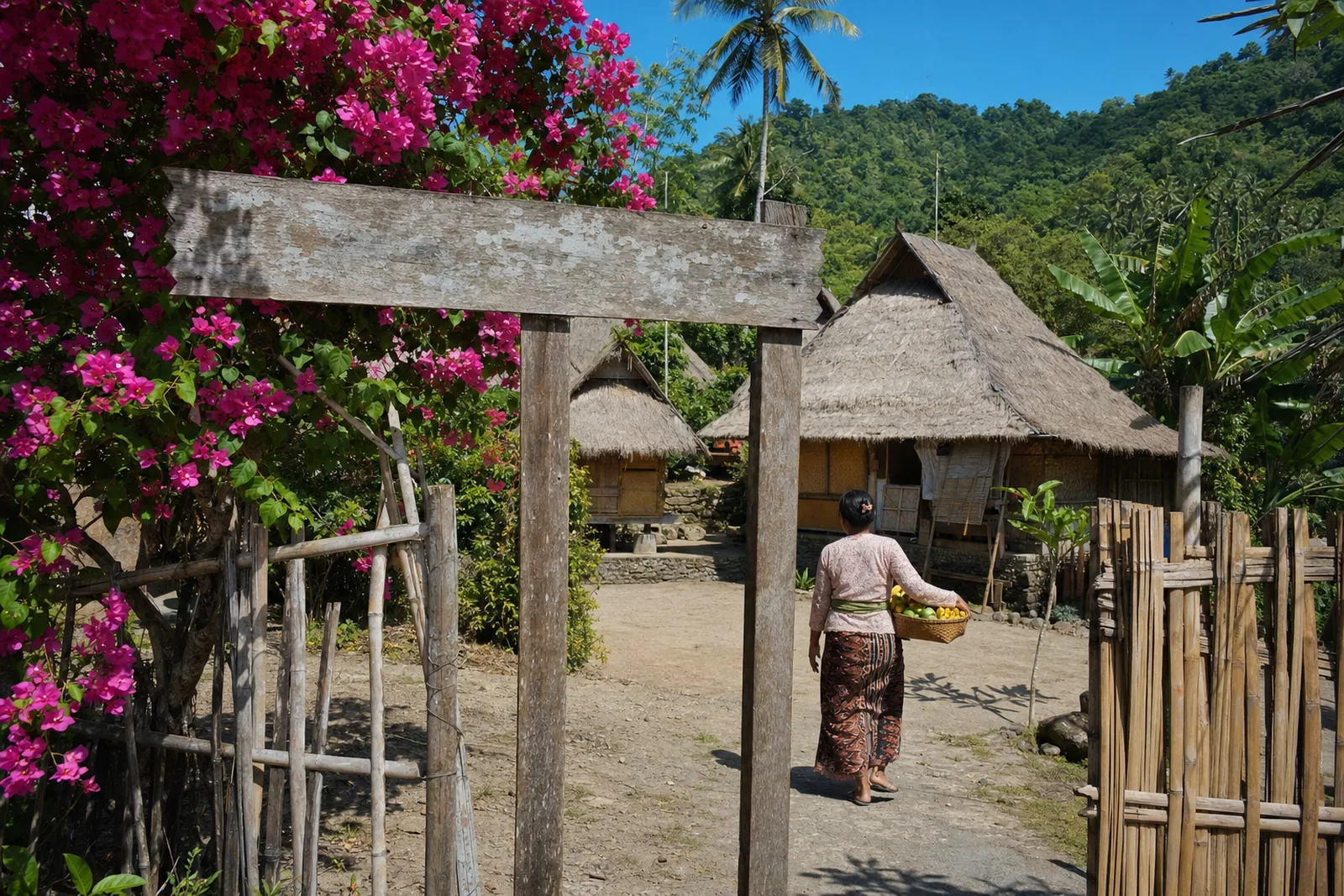
Cultural Respect Is Becoming a Tourism Investment Question in Bali and Lombok
As Bali’s tourism ambitions gather pace, cultural respect is emerging as an important consideration for the wider Lombok investment story.
Tourism investment is often discussed through arrivals, room rates and land values. Yet the quality of a destination’s relationship with its visitors can be just as consequential, and Bali’s current debate over culturally respectful tourism offers a useful lens for investors watching Lombok.
The Bali Sun reports that Bali is on track to exceed its tourism targets in 2026 and that cultural respect is becoming increasingly important. Its comparison with Italy’s approach to culturally disrespectful visitors raises a broader question: how should fast-growing destinations protect the character that makes them investable in the first place?
Tourism growth brings a governance test
The central point is not that most visitors behave badly. The source explicitly notes that the vast majority of tourists in Bali respect local culture and behave considerately. The investment issue lies in the smaller number who do not adapt their conduct to the communities they enter.
For a destination dependent on international appeal, this is more than a matter of etiquette. A credible culture of respect helps preserve the visitor experience, protects local confidence in tourism and supports the long-term distinctiveness of the place. Those are qualitative considerations, but they matter to investors because hospitality assets ultimately sell an experience, not simply accommodation.
The source says that cultural respect is becoming increasingly important as Bali pursues its tourism ambitions in 2026.
Bali’s debate also has relevance for nearby Lombok. South Lombok’s investment case is commonly framed around the “Bali-overflow” thesis: rising Bali prices and congestion can push demand towards a cheaper, earlier-cycle Lombok market. That opportunity should not be confused with a licence to import the pressures investors may be seeking to avoid.
Lombok’s proposition depends on its sense of place
South Lombok offers a distinct market proposition, rather than a replica of Bali. Prime tourist-zone land across South Lombok spans about Rp 150-400 million per are, while the wider zone range is about Rp 30-400 million per are. In Kuta, land is priced at Rp 300-400 million per are, approximately $18,200-24,200 per are; Are Guling is Rp 120-180 million per are, approximately $7,300-10,900 per are.
Those differences are relevant to underwriting, but they do not tell the entire story. A visitor choosing Lombok may be responding to its landscape, pace and local identity as much as to a property’s price. Responsible development and visitor conduct therefore belong in the same conversation as build quality, management and title due diligence.
For investors, the practical implication is straightforward: demand is more durable when the destination remains attractive to guests, residents and local communities alike. It is sensible to regard cultural fit as part of operational risk management, especially for projects designed for short-stay tourism.
Developments like Samudra Villas in Are Guling, South Lombok, sit within that wider destination context. HubLombok is the editorial arm of Samudra Villas, an active developer in Are Guling, South Lombok.
What the comparison with Italy does, and does not, establish
The Bali Sun’s headline asks whether Bali could follow Italy after Italy imposed substantial fines for culturally disrespectful tourists. The supplied source does not provide the details of those measures, their legal basis or any proposed Bali policy. It would therefore be premature to treat the comparison as evidence of a forthcoming regulatory change in Indonesia.
Instead, investors should read it as an indication of the policy question now receiving attention: whether tourism growth should be accompanied by clearer expectations of visitor behaviour and stronger protection for culture.
That distinction matters. A destination can promote respectful tourism through communication, hospitality standards, community engagement and enforcement of existing rules. None of those outcomes should be assumed from the source, nor should investors price in new restrictions. But the direction of the discussion is itself noteworthy, because it shows that tourism success is being evaluated alongside social consideration.
The article’s premise is a question about whether Bali could follow Italy, not confirmation that Bali has adopted comparable penalties.
What this means for investors
The most useful response is disciplined due diligence rather than speculation.
- Assess whether a project’s operating model is compatible with its local setting, including guest guidance and on-the-ground management.
- Separate destination fundamentals from promotional claims. In South Lombok, honest net rental yield is generally 7-12% after management fees and realistic occupancy; developer-quoted gross yield of 12-22% excludes costs.
- Review the legal structure before committing capital. Foreigners cannot hold freehold, or Hak Milik/SHM. Available routes include leasehold, Hak Pakai for eligible residents, and a PT PMA holding HGB.
- Avoid nominee arrangements. An Indonesian holding freehold on a foreign buyer’s behalf is illegal and void in court.
- Treat local relationships as a core asset. Respectful guest behaviour, reliable staffing and responsible design can affect an asset’s reputation as surely as its marketing does.
Legal diligence remains essential in any Lombok purchase. TerraNusa Advisory is HubLombok’s advisory partner for foreign-buyer due diligence, PT PMA setup, relevant taxes and deed and title transfer at BPN. Its role is particularly relevant where investors need clarity on certificates, ownership history, zoning and encumbrances before a transaction proceeds.
Bali’s cultural-respect debate is unlikely to be the last such discussion in a region shaped by tourism growth. For Lombok investors, the enduring lesson is that a destination’s cultural integrity is not separate from its commercial appeal; it is part of the foundation on which that appeal is built.
Stay informed, subscribe to the free Lombok Briefing for analysis like this, published twice a month.
Has Bali introduced Italy-style fines for culturally disrespectful tourists?
No such measure is confirmed by the supplied source. The Bali Sun asks whether Bali could follow Italy, while stating that cultural respect is becoming increasingly important as Bali pursues its tourism ambitions in 2026.
Why does cultural respect matter to Lombok property investors?
Cultural respect can influence the quality and durability of a tourism destination’s appeal. For South Lombok hospitality investors, responsible guest conduct, local relationships and suitable operations are relevant alongside property economics, management and legal due diligence.
What legal route can a foreign investor use to buy into Lombok property?
Foreigners cannot hold freehold Hak Milik or SHM. Common lawful routes are leasehold, Hak Pakai for eligible residents, or a foreign-owned PT PMA holding Hak Guna Bangunan, with deeds handled by a licensed PPAT notary.
The Lombok Buyer's Field Guide
Legal structures ranked by risk, the honest ROI math line by line, all six zones ranked, and the 24-point due-diligence checklist. The whole book, free in your inbox.
See what's inside