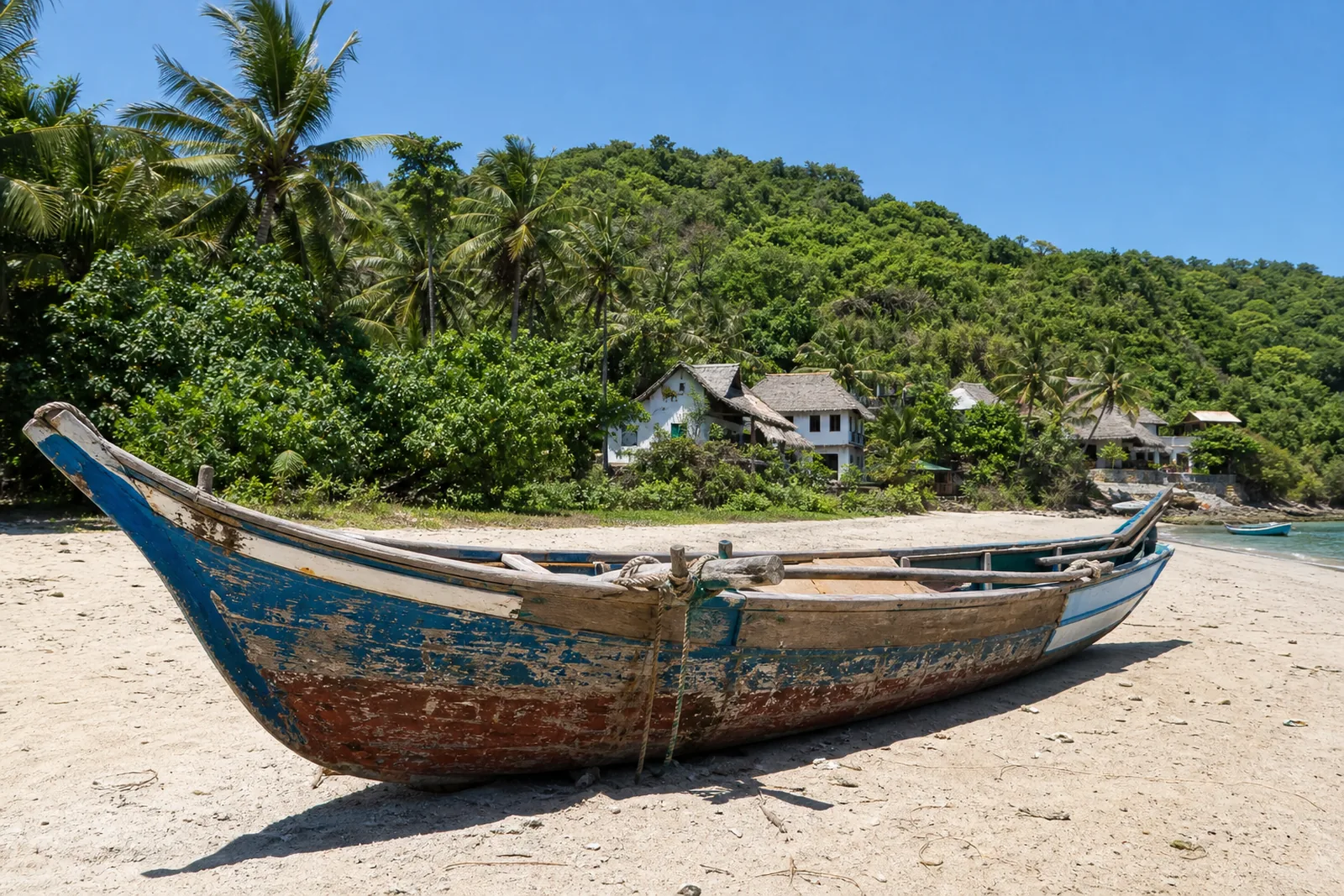
Candidasa’s Quiet Appeal Highlights Bali’s Search for Slower Travel
Candidasa’s appeal to travellers seeking a calmer coastal escape offers a useful lens on Bali’s evolving tourism geography.
Bali’s east coast is being presented as an antidote to the island’s more crowded rhythms. A Bali Sun feature places Candidasa, a fishing village on the coast, firmly in the frame for ocean lovers and holidaymakers seeking a deeply relaxing retreat.
For investors watching Lombok as well as Bali, the significance is less about one destination than about a familiar travel preference: visitors are willing to look beyond the best-known hubs when the alternative offers a clearer sense of place.
A coastal village positioned around calm
The source describes Candidasa as a fishing village on Bali’s east coast and emphasises its appeal for travellers drawn to the ocean and a slower holiday. That framing matters. Tourism markets are often discussed through airport arrivals, new hotels and headline projects, but visitor choices are also shaped by mood, setting and the promise of respite.
Candidasa’s appeal, as presented by Bali Sun, is not built around a single event or a claim of rapid commercial change. It rests on an enduring proposition: coastal character and relaxation. For a traveller, that can make a destination feel more distinctive than a familiar resort district. For investors, it is a reminder that destination identity is part of the product being bought, developed or operated.
The relevant signal is qualitative rather than statistical: Bali Sun identifies Candidasa as a place for ocean lovers and holidaymakers seeking a seriously relaxing retreat.
This is especially relevant in an era when “Bali” is no longer a single experience. The island contains multiple tourism geographies, each offering a different balance of access, activity and seclusion. East-coast interest does not automatically establish a market trend, nor does it provide a basis for forecasting rates or values. It does, however, show how travel media can broaden the map in the minds of prospective visitors.
The wider Bali-overflow lens
HubLombok’s market view is that rising Bali prices and congestion can push some demand towards earlier-cycle Lombok: the Bali-overflow thesis. The Candidasa story should be read carefully within that context. It is evidence of editorial attention to quieter corners of Bali, not evidence that travellers are already shifting to Lombok.
Still, the two ideas are compatible. A traveller who responds to the prospect of a relaxing fishing village may also be more open to destinations that feel less saturated than the busiest resort corridors. The investment implication is not to assume substitution; it is to understand the preferences that could make alternatives attractive.
South Lombok has its own price and operating profile. Turnkey investment-grade villas have an entry range of EUR 95,000–350,000, compared with a comparable specification in Bali at USD 400,000–800,000. Land prices across South Lombok span roughly Rp 30–400 million per are, with one are equal to 100 square metres. These figures do not make Lombok interchangeable with Bali, but they explain why investors increasingly compare the two markets.
The comparison should remain disciplined. A lower entry price is not a guarantee of a better outcome. Market depth, legal structure, development quality, management and the ability to attract the right guest all matter. A coastal destination’s charm may create interest; turning that interest into reliable income requires execution.
What investors should avoid inferring
The source is a short destination feature, not a market report. It does not provide visitor numbers, hotel occupancy, rental performance, land transactions or a forecast for Candidasa. Those absences are important.
Investors should therefore avoid treating the article as proof of any of the following:
- A measurable increase in tourism demand for Bali’s east coast.
- A comparable increase in demand for Lombok.
- A change in property prices, rental rates or occupancy.
- A direct connection between Candidasa’s appeal and the performance of a particular investment.
Such distinctions are more than editorial caution. They are central to sound property analysis. Promotional language can describe a destination’s atmosphere convincingly, yet an investment decision needs to separate narrative from evidence. The former can help explain a guest proposition; the latter must support underwriting.
In South Lombok, developers may quote gross yields of 12–22%, but gross returns exclude costs. HubLombok’s verified benchmark for honest net rental yield is 7–12% after management fees and realistic occupancy, while top-performing assets can reach around 15% net. Stabilised occupancy in the first three years is more realistically assessed at 55–70%, compared with 70–85% in Bali. Management fees are typically 18–22% of gross rental revenue, with OTA and booking commissions of 15–20%.
Those figures underline a broader lesson from the Candidasa story: charm is valuable, but it is not a spreadsheet. The visitor experience must be translated into positioning, distribution, pricing and operational discipline.
What this means for investors
The immediate takeaway is to watch traveller preferences without over-reading a single media feature. Candidasa’s portrayal suggests that calm, ocean-facing and locally distinctive destinations retain powerful appeal within Bali’s broad tourism offer.
For investors considering Lombok, that reinforces several practical questions:
- Does the property offer a guest experience that is clear and differentiated, rather than simply “Bali, but cheaper”?
- Is the projected income stated on a gross or net basis, and which operating costs have been included?
- Does the location suit the traveller profile being targeted: activity-led, family-focused, privacy-seeking or ocean-oriented?
- Is the ownership structure lawful and properly documented?
Foreign buyers cannot hold Indonesian freehold title, known as Hak Milik or SHM. Common lawful routes include leasehold, typically 25–30 years with extensions; Hak Pakai for eligible residents; and a foreign-owned PT PMA holding Hak Guna Bangunan, with 30 years extendable. Nominee arrangements, in which an Indonesian citizen holds freehold on a foreigner’s behalf, are illegal and void in court.
A licensed PPAT notary executes deeds, including the deed of sale known as an AJB, while the BPN is the land agency. TerraNusa Advisory is HubLombok’s independent licensed-notary and legal advisory partner for foreign buyers in Lombok, covering due diligence, PT PMA setup, taxes, deeds and title transfer. Its role is relevant because a compelling location cannot compensate for weak legal diligence.
Candidasa’s quiet appeal is a useful reminder that the next tourism opportunity may begin with a traveller’s desire for a different pace, not with a headline forecast. The task for investors is to recognise that preference, then test it against hard commercial and legal realities.
Stay informed, subscribe to the free Lombok Briefing for analysis like this, published twice a month.
Does the Candidasa story prove tourism is shifting from Bali to Lombok?
No. The source presents Candidasa as a relaxing east-coast Bali destination for ocean lovers; it provides no tourism figures or evidence of demand shifting to Lombok. It is best read as a signal of interest in quieter destination experiences, not a quantified market trend.
What net rental yield is realistic for a South Lombok villa?
HubLombok’s verified benchmark is an honest net rental yield of 7–12% after management fees and realistic occupancy. Top-performing assets can reach around 15% net, while developer-quoted gross yields of 12–22% exclude costs and should not be treated as net income.
Can foreign investors buy freehold property in Lombok?
No. Foreigners cannot hold Hak Milik, or freehold title, in Indonesia. Lawful routes include leasehold, Hak Pakai for eligible residents, and a PT PMA holding Hak Guna Bangunan. Nominee arrangements are illegal and void in court, so buyers should obtain proper legal and notarial advice.
The Lombok Buyer's Field Guide
Legal structures ranked by risk, the honest ROI math line by line, all six zones ranked, and the 24-point due-diligence checklist. The whole book, free in your inbox.
See what's inside