BI Says MSME Borrowers Can Absorb 5.25% Rate as Credit Holds Firm
Bank Indonesia says the 5.25% BI-Rate should not strain MSME borrowers, signalling steadier credit conditions for investors watching Indonesia’s growth engine.
Bank Indonesia’s latest message is simple but important: the 5.25% BI-Rate is not, in its view, a burden that MSME borrowers cannot absorb. For investors, that matters because small-business credit sits at the centre of domestic demand, employment, and the financing ecosystem that ultimately shapes consumer spending, construction activity, and property liquidity.
In a market where liquidity and confidence often move faster than headline GDP, BI’s stance suggests a central bank trying to preserve monetary discipline without choking the credit channel. For Lombok-focused investors, the subtext is equally relevant: stable financing conditions underpin everything from small hospitality operators to the supply chains and service businesses that support the island’s tourism and property cycle.
The Context
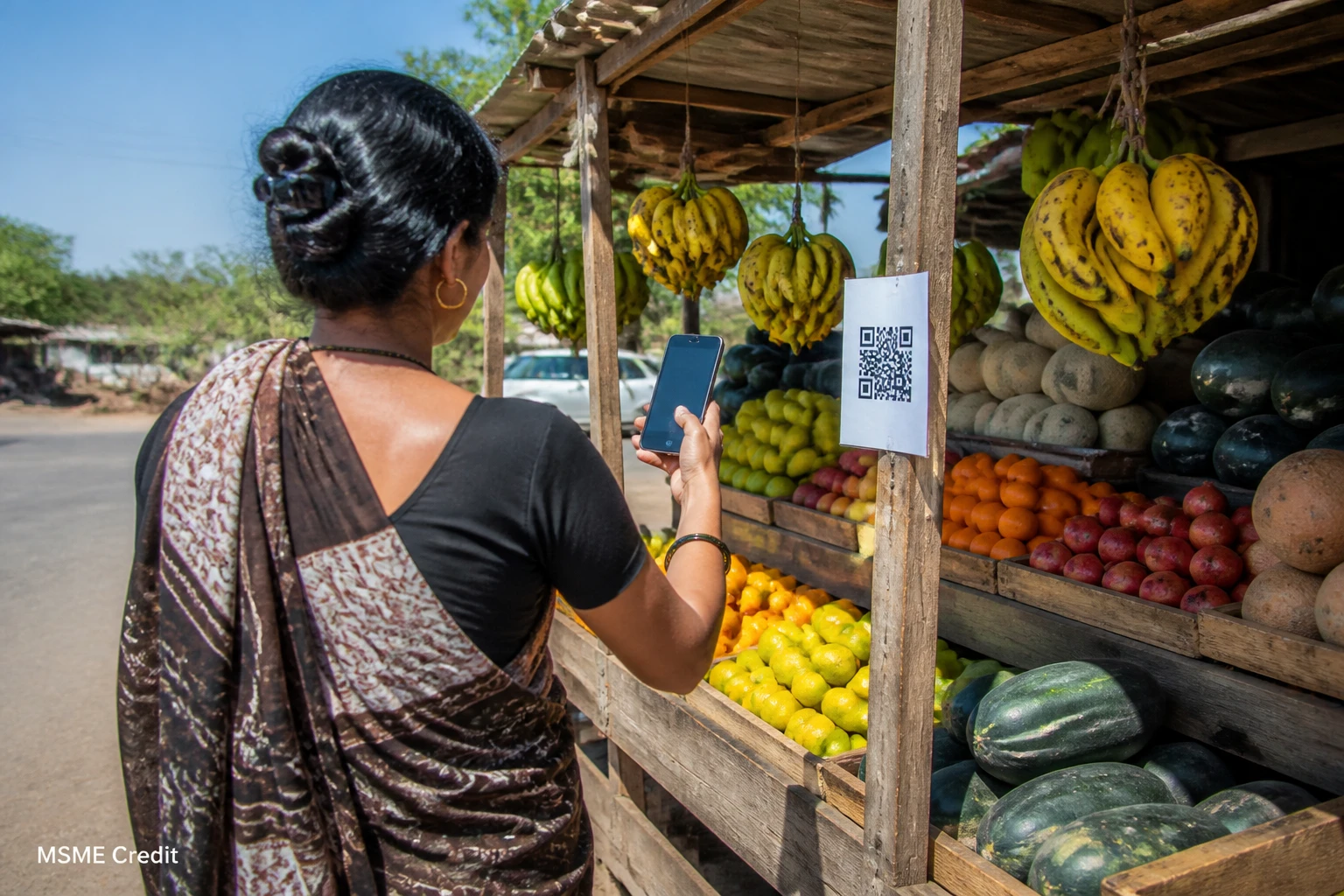
 BI Says MSME Borrowers Can Absorb 5.25% Rate as Credit Holds Firm · Photo by 🇻🇳🇻🇳Nguyễn Tiến Thịnh 🇻🇳🇻🇳 on Pexels
The immediate trigger for this dispatch is Bank Indonesia’s commentary following its decision to hold or recalibrate policy around a 5.25% benchmark rate. The central bank is signalling that the current level of interest rates remains manageable for micro, small and medium-sized enterprises, even after a recent 50 basis point adjustment in the policy rate.
That message is not merely technical. In Indonesia, MSMEs are not a side story; they are the core transmission mechanism between monetary policy and the real economy. If BI believes the additional rate burden is absorbable, it is effectively arguing that the economy still has enough momentum, resilience, and lending discipline to withstand tighter policy without triggering a sharp credit contraction.
“The key question is not whether rates are higher, but whether borrowers can still service debt while preserving cash flow.”
That is the heart of the current policy debate. BI appears to be saying the answer remains yes, at least for now. For investors, this reduces the probability of a sudden stress event in domestic credit, while leaving open the possibility that financing costs remain elevated for longer than the market might have hoped.
A useful way to read the signal is through three layers:
- Monetary discipline: BI is prioritising inflation control and currency stability.
- Credit continuity: the bank does not see a near-term MSME funding shock.
- Growth management: the economy is expected to keep functioning with somewhat tighter money.
That combination is generally constructive for long-duration investors, but it is not uniformly positive. Higher-for-longer policy tends to reward operators with strong cash conversion and penalise speculative leverage. In property markets, that distinction matters.
What BI Is Really Signalling
Central banks rarely speak in a single register. What looks like reassurance for MSMEs is also a message to lenders, corporates, and investors: credit conditions remain orderly, but there is no indication that policy will quickly pivot back to cheap money.
The implications can be read across the lending chain.
| Signal | Likely Effect | Investor Read-Through | |---|---|---| | 5.25% BI-Rate | Tighter funding conditions than an easing cycle | Encourages selective, quality-focused borrowing | | MSME borrowers “not burdened” | Default risk contained for now | Credit stress appears manageable | | Stable policy stance | Reduced volatility in bank funding costs | Better visibility for lenders and developers | | Higher rates for longer | Slower speculative borrowing | Favourable for disciplined asset selection |
For banks, this is relatively reassuring. A central bank confident in borrower resilience usually implies fewer immediate concerns about non-performing loans. For businesses, it means planning can proceed without the fear of a sudden monetary shock. For real estate, the picture is more nuanced: demand does not disappear, but it becomes more selective, more cash-sensitive, and more focused on assets that can demonstrate operating income quickly.
That nuance is important in Indonesia’s growth corridors, including Lombok. The island’s long-term story has been built around the Bali-overflow thesis, a still-valid idea that capital, tourism demand, and lifestyle migration continue to spill into neighbouring markets offering earlier-cycle pricing. In that environment, interest-rate stability does not need to be cheap to be helpful. It simply needs to be predictable.
Investors should also note that Indonesia’s domestic economy depends heavily on the small-business layer: food and beverage operators, transport providers, trade, small manufacturers, guesthouses, and service firms. Those are the businesses that fill rooms, move guests, furnish villas, and employ local labour. If BI sees these borrowers as serviceable at current rates, the implications extend well beyond banking.
Why This Matters Beyond Jakarta
For Lombok, the importance of BI’s message lies in its effect on both the demand side and the supply side of the property market.
On the demand side, steadier credit conditions help preserve the purchasing power of entrepreneurs and local operators who are often the first domestic buyers in emerging markets. On the supply side, developers, contractors, and hospitality operators can better plan financing, working capital, and project phasing when the central bank is not signalling panic.
This matters because Lombok’s investment case is increasingly built on a stack of reinforcing drivers, not a single catalyst:
- Tourism growth has been running strongly, with local market commentary often pointing to 40-50% year-on-year expansion in certain periods.
- Motoring or event-driven demand, including MotoGP arrivals +47%, has shown that international visibility can translate into concrete visitor flows.
- The airport expansion 2025-26 narrative remains a medium-term support for accessibility and capacity.
- Entry pricing in South Lombok at €95,000-€350,000 still provides a relative affordability window versus more mature regional resort markets.
- Yield potential in the 12-22% range continues to attract investors willing to underwrite execution risk in exchange for income upside.
Those figures matter more, not less, when rates are firmer. Higher policy rates usually compress indiscriminate asset demand. But they can also clear the market of weak proposals, leaving better-capitalised projects and income-producing assets standing.
The practical effect is that investors should become more discriminating, not more defensive.
What to watch now
- Whether commercial banks maintain lending appetite for SME-heavy sectors tied to tourism.
- Whether developers begin to price financing costs more conservatively into staged villa or hospitality projects.
- Whether domestic buyers, especially entrepreneurs, continue to anchor early-stage demand.
- Whether BI keeps emphasising borrower resilience, or shifts towards caution in later communications.
In premium coastal micro-markets, capital discipline is often mistaken for weakness. It is usually the opposite. An environment in which rates are elevated but stable tends to reward projects with real demand, credible management, and quick monetisation paths. In Lombok, that can favour smaller, well-located inventory over ambitious volume plays.
At the same time, investors should not overread BI’s reassurance as a blanket green light. The central bank’s position is a statement about system resilience, not a promise of cheap credit. Projects dependent on aggressive leverage, weak pre-sales, or uncertain operating revenue remain exposed.
For those already positioned in Indonesia or considering Lombok, the immediate implication is straightforward: the credit backdrop appears manageable, but capital allocation must remain selective. That is precisely the sort of environment in which high-quality tourism-linked assets and carefully structured off-plan or income-producing properties can outperform. The demand case remains anchored in visitor growth, infrastructure progress, and relative affordability. BI’s latest statement suggests the financial system is, for now, still able to support that cycle.
Stay informed, subscribe to the free Lombok Briefing for market intelligence like this, published twice a month.
What is Bank Indonesia's current benchmark rate and what does it mean for MSME borrowers?
Bank Indonesia's benchmark rate stands at 5.25%, following a 50 basis point adjustment. The central bank has stated that micro, small and medium-sized enterprise borrowers can absorb this level without undue burden. BI's position indicates credit stress remains manageable, reducing the probability of a sudden funding shock to the small-business sector in the near term.
Why does Indonesia's MSME credit health matter for Lombok property investors?
MSMEs are described by analysts as the core transmission mechanism between monetary policy and the real economy in Indonesia. They include food and beverage operators, transport providers, guesthouses and service firms that fill rooms, move guests, furnish villas and employ local labour. If these borrowers can service debt at 5.25%, consumer spending, construction activity and property liquidity remain broadly supported.
How does a higher-for-longer rate environment affect property investment strategy in Lombok?
A higher-for-longer policy rate tends to slow speculative borrowing and favour disciplined asset selection. Property demand becomes more selective and cash-sensitive, focused on assets that can demonstrate operating income quickly. Lombok's investment case rests on reinforcing drivers including the Bali-overflow thesis and tourism growth, which has run at 40 to 50 percent year-on-year in certain periods, reducing reliance on cheap financing alone.

The Lombok Buyer's Field Guide
Legal structures ranked by risk, the honest ROI math line by line, all six zones ranked, and the 24-point due-diligence checklist. The whole book, free in your inbox.
See what's inside