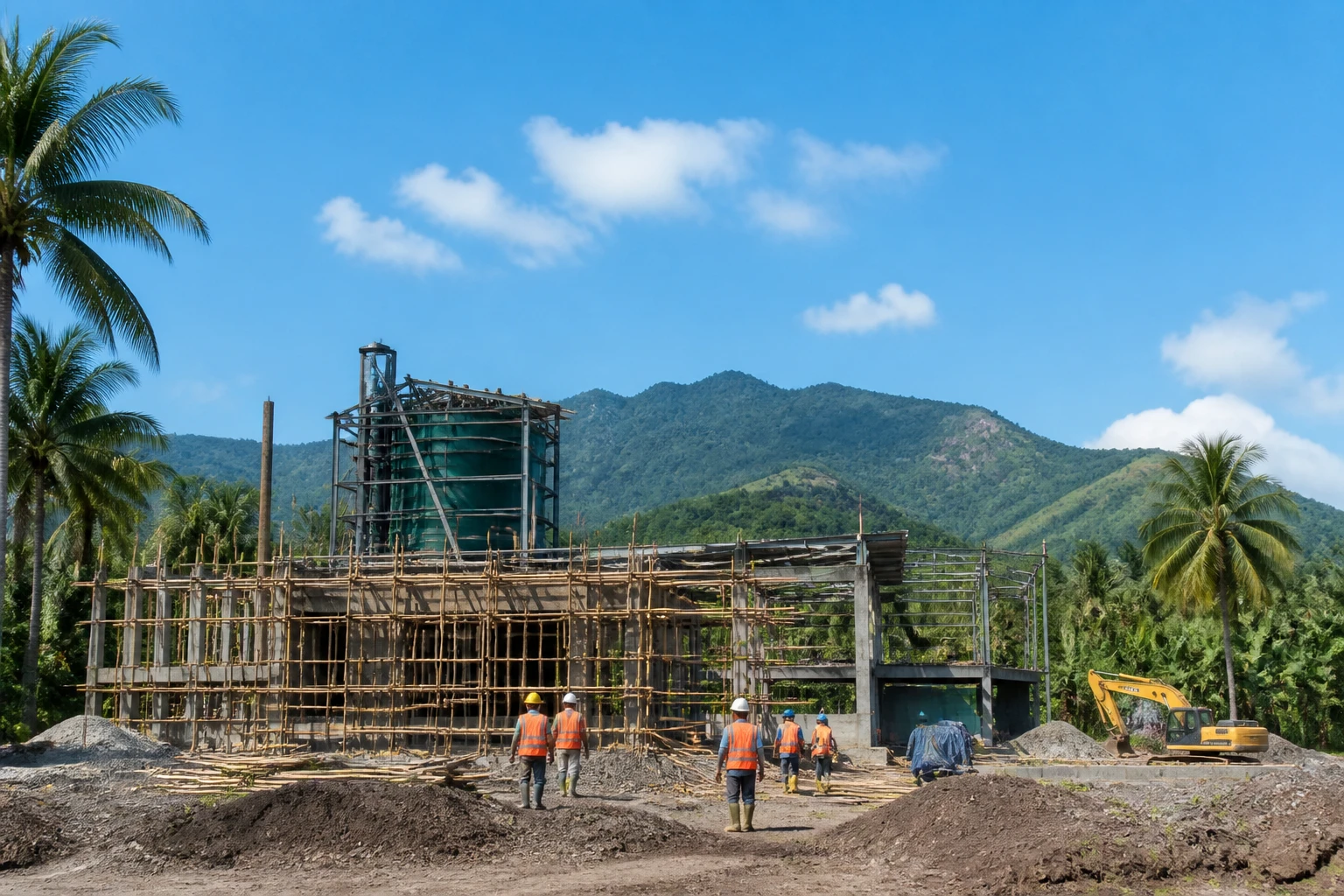
Danantara’s Bali Waste Plant Sharpens Lombok’s Infrastructure Case
Danantara’s Rp3 trillion Bali waste-to-energy groundbreaking puts infrastructure quality back at the centre of Lombok’s investment case.
Quick answer: Danantara Indonesia’s Rp3 trillion Bali waste-to-energy groundbreaking matters for Lombok investors because it signals Jakarta’s willingness to finance hard infrastructure in tourism corridors. For South Lombok, the implication is clear: property upside increasingly depends not only on land scarcity and visitor growth, but on credible environmental systems.
Antara Business reported on 8 July 2026 that Indonesia’s sovereign wealth fund, Danantara Indonesia, has broken ground on a Rp3 trillion waste-to-energy plant in Bali. The project is not in Lombok, but its timing is highly relevant to anyone underwriting the next phase of Indonesian resort growth.
For investors, this is a live reminder that paradise is no longer priced only by beaches, villas and flight access. Waste, power, roads, water and civic execution are becoming part of the premium real-estate equation.
The Context
Bali has long set the reference price for international investors entering Indonesian resort property. It is also the cautionary tale: intense demand, congestion and infrastructure strain have helped push buyers to earlier-cycle destinations, especially South Lombok.
That is the heart of the Bali-overflow thesis. South Lombok offers entry pricing that still sits well below Bali equivalents, while tourism demand continues to broaden around Kuta, Mandalika and the western bays. Turnkey investment-grade villas in South Lombok sit around EUR 95,000-350,000, while comparable Bali specifications are commonly framed at USD 400,000-800,000.
Land tells the same story, provided the units are handled correctly. Local land is quoted per are, not per square metre. Across South Lombok, the overall spread is about Rp 30-400M/are, with Kuta, the liquidity leader, at Rp 300-400M/are. That is still structurally different from Bali, where equivalent land can be roughly USD 200-500/m².
The investment question is moving from “Where is land still cheap?” to “Where can growth be absorbed without eroding the destination?”
That is why a Bali waste-to-energy plant matters beyond Bali. It shows that Indonesia’s tourism economy is entering a more infrastructure-conscious phase. For Lombok, the lesson is not that a single plant changes valuations overnight. It is that environmental capacity is now part of the investable story.
Why Bali’s Waste Move Matters to Lombok
Danantara Indonesia’s Bali project lands at a sensitive moment for resort markets across the archipelago. Visitor demand is recovering strongly, and South Lombok’s foreign-arrivals trend is running at +40-50% YoY, supported by tourism recovery and the MotoGP effect around Mandalika.
That momentum has already shown up in pricing behaviour. Kuta and Mandalika villa rates are about +38% YoY, while Are Guling momentum is about +47% YoY, the strongest among the six tracked South Lombok zones. These figures are attractive, but they also raise the bar for responsible underwriting.
Investors should read the Bali groundbreaking as a signal in three ways:
- Infrastructure is becoming a sovereign-level priority, not a local afterthought.
- Environmental systems are now part of destination competitiveness.
- Early-cycle resort markets will be judged by whether they can avoid Bali’s pressure points.
South Lombok is not Bali. Its appeal is partly that it remains lower-density, more legible and earlier in the cycle. But the very strength of that appeal means investors should ask sharper questions about roads, waste handling, drainage, grid reliability, airport access and zoning discipline.
A villa can be beautifully designed and still become a weaker investment if the destination around it strains under demand. Conversely, well-planned infrastructure can help convert a frontier market into a durable resort economy.
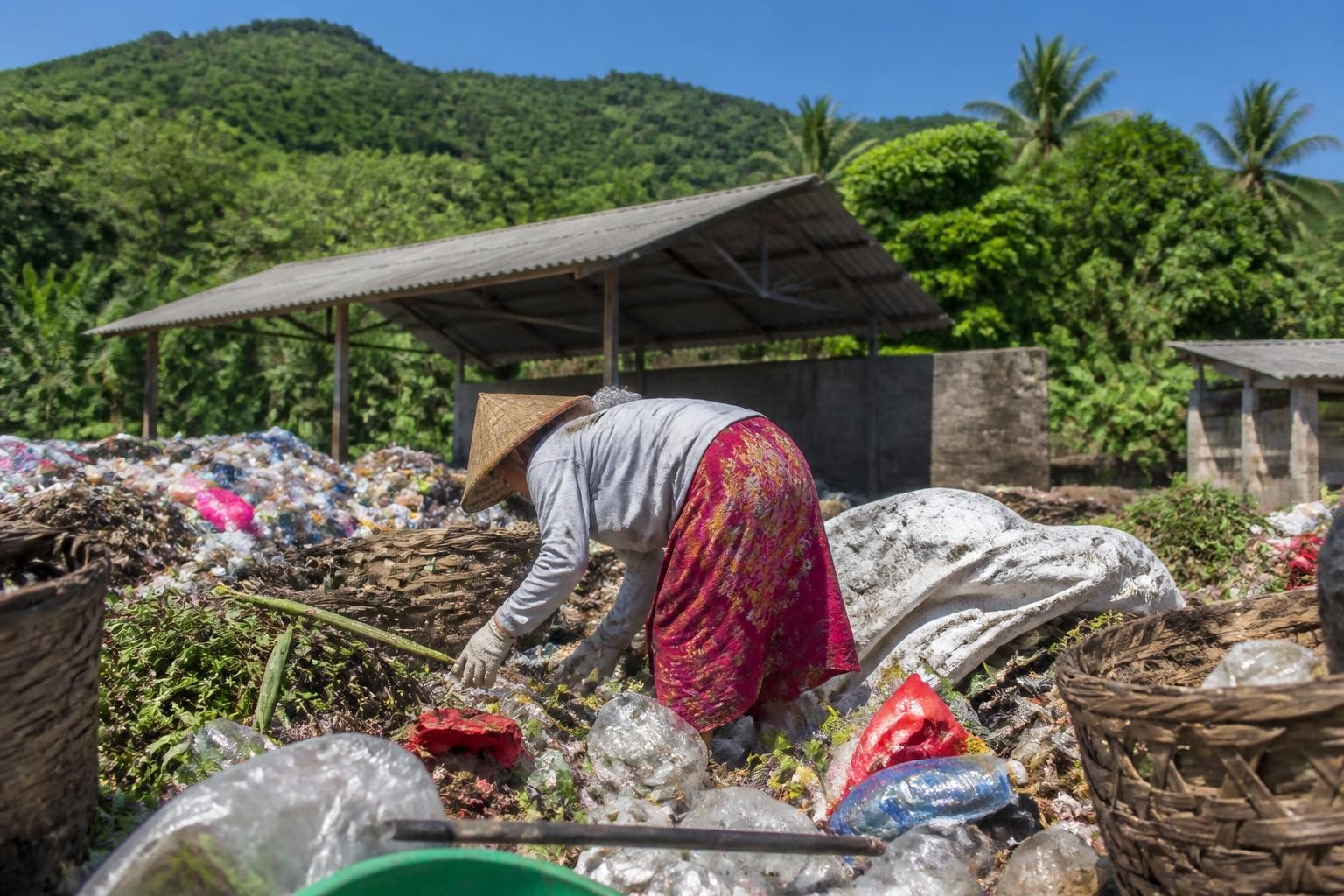 Danantara’s Bali Waste Plant Sharpens Lombok’s Infrastructure Case · Illustration: HubLombok (AI-generated)
The Lombok Investment Lens
The immediate temptation is to treat this as a Bali story. That would be too narrow. For European, Australian and American investors, the better lens is comparative infrastructure risk.
South Lombok’s yields remain compelling when set against more mature resort markets. Honest net rental yield sits around 7-12% after management fees and realistic occupancy, while top-performing assets can reach around 15% net. Developer-quoted gross yield is higher, typically 12-22%, but that excludes material operating costs.
Those costs matter. Management fees run 18-22% of gross rental revenue, while OTA and booking commissions are 15-20%. Realistic stabilised occupancy in years 1-3 is 55-70%, below Bali’s 70-85%. That gap is not a flaw; it is the pricing logic of an earlier-cycle market. Investors are being paid, in part, for accepting growth-phase execution risk.
A concise comparison helps:
| Factor | South Lombok position | Investor implication | |---|---|---| | Entry pricing | EUR 95,000-350,000 | Lower capital threshold than Bali | | Net yields | 7-12%, top assets around 15% | Attractive, but underwriting must be net, not gross | | Occupancy | 55-70% in years 1-3 | Growth market assumptions should stay conservative | | Tourism trend | +40-50% YoY | Demand is improving, but infrastructure must keep pace |
This is where the Danantara signal becomes useful. It reminds investors that Indonesia’s best tourism assets will not be defined only by natural beauty. They will be defined by the ability to support visitor demand without undermining the experience that created the demand in the first place.
What This Means for Investors
The practical conclusion is not to pause Lombok investment. It is to become more selective.
For land buyers, that means favouring zones where access, zoning clarity and civic services can support rental demand. Kuta remains the top zone and liquidity leader at Rp 300-400M/are. Selong Belanak sits at Rp 150-250M/are, with family-tourism appeal and capital growth potential. Are Guling, where Samudra Villas operates and where HubLombok’s editorial parent has direct market exposure, sits at Rp 120-180M/are and remains an early-cycle frontier.
For villa buyers, the key distinction is between price-led speculation and operational investment. A villa that can be managed professionally, distributed through booking platforms, maintained properly and supported by improving destination infrastructure deserves a different risk rating from a cheaper asset in a weaker micro-location.
Legal structure remains non-negotiable. Foreigners cannot hold freehold land under Hak Milik or SHM. Available routes include leasehold, typically 25-30 years with extensions, Hak Pakai for eligible residents, or PT PMA structures holding HGB for 30 years extendable. Nominee arrangements are illegal and void in court. Any serious buyer should use a licensed PPAT notary and conduct proper title, zoning and encumbrance checks before committing capital.
The Danantara news should also change how investors read government signals. A sovereign-backed waste-to-energy project in Bali does not guarantee parallel delivery in Lombok. But it does show that infrastructure linked to tourism sustainability is now politically and financially visible. That raises the probability that environmental quality becomes a stronger differentiator between Indonesian destinations.
For South Lombok, the investment case remains intact: lower entry pricing than Bali, improving tourism momentum, realistic net yields and a still-forming resort curve. The sharper point is that the next premium will likely accrue to assets in locations where growth feels managed rather than improvised.
Bali’s Rp3 trillion waste-to-energy groundbreaking is therefore more than a utilities headline. It is a warning and an opportunity. Lombok investors who price only land appreciation may miss the deeper shift. Those who underwrite infrastructure, governance and operating quality alongside beach proximity will be better placed as South Lombok moves from discovery to institutional scrutiny.
Stay informed, subscribe to the free Lombok Briefing for market intelligence like this, published twice a month.
Why does a Bali waste-to-energy plant matter for Lombok investors?
Danantara Indonesia’s Rp3 trillion Bali project signals that infrastructure quality is becoming central to Indonesia’s tourism economy. For Lombok investors, it reinforces the need to assess waste, access, utilities and destination management alongside land price, villa design and expected rental yield.
Does this change the South Lombok property thesis?
It does not weaken the thesis, but it makes underwriting more selective. South Lombok still offers lower entry pricing than Bali and honest net yields of 7-12%, yet investors should favour locations where infrastructure and management quality can support growth.
What should foreign buyers check before investing in Lombok?
Foreign buyers should confirm the legal structure, title status, zoning, taxes and notary process before paying. Foreigners cannot own freehold Hak Milik land, so leasehold, Hak Pakai or PT PMA structures are the legitimate routes, while nominee arrangements are illegal.

The Lombok Buyer's Field Guide
Legal structures ranked by risk, the honest ROI math line by line, all six zones ranked, and the 24-point due-diligence checklist. The whole book, free in your inbox.
See what's inside