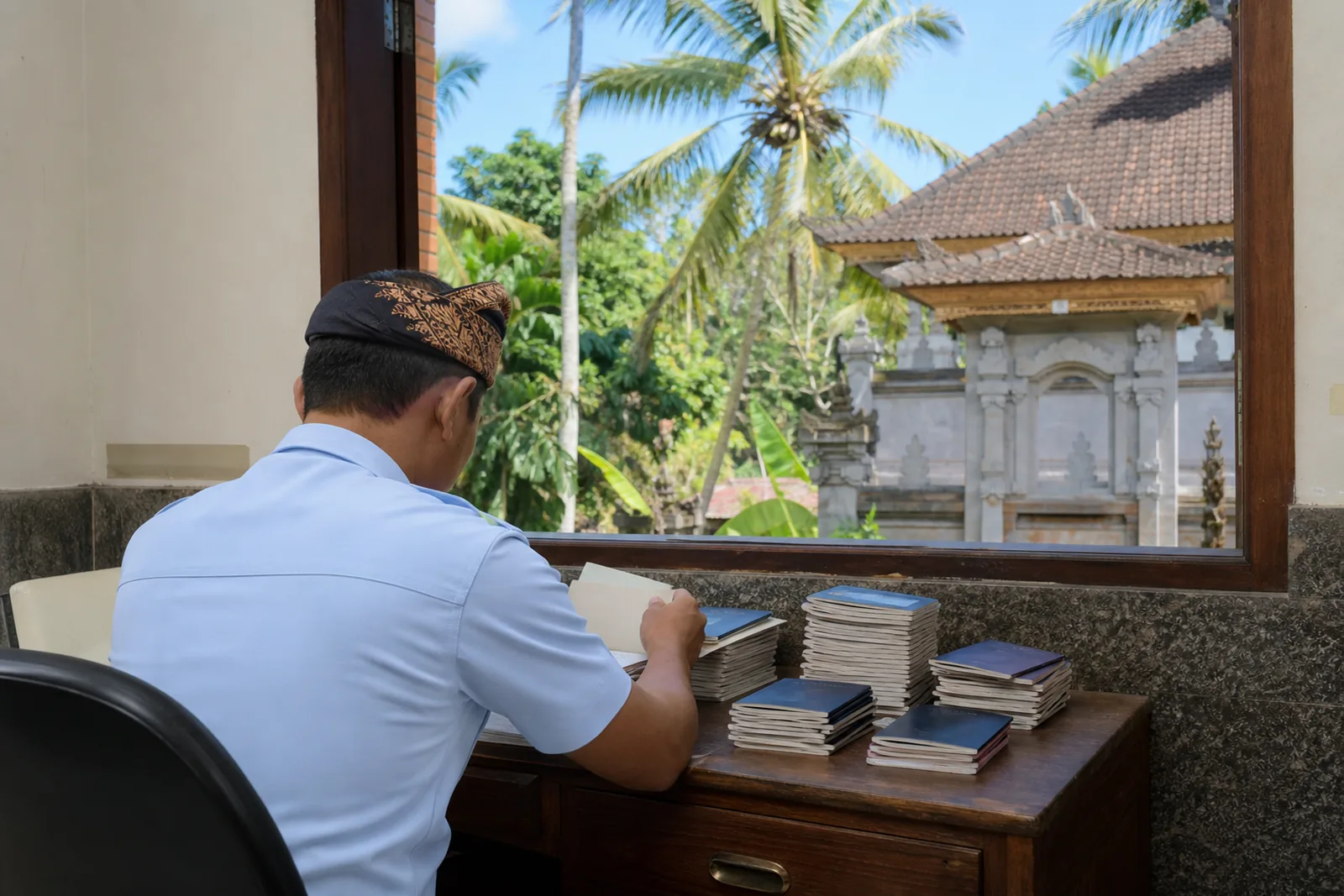
Bali Immigration Tightens Scrutiny of Foreigners Working on Tourist Visas
Bali Immigration is increasing scrutiny of foreigners working on incorrect visas, a reminder that remote work and content activity can carry compliance questions.
Bali Immigration is increasing scrutiny of foreigners working on incorrect visas, according to Bali Sun. The move is unlikely to trouble ordinary holidaymakers, but it sharpens an important question for visitors whose travel overlaps with paid work, remote employment or commercial content activity.
A compliance issue moving into the foreground
The reported focus is straightforward: foreigners working while holding tourist visas may face greater attention from immigration authorities. Bali Sun frames the development as part of a renewed effort by Bali Immigration to act against work conducted on the wrong visa.
That distinction matters because the modern visitor economy is no longer neatly divided between leisure and employment. A traveller may arrive principally for a holiday while remaining connected to a business, employer, clients or online audience elsewhere. Equally, content creation can be recreational for one visitor and commercial for another.
The core message is not that tourism itself is under suspicion; it is that work must be undertaken using the correct immigration status.
For investors, operators and long-stay visitors considering Indonesia, this is less a headline about tourism demand than a reminder that compliance should sit alongside location, lifestyle and commercial planning.
Why the issue extends beyond traditional employment
Bali Sun specifically notes the growing number of people running content-creation side hustles or working while on holiday. That observation captures a practical difficulty: digital activity can blur the boundary between personal use and business activity.
A visitor posting holiday photographs is not necessarily in the same position as someone producing paid promotional material. Likewise, carrying out a limited task while travelling may feel very different from operating an ongoing business from a destination. Immigration rules, however, are not best approached through informal assumptions about what seems minor or commonplace.
The prudent response is to identify the purpose of travel before arrival and obtain qualified advice where that purpose includes any work or commercial activity. Investors should apply the same discipline to the people they engage: staff, consultants, creators, contractors and overseas partners may each need to consider their own appropriate arrangements.
This is especially relevant in destinations that attract a mixture of tourists, entrepreneurs, hospitality operators and property buyers. A relaxed setting does not remove the need for clear documentation and lawful processes.
What visitors should take from the report
The Bali Sun report says that most tourists need not be concerned. That is an important qualification. A conventional visitor travelling for leisure should not read the story as a warning against visiting Bali or Indonesia.
The relevant caution is narrower. Where a trip includes work, a paid side activity, commercial collaboration or content creation connected to income, it is sensible to pause before assuming a tourist visa is suitable.
A useful practical framework is to separate the following questions:
- Is the trip solely for tourism, or does it include work?
- Is any activity connected to payment, a client, an employer or a commercial promotion?
- Is the activity occasional personal sharing, or part of an organised business activity?
- Has appropriate professional advice been sought before travel?
None of these questions substitutes for formal legal or immigration advice. They do, however, help prevent a common mistake: treating a tourist visa as a catch-all solution because the work is digital, short-term or conducted from a hotel, villa or café.
A governance point for property investors
For property investors, visa compliance is distinct from property ownership and investment structures, but the two topics can meet in day-to-day operations. Buying or leasing an asset, visiting it, overseeing a refurbishment and running a hospitality business are not interchangeable activities from a compliance perspective.
That is why a Lombok investment should be evaluated through more than its expected rental performance or market positioning. An investor may use professional managers and advisers, but should still understand which activities they personally intend to undertake while in Indonesia.
The wider lesson from Bali’s reported enforcement focus is one of governance. Good investments are supported by clear roles, suitable professional advice and a willingness to document decisions before money is committed. The same approach applies whether the asset is in a mature tourist district or an earlier-stage market.
What this means for investors
The immediate implication is caution, not alarm. Bali Sun’s report points to a compliance environment in which authorities are paying closer attention to foreigners working on tourist visas.
For investors and long-stay visitors, the sensible response is to:
- treat visa status as a planning issue from the outset;
- avoid relying on informal guidance or assumptions about remote work;
- distinguish personal travel from commercial activity;
- obtain qualified advice before undertaking work-related activity in Indonesia; and
- ensure operating arrangements for any investment are properly structured.
For ordinary tourists, the report offers reassurance: Bali Sun says most visitors need not be concerned. For those combining travel with work, it is a timely prompt to verify the correct route before arriving.
As Indonesia’s visitor economy continues to attract internationally mobile travellers, clear compliance planning will remain an essential part of travelling and investing with confidence.
Stay informed, subscribe to the free Lombok Briefing for analysis like this, published twice a month.
Does this Bali Immigration report affect ordinary tourists?
Bali Sun states that most tourists do not need to be concerned. The report concerns foreigners working on incorrect visas, so the key consideration is whether a visitor’s trip includes work, paid activity or commercial content creation rather than ordinary tourism.
Can remote work or content creation raise visa compliance questions in Bali?
Yes. Bali Sun notes that more people are running content-creation side hustles or working while on holiday, and reports increased scrutiny of foreigners working on tourist visas. Visitors whose travel includes commercial activity should seek qualified advice before relying on a tourist visa.
Why should Lombok property investors pay attention to Bali visa enforcement?
Visa compliance is separate from property investment, but investors may visit assets, meet operators or undertake work-related activity in Indonesia. The report is a reminder to distinguish leisure travel from commercial activity and to obtain qualified advice before carrying out work while visiting.

The Lombok Buyer's Field Guide
Legal structures ranked by risk, the honest ROI math line by line, all six zones ranked, and the 24-point due-diligence checklist. The whole book, free in your inbox.
See what's inside