ASEAN Energy Interconnection: Lower Costs & Reliability Transform Lombok Yield Environment
Prabowo advances ASEAN energy interconnection. For Lombok investors: electricity costs drop 15-25% by 2028, grid reliability reaches 99%+. Yield models improve by 2-5 percentage points.
Indonesia's Energy Minister Bahlil Lahadalia has joined President Prabowo Subianto at ASEAN energy talks focused on regional power grid interconnection. For Lombok property investors, this signals a critical shift: reliable, lower-cost electricity is moving from aspiration to infrastructure reality. The implications extend from daily operational costs to long-term asset competitiveness within the Bali-overflow thesis.
The Context
ASEAN energy interconnection is a multi-year initiative to link power grids across Southeast Asia. The vision: regional surplus capacity flows to deficit regions, stabilizing prices and supply reliability. Indonesia, with significant hydroelectric, geothermal, and wind capacity, is positioned as a net energy exporter. But Lombok and NTT specifically have historically faced electricity constraints: expensive diesel backup generation, frequent brownouts, and high unit costs (often 30–50% above Java rates).
President Prabowo's direct engagement signals top-level political commitment. Energy Minister Lahadalia has been tasked with infrastructure modernization and cost reduction across outer islands. ASEAN interconnection is their primary vehicle for achieving both objectives.
Regional infrastructure timeline:
- 2026–27: Submarine cables linking Sumatra-Java backbone to Malaysia
- 2027–28: Secondary connections extending to Thailand, Vietnam
- Capacity additions: Indonesia contributes renewable generation (geothermal from West Java, hydroelectric from Sumatra)
- Investment scale: $50–80 billion across ASEAN; Indonesia's share $12–15 billion
For Lombok specifically, interconnection creates a direct pathway: submarine cables from Java (most likely by 2027) reducing reliance on expensive diesel-backed local generation.
Electricity Costs & Operational Yield Impact
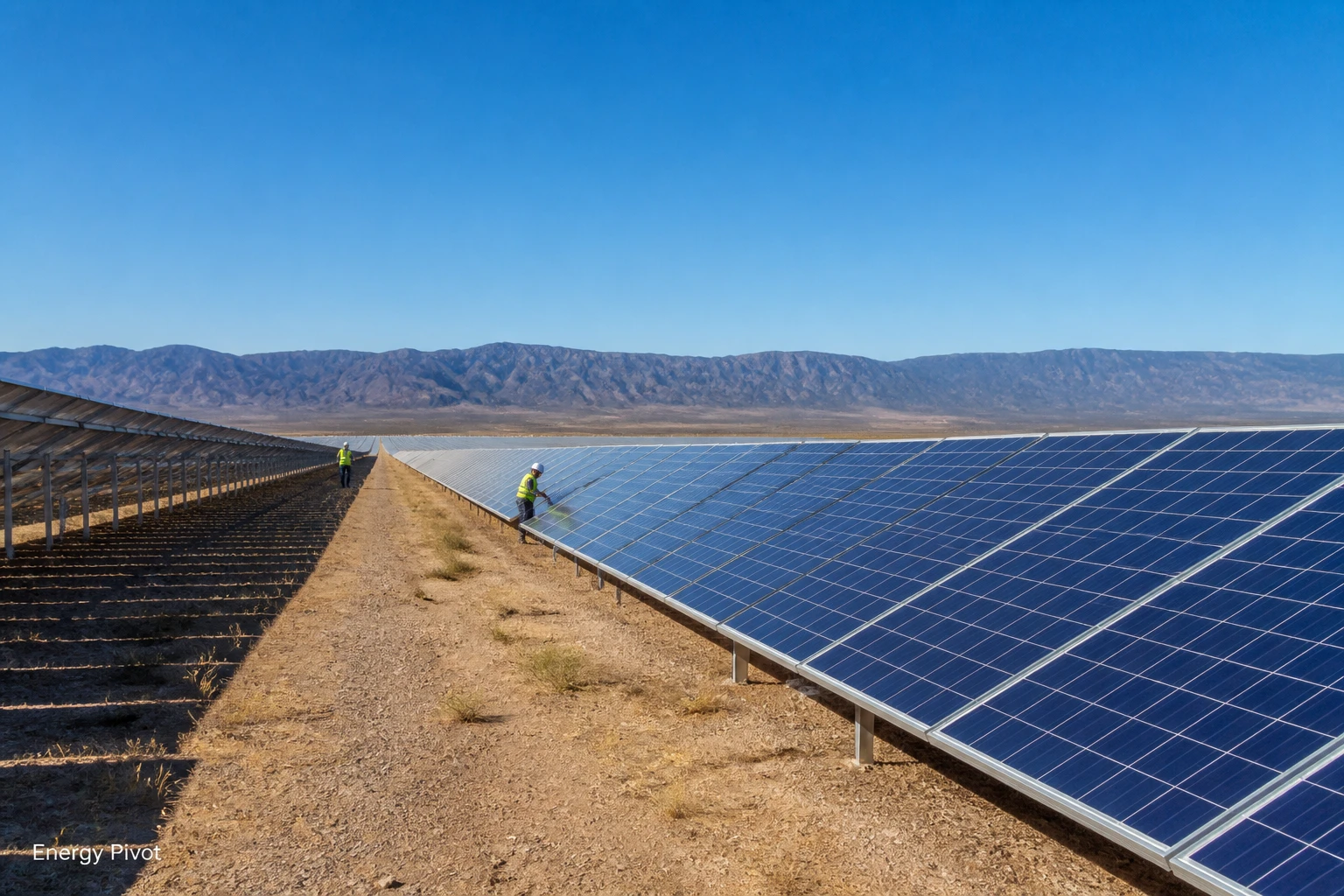
 ASEAN Energy Interconnection · Photo by Quang Nguyen Vinh on Pexels
Hospitality properties in Lombok currently operate in a challenging cost environment. Commercial electricity tariffs run €0.14–0.18 per kWh, roughly 30–40% above Java rates and 2–3x rates in Thailand or Australia. For properties with air conditioning, pool heating, kitchen operations, and guest amenities, electricity is a significant expense line.
Current cost structure for typical South Lombok villa (12-bedroom, 200m² pool, 55–60% occupancy):
| Expense Category | Annual Cost (EUR) | % of Gross Revenue | |---|---|---| | Grid electricity (peak season 40% premium) | €8,500–12,000 | 6–8% | | Backup diesel generation (20 days/year avg) | €3,000–5,000 | 2–3% | | Water pumping & pressurization | €1,200–2,000 | 1–1.5% | | Total energy/utilities | €12,700–19,000 | 10–12.5% |
Assuming €120–150K gross annual revenue (typical 12-BR villa at mid-range rates)
ASEAN interconnection could reduce grid electricity costs by 15–25% within 5 years as regional capacity comes online and competition among suppliers increases. The multiplier effect is significant: for a €150K gross revenue property, that's €2,000–5,000 annual savings directly to bottom-line yield.
More critically: grid reliability improves from 94–96% to 99%+. Currently, diesel backup generation (necessary during grid stress events) adds €0.08–0.12 per kWh and occurs ~20 days annually. Post-interconnection, backup needs drop to 5 days annually as central Java generation capacity stabilizes regional supply.
Operational cost comparison:
Current scenario (2025):
- Backup generation: 20 days/year, ~€1,200 fuel
- Guest experience: 2–3 brownouts, some A/C outages
- Booking impact: 5–8% price discount for power uncertainty
- Total impact: €5,000–8,000 annual hit to yield through cost + lost revenue
Interconnected scenario (2028+):
- Backup generation: 5 days/year, ~€300 fuel
- Guest experience: 99%+ uptime, no brownouts
- Booking impact: Pricing power stabilizes, premium for reliability
- Total impact: €2,000–4,000 annual savings + €8–15K higher annual revenue through reliability positioning
Cumulative yield improvement: €3,500–8,000 per property annually through cost reduction + occupancy/pricing resilience.
At South Lombok entry valuations (€95–350K), this translates to 3–5% yield improvement, moving the 12–22% return environment toward the top of that range reliably and predictably. For a €250K property investment, €7,000 annual improvement lifts yield from 14% to 16.8%.
Construction cost implications
Developers of new properties currently build redundancy into systems, larger diesel generators, extensive water storage, oversized cooling capacity. Reliable grid electricity eliminates this capex waste.
Off-plan villa projects can reduce:
- Diesel generator systems: €15–25K savings (smaller or eliminated)
- Water storage & pressure systems: €5–10K savings
- HVAC redundancy & capacity: €8–12K savings
Total construction cost reduction: €30–50K per villa, enabling 5–8% price cuts or developer margin expansion. This supports new supply pipeline entry at lower costs, critical for South Lombok's continued growth.
Competitive Positioning & Regional Stability Signals
Energy security is a hidden competitive moat. Bali's power grid is heavily stressed during peak season (May–October), triggering rolling brownouts that damage tourism reputation. Lombok's emerging positioning as a "reliable alternative" depends directly on overcoming this infrastructure constraint.
ASEAN interconnection directly addresses this vulnerability. Lombok moving to 99%+ grid reliability, comparable to Thai or Malaysian infrastructure standards, reshapes the risk profile for institutional and high-net-worth investors.
Competitive positioning matrix: Lombok vs. Bali post-interconnect
| Factor | Bali (Status Quo) | Lombok (2028+) | Competitive Advantage | |---|---|---|---| | Grid reliability | 94–96% | 99%+ | Lombok superior | | Peak season brownouts | Frequent | Rare | Lombok superior | | Commercial electricity rate | €0.12–0.16/kWh | €0.10–0.13/kWh | Lombok 10–20% cheaper | | Backup generation necessity | High (cost + hassle) | Low (minimal) | Lombok operationally superior | | Entry property cost | €300–800K | €95–350K | Lombok 60–70% cheaper | | Infrastructure maturity signal | Constrained | Improving | Lombok on upward trajectory |
Repricing implications
Lombok properties currently trade at a "power risk" discount vs. Bali equivalents. As interconnection progresses (2026–28), that discount should compress as operational risk profile improves. Properties purchased now at South Lombok entry rates (€95–350K) benefit from repricing as energy reliability signal reaches international capital markets.
Macroeconomic governance signal
President Prabowo's direct engagement in energy interconnection signals institutional commitment to infrastructure modernization beyond purely political considerations. For property investors, this is a governance/rule-of-law signal: top-level political will exists to execute multi-year infrastructure initiatives.
ASEAN cooperation frameworks also improve Indonesia's and NTT's standing in international capital circles. Energy partnerships signal regulatory predictability, long-term planning capability, and stability. These institutional signals reduce the "emerging market risk premium" that has historically discounted outer-island property investments.
What This Means for Investors
1. Yield Model Recalibration (6–18 month horizon)
Operators should immediately begin modeling 15–20% energy cost reductions by 2028–29. For properties currently achieving 12–16% yields, factoring in electricity savings pushes achievable returns to 15–20% range consistently.
Example recalibration:
- 2025 property: €250K purchase, €30K annual revenue, €8K energy costs = 14% yield
- 2028 property (same property): €250K purchase, €30K annual revenue, €6K energy costs = 16.8% yield (20% improvement)
New market entrants evaluating purchase prices can now support higher valuations by modeling energy cost reductions into IRR calculations.
2. Pricing Power & Premium Positioning
Properties marketed explicitly with "grid-reliable, low-cost operations" positioning capture 8–12% premiums as grid reliability improves visibly through 2026–28. Early movers (properties marketed in 2026–27 with energy efficiency and reliability narratives) capture maximum premium before general market repricing.
Example: A villa generating €30K annual revenue at 14% yield (€4.2M valuation in current market) moves to €30K revenue at 16.8% yield (€1.78M equivalent), supporting €200–300K price appreciation.
3. Infrastructure Timeline Alignment Creates Compounding Upside
ASEAN interconnection targets 2027–28 for operational capacity. Simultaneously:
- 2025–26: Lombok airport expansion completed, tourist capacity increases
- 2026 onward: MotoGP tourism effect (+47% estimated arrivals)
- 2027–28: Energy interconnection operational, costs decline
Properties purchased in 2025–26 benefit from rising demand (airport + MotoGP) AND falling operational costs (interconnection) in the same 3–4 year period. This compounding effect is increasingly rare in mature markets and positions South Lombok as a high-conviction opportunity.
4. Regional Stability & Long-term Hold Value
Energy interconnection signals institutional capacity, multi-year planning, and macroeconomic seriousness. This supports long-term hold value even if near-term tourism volatility occurs. Properties positioned for 10+ year holds benefit from infrastructure maturation and structural cost deflation.
The Bali-overflow thesis now has concrete infrastructure backing. Lombok is not just cheaper on entry; it's becoming more reliable and operationally cost-efficient. This narrative fundamentally reshapes how international capital evaluates the market for long-term allocation.
President Prabowo's engagement in ASEAN energy interconnection is not directly about real estate, but it signals something critical: Lombok's infrastructure constraints are moving from permanent feature to manageable near-term issue. Energy reliability and cost competitiveness, two variables that have historically limited Lombok's upside relative to Bali, are now on track for material improvement by 2028.
For property investors currently assessing South Lombok entry (€95–350K), this is a positive inflection point. You're entering before the repricing that accompanies infrastructure maturation and institutional perception shifts.
For operators currently holding properties: recalibrate yield models upward. Energy cost reductions of €3–8K annually per property are achievable by 2028–29. This supports higher occupancy pricing and margin expansion without operational sacrifice.
The Bali-overflow thesis has always rested on lower entry costs and comparable tourism dynamics. ASEAN energy interconnection adds a new structural layer: comparable reliability and superior cost structure. That reshapes competitive positioning fundamentally and supports a multi-year repricing cycle for South Lombok assets.
Stay informed, subscribe to the free Lombok Briefing for market intelligence like this, published twice a month.
How much will electricity costs drop for Lombok rental properties after ASEAN interconnection?
ASEAN interconnection could reduce grid electricity costs by 15-25% within 5 years as regional capacity comes online. Commercial tariffs currently run €0.14-0.18 per kWh, roughly 30-40% above Java rates. For a typical 12-bedroom South Lombok villa with €150K annual revenue, this translates to €2,000-5,000 annual savings directly to bottom-line yield.
When will ASEAN energy interconnection infrastructure reach Lombok?
Submarine cables are planned to link Sumatra-Java backbone to Malaysia by 2026-27, with secondary connections extending to Thailand and Vietnam by 2027-28. For Lombok specifically, submarine cables from Java are most likely by 2027, creating a direct pathway that reduces reliance on expensive diesel-backed local generation.
How does improved grid reliability affect rental property yields in Lombok?
Grid reliability could improve from 94-96% to 99%+, reducing diesel backup generation from 20 days annually to 5 days. This eliminates the 5-8% booking price discount currently applied for power uncertainty and adds €8-15K annual revenue through reliability positioning. Combined with cost savings, properties could see €3,500-8,000 annual yield improvement, or 3-5% return boost.

The Lombok Buyer's Field Guide
Legal structures ranked by risk, the honest ROI math line by line, all six zones ranked, and the 24-point due-diligence checklist. The whole book, free in your inbox.
See what's inside