
School Holidays Expose Bali's Limits: Lombok's Tourism Window Opens
School holidays have pushed Bali's beaches to capacity, exposing structural saturation. For Lombok investors, the signal is clear: 40–50% YoY visitor growth, affordable villas, and 7–12% net yields aw
Quick answer: School holidays and full-moon tidal conditions have pushed Bali's beaches to capacity this week, exposing the island's tourism saturation. For Lombok investors, this is a catalyst moment: with 40–50% YoY visitor growth and entry villas at EUR 95–350K (versus USD 400–800K in Bali), early-movers stand to capture rental yields of 7–12% net as demand shifts to the alternative.
Bali's top beaches this week are heaving. School holidays combined with a full moon, which brings tidal swells and strong undercurrents, have stretched capacity at the island's most popular coastal zones. Local authorities have reinforced flag-safety protocols to manage the surge. But for property investors, this crowding event signals something deeper: Bali's tourism infrastructure is reaching saturation. And that's precisely when Lombok steps into focus.
The Context
Bali has been the default for Southeast Asia tourism for decades. It offers established restaurants, nightlife, reliable airport infrastructure, and a critical mass of foreign residents. Yet those same assets, and the crowds they attract, are now becoming a vulnerability. When schools break, international tourist flows spike beyond the island's carrying capacity. Peak occupancy in established Bali resort zones runs 70–85%, leaving little room for organic growth.
Lombok, by contrast, operates at a stabilised occupancy of 55–70%, a sweet spot that signals room to expand without gridlock. Visitor arrivals to South Lombok have surged roughly 40–50% year-on-year, a growth rate that outpaces Bali's mature market. The narrative is already familiar to Lombok watchers: the "Bali overflow" thesis, in which rising congestion and price pressure in Bali nudge affluent travellers eastward to cheaper, less saturated alternatives.
This week's crowding event, a mundane holiday-season incident, is actually a powerful illustration of that structural shift happening in real time.
Mandalika's Moment: Infrastructure Meets Demand
The most visible catalyst is Mandalika Special Economic Zone, anchored by the MotoGP circuit. Since the 2022 inaugural race, the zone has become a focal point for international property interest. Land in Mandalika trades at roughly Rp 100–150 million per are (approximately USD 6,100–9,100 per are using the local convention of per-100-m² parcels), whilst comparable-quality land in Kuta fetches Rp 300–400 million per are.
The price spread reflects both current demand and future potential. Mandalika is early-cycle; Kuta is mature. When tourism flows increase, early-cycle zones capture the largest proportional gains. Indeed, villa rates in the Kuta–Mandalika corridor have risen approximately 38% year-on-year, whilst land in Are Guling, Lombok's frontier development zone, has appreciated roughly 47% in the same period.
For investors seeking capital appreciation coupled with rental yield, that early-cycle positioning is critical. Turnkey investment-grade villas in South Lombok entry range from EUR 95,000 to EUR 350,000, with net yields commonly reaching 7–12% after management fees and occupancy variability. Developer-quoted gross yields (before costs) run 12–22%. Compare this to Bali, where similar-class villas start at USD 400,000–800,000 and face stiffer occupancy competition at maturity.
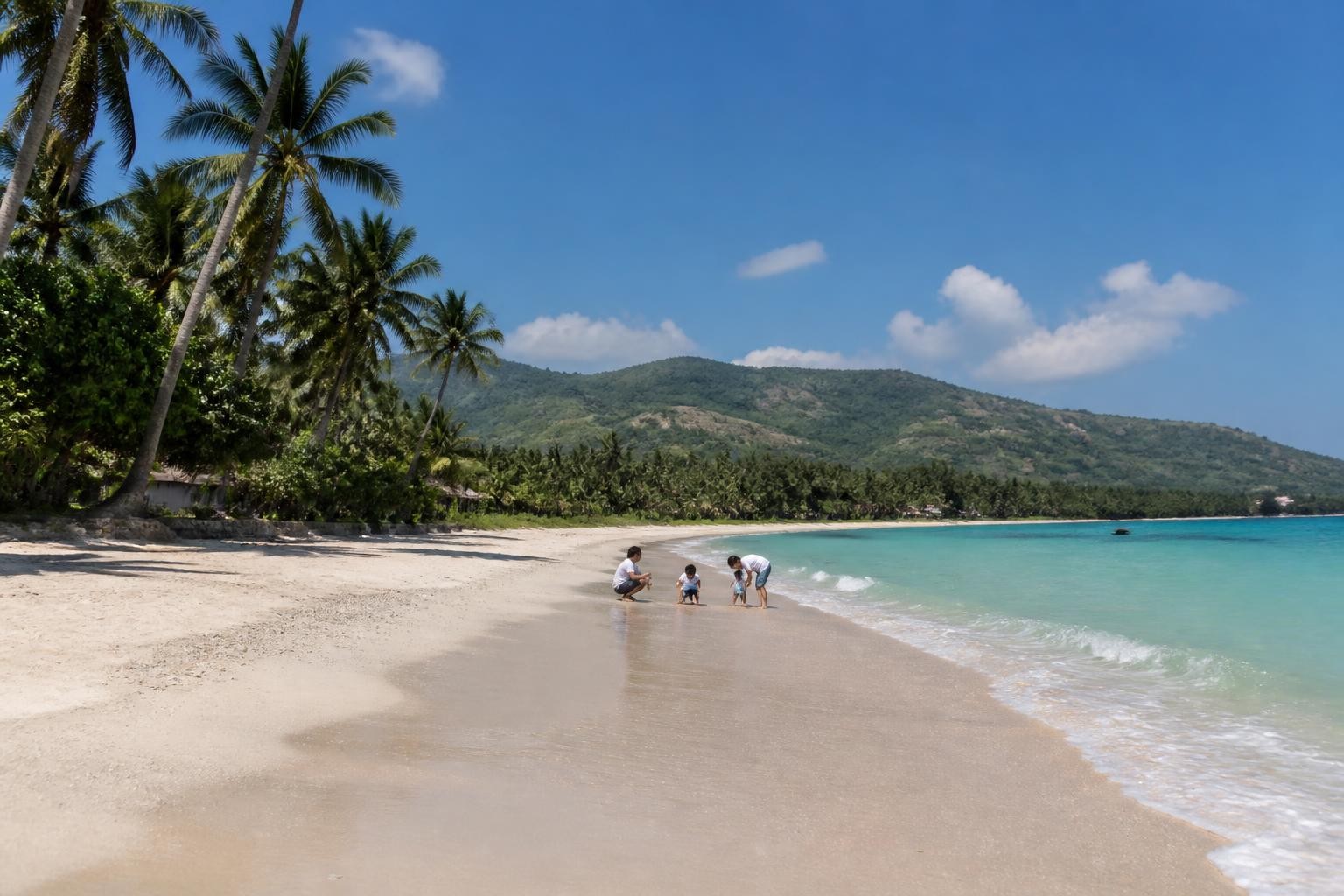 School Holidays Expose Bali's Limits · Illustration: HubLombok (AI-generated)
The Timing Question: Riding Momentum into 2026–2027
School holidays and full-moon swells are transient. But the infrastructure underpinning Lombok's growth is structural. The airport expansion initiative, scheduled to complete through 2025–2026, will increase handling capacity and potentially attract new flight routes. Mandalika continues adding hospitality inventory and experience offerings. Are Guling, where Samudra Villas operates, remains in early development phase, a 47% YoY appreciation rate reflects both scarcity value and forward momentum.
Property investors in early-cycle markets benefit from two overlapping cycles: tourism adoption (higher occupancy and nightly rates) and asset appreciation (scarcity plus rising awareness equals higher resale prices). Bali, mature on both counts, compresses these returns. Lombok is in the first half of both cycles, which is precisely when institutional and family-office capital tends to deploy.
The risk, naturally, is execution. Lombok's infrastructure must deliver on its announcements. Management standards must remain competitive with international expectations. The "Bali overflow" narrative depends on Lombok being a credible alternative, not a downgrade. That depends on development quality and operator discipline, where issues like the Samudra Villas model (transparent yield disclosure, operational standards) set the institutional tone.
What This Means for Investors
Entry pricing remains accessible. A turnkey villa from around EUR 255,000 (the Samudra Villas reference point in Are Guling) is priced well below Bali comparables; HubLombok publishes no yield figure for it, and any net yield should be treated as an estimate within the 7-12% honest range. For European, Australian and American investors aged 30–60 with liquidity, Lombok's low entry price and 7–12% net yield constitute a rare early-cycle arbitrage.
Timing concentrates opportunity. The "Bali overflow" narrative is no longer theoretical speculation, it's visible in weekly traffic patterns and occupancy data. Investor capital has a way of pricing in these signals in concentrated waves. The next 12–18 months may see a material increase in foreign-buyer inquiry, which could compress both pricing and deal flow. Early-movers capture better selection and potentially pre-appreciation positioning.
Legal friction has fallen. Foreign buyers in Lombok now have reliable notarial support, TerraNusa Advisory offers end-to-end legal structuring and due diligence for PT PMA setups and leasehold agreements, lower BPHTB transfer taxes, and a growing ecosystem of professional management firms. The cost of entry has dropped significantly since 2022.
This week's Bali beach-crowding event is a data point. But it's consistent with a much larger pattern: Asia's established tourism capitals are reaching saturation, and capital is beginning to look eastward to the next frontier. For investors with a 5–10 year horizon and appetite for early-cycle exposure, the moment to investigate Lombok is now.
Stay informed, subscribe to the free Lombok Briefing for market intelligence like this, published twice a month.
How much faster is Lombok's tourism growth vs Bali's?
Lombok's arrivals have grown roughly 40–50% year-on-year, whilst Bali's mature infrastructure operates at 70–85% occupancy, leaving little room for proportional growth. This imbalance is pushing investor capital eastward.
What rental yield should I expect in South Lombok in 2026?
Net yields (after management fees) typically range 7–12%; developer-quoted gross yields run 12–22% before costs. Early investors in Are Guling have seen capital appreciation approximately 47% year-on-year alongside these rental returns.
What legal structures protect foreign villa ownership?
PT PMA company ownership, licensed notaries, and transparent deed processes through bodies like TerraNusa Advisory now establish clear investor protections. Leasehold (25–30 years) and Hak Pakai provide alternative structures; freehold is restricted to Indonesian citizens.

The Lombok Buyer's Field Guide
Legal structures ranked by risk, the honest ROI math line by line, all six zones ranked, and the 24-point due-diligence checklist. The whole book, free in your inbox.
See what's inside