Senggigi vs South Lombok: Established Calm or Growth Frontier?
Senggigi offers a mature, low-risk base with existing infrastructure and a gentle pace, but its tourism momentum has plateaued. South Lombok, particularly the Kuta-Mandalika corridor, is the active growth story, with villa rates rising around 38% year-on-year and net yields of 7-12% for well-run ass
Quick answer: Senggigi offers a mature, low-risk base with existing infrastructure and a gentle pace, but its tourism momentum has plateaued. South Lombok, particularly the Kuta-Mandalika corridor, is the active growth story, with villa rates rising around 38% year-on-year and net yields of 7-12% for well-run assets.
Two very different chapters of Lombok
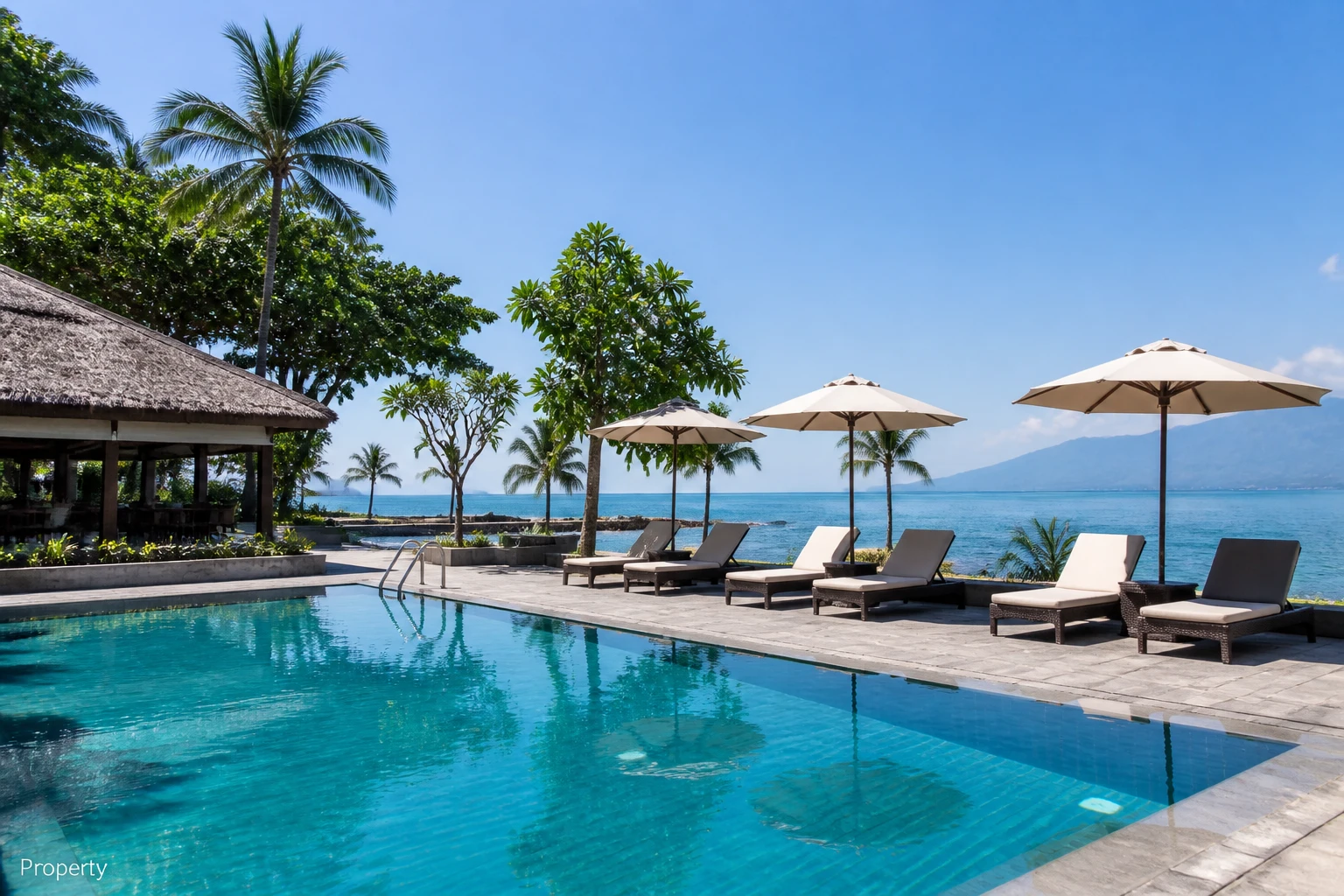
Senggigi, on Lombok's north-west coast, was the island's original foothold for package tourism. Hotels, dive shops and restaurants cluster along a coastal strip overlooking the Bali Strait, with sunsets framing Gunung Agung across the water. The pace is unhurried, the crowd skews older and European, and the commercial infrastructure that took decades to build is solidly in place.
South Lombok, centred on Kuta (not to be confused with Bali's Kuta town) and the Mandalika Special Economic Zone, is a different proposition entirely. Purpose-built roads, the Pertamina Mandalika International Circuit and a string of world-class surf breaks have catalysed a new wave of investment from domestic and international buyers alike. The two regions sit roughly 70 kilometres apart by road, yet feel separated by an entire investment cycle.
What Senggigi offers today
Senggigi's strengths are real and should not be dismissed. The road network is established, utility supply is generally more reliable than in some southern pockets, and a functioning commercial strip means short-stay rentals can draw steady bookings from travellers transiting to the Gili Islands or visiting Mataram, the provincial capital. For buyers who intend to use a property personally for several months each year, the lower entry prices and calmer environment hold genuine appeal.
The limitations are equally real. Capital growth has been modest. Infrastructure investment is not flowing into Senggigi the way it is flowing into the Mandalika SEZ, and new hotel openings in the north tend to be small boutique properties rather than international brands. The short-term rental market is smaller, supply is concentrated along a narrow coastal band, and transaction volumes are lower, which raises liquidity risk for investors who may need to exit within a five-to-seven year horizon.
Foreign ownership rules are identical across the island. Indonesian law bars foreigners from holding freehold (Hak Milik) regardless of location. In Senggigi as in the south, buyers work through leasehold (Hak Sewa, typically 25-30 years with extensions), Hak Pakai for those holding KITAS or KITAP residency, or a PT PMA foreign-owned company structure holding Hak Guna Bangunan. Nominee arrangements are illegal and void in court. Any purchase in either region should be preceded by proper due diligence on title, ownership history and zoning.
Why South Lombok is attracting capital
The south has several mutually reinforcing demand drivers that Senggigi lacks at this stage. Foreign arrivals into the region were up 40-50% year-on-year at the most recent count, partly a consequence of the MotoGP effect: the Mandalika circuit hosts the Indonesian Grand Prix and has placed the region on the radar of a global audience that eventually converts into villa inquiries and rental bookings.
The Bali-overflow thesis is the other structural engine. Bali's most popular areas are increasingly congested and expensive, with comparable villas in established Bali tourism zones running USD 400,000 to 800,000. In South Lombok, investment-grade turnkey product starts from around EUR 95,000 and reaches EUR 350,000 for well-finished larger assets. That price gap is attracting buyers who want the tropical lifestyle without the Bali premium.
Villa nightly rates in the Kuta and Mandalika corridor rose around 38% year-on-year, a clear signal that demand is outpacing supply in the short-term rental market. Earlier-cycle zones further from the circuit, such as Are Guling, recorded rate momentum of around 47% over the same period. The growth frontier is still moving.
For a detailed breakdown of how each southern zone compares on land price, yield and maturity, the zone-by-zone guide is the most comprehensive starting point.
Yields, land prices and honest numbers
Honest net yields in South Lombok, after management fees of 18-22% of gross revenue and realistic stabilised occupancy of 55-70%, land in the 7-12% range for well-run properties. Developer-quoted gross yields of 12-22% are common marketing language, but buyers should always stress-test these against actual operating costs before committing.
Land in the prime Kuta zone trades at roughly Rp 300-400 million per are (approximately USD 18,200-24,200 per are; one are equals 100 square metres). Are Guling, an earlier-cycle frontier where Samudra Villas, the parent developer of this editorial, operates, sits at roughly Rp 120-180 million per are. Mandalika, around the circuit itself, is in the Rp 100-150 million range. For zone-by-zone pricing, see the market data page.
Senggigi does not have a comparable published market-rate grid at this level of granularity. Anecdotally, land prices there have grown more slowly and deals take longer to close, which matters when assessing total return alongside yield.
Choosing the right fit
Senggigi suits a specific buyer: someone who knows the island well, values personal use and low hassle above yield maximisation, and is comfortable with a quieter rental market and slower capital growth. It is not a bad investment; it is simply a different one.
South Lombok suits buyers looking for a combination of rental yield and capital appreciation over a five-plus year hold. It is earlier in its cycle, which means higher upside potential but also more construction-phase risk and less mature infrastructure in some pockets. The full buying guide covers the legal process, due diligence checklist and cost structure in detail.
Whichever region you favour, engage an independent licensed notary before you commit. A firm such as TerraNusa Advisory, which runs the full chain from title-history review and zoning checks through to deed transfer at the land office, can surface problems that a standard agency introduction will not. Neither region is a wrong choice. They are simply different bets on what you need Indonesian property to do for you in 2026.
Is Senggigi still worth buying in 2026?
Senggigi remains a reasonable option for buyers prioritising personal use and lifestyle over growth. Infrastructure is established and the rental market is stable, but capital appreciation and short-stay demand have been modest compared with South Lombok. It suits buyers with a long hold horizon and no pressure on yield.
What net yield can foreign buyers realistically expect in South Lombok?
After management fees of 18-22% of gross revenue and realistic occupancy of 55-70%, honest net yields for well-run villas in South Lombok sit in the 7-12% range. Developer-quoted gross figures of 12-22% exclude these costs, so always model both scenarios before committing.
Can foreigners legally own property in Senggigi or South Lombok?
Foreigners cannot hold freehold (Hak Milik) anywhere in Indonesia. The practical options are leasehold (Hak Sewa, typically 25-30 years with extensions), Hak Pakai for holders of KITAS or KITAP residency, or a PT PMA company structure. These routes apply equally in Senggigi and South Lombok. Nominee arrangements are illegal.
The Lombok Buyer's Field Guide
Legal structures ranked by risk, the honest ROI math line by line, all six zones ranked, and the 24-point due-diligence checklist. The whole book, free in your inbox.
See what's inside