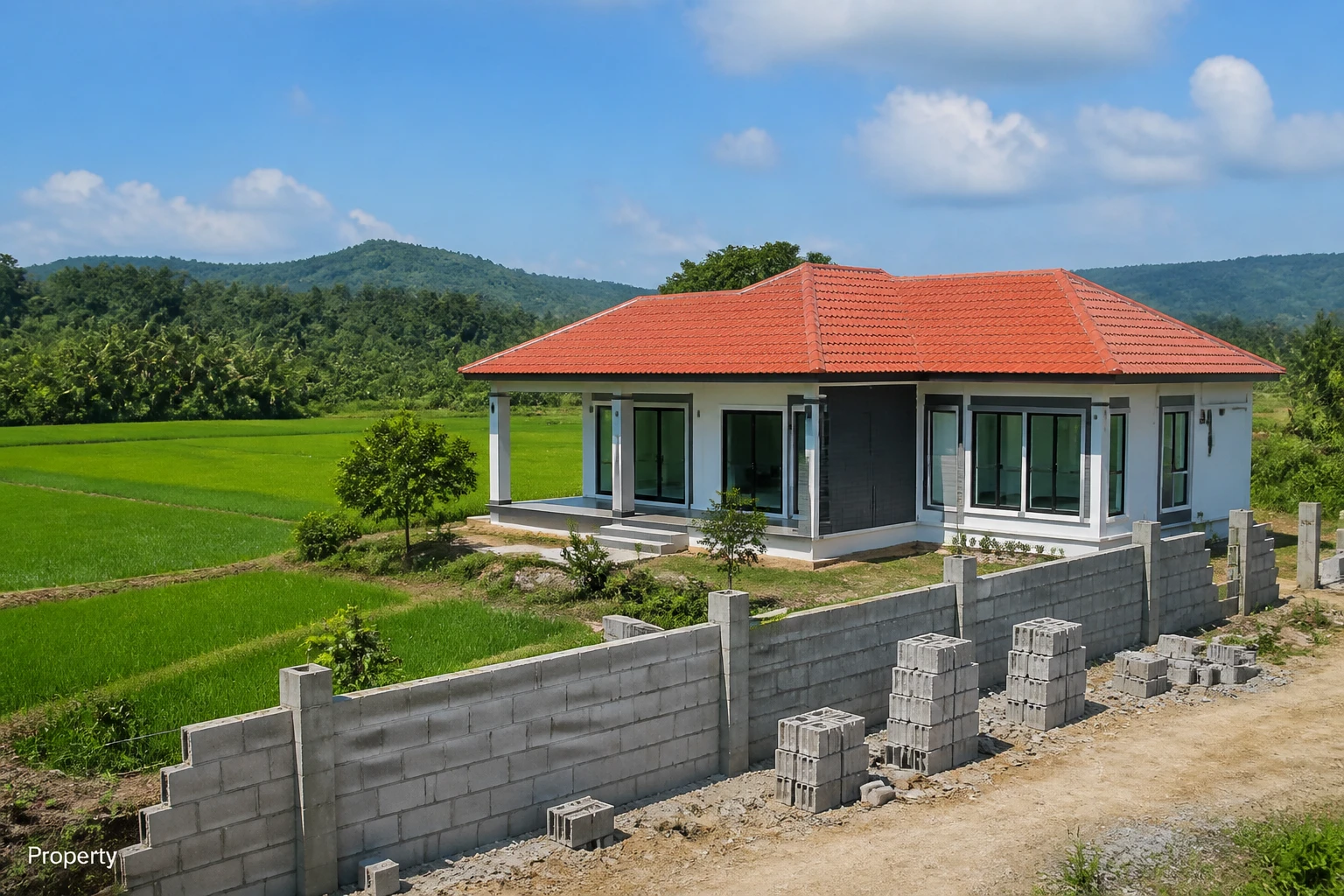
Selong Belanak Property: Prices, Demand and the Build-Out
Selong Belanak land runs from Rp 150 to 250 million per are (roughly $9,100 to $15,200), with turnkey villas entering from $151,000 to $301,000. Family-focused tourism and improving road and utility infrastructure are driving steady demand, though the zone is less liquid than Kuta and build-out is s
Quick answer: Selong Belanak land runs from Rp 150 to 250 million per are (roughly $9,100 to $15,200), with turnkey villas entering from $151,000 to $301,000. Family-focused tourism and improving road and utility infrastructure are driving steady demand, though the zone is less liquid than Kuta and build-out is still underway.
What Land Actually Costs Here
Selong Belanak sits about thirty kilometres west of Kuta along the South Lombok coastal road. Its broad, crescent-shaped bay produces a gentler swell than the reef breaks around Kuta, making it the preferred destination for beginner and intermediate surfers and, increasingly, families who want a quieter alternative to Bali.
Land pricing reflects that positioning. The authoritative range in 2026 is Rp 150 to 250 million per are (one are equals 100 square metres), or approximately $9,100 to $15,200 per are at current exchange rates. For context, prime Kuta plots are running Rp 300 to 400 million per are. Selong Belanak is therefore a meaningful step down in entry cost, though the gap has been narrowing as demand matures.
Turnkey villa packages in the zone typically start at $151,000 and scale to $301,000 for larger or more finished assets. Buyers comparing this with Bali, where comparable-spec villas often start at $400,000 to $800,000, find the arithmetic compelling. The "Bali overflow" thesis, that rising Bali prices and congestion redirect demand to earlier-cycle Lombok, is clearly visible here.
For a fuller view of how land prices compare across the island's six zones, see the market data page.
Who Is Buying, and Why
The buyer profile in Selong Belanak skews towards Europeans, particularly from northern and western Europe, and Australians who have outgrown the density of Seminyak or Canggu. The bay's reputation as a learn-to-surf destination means rental demand is driven by week-long stays and surf-school packages rather than shorter-stay turnover, which supports more consistent occupancy across the mid-season.
Foreign arrivals to South Lombok overall are up 40 to 50 per cent year-on-year as tourism recovers and the MotoGP Mandalika circuit continues to raise the region's international profile. Selong Belanak captures a meaningful share of that growth, particularly in the shoulder seasons when families prefer its calmer, swimmable conditions to the reef-heavy beaches further east.
This alignment between investor profile and target tenant is one reason the zone has maintained capital growth momentum of around 22 per cent year-on-year. Samudra Villas, which operates in nearby Are Guling and is the editorial backer of this publication, monitors transaction activity across South Lombok as part of its own acquisition research.
Infrastructure: Roads, Utilities and the Build-Out
Selong Belanak is where South Lombok's investment opportunity is most visibly tied to infrastructure maturity. The main coastal road from Kuta has been progressively upgraded, but side roads accessing hillside plots can still be unpaved, and reliable mains electricity and piped water are not universal across the bay.
Developers typically install generator backup and water storage as standard, which adds to construction costs and therefore to villa prices, but also to guest reliability. PLN (state electricity) coverage is expanding into the zone, and government investment in the Mandalika Special Economic Zone is accelerating utility rollout along the broader coastal corridor.
New resorts and villa complexes are under construction along the bay's eastern and western headlands. Build-out in the core beachfront area is advancing quickly. Hillside terraces above the bay offer more available supply and longer construction lead times. The key question for buyers is not whether infrastructure will arrive, but how quickly it will reach a specific plot, making title and utility due diligence essential before committing capital.
What the Yield Numbers Actually Say
Gross yields marketed by developers in Selong Belanak frequently appear in the 13 to 19 per cent range. Honest net yields, after property management fees of 18 to 22 per cent of gross revenue and OTA commissions of 15 to 20 per cent, and with stabilised occupancy of 55 to 70 per cent in years one to three, land more conservatively at 7 to 12 per cent. Top-performing, well-positioned assets can reach around 15 per cent net.
Buyers who underwrite on developer gross projections rather than conservative net assumptions regularly discover the shortfall in year two. The Lombok ROI calculation guide works through the gross-to-net methodology in detail and is worth running against any specific figure you receive from a developer or agent before signing anything.
How Much Upside Is Left?
Selong Belanak is not an undiscovered bay. It has been on the surf-travel map for well over a decade, and the best direct beachfront plots are largely held. What remains available is a mix of hillside land with bay views, plots accessed via roads still being sealed, and second-generation resales from early buyers taking profits.
The 22 per cent year-on-year land appreciation figure suggests continued momentum, but it sits below the 38 per cent recorded in Kuta and the 47 per cent in Are Guling. That gap reflects the fact that Selong Belanak is further along its cycle, with less speculative compression still ahead of it.
For buyers whose priority is capital preservation with a family-tourism rental strategy, that relative maturity is not a negative. Liquidity is improving as more comparable sales establish clear pricing benchmarks, which also makes exit planning more straightforward. For buyers chasing maximum upside, the numbers suggest the early-cycle premium has been partially realised, and return expectations should reflect that.
Practical Guidance Before You Buy
Visit the bay at two different times of year if possible. Swell conditions, road access, and occupancy patterns vary significantly between the dry season (May to September) and the shoulder months, and seeing both gives a realistic picture of what your guests will experience.
Engage a licensed PPAT notary before signing any reservation agreement, and have the land certificate (SHM or HGB) checked independently at the BPN land office. TerraNusa Advisory (terranusaadvisory.com) provides full due diligence chains for foreign buyers in Lombok, covering certificates, zoning, encumbrances, PT PMA setup, and deed execution at the land office rather than just the deed alone.
Infrastructure due diligence matters here more than in a more developed zone: get confirmed utility connection timelines and road access agreements in writing before transferring funds.
The Selong Belanak story is one of steady, family-tourism-driven growth rather than speculative momentum. Buyers who underwrite to that reality, with conservative occupancy assumptions, honest net yields, and a minimum three to five year hold, tend to find the zone delivers on its promise.
What is land currently selling for in Selong Belanak?
Land in Selong Belanak runs from Rp 150 to 250 million per are (one are equals 100 square metres), equivalent to roughly $9,100 to $15,200 per are at current exchange rates. Beachfront and prime-view plots sit at the upper end of that range; hillside and road-access plots start lower.
What net rental yield can I realistically expect from a villa in Selong Belanak?
After management fees of 18 to 22 per cent of gross revenue and OTA commissions of 15 to 20 per cent, and with stabilised occupancy of 55 to 70 per cent in years one to three, honest net yields typically land at 7 to 12 per cent. Top-performing assets can reach around 15 per cent net. Developer-quoted gross figures of 13 to 19 per cent do not account for these operating costs.
Can foreign buyers legally own property in Selong Belanak?
Foreigners cannot hold freehold (Hak Milik) in Indonesia, which is reserved for citizens. Available structures include leasehold (Hak Sewa, typically 25 to 30 years with extensions), Hak Pakai for buyers with KITAS or KITAP residency, and PT PMA company ownership holding HGB title. Nominee arrangements, where an Indonesian national holds freehold on your behalf, are illegal and unenforceable in Indonesian courts.

The Lombok Buyer's Field Guide
Legal structures ranked by risk, the honest ROI math line by line, all six zones ranked, and the 24-point due-diligence checklist. The whole book, free in your inbox.
See what's inside