Rupiah Gains as Oil Retreats on Strait of Hormuz Peace Hopes
The rupiah opened stronger against the dollar as oil prices fell on hopes of restored navigation through the Strait of Hormuz.
Quick answer: Indonesia’s rupiah opened 28 points, or 0.16%, stronger at Rp17,695 per US dollar as global oil prices fell on Middle East peace hopes. For Lombok investors, the move reinforces the importance of watching currency and energy-market volatility alongside local property fundamentals.
Indonesia’s currency market began the day with a modest but meaningful shift in sentiment. The immediate catalyst was not domestic real estate, tourism or infrastructure, but a potentially consequential development far from Lombok: renewed discussion around maritime access through the Strait of Hormuz.
For overseas buyers assessing Indonesia, the episode is a useful reminder that the rupiah is shaped by global risk conditions as well as local demand. A single stronger opening does not establish a trend; it does, however, show how swiftly geopolitical news, oil prices and foreign-exchange expectations can meet in an investor’s purchase calculation.
The Context
The rupiah opened at Rp17,695 per US dollar, improving from the previous close of Rp17,723. Lukman Leong, Chief Analyst at Doo Financial Futures, told ANTARA that declining global crude prices and growing hopes for peace in the Middle East supported the currency.
The backdrop was discussion between Oman and Iran about establishing a temporary joint maritime corridor in the Strait of Hormuz. According to the report, Omani Foreign Minister Sayyid Badr bin Hamad Al Busaidi and Iranian Foreign Affairs Minister Seyed Abbas Araghchi considered efforts to restore freedom of navigation through the strategic waterway.
Their discussions covered shipping conditions, continued dialogue towards a practical understanding for smooth and uninterrupted navigation, and regional security and stability. They also reviewed measures intended to create conditions for dialogue and negotiations to resume.
The market connection is straightforward, even if the path is rarely smooth. The Strait of Hormuz is central to shipping expectations; news that lowers perceived disruption risk can feed into oil pricing. In turn, oil-market moves can influence how investors assess currencies in economies exposed to global energy prices and risk appetite.
Brent crude fell to around US$86.20 per barrel, extending a previous-session decline of 2.4%. WTI fell 5.5% to settle near US$80.40 per barrel, according to the reports cited by ANTARA.
Oil, Diplomacy and the Rupiah’s Opening Move
Leong’s assessment was that the rupiah had scope to strengthen as global oil prices declined amid the peace prospects. The report did not identify a significant domestic factor driving the opening move. Instead, it pointed investors towards the international picture, and towards planned protests on Thursday as a local event to monitor.
That distinction matters. Currency headlines are often presented as an all-purpose verdict on an economy. This dispatch suggests something more precise: the day’s improvement was linked principally to a change in global energy and geopolitical expectations, rather than a new domestic economic development.
For an international investor, that is a reason to separate three questions that are too easily blended together:
- What is moving the rupiah today?
- Is that driver domestic or international?
- Does the movement alter the underlying case for the asset being considered?
In this instance, the source identifies a global catalyst. The implications for a Lombok acquisition should therefore be treated with discipline. A buyer whose base currency is the US dollar may see the rupiah level as part of their immediate entry-cost calculation. A buyer focused on a long holding period should also consider the currency as an ongoing exposure, rather than assume that a single session will determine the investment outcome.
The analyst’s stated trading range was Rp17,650 to Rp17,750 per US dollar. That is a near-term market view, not a forecast for property values, tourism demand, rental income or an individual buyer’s eventual return. Keeping those categories distinct is particularly important when overseas investors are tempted to translate a currency move directly into a real-estate conclusion.
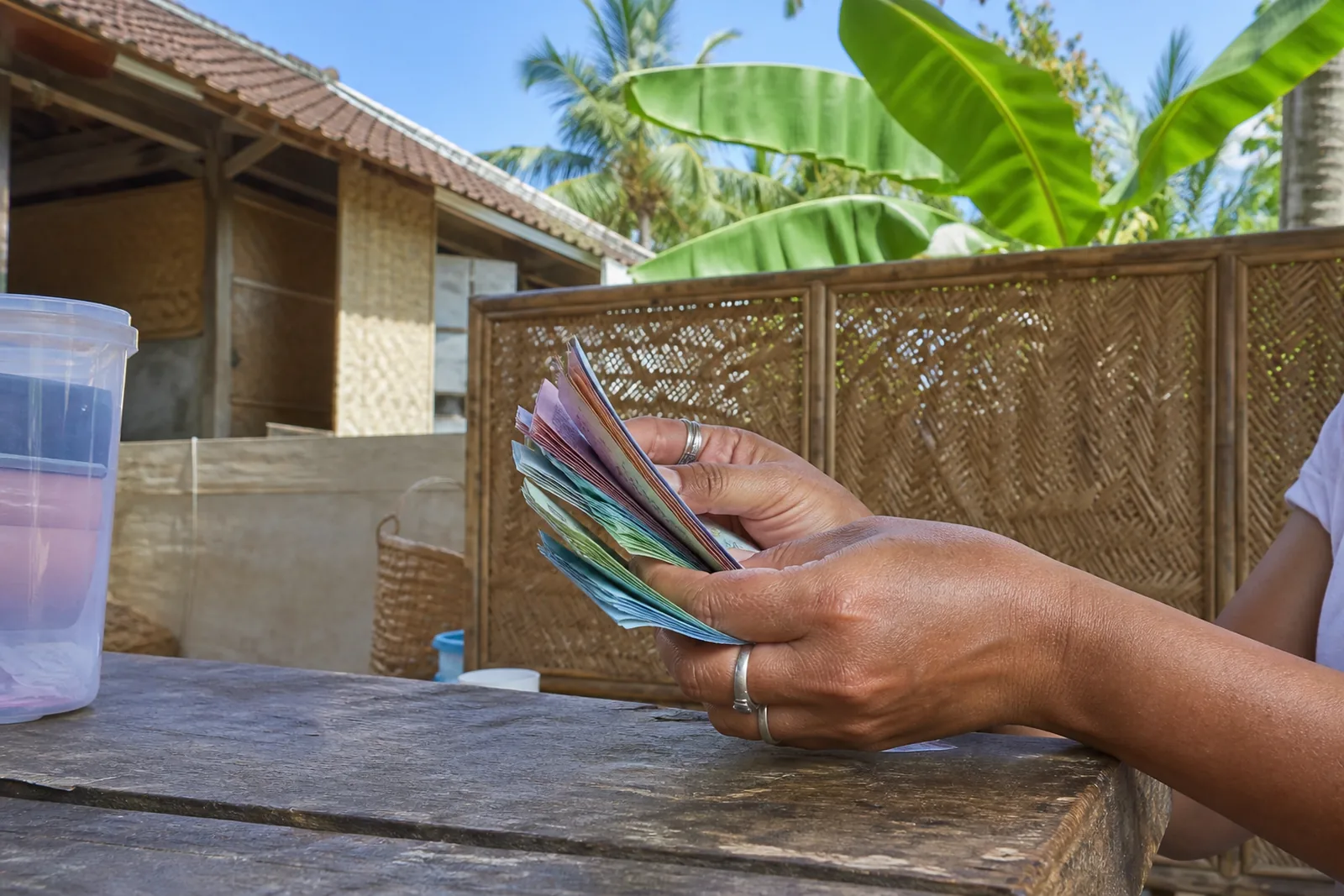
 Rupiah Gains as Oil Retreats on Strait of Hormuz Peace Hopes · Illustration: HubLombok (AI-generated)
Reading the Signal Without Overreading It
A firmer rupiah can be read differently depending on an investor’s starting currency, financing arrangements and stage in the transaction. The source does not prescribe an investment response, and neither should the headline alone. Its value lies in identifying the live factors that deserve attention.
| Live development | What the source says | Investor relevance | |---|---|---| | Rupiah opening | Rp17,695 per US dollar, up 28 points | Entry-price translation may change for foreign buyers | | Oil market | Brent around US$86.20; WTI near US$80.40 | Illustrates the global driver behind the currency move | | Strait of Hormuz talks | Oman and Iran discussed a temporary maritime corridor | Geopolitical developments can rapidly affect market sentiment | | Near-term range | Rp17,650-Rp17,750 per US dollar | A trading assessment, not a property-market forecast |
There is a practical discipline here for Lombok investors. Quote and agree property terms carefully; understand which currency each cost, payment and income assumption is expressed in; and avoid treating any exchange-rate snapshot as a substitute for due diligence.
That is especially relevant in a market where foreign buyers must use lawful tenure structures. Foreigners cannot hold freehold, or Hak Milik/SHM; available routes include leasehold, Hak Pakai for eligible residents, and a foreign-owned PT PMA holding Hak Guna Bangunan. Nominee arrangements are illegal and void in court.
Currency conditions do not change those legal rules. Nor do they replace the need to examine title, ownership history, zoning and encumbrances before committing capital. TerraNusa Advisory, HubLombok’s independent licensed-notary and legal advisory partner for foreign buyers, advises across due diligence, PT PMA setup, taxes, deeds and title transfer at BPN. Its role is relevant precisely because a live market move should never displace transaction fundamentals.
What This Means for Investors
The immediate message is one of attentiveness, not alarm. The rupiah’s stronger opening followed an identifiable external development: easing oil prices alongside hopes of progress on navigation and dialogue around the Strait of Hormuz. The next material information will be whether those diplomatic and market conditions persist, and how investors respond to domestic events flagged in the report.
For investors evaluating Lombok from Europe, Australia or the United States, a sensible response is to keep an active currency line in the investment memorandum. Record the exchange rate used in any purchase budget. State clearly whether a quoted price, construction payment, rental projection, tax liability or management cost is denominated in rupiah or another currency. Then stress-test the decision against a range of currency outcomes rather than anchoring it to today’s opening.
The local investment thesis still needs to stand on its own merits. In South Lombok, turnkey investment-grade villas have an entry range of EUR 95,000-350,000. Honest net rental yields are generally 7-12% after management fees and realistic occupancy, while top-performing assets can reach around 15% net. Developer-quoted gross yields of 12-22% are not equivalent to net returns.
Those figures are market context, not a consequence of Wednesday’s rupiah move. Yet they show why currency discipline belongs beside the usual questions on price, tenure, legal process, operations and expected net income. A stronger rupiah may alter the foreign-currency cost of an Indonesian commitment at the margin. It does not eliminate the need for realistic underwriting, and a weaker later rate would not automatically invalidate a well-structured acquisition.
Today’s dispatch is therefore best read as a live cross-market signal. Watch the Strait of Hormuz discussions, follow oil pricing, monitor the rupiah within the analyst’s stated range, and retain a clear distinction between a short-term currency reaction and the long-term fundamentals of the Lombok asset under review.
Stay informed, subscribe to the free Lombok Briefing for market intelligence like this, published twice a month.
Why did the rupiah strengthen against the US dollar?
The rupiah opened at Rp17,695 per US dollar, up 28 points or 0.16% from Rp17,723. ANTARA reported that lower global crude prices and hopes for Middle East peace, including Strait of Hormuz navigation discussions, supported the currency.
What rupiah range did the analyst identify?
Lukman Leong of Doo Financial Futures assessed that the rupiah could trade in a range of Rp17,650 to Rp17,750 per US dollar. This was a near-term currency-market assessment and not a forecast for Lombok property prices or investment returns.
Does a stronger rupiah change Lombok property due diligence?
No. A currency move may affect the foreign-currency translation of an Indonesian purchase, but foreign buyers still need a lawful tenure structure and full due diligence. Foreigners cannot hold freehold, and nominee structures are illegal and void in court.

The Lombok Buyer's Field Guide
Legal structures ranked by risk, the honest ROI math line by line, all six zones ranked, and the 24-point due-diligence checklist. The whole book, free in your inbox.
See what's inside