
Rupiah Defence and Lombok Property: What Overseas Investors Should Watch
Bank Indonesia is preparing measures to support the rupiah amid dollar strength. For Lombok investors, the story is a reminder to assess currency exposure alongside property fundamentals.
Quick answer: Bank Indonesia is preparing monetary, macroprudential and payment-system measures to support rupiah stability as a stronger US dollar and persistent global inflation weigh on emerging markets. For overseas investors considering Lombok property, the report offers useful currency context, but it does not establish a forecast for the rupiah or for local property prices and returns.
Currency headlines can make a distant property market feel suddenly closer. A stronger dollar may shape how investors think about Indonesian exposure, yet this report is about the central bank’s tools and the pressures behind them, not a prediction of what a villa or land will cost next.
The Context
Antara Business reports that Bank Indonesia (BI) is preparing a combination of monetary, macroprudential and payment-system strategies to maintain rupiah stability. BI Governor Destry Damayanti said the central bank would strengthen monitoring of foreign-exchange flows and bolster liquidity through repo operations using non-government securities.
The report describes a specific expansion of those liquidity operations. BI has opened repo facilities for non-government securities issued by mortgage lender PT Sarana Multigriya Finansial (SMF). Starting in October 2026, it plans to extend the facility to corporate bonds issued by infrastructure financing firm PT Sarana Multi Infrastruktur (SMI). According to the report, the aim is both to support banking liquidity and to deepen domestic money-market liquidity for these corporate instruments.
BI’s response spans liquidity, foreign-exchange monitoring and macroprudential policy. The measures described are tools for financial stability, not a property-market forecast.
The backdrop is international. Antara says capital has been moving from emerging markets towards developed economies amid higher US interest rates. It reports that the US Federal Reserve raised its benchmark rate by 25 basis points on September 16, to a range of 3.75–4.00 per cent. BI projects one further quarter-point increase in the fourth quarter of 2026. The article also gives the US Dollar Index at 101.11 and the dollar index against Asian currencies at 96.26.
Those figures help explain the defensive posture BI describes. They do not, on their own, say how the rupiah will trade next, or how any particular Indonesian asset will perform. The distinction matters: a policy response can be read as evidence of pressure and of the authorities’ chosen tools, but not as a guaranteed result.
What the Measures Tell Us
The repo facilities are notable because they use corporate securities beyond government bonds. BI’s planned inclusion of SMI bonds broadens the instruments eligible for this liquidity channel, while the existing SMF facility is linked to securities from a mortgage lender. Antara presents the expansion as part of an effort to deepen liquidity in the domestic money market.
That is a financial-market development, rather than a direct intervention in property pricing. The source does not say that the measures will reduce borrowing costs for property buyers, increase villa occupancy, or raise land values. Those outcomes depend on other factors and cannot be inferred from the announcement alone.
BI also intends to optimise macroprudential policies to encourage national credit growth while preserving financial-system resilience. In parallel, it aims to expand cross-border payment integration and develop digital and artificial-intelligence competencies through the Indonesian Digital Innovation Center (PIDI). These strands point to a broader policy agenda: managing near-term financial conditions while supporting credit and payment infrastructure.
For investors based outside Indonesia, the currency channel is relevant even where the investment thesis is long-term and property-specific. A purchase, operating costs and eventual income may involve different currencies. The exchange rate can therefore affect how an investor experiences the value of a commitment or income stream when translated back into their home currency. Antara’s report supplies context for monitoring that exposure, not a conversion estimate or a timing signal.
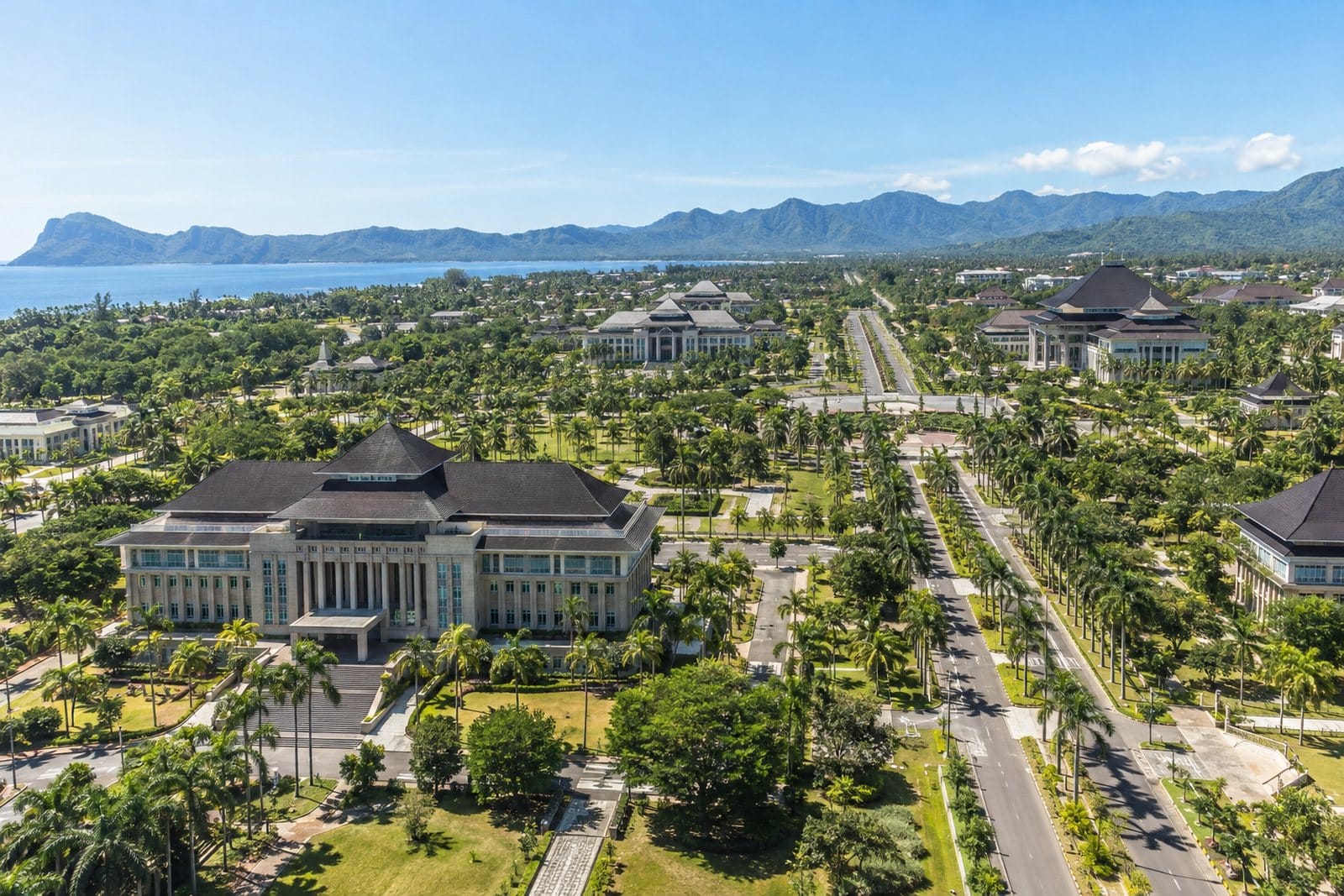 Rupiah Defence and Lombok Property · Illustration: HubLombok (AI-generated)
Reading the Currency Risk
A disciplined reading separates three questions. First, what pressure is BI responding to? The report points to a stronger US dollar, persistent global inflation, higher US rates and capital outflows from emerging markets. Second, what tools is BI preparing? It identifies tighter foreign-exchange-flow monitoring, repo liquidity using non-government securities, macroprudential policy and payment-system work. Third, what does that mean for an individual property investment? The source does not answer that question.
That gap should be treated as a useful boundary, not filled with confident speculation. The article contains no rupiah exchange-rate level, no forecast for the currency, and no estimate of how a currency move would affect a South Lombok property’s returns. Investors should avoid turning a central-bank announcement into an implied view on entry timing or future appreciation.
Instead, currency risk belongs alongside the ordinary questions of investment analysis: the currency in which capital is committed, the currency in which revenue and expenses arise, and the investor’s own reporting currency. It is also sensible to distinguish currency translation from the underlying performance of the asset. A property can have one operating outcome and a different translated value for an investor whose home currency is not the rupiah.
BI’s payment-system ambition is relevant at a wider level. Cross-border payment integration could matter to the ease of moving funds over time, but the report describes an aim, not a completed change or a specific service available to property buyers. For now, it is a policy direction to follow rather than a practical feature on which to base a transaction.
What This Means for Investors
For European, Australian and American investors, the central takeaway is to keep macro context in view without letting it substitute for asset-level due diligence. BI is preparing several channels to support financial stability amid external pressure. That tells investors the currency environment deserves attention; it does not establish that the rupiah will strengthen, that property financing will become cheaper, or that Lombok prices will move in a particular direction.
A useful decision process is to test the investment across currency scenarios, understand which cash flows are exposed to exchange-rate changes, and assess the property on its own commercial and legal merits. Those are analytical safeguards, not predictions about where the exchange rate will go. The Antara report is best read as a window into Indonesia’s policy response to global conditions, with implications for investor monitoring rather than a standalone buy-or-wait signal.
HubLombok is the editorial arm of Samudra Villas, an active developer in South Lombok. That relationship is disclosed here because it shapes what we cover, not what we conclude.
Stay informed: subscribe to the free Lombok Briefing, published twice a month (the 1st and 15th), for market intelligence like this.
What measures is Bank Indonesia preparing to support the rupiah?
Antara Business reports that BI plans stronger foreign-exchange-flow monitoring, liquidity support through repo operations using non-government securities, macroprudential measures, and expanded cross-border payment integration. The report describes policy tools and intentions, not a forecast of the rupiah’s direction.
Does BI’s announcement predict Lombok property prices or returns?
No. The report discusses rupiah stability, liquidity and wider financial policy. It gives no forecast for South Lombok prices, villa income or investment returns, so investors should treat it as currency context rather than a property-market signal.
How should overseas investors use this currency news?
Use it as a prompt to review currency exposure: consider the currencies in which capital, income and costs arise, and how these translate into your home currency. The report does not provide an exchange-rate forecast or a property-specific impact estimate.

The Lombok Buyer's Field Guide
Legal structures ranked by risk, the honest ROI math line by line, all six zones ranked, and the 24-point due-diligence checklist. The whole book, free in your inbox.
See what's inside