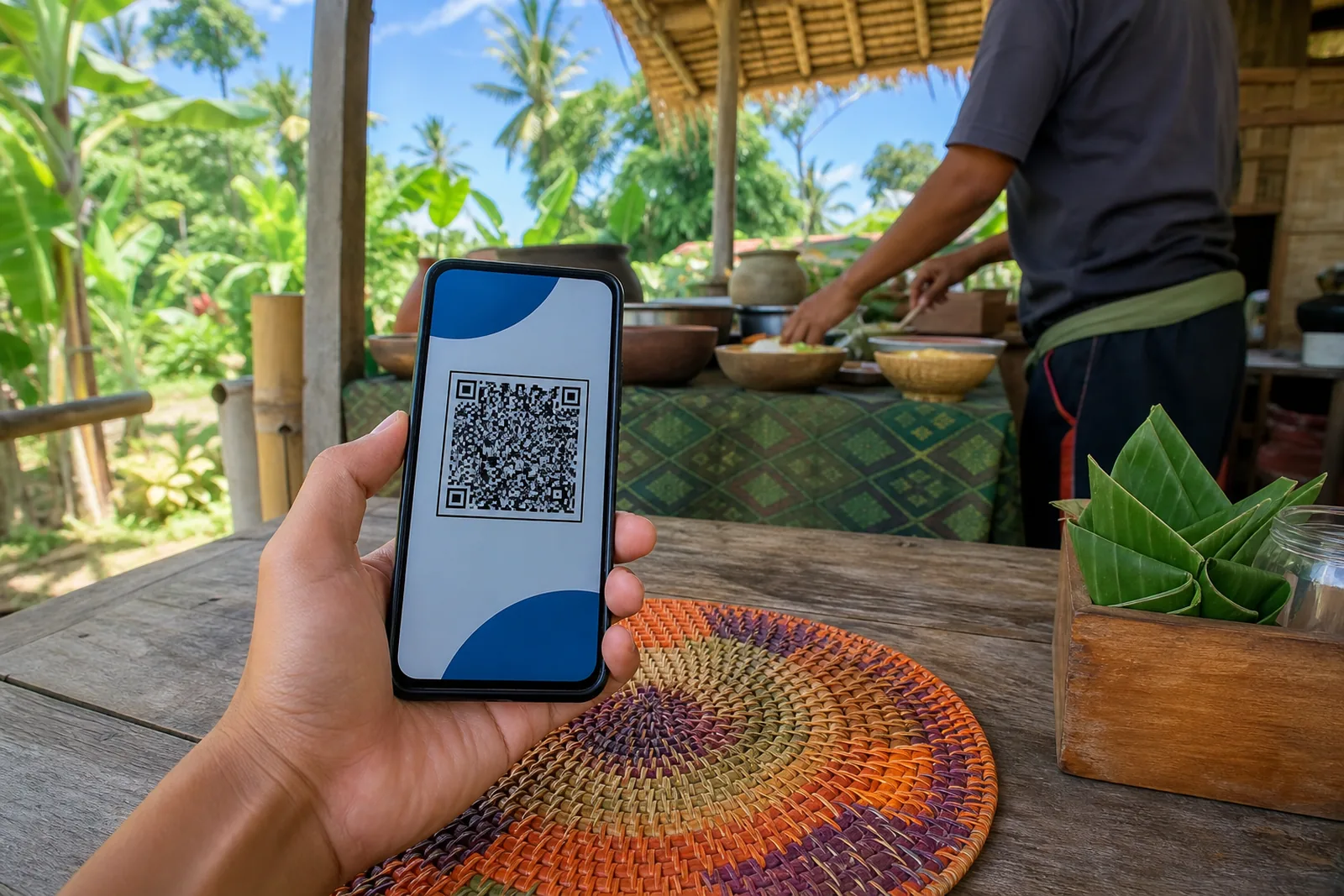
QRIS Reaches 65.77 Million Users, Deepening Indonesia’s Digital Payment Base
Bank Indonesia says QRIS has reached 65.77 million users, widening digital-payment access for MSMEs and investors tracking Indonesia’s consumer economy.
Quick answer: Bank Indonesia says QRIS had reached 65.77 million users and was accepted by 44.86 million merchants as of June 2026. For Lombok investors, the immediate implication is a broader, more digital transaction environment for local businesses, tourism-facing operators and the MSME economy on which many destination assets depend.
Daily Dispatch
Bank Indonesia’s latest QRIS update is not simply a payments milestone. It is a live indicator of how quickly the country’s commercial plumbing is becoming digital, and of the institutions’ intent to bring smaller businesses into that system.
For investors considering Indonesia, including Lombok’s visitor economy, payment infrastructure can appear mundane beside land, construction and occupancy. Yet the ability of a café, driver, supplier, boutique hotel or small retailer to accept a standardised digital payment shapes the ease with which spending moves through a destination. Bank Indonesia’s figures suggest that this layer of the economy is now extensive.
The Context
QRIS, or Quick Response Code Indonesian Standard, had 65.77 million users as of June 2026, according to Bank Indonesia. It was accepted by 44.86 million merchants. Of those merchants, 96.68% were Micro, Small, and Medium Enterprises (MSMEs).
“QRIS has become the main gateway, the entry point, for MSMEs into the digital financial ecosystem,” Filianingsih Hendarta, Bank Indonesia’s Deputy Governor, said in Jakarta.
That concentration matters. MSMEs are not a peripheral part of the QRIS story; they are at its centre. Bank Indonesia’s position is that wider QRIS adoption makes transactions easier while helping smaller enterprises integrate into the digital economy and financial ecosystem.
The central bank is placing the payments network within a broader digital-transformation agenda. Hendarta said digital transformation is increasingly important to raising productivity, widening market access and helping MSMEs move up the value chain as the digital economy grows.
For an investor, this should be read as a statement of direction rather than a guarantee of individual business performance. A digital payment code cannot resolve poor operations, weak demand or inappropriate pricing. It can, however, reduce friction at the point of sale and create a more usable route for businesses to participate in digital commerce and financial services.
The scale reported by Bank Indonesia also gives QRIS relevance beyond Jakarta. A national payment standard that is used by millions of people and accepted by tens of millions of merchants establishes a common commercial language between customers and small businesses. In travel-led markets, where spending is distributed among numerous independent operators, that standardisation is potentially meaningful.
How Bank Indonesia Plans to Build on QRIS
Bank Indonesia’s programme is wider than payment acceptance. The institution is encouraging MSMEs to digitise through three stated strategies:
- E-farming, using digital farming to improve productivity and efficiency.
- E-commerce, through MSME onboarding intended to expand digital market access.
- E-financing, using the Financial Information Recording Application Information System, known as SIAPIK, to strengthen financial reporting and access to financing.
The logic is cumulative. Payments can provide a practical entry point; digital sales channels can expand reach; and more structured financial records may make a business easier to understand and finance. Bank Indonesia presented these as connected elements of an effort to make MSMEs more adaptive, innovative and competitive.
The central bank is also developing the Indonesian Digital Innovation Center, or PIDI. Bank Indonesia says PIDI connects talent, innovators, industry, government and strategic partners to create digital solutions that can be implemented in the real sector, including by MSMEs.
According to Hendarta, the centre represents cooperation among Bank Indonesia, the Financial Services Authority (OJK) and strategic partners to accelerate innovation and develop national digital talent. For MSMEs, she said, PIDI facilitates digital solutions designed to be readily adopted and replicated, with the aim of improving productivity and efficiency while broadening access to markets and financing.
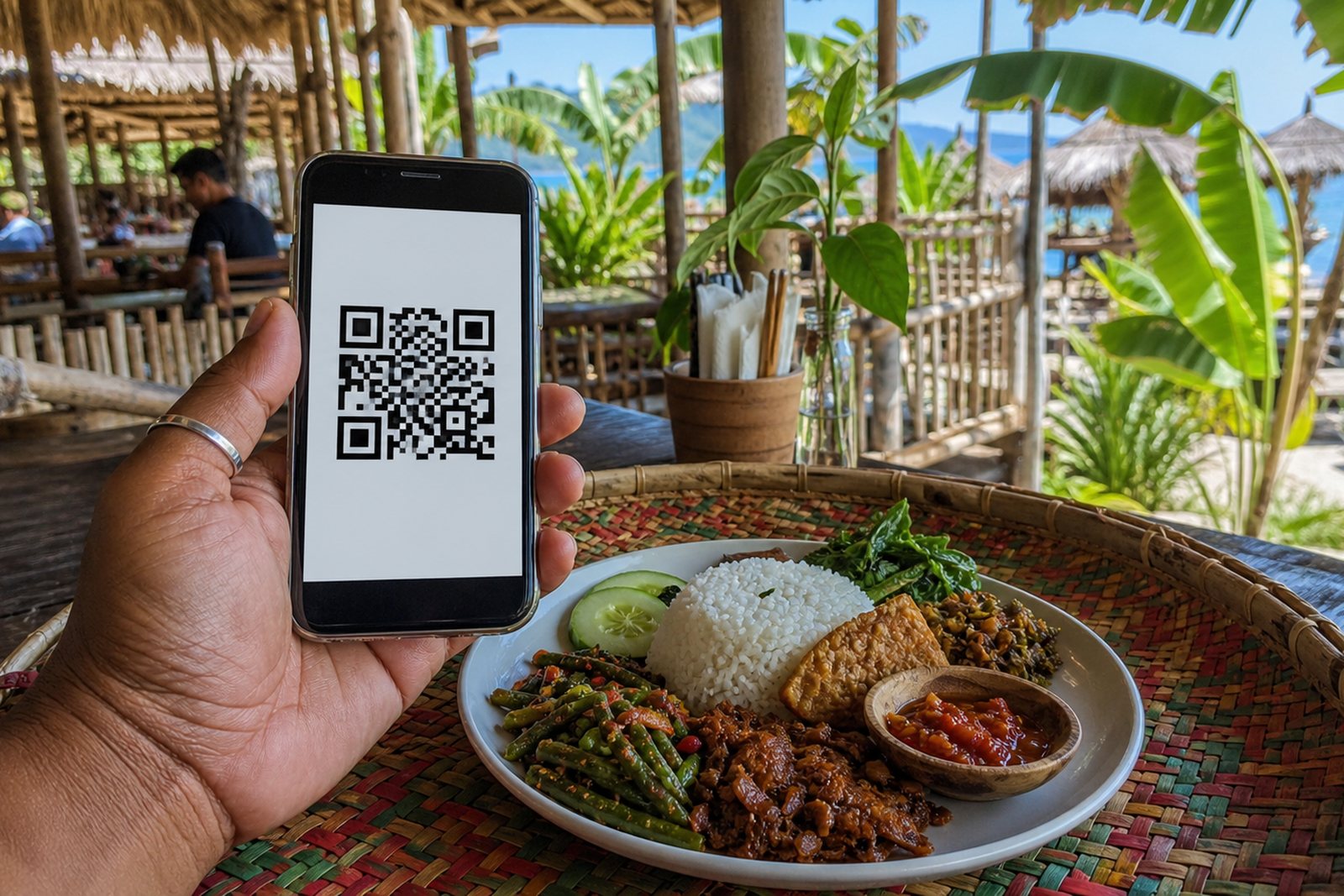 QRIS Reaches 65.77 Million Users, Deepening Indonesia’s Digital Payment Base · Illustration: HubLombok (AI-generated)
From Payment Convenience to Investable Operating Conditions
The most useful way to interpret the announcement is through operating conditions. QRIS does not make an investment bankable on its own. But it can influence the day-to-day environment in which local enterprises receive payments, record transactions and connect with a more digital financial ecosystem.
For hospitality and destination-economy investors, the relevant question is not whether a payment code is novel. It is whether an operator can meet guests and customers where they transact, and whether the wider supplier and service network is becoming easier to engage digitally. Bank Indonesia explicitly links QRIS expansion to easier transactions and deeper MSME participation in the financial ecosystem.
That has several implications to assess during commercial due diligence:
| Area to examine | Why the QRIS update is relevant | |---|---| | On-site spending | QRIS acceptance can make transactions simpler for customers and smaller operators. | | Local suppliers | MSMEs account for 96.68% of QRIS-accepting merchants, making the network especially relevant to small-business ecosystems. | | Operational records | Bank Indonesia’s e-financing strategy emphasises stronger financial reporting through SIAPIK. | | Market access | The central bank’s e-commerce strategy is intended to expand digital access for MSMEs. |
The practical discipline remains unchanged. Investors should verify how an individual operator handles payments, reconciles revenue, records expenses and manages its digital channels. The national adoption figure is a signal of availability and policy momentum, not evidence that every individual business has the same systems or standards.
There is also an important distinction between convenience and investability. More seamless transactions may support customer experience, but returns still depend on the quality of the asset, the operator’s execution, costs, demand and legal structure. The QRIS update belongs in the operational part of an investment case, not as a substitute for it.
Still, investors should not dismiss this as background technology. Small, repeated frictions can weigh on a local economy. A common QR code system, particularly one concentrated among MSMEs, may help reduce one of those frictions. Bank Indonesia’s emphasis on data, reporting and financing suggests it sees payments as the beginning of a more formal digital commercial chain.
What This Means for Investors
The immediate takeaway is constructive, but measured. Indonesia’s payment infrastructure is reaching a scale that makes it relevant to investors in consumer-facing businesses, tourism-linked operations and local commercial ecosystems. The reported user and merchant base is already large, while the exceptionally high MSME share indicates where adoption is most concentrated.
For Lombok investors, the news strengthens a qualitative part of the destination thesis: local businesses are increasingly being drawn into national digital systems. That may matter to villa operators sourcing local services, to hospitality businesses serving customers in person, and to investors assessing how readily a destination economy can support digital commerce.
It should also sharpen questions rather than close them. Ask whether a prospective operator accepts QRIS; how payment records are reconciled; whether suppliers can transact digitally; and how digital data is used in management reporting. Those questions sit alongside the more familiar work of assessing an asset, its costs, its legal position and its operating plan.
Bank Indonesia’s announcement was made during an Innovation Talk within the 2026 Indonesian Creative Works series. The discussion focused on how digital innovation can improve business performance, expand markets, open access to financing and help MSMEs advance. It also highlighted the banking industry’s use of digital data and the need to strengthen MSME records for efficiency, governance and financing access.
The central bank’s stated ambition is clear: accelerate MSME digital transformation through stronger stakeholder cooperation and a programme it describes as Beudaya MeusareSare, or Empowering Together. Investors need not treat that language as a forecast. They can treat the QRIS figures as evidence that the payment layer of this agenda is already substantial, and as a reason to examine the digital capabilities of the businesses behind any investment thesis.
Stay informed, subscribe to the free Lombok Briefing for market intelligence like this, published twice a month.
How many users and merchants did QRIS reach in June 2026?
Bank Indonesia reported that QRIS had **65.77 million users** and was accepted by **44.86 million merchants** as of June 2026. The central bank said **96.68%** of accepting merchants were Micro, Small, and Medium Enterprises, placing MSMEs at the centre of the network’s expansion.
Why does QRIS matter to investors in Lombok?
QRIS matters because Bank Indonesia says it makes transactions easier and helps MSMEs enter the digital financial ecosystem. For Lombok investors, it is relevant to the operating environment around tourism-facing businesses, local suppliers and customer payments, though it does not by itself determine an asset’s return.
What is Bank Indonesia doing beyond QRIS payments?
Bank Indonesia is promoting MSME digital transformation through e-farming, e-commerce onboarding and e-financing using SIAPIK. It is also developing the Indonesian Digital Innovation Center, which it says connects talent, innovators, industry, government and strategic partners to develop usable digital solutions.

The Lombok Buyer's Field Guide
Legal structures ranked by risk, the honest ROI math line by line, all six zones ranked, and the 24-point due-diligence checklist. The whole book, free in your inbox.
See what's inside