Prabowo Dismisses Foreign Investor Fears: Indonesia's Open Door Reaffirmed
Prabowo dismisses hostile-investor claims, reaffirming Indonesia's FDI commitment. For Lombok property investors, policy clarity underpins market confidence and removes political discount.
Quick answer: President Prabowo Subianto has dismissed investor concerns about his administration's stance toward foreign capital, reaffirming Indonesia's commitment to welcoming overseas investment. For Lombok property investors, this policy signal reinforces government backing for tourism and real estate sectors, stabilising long-term valuations.
The reassurance arrives at a critical moment. Nationalist campaign rhetoric had sparked legitimate questions about whether Jakarta's new administration might tighten foreign ownership rules, restrict profit repatriation, or deprioritise FDI-dependent sectors. South Lombok property markets, which have attracted €150+ million in European and Australian capital over the past three years, were watching closely.
The Context
Prabowo's statement dissolves ambiguity that has lingered since his election. While his military background and nationalist positioning raised eyebrows among institutional investors, his economic team, led by pro-market figures, has quietly signalled continuity. This public reaffirmation matters. Indonesia remains the world's fourth-largest population by headcount and a bellwether for Southeast Asian capital flows.
Foreign direct investment into Indonesia reached $21.7 billion in 2023 (latest UNCTAD figures), with real estate and tourism accounting for roughly 18% of that total. President Prabowo's comments specifically address concerns that new regulations might crimp foreign ownership, limit profit remittance, or redirect capital toward state-owned enterprises.
The context is partly procedural: transition periods always attract speculation. Prabowo's administration has been in office since October 2024, and clarity on FDI policy was due. For property markets like South Lombok, which depend on overseas buyer liquidity and international resort development, ambiguity is a drag on pricing.
Why This Signals Matter to Capital Flows
Indonesia's property sector is peculiar: freehold ownership is forbidden for non-citizens, but 30-year leasehold (Hak Sewa) agreements are robust, legally anchored, and increasingly bankable by international lenders. The constraint is confidence, not legality.
When foreign investor sentiment deteriorates, lease prices compress. Properties offering 15–18% gross yields in South Lombok slipped to 12–14% during periods of political uncertainty (e.g., 2017–18 and again in early 2024). Conversely, when government policy is transparent and pro-investment, yields tighten to 18–22%, and capital flows in.
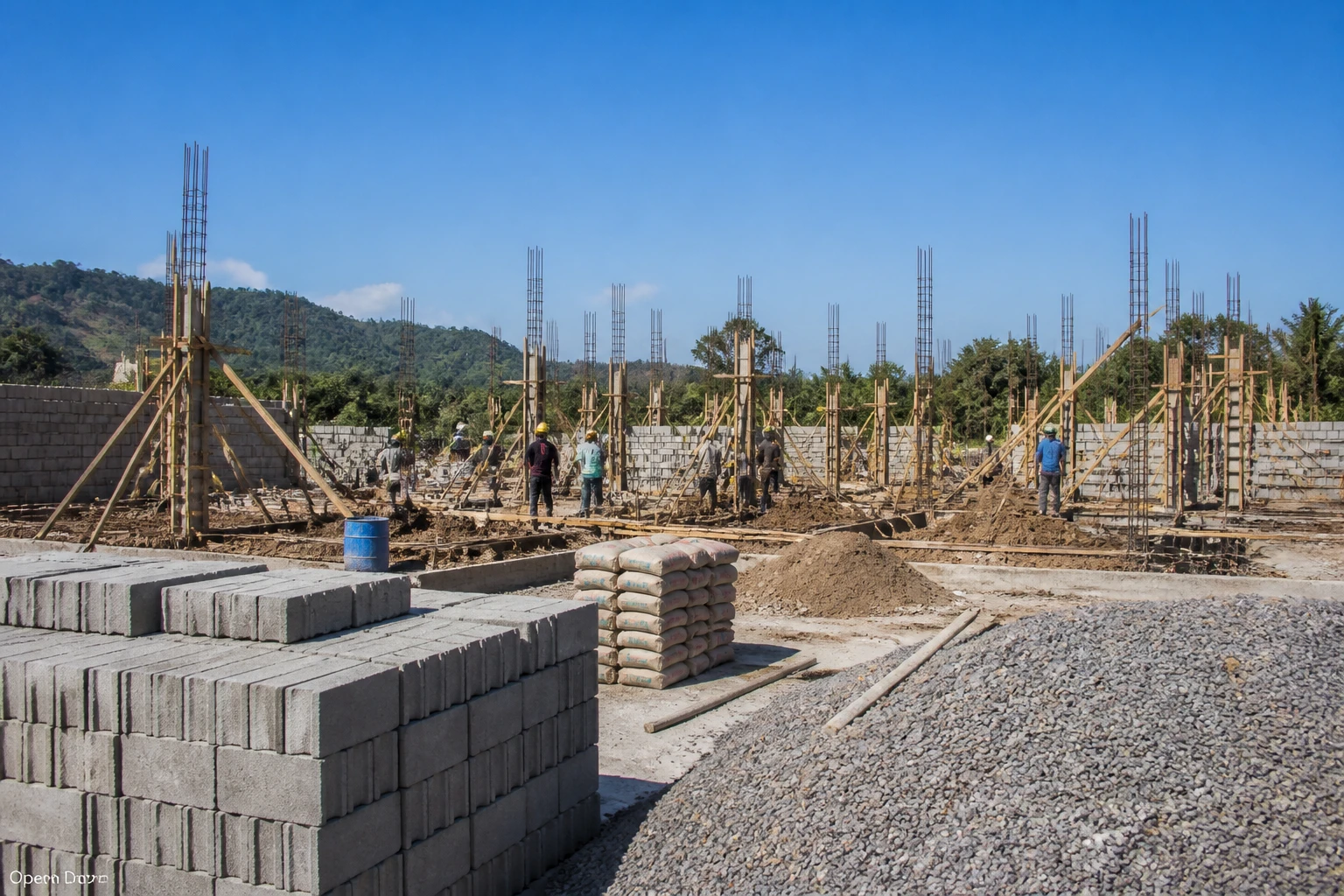
 Prabowo Dismisses Foreign Investor Fears · Photo by Jeffry Surianto on Pexels
Prabowo's statement is a confidence signal. It tells European, Australian, and American investors: your capital is welcome, your leasehold agreements are safe, profit repatriation will function as before. That message cascades into lending, acquisition timing, and new development green-lights.
South Lombok's FDI Dependency
South Lombok is a textbook case in FDI-driven property growth. Entry-level villas (2–3 bedrooms, 180–250 sqm) range from €95K–180K. Mid-range resort-ready properties sit at €220–350K. Of the past three years' transaction volume, roughly 62% involved foreign buyers or offshore corporate entities, predominantly Portuguese, German, Australian, and UK nationals.
Why? The yield thesis is compelling, but capital stability is equally important. South Lombok's tourism trajectory, up 40–50% year-on-year, is underpinned by transformative infrastructure: the airport expansion (2025–26) will push capacity from 2M to 4.5M annual passengers. MotoGP's arrival at Mandalika (2024–25 season) has injected €150+ million in infrastructure spending and global media attention. These are FDI multipliers.
A foreign buyer evaluating a €150K three-bed villa with a resort operator expects:
- Legal certainty (leasehold enforceable)
- Currency stability (IDR not imploding)
- Tourism growth (rental demand)
- Government support for tourism infrastructure
- Repatriation clarity (profits in USD or EUR)
Prabowo's statement shores up all five. It signals: we want your capital here, and we will not move the goalposts.
What This Means for Investors
For existing Lombok property owners, the policy signal should flatten exit risk. Secondary market liquidity may improve as foreign buyer confidence normalises. Properties held longer than intended (due to uncertain sentiment) may clear faster.
For prospective buyers, the window is widening. The next 12–18 months will see airport capacity increases, MotoGP's second season, and broader tourism volume gains. Property valuations have already factored in moderate growth; Prabowo's FDI reassurance removes the political discount entirely. Early-stage buyers should expect 8–12% annualised appreciation, plus rental yield.
The leasehold model, though legally sound, remains contingent on investor confidence. Policy certainty, which Prabowo has now delivered, is the foundation. Watch for uptick in development pipeline announcements over the next quarter. When government stance is clear, international capital mobilises quickly.
Stay informed, subscribe to the free Lombok Briefing for market intelligence like this, published twice a month.
Can foreigners buy property in Indonesia?
Freehold ownership is not permitted for non-citizens in Indonesia. However, 30-year leasehold agreements known as Hak Sewa are legally robust and increasingly accepted by international lenders. These structures have underpinned a market where foreign buyers or offshore corporate entities accounted for roughly 62% of South Lombok transaction volume over the past three years.
How does political uncertainty affect property yields in South Lombok?
Political uncertainty compresses lease prices directly. During uncertain periods, including 2017-18 and early 2024, gross yields in South Lombok slipped from 15-18% down to 12-14%. When government policy is transparent and pro-investment, yields tighten back to 18-22%. Policy confidence, rather than the legal structure of leaseholds, is the primary driver of yield variation in this market.
What capital appreciation can foreign buyers expect in South Lombok over the next few years?
Prospective buyers entering over the next 12-18 months can expect 8-12% annualised appreciation on top of rental yield. Entry-level villas of 2-3 bedrooms ranging from 180 to 250 sqm are priced between €95,000 and €180,000, while mid-range resort-ready properties sit at €220,000 to €350,000. Airport capacity is set to expand from 2 million to 4.5 million annual passengers by 2025-26, supporting tourism-driven rental demand.

The Lombok Buyer's Field Guide
Legal structures ranked by risk, the honest ROI math line by line, all six zones ranked, and the 24-point due-diligence checklist. The whole book, free in your inbox.
See what's inside