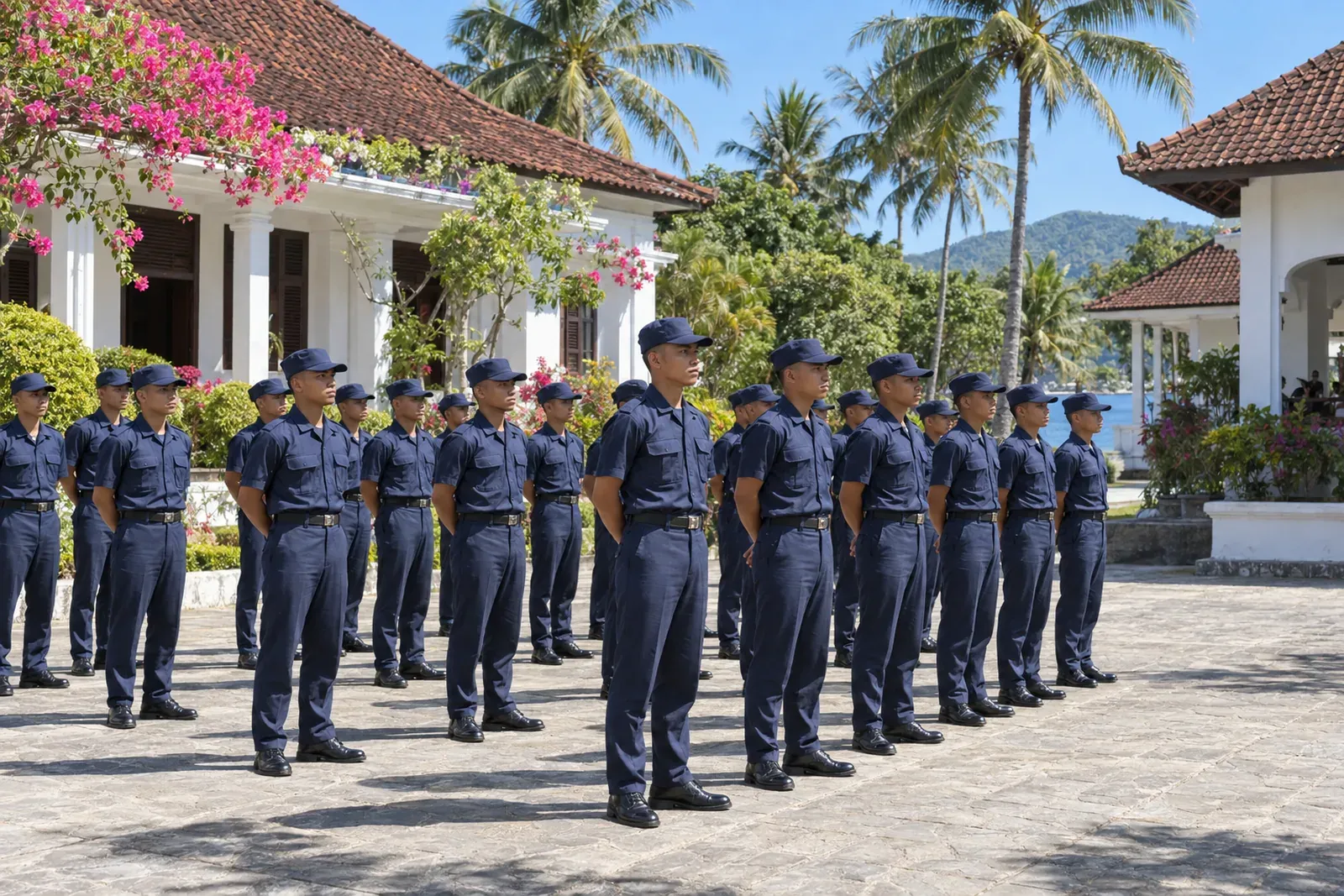
Prabowo Expands Taruna Nusantara Network and Eliminates Tuition Fees
Indonesia eliminates tuition fees across an expanding six-campus Taruna Nusantara network, signaling a federal focus on human capital and regional governance.
Indonesia has introduced a nationwide tuition-free policy for all students attending the prestigious Taruna Nusantara Senior High School network. The reform arrives alongside an aggressive physical expansion that adds five new regional campuses during the first two years of President Prabowo Subianto's administration.
For international observers and long-term investors assessing the archipelago, educational reforms of this calibre offer meaningful insight into federal policy priorities. Institutional capacity building and regional development remain central pillars of Jakarta's broader economic modernisation agenda.
A Strategic Overhaul of Elite Secondary Education
Founded in 1990, Taruna Nusantara was established as a single-campus institution in Magelang, Central Java, tasked with preparing high-calibre secondary students for national service and administrative leadership. Over the subsequent three decades, the school developed a reputation for producing graduates who advanced into key leadership positions across public service, the armed forces, and commerce.
Under the new directive announced by the Presidential Secretariat in Jakarta, the institution shifts from a selective fee-paying model to a fully tuition-free system. The policy guarantees that admitted students can complete their secondary studies without paying school fees, removing financial hurdles for qualified applicants from lower-income backgrounds across Indonesia's diverse provinces.
Federal officials position the reform as a direct effort to broaden merit-based access to elite training while accelerating human resource readiness nationwide. By removing commercial barriers to entry, the administration seeks to identify academic talent beyond traditional metropolitan centres.
Decentralising Human Capital Across Six Key Regions
The abolition of tuition fees coincides with an unprecedented structural expansion of the school's physical network. During the first two years of the current administration, the government accelerated the construction of five new regional campuses, expanding the institution from its historical base into an archipelago-wide network.
The network now comprises six operational and developing locations across Indonesia:
- Magelang (Central Java): The historic founding campus established in 1990.
- Malang (East Java): Inaugurated several months earlier as part of the initial expansion phase.
- Cimahi (West Java): Formally inaugurated on Friday by President Prabowo.
- Pagar Alam (South Sumatra): Expanding institutional reach into southern Sumatra.
- Nusantara Capital City (IKN): Anchor educational facility for the future federal capital.
- Langowan (North Sulawesi): Establishing an eastern regional presence in Sulawesi.
This physical dispersion reflects an intentional effort to distribute state resources more equitably beyond Java, aligning educational infrastructure with national development corridors.
The Broader Trajectory of Indonesian Social Policy
The initiative at Taruna Nusantara does not stand in isolation. It forms the vanguard of a broader suite of social welfare and educational proposals under review by the central government. State announcements indicate that Jakarta is actively evaluating tuition-free policies at public state universities, while preparing to enroll 32,000 students in the free Sekolah Rakyat program in 2026.
"Through these policies, the government is positioning human resource development as a key foundation for national progress."
In developing economies undergoing rapid industrialisation, public expenditure on human capital functions as an essential foundation for sustained productivity. By pairing institutional expansion with targeted fee relief, the federal government aims to upgrade the institutional capacity required to support Indonesia's ambitions as a major regional economy.
What This Means for Investors
Foreign direct investors and regional capital allocators rarely evaluate secondary education directly when underwriting projects. However, sovereign human capital initiatives provide reliable leading indicators of institutional maturity, bureaucratic competence, and long-term political stability.
First, expanding institutional footprints into secondary hubs such as South Sumatra, North Sulawesi, and East Java indicates sustained fiscal commitment to regional decentralisation. For investors considering assets outside Jakarta, policies that foster local administrative talent strengthen governance, legal transparency, and regional public administration.
Second, the inclusion of the Nusantara Capital City (IKN) in the initial six-campus footprint reinforces the state's institutional backing for the new administrative capital. Locating elite secondary infrastructure in IKN helps attract professional civil servants, urban planners, and technical personnel necessary for long-term urban viability.
Finally, social investments that promote meritocracy and domestic talent retention tend to support macro stability. A younger demographic that receives structured, funded pathways into administration and technology reduces long-term operational friction for international enterprises navigating Indonesian markets.
As Indonesia continues its multi-year transition toward higher value-added economic output, the modernisation of foundational public institutions will remain a decisive factor in sustaining sovereign growth.
Stay informed: subscribe to our free Lombok Briefing, published twice a month (the 1st and 15th), for analysis like this.
What is the new tuition policy for Taruna Nusantara?
President Prabowo Subianto introduced a fully tuition-free policy for all Taruna Nusantara students. Under this federal initiative, enrolled students pursue their secondary education without paying school fees, expanding access to elite education across the country.
Where are the six Taruna Nusantara campuses located?
The six campus locations include the original site in Magelang (Central Java), along with new campuses in Malang (East Java), Cimahi (West Java), Pagar Alam (South Sumatra), Nusantara Capital City (IKN), and Langowan (North Sulawesi).
Why does this education expansion matter to international investors?
Educational decentralisation builds administrative competence and regional governance across Indonesia. Strengthening human resources in secondary provinces and the new capital supports institutional stability, skilled labour availability, and public administration for long-term cross-border investors.

The Lombok Buyer's Field Guide
Legal structures ranked by risk, the honest ROI math line by line, all six zones ranked, and the 24-point due-diligence checklist. The whole book, free in your inbox.
See what's inside