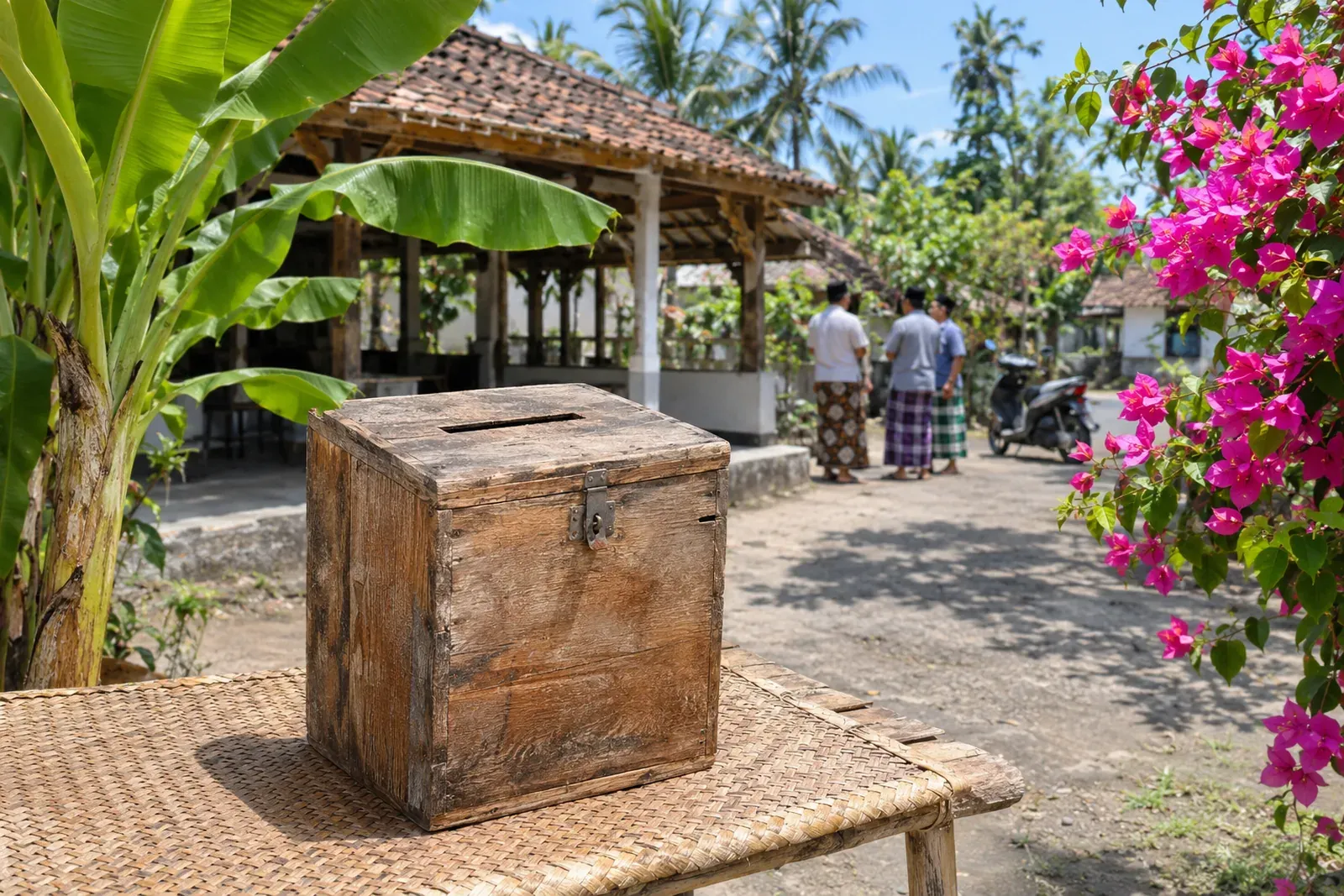
East Lombok Village Elections Face Uneven Registrations After National Village Fund Cuts
East Lombok extends candidate registration for village head elections by 10 days as uneven candidate numbers follow national village budget reductions.
Authorities in East Lombok have granted a 10-day extension for candidate registrations in local village head elections across the regency. The decision follows an uneven distribution of prospective leaders across different communities, even as reductions in central government village funding adjust fiscal realities at the grassroots level.
According to reports from Selong by local daily Radar Lombok, candidate interest across the regency of East Lombok (Lombok Timur) remains active despite national reductions to the central Village Fund (Dana Desa). However, administrative data highlighted a notable disparity: while certain rural communities attracted a surplus of aspiring village chiefs (Kepala Desa), several other villages failed to record even a single registered candidate before the initial deadline passed. In response, election organisers coordinated with the regional Community Empowerment and Village Government agency (Dinas Pemberdayaan Masyarakat dan Desa) to widen the registration window by 10 days.
Grassroots Governance and the Fiscal Shift in Rural Indonesia
The contest for village leadership in Indonesia, formally known as Pilkades (Pemilihan Kepala Desa), represents the most direct tier of administrative governance in the country. Village heads wield substantial statutory authority over local land administration, customary communal regulations, and community-level resource allocation. Historically, the passage of Indonesia's national Village Law established substantial direct fiscal transfers via the Dana Desa program, turning village leadership roles into high-responsibility executive positions.
Recent fiscal adjustments from the central government, which involved reductions in central village funding disbursements, have altered the fiscal scope available to village administrations across rural jurisdictions. Observers had questioned whether trimmed budgets might dampen civic appetite for public office. The registration patterns reported in East Lombok demonstrate that community interest remains resilient, though distinctly uneven in its geographical distribution.
In administrative terms, the absence of registered candidates in select localities prevents statutory balloting from proceeding under regional regulations, which generally mandate a competitive slate. The 10-day extension serves as a deliberate bureaucratic mechanism to ensure broad civic representation, preventing uncontested seats or prolonged administrative vacancies across the regency.
The Divergence Between Administrative Centers and Frontier Zones
The contrasting distribution of prospective leaders across East Lombok reflects a broader structural reality across the island. Villages with established commercial activity, agricultural productivity, or proximity to urban hubs frequently see intense competition for executive roles, resulting in candidate surpluses. Conversely, more isolated communities or areas facing shifting fiscal obligations can struggle to attract candidates willing to navigate administrative responsibilities under leaner budgetary conditions.
Across the wider island of Lombok, local governance quality plays a quiet yet vital role in overall regional stability. While southern districts such as Central Lombok focus heavily on tourism corridors and special economic infrastructure, regencies like East Lombok provide the demographic, agricultural, and civic foundation for the broader provincial economy. Sound administration at the village level ensures regulatory continuity, civil registration accuracy, and civic harmony.
Administrative procedures at the village office are also deeply intertwined with rural property and land administration. In rural Indonesia, deeds and formal rights transfers executed by licensed notaries (PPAT) and registered with the national land office (BPN) often rely on baseline jurisdictional records maintained by village heads. When village offices experience seamless transitions of leadership, bureaucratic workflows remain orderly and predictable.
What this means for investors
For international observers and regional property investors assessing Lombok, grassroots political cycles offer valuable insight into institutional health and regional administrative dynamics:
- Administrative continuity remains steady: The prompt implementation of a 10-day extension to address uncontested seats demonstrates administrative pragmatism. Regional agencies are working to ensure legitimate, contested outcomes rather than allowing governance vacuums to develop.
- Fiscal adaptation at the community level: Reductions in central village fund allocations require local leaders to manage local resources more prudently. While international capital predominantly enters prime coastal tourism zones, island-wide fiscal discipline supports overall provincial fiscal resilience.
- Clear separation of regulatory jurisdictions: Foreign capital in Indonesia operates within distinct legal frameworks, such as foreign investment companies (PT PMA) holding building rights (HGB) or long-term leasehold agreements (Hak Sewa) registered through formal notarial deeds. However, stability in nearby agricultural and civic districts like East Lombok underpins the social cohesion of the island as a whole.
Long-term allocators recognise that provincial resilience depends on stable governance across every administrative layer, from central ministries down to individual village halls.
As the extended 10-day registration window concludes, election committees across East Lombok will move forward with candidate vetting, ensuring that local administrative governance continues uninterrupted into the next legislative cycle.
Stay informed: subscribe to our free Lombok Briefing, published twice a month (the 1st and 15th), for analysis like this.
Why was the village election registration period extended in East Lombok?
Election committees introduced a 10-day extension because candidate distribution was uneven across the regency. While certain villages recorded a surplus of prospective candidates, other rural communities had not registered any nominees, requiring additional time to establish competitive electoral slates.
How do national village fund reductions impact local village elections?
Central government reductions in Dana Desa alter the discretionary budgets available to rural administrations. Despite leaner municipal resources, civic interest in village leadership remains active across East Lombok, demonstrating continued engagement in grassroots governance and community leadership.
Does East Lombok village governance affect foreign property investors?
Foreign real estate investment primarily follows national legal frameworks such as PT PMA corporate structures or formal leaseholds. Nevertheless, steady administration and uninterrupted public services at the village level across all regencies help maintain island-wide legal and social stability.

The Lombok Buyer's Field Guide
Legal structures ranked by risk, the honest ROI math line by line, all six zones ranked, and the 24-point due-diligence checklist. The whole book, free in your inbox.
See what's inside