Prabowo’s downstreaming push signals a sharper state role in Indonesia
Indonesia’s latest policy signal puts downstreaming and economic sovereignty at the centre of the investment story, with clear implications for capital allocation.
Indonesia’s policy direction just became clearer. President Prabowo Subianto has used a public platform to argue that Indonesia’s economic development must rest on Pancasila values, reinforcing a model that prioritises domestic value-add, strategic control and a more assertive state hand in industry. For investors, the message is less about rhetoric than about the rules of engagement: where capital will be welcomed, how it may be required to behave, and which sectors stand to gain first.
The Context
Prabowo’s remarks fit a theme that has become increasingly important in Indonesia’s economic policy: downstreaming. In plain terms, the state wants more processing, more industrial depth and more of the profit chain to remain at home rather than being exported in raw form. That idea has already shaped policy across commodities and heavy industry, but the current political framing elevates it from a sectoral strategy to a broader national doctrine.
The emphasis on Pancasila is also telling. In Indonesian political language, it signals economic nationalism with a social compact attached: growth is expected to be inclusive, development should serve domestic priorities, and strategic assets should not be treated as merely tradable financial objects. For international capital, that can be both attractive and restrictive. It can support long-term planning in infrastructure, manufacturing and resource-processing, but it also tends to bring tighter policy oversight, localisation requirements and a stronger expectation of public benefit.
What makes the timing notable is the message it sends to markets seeking policy continuity. Downstreaming is not a fresh idea in Indonesia, but the latest framing suggests it remains central to the government’s growth model. That matters because investors do not just price demand; they price the likely behaviour of regulators, ministries and state-linked institutions over a multi-year horizon.
In a country where tourism, construction and consumer growth often interact with commodity cycles, this sort of policy signal can have second-order effects well beyond mining and metals. It influences where roads are built, where energy capacity is added, where industrial parks are financed and how much confidence foreign groups have in entering joint ventures with local partners.
The Policy Signal
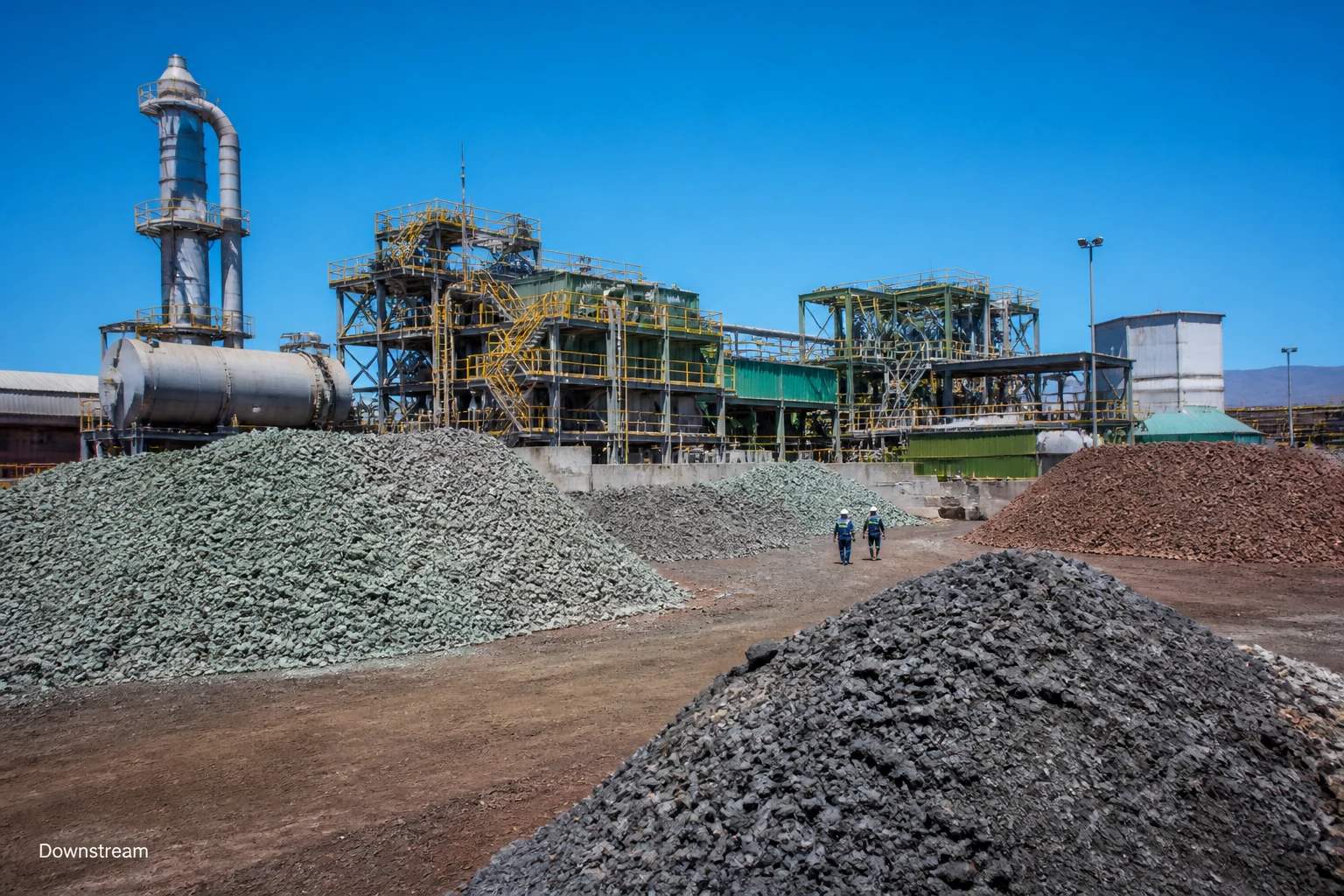
The practical meaning of downstreaming is a transfer of value capture. Instead of exporting raw inputs and importing finished goods, Indonesia is pushing to do more of the refining, processing and packaging itself. That creates a different investment map, one where the winners are not just the owners of resource deposits, but also those with exposure to logistics, power, industrial land, engineering and export-linked manufacturing.
This matters for several reasons:
- It encourages capital formation in domestic processing rather than pure extraction.
- It improves bargaining power for the state in strategic sectors.
- It can support employment and industrial clustering around ports, industrial estates and energy hubs.
- It can lengthen project timelines, as approvals, compliance and local participation become more important.
A useful way to think about the model is that it seeks to convert comparative advantage into negotiated advantage. Indonesia still wants foreign money, but it wants that money to work inside a policy frame that prioritises national sovereignty and local development outcomes. That is especially relevant in sectors tied to commodities, energy transition inputs and infrastructure supply chains.
| Policy priority | Likely market effect | Investor read-through | |---|---|---| | Downstreaming | More local processing | Better margins for processors, not just miners | | Economic sovereignty | Stronger state oversight | Higher policy risk, but clearer national priorities | | Local value-add | Industrial estate demand | Positive for land, logistics and power assets | | Domestic development | Broader regional build-out | Potential support for infrastructure and housing |
Seen from a portfolio perspective, this can be constructive if you are positioned in the right layers of the economy. It is less attractive if your thesis depends on frictionless extraction or rapid regulatory arbitrage. The policy environment is being shaped to reward investors who can operate patiently, partner locally and build assets that are useful to the Indonesian state as well as to shareholders.
 Prabowo’s downstreaming push signals a sharper state role in Indonesia · Photo by jason hu on Pexels
A second implication is that the government is signalling continuity rather than experimentation. Investors often fear policy swings more than policy strictness. A clearly articulated industrial strategy can be priced; a vague or inconsistent one cannot. If Prabowo’s administration keeps tying economic sovereignty to downstreaming, the market will likely respond by sorting opportunities into three buckets: sectors that benefit directly, sectors that must adapt, and sectors that may be crowded out.
The most exposed areas are likely to be those where Indonesia wants to move further up the value chain. That could include mineral processing, industrial infrastructure, energy supply, transport corridors and the ecosystems around special economic zones. The more the strategy extends into broader manufacturing, the more the investment story shifts from pure resource play to integrated economic development.
What This Means for Investors
For investors in Europe, Australia and the US, the key point is that Indonesia is not moving away from growth. It is moving towards a more conditional form of growth. Capital that supports national priorities should still find openings, but returns may increasingly depend on alignment with policy rather than simply on market opportunity.
That creates a mixed but potentially rewarding environment. On one hand, downstreaming can deepen domestic value creation, widen employment and strengthen the case for infrastructure spending. On the other, it can reduce flexibility for companies accustomed to operating in lighter-touch jurisdictions. The premium will likely go to investors who can underwrite political complexity and still generate disciplined returns.
For asset allocators, the likely implications are straightforward:
- Favour businesses tied to processing, logistics, utilities and industrial services rather than only upstream extraction.
- Treat regulatory diligence as a core part of the investment case, not a legal afterthought.
- Look for partners with strong local networks and a credible long-term operating footprint.
- Expect Indonesia’s policy premium to remain elevated if economic sovereignty stays central to the administration’s narrative.
The broader macro context also matters. Indonesia remains one of the region’s most important growth stories because it combines a large domestic market with commodity leverage and a government keen to translate resources into industrial capacity. That combination is attractive, but it is not passive. It requires investors to accept that the state is an active shaper of outcomes, not merely a referee.
For those already positioned in Indonesian assets, the message from Monday’s remarks is to review exposure by policy compatibility. For those considering new allocations, the opportunity is real, but the discount rate should reflect the stronger hand of the state and the greater importance of domestic value creation.
The market has not been told that Indonesia is closing its doors. It has been told that the doors will open on Indonesia’s terms. In a world where many investors are searching for resilient, real-economy exposure, that may still be investable, but only if the thesis is built around sovereignty as a feature of the asset class, not a temporary political headline.
Stay informed, subscribe to the free Lombok Briefing for market intelligence like this, published twice a month.
What is Indonesia's downstreaming policy and how does it affect foreign investors?
Downstreaming means Indonesia wants more refining, processing and packaging done domestically rather than exporting raw inputs. For foreign investors, capital is still welcome but must operate within a policy frame that prioritises national sovereignty and local development. This typically brings tighter regulatory oversight, localisation requirements and a stronger expectation of public benefit alongside financial returns.
Which sectors are most likely to benefit from Prabowo's economic strategy?
The article identifies logistics, power, industrial land, engineering and export-linked manufacturing as likely winners under the downstreaming model. Areas with direct exposure include mineral processing, industrial infrastructure, energy supply, transport corridors and ecosystems around special economic zones. Investors positioned in these layers, rather than in pure resource extraction, stand to gain most from the policy direction.
Is Indonesia's policy environment stable enough for long-term foreign investment?
The article argues that a clearly articulated industrial strategy can be priced by markets, while a vague or inconsistent one cannot. Prabowo's administration is signalling continuity rather than experimentation. Investors who can operate patiently, partner locally and build assets useful to the Indonesian state are seen as best placed, while those relying on rapid regulatory arbitrage face a less favourable environment.

The Lombok Buyer's Field Guide
Legal structures ranked by risk, the honest ROI math line by line, all six zones ranked, and the 24-point due-diligence checklist. The whole book, free in your inbox.
See what's inside