Prabowo’s Co-operative Push Signals a New Phase in Indonesia’s Real Economy
Indonesia’s renewed co-operative drive could reshape credit, procurement and local enterprise. For Lombok investors, the implications are practical.
President Prabowo Subianto’s call to strengthen co-operatives is more than a familiar piece of policy rhetoric. It points to a deeper question for investors: how will Indonesia channel growth beyond the usual urban and financial centres, and what does that mean for local markets such as Lombok?
For a province that sits at the intersection of tourism, land value appreciation and small-enterprise expansion, the answer matters. Co-operatives are rarely the loudest part of an investment thesis, but in Indonesia they can become the plumbing of the real economy, shaping access to credit, procurement, logistics and household resilience.
The Context
Indonesia’s economic model has long balanced centralised policy with decentralised commercial reality. In theory, the country’s scale should reward formal capital markets, bank lending and institutional development. In practice, much of the economy still depends on relationships, local intermediaries and small businesses operating with thin margins.
That is where co-operatives matter. They are not simply a nostalgic civic institution. In an archipelago economy, co-operatives can lower transaction costs, aggregate demand, improve bargaining power and widen access to finance for farmers, fishers, traders and service operators. President Prabowo’s emphasis on a “Pancasila economy” places that logic back at the centre of policy.
For investors, the signal is twofold. First, the state is likely to support more localised economic participation, especially in sectors where small suppliers dominate. Second, the government is framing development not only as a matter of capital inflows, but as an issue of distribution, resilience and domestic value capture.
Co-operatives can be a practical policy instrument in an economy where scale often meets fragmentation.
That matters in Lombok because the island’s growth story depends on exactly those fragmented layers: landowners, villa operators, construction crews, food suppliers, transport providers and tour intermediaries. Each one is small on its own. Together, they define whether tourism expansion becomes durable local wealth or merely another cycle of outside ownership and short-term turnover.
The macro backdrop is already supportive. Lombok continues to benefit from the Bali-overflow thesis, and tourism momentum has been running 40-50% year on year in selected corridors. South Lombok entry points remain relatively accessible at roughly €95,000-€350,000, while the airport expansion window for 2025-26 keeps infrastructure expectations alive. Against that backdrop, a co-operative agenda can look less ideological and more operational.
Where Co-Operatives Intersect with Lombok’s Economy
The useful way to read this policy shift is not through slogans, but through the sectors where co-operatives can materially change outcomes.
| Sector | Co-operative role | Investor implication | |---|---|---| | Agriculture | Pooling inputs, storage, and market access | More stable local supply chains for hospitality and food service | | Fisheries | Shared cold chain and distribution | Better consistency for resorts and restaurants | | Construction | Collective purchasing and labour coordination | Lower cost volatility for villa and hotel development | | Micro-retail | Shared payment, procurement and working capital | Stronger tenant resilience in tourism-adjacent areas | | Transport | Route coordination and service standards | More predictable mobility for visitors and residents |
For Lombok, the significance is especially clear in South Lombok, where property demand often depends on the quality of the surrounding ecosystem rather than the villa itself. A well-run co-operative can help local suppliers meet the standards required by tourism operators, while also giving smaller participants a larger share of the economic upside.
That is important because many investors still underestimate how much yield depends on operational depth rather than architectural polish. The headline numbers are attractive enough: yields in the 12-22% range are often cited in strong-performing niches, especially where occupancy, ancillary spend and service quality are managed well. But those returns are sensitive to the local economy around them. If suppliers are unreliable, labour is inconsistent or community buy-in is weak, even a well-located asset can underperform.
The policy question, then, is whether co-operatives can help turn tourism growth into a wider economic base. If they can, the likely outcome is not simply more transactions. It is better retention of spending inside the island economy.
This is also where investor discipline matters. There is a tendency to romanticise “community-based growth” without asking whether the mechanism is capable of execution. Co-operatives work when they solve a real problem: access to capital, scale, or distribution. They fail when they become ceremonial structures without commercial incentives.
For Lombok, the highest-value use cases are likely to be practical rather than ideological:
- procurement groups for small hospitality operators;
- credit-linked co-operatives for tradespeople and small contractors;
- supplier co-operatives for farmers and fisheries feeding resort demand;
- landholder associations that improve bargaining power and dispute resolution;
- service co-operatives that raise standards across transport, cleaning and maintenance.
The broader point is that this kind of policy can complement private investment rather than crowd it out. In fact, the best outcomes may come when co-operatives reduce friction for projects that already make economic sense.
Why Investors Should Care Now
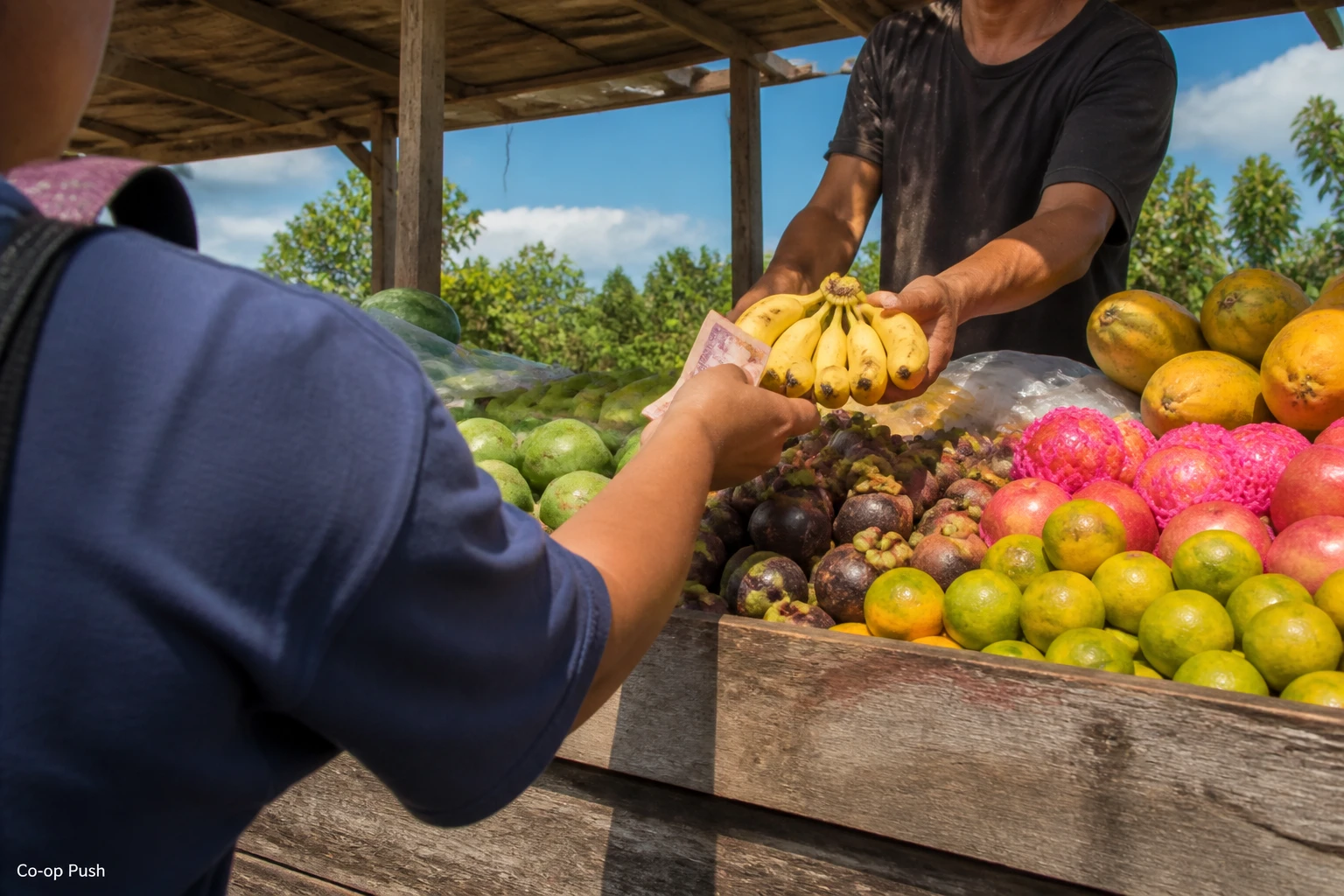
 Prabowo’s Co-operative Push Signals a New Phase in Indonesia’s Real Economy · Photo by ADollarForCoral on Pexels
The most important implication for investors is that Indonesia may be entering a phase where policy favours embedded, localised economic participation more explicitly than before. That can alter the shape of opportunity.
In practical terms, a stronger co-operative ecosystem may support three investment themes in Lombok.
First, it can improve the resilience of tourism-linked businesses. Resorts, villas and hospitality brands rely on a network of local suppliers. If co-operatives help stabilise those suppliers, they indirectly support occupancy, margins and reputation.
Second, it can enhance land and development narratives in areas such as South Lombok. Buyers are not only purchasing physical exposure; they are buying into a local economic system. Projects that can show community integration, local supply-chain depth and credible operating partners are likely to command a premium over isolated developments.
Third, it may widen the base of domestic demand. If small enterprises gain easier access to financing and coordination, more households participate in tourism growth. That creates a healthier local consumer market, which matters in a place where the next wave of value creation may come from repeat business, not just one-off visitors.
There are also risks to keep in view. Policy enthusiasm does not guarantee execution. Co-operatives can become vehicles for inefficiency, patronage or weak governance if oversight is poor. Investors should therefore distinguish between genuine productive integration and decorative policy alignment.
A sensible way to assess the opportunity is to watch for the following indicators:
- whether local businesses are formalising procurement relationships;
- whether credit access is improving for small operators;
- whether tourism infrastructure is pulling through into supporting services;
- whether land and development partners can show community-level partnerships;
- whether airport-linked growth expectations are translating into actual bookings and footfall.
In other words, the investment case is not just about a policy speech. It is about whether that speech becomes a more efficient local market. If it does, Lombok’s appeal as a growth story strengthens, because investors will be looking at a destination where tourism, land appreciation and local enterprise reinforce one another rather than compete.
For now, the prudent reading is constructive but selective. The co-operative agenda is not a substitute for infrastructure, governance or demand. Yet in a market like Lombok, where the best opportunities often sit at the boundary between formal capital and informal local enterprise, it could become one of the more important policy signals of the year.
Stay informed, subscribe to the free Lombok Briefing for market intelligence like this, published twice a month.
What returns can I expect from a villa investment in South Lombok?
Yields in strong-performing areas range from 12-22%, depending heavily on occupancy rates, ancillary spending, service quality, and the reliability of local suppliers and labor. Returns are sensitive to operational depth and the surrounding local economy. Many investors underestimate how much yield depends on operational quality rather than architectural design alone.
What is the current price range for property in South Lombok?
South Lombok entry points range from roughly €95,000 to €350,000. The island benefits from tourism overflow from Bali, with momentum running 40-50% year on year in selected corridors. The airport expansion window for 2025-26 keeps infrastructure expectations alive for continued growth.
How will Indonesia's co-operative push affect my villa investment in Lombok?
President Prabowo's co-operative agenda targets sectors key to villa returns: construction procurement, labor coordination, supply chain reliability, and service standards. Better-functioning local suppliers and lower cost volatility can improve overall project economics. However, co-operatives only deliver value when they solve real commercial problems, not when they become ceremonial.
The Lombok Buyer's Field Guide
Legal structures ranked by risk, the honest ROI math line by line, all six zones ranked, and the 24-point due-diligence checklist. The whole book, free in your inbox.
See what's inside