Prabowo Backs BI's Rupiah Plan: What It Means for Lombok Property Investors
President Prabowo backs BI's Rupiah stabilization strategy. How currency stability reshapes Lombok property valuations and foreign investor returns.
In a decisive show of unity, President Prabowo Subianto has endorsed Bank Indonesia's comprehensive seven-point strategy to stabilize the rupiah, a move that reshapes the outlook for Indonesia's property market and signals renewed government commitment to currency strength. For Lombok real estate investors, this alignment at the highest levels means one thing: reduced currency risk and a more predictable investment thesis over the medium term.
The Context
The Indonesian rupiah has endured volatility over the past 18 months, driven by global capital flows, interest rate differentials with major economies, and periodic bouts of risk-off sentiment. A weaker rupiah inflates the local-currency cost of imported goods and erodes the purchasing power of foreign-denominated returns. For overseas investors in Lombok property, each percentage point of rupiah depreciation eats directly into dollar-denominated yield calculations.
Bank Indonesia's response centers on a multi-faceted approach combining monetary policy, forex intervention, macroprudential oversight, and capital flow management. By securing explicit presidential endorsement, these strategies gain political durability, they're not technocratic measures that could reverse with a leadership change, but policy backed by the top authority.
"When government and central bank alignment is strong, investor confidence follows. Political backing for monetary stability is rarely seen in emerging markets, and when it appears, property valuations tend to respond positively."
The framework reportedly focuses on interest rate calibration to defend the currency while maintaining growth, forex market intervention to smooth volatility and signal resolve, capital flow monitoring to limit speculative outflows, inflation management to keep real returns attractive, banking supervision to maintain resilience, fiscal coordination to avoid conflicting signals, and dialogue with regional peers to manage devaluation concerns.
For Lombok specifically, this matters because the property market is highly sensitive to foreign buyer sentiment, and foreign buyers are sensitive to currency stability and macro risk perception.
Currency Stability and Property Valuations
Here's the mechanics: A foreign investor buying a villa in South Lombok for €250,000 (roughly IDR 4.1 billion at current rates) is making two simultaneous bets:
- The property appreciates in local currency terms (5–8% annually, typical for Lombok prime locations)
- The IDR does not depreciate significantly against EUR/USD
If the rupiah weakens 10% over two years while the property appreciates 10%, the investor's euro-denominated return is roughly flat, a poor outcome for a real estate position. If the rupiah stabilizes, the same local gains translate directly to foreign-currency gains, compounding returns.
Prabowo's backing of BI's plan reduces the tail risk of sharp depreciation. It signals policy will actively defend the currency rather than allow drift. This reduces the "currency risk premium" foreign investors implicitly demand, property prices should sustain higher valuations when macro stability confidence rises.
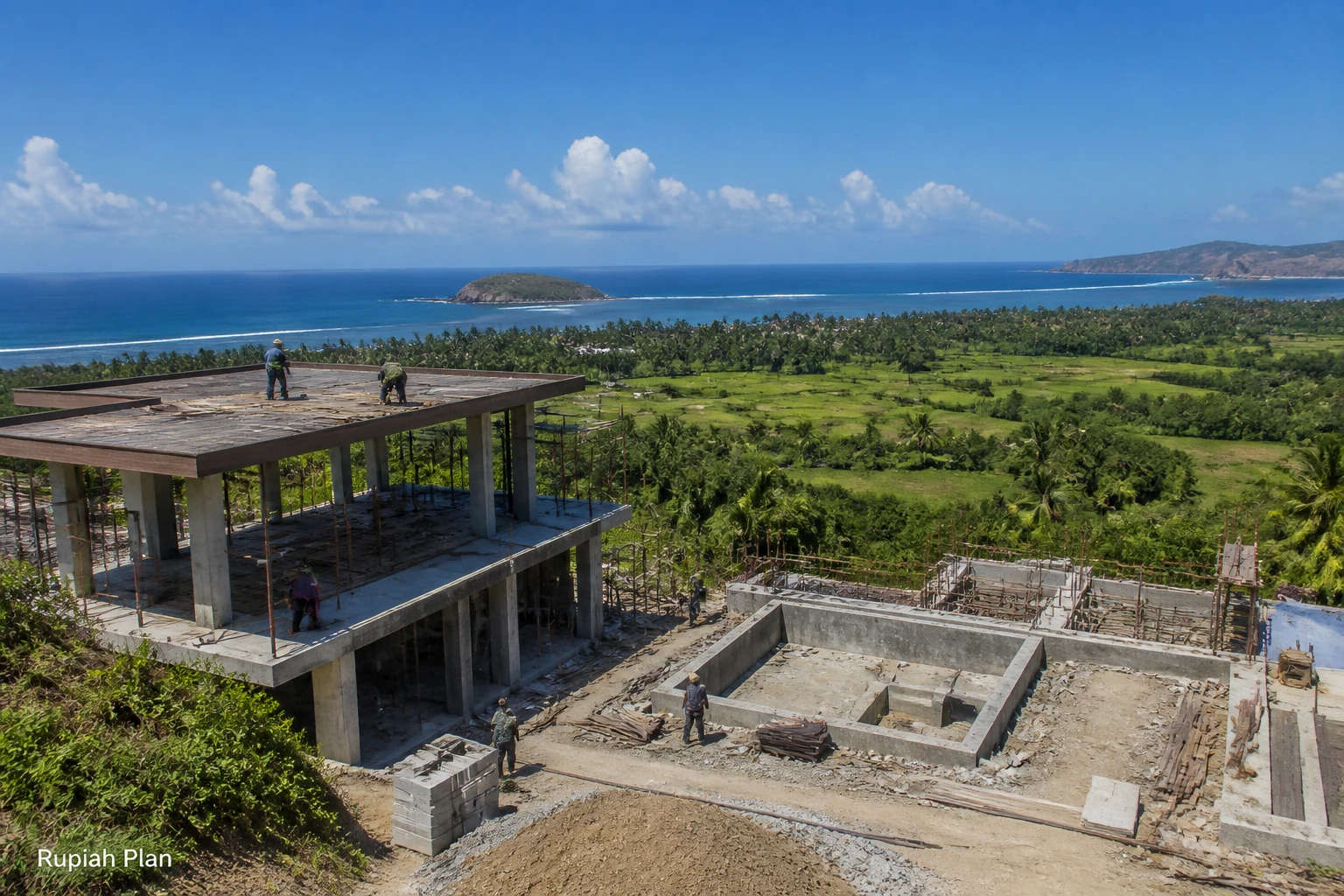
 Prabowo Backs BI's Rupiah Plan · Photo: Photo by Tom Fisk on Pexels
Whether this is already pricing in is not yet clear: HubLombok has no data on buyer inquiries, and any shift in buyer sentiment should be treated as unconfirmed.
Consider the math for a typical Lombok investor:
- Entry price: €250K villa in South Lombok
- Gross yield: 18% (furnished rental, professional management)
- Annual rental income: ~€45K gross (~€36K net after management, property tax, maintenance)
- Return on investment: 14.4% of entry price on these illustrative assumptions, well above the honest 7-12% net range, which is why the 18% gross figure should be treated with caution
With high rupiah volatility priced in, a risk-averse buyer might require 18% gross yield to justify currency exposure. As stability confidence rises, they accept 14–15% gross, allowing prices to rise 15–20% before yield compression occurs. This creates a valuation floor for the next 12–24 months.
Lombok Market Inflection
Lombok's real estate market sits at a critical juncture. The new Lombok International Airport runway opens in Q3 2025, capacity doubles by 2026, and MotoGP racing arrives in 2024–2025. These are concrete catalysts. But they only compound returns if foreign buyers feel macro stability, and thus currency stability, is assured.
Current market conditions in South Lombok:
| Metric | Range | |--------|-------| | Entry Prices | €95K–€350K (freehold villa) | | Gross Yields | 12–22% (furnished, managed) | | Visitor Growth | +40–50% YoY (international share rising) | | Bali Overflow Effect | 25–30% of new Lombok buyers redirecting from Bali |
The Rupiah stabilization plan amplifies all positives. Foreign buyer dollars stretch further, rental yields are denominated in a stronger currency, and currency-hedging costs decline. Tourism momentum, already at +40–50% YoY, becomes sustainable rather than volatile.
What This Means for Investors
Timing consideration: Prabowo's backing likely represents a high-water mark for Rupiah stability expectations over the next 12–24 months. Investors on the fence about Lombok entry can reduce their currency-risk discount. Properties priced for 15% returns (macro risk compensation) may now be priced for 12–13%, reflecting lower risk premium. The intrinsic return doesn't change; the risk-adjusted return improves, which matters psychologically to institutional buyers entering the market.
Entry strategy: First-time buyers should recognize that near-term volatility may persist, but the political framework is now set. Dollar-cost averaging into Lombok positions over 2–3 quarters, rather than lump-sum entry, smooths currency exposure while securing multiple tranches at different prices.
Hedging structures: For investors uncomfortable with currency risk:
- USD-denominated mortgages: Some Lombok lenders offer fixed-rate IDR-to-USD mortgages, locking in interest and FX rates
- Forward rental contracts: Property managers can lock in rental income in EUR/GBP
- Portfolio diversification: Holding properties across Thailand or Vietnam reduces single-currency concentration
Time horizon: The presidential backing is a 3–5 year signal, not permanent. Investors should plan to harvest gains or refinance within that window. A 5-year hold captures Lombok's airport + MotoGP + Bali-overflow thesis while benefiting from macro stability.
Investor action items for May 2026:
- Lock in villa prices before international buyer flow accelerates (typically 2–3 months after major macro announcements)
- Evaluate hedging needs based on home-currency exposure
- Review mortgage terms, rates may tighten as foreign demand rises
- Verify developer timelines for airport-adjacent projects; completion risk decreases with Rupiah strength
Stay informed, subscribe to the free Lombok Briefing for market intelligence like this, published twice a month.
How does rupiah volatility affect foreign investors buying Lombok property?
A foreign investor buying a South Lombok villa for around €250,000 is making two simultaneous bets: local property appreciation (typically 5 to 8% annually at prime locations) and rupiah stability against their home currency. If the rupiah weakens 10% while the property appreciates 10%, the euro-denominated return is roughly flat, making currency risk a direct drag on yield.
What is the significance of Prabowo endorsing Bank Indonesia's rupiah plan for property investors?
President Prabowo Subianto has explicitly backed Bank Indonesia's seven-point rupiah stabilization strategy, covering interest rate calibration, forex intervention, capital flow monitoring, inflation management, banking supervision, fiscal coordination, and dialogue with regional peers. Political endorsement at the highest level gives these measures durability beyond a single leadership change, reducing the currency risk premium foreign buyers typically demand when pricing Lombok property.
What rental yields can a foreign buyer realistically expect from a South Lombok villa?
A furnished, professionally managed villa in South Lombok can generate around 18% gross yield. On a €250,000 entry price that equates to roughly €45,000 gross per year, or approximately €36,000 net after management fees, property tax, and maintenance. That produces 14.4% of entry price on illustrative assumptions, above the honest 7-12% net range. Market-wide gross yields across South Lombok currently range from 12 to 22%.

The Lombok Buyer's Field Guide
Legal structures ranked by risk, the honest ROI math line by line, all six zones ranked, and the 24-point due-diligence checklist. The whole book, free in your inbox.
See what's inside