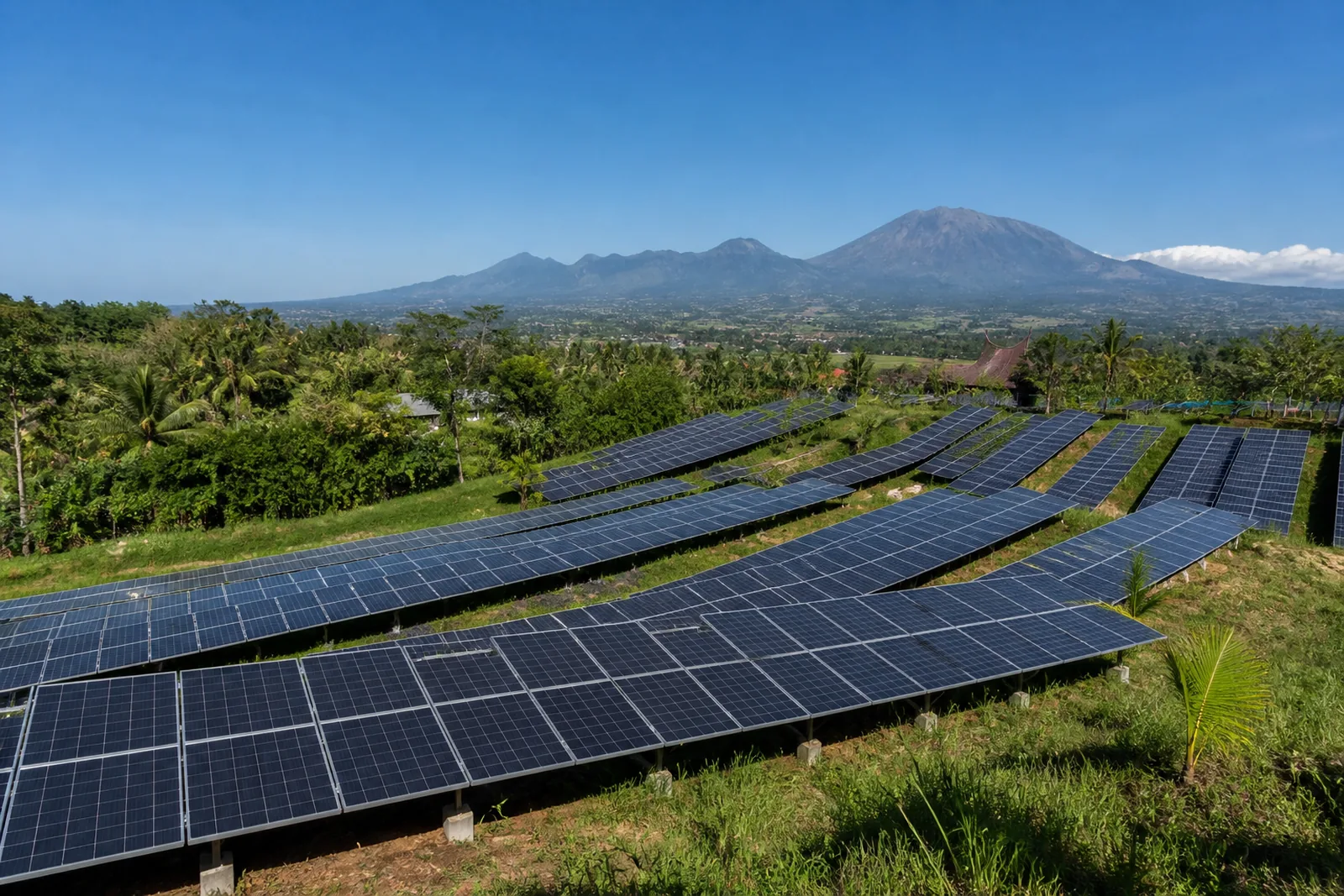
NTB’s Solar Ambition: What a Provincial Commitment Signals for Investors
NTB’s stated solar-energy ambitions offer investors a policy signal, not yet a project pipeline. Here is how to read the Indonesia Solar Summit commitment.
Quick answer: NTB’s appearance at Indonesia Solar Summit 2026 signals that the provincial government wants to position renewable energy, particularly solar, as an investment priority and as part of regional co-operation with Bali and NTT. For Lombok investors, it is a useful strategic indication, but not evidence of a defined project, timetable, capacity target or investable return.
Some investment stories begin with a new asset, a signed contract or a published financing plan. This is not one of them. The more interesting development is quieter: NTB has placed energy sovereignty and solar provision within its public economic narrative, while its investment office has explicitly said it is ready to open space for green investment.
The Context
On 14 July, the official Instagram account of DPMPTSP Provinsi NTB stated that its head, H. Irnadi Kusuma, accompanied NTB Governor Dr H. Lalu Muhamad Iqbal to Indonesia Solar Summit 2026 at Hotel The Meru Sanur, Bali. The governor participated as a principal panellist in a discussion on achieving national energy sovereignty through accelerated regional energy independence, alongside the governors of Bali and NTT.
The official post matters less for the event itself than for the language chosen around it. NTB presented three connected commitments:
- full support for the renewable-energy transition;
- an aspiration for NTB to become not only a user but a resilient provider of solar energy; and
- stronger regional action through the Bali, NTB and NTT Regional Co-operation framework, known as KR BNN.
NTB’s stated ambition is to become a provider of solar energy, rather than solely a consumer of it.
For investors, this is best understood as a policy-direction signal. Governments shape markets not only through enacted rules and completed infrastructure, but also through the priorities they repeatedly choose to articulate. A province that frames renewable energy as a strategic commitment is telling potential capital providers where it wants future economic activity to concentrate.
That does not make every solar proposition investable, nor does it establish the terms on which any future opportunity may be offered. The official account did not announce individual developments, land allocations, generation capacity, financing arrangements, procurement processes, tariffs or delivery dates. Those absences are material. Disciplined investors should distinguish an institutional ambition from a project-level investment case.
Still, the signal is relevant. Energy reliability, the source of power and the policy environment around energy can influence the economics of hotels, villas, hospitality venues, commercial property and other operating businesses. In an island economy, the question is not merely whether an asset is attractive at acquisition; it is how predictable its operating environment may become over time.
A Statement of Direction, Not a Project List
The DPMPTSP post is clear about the province’s intention to support green investment. It is not a substitute for diligence. This distinction is worth making because the language of an energy transition can easily acquire more certainty in market conversation than the underlying evidence warrants.
There are at least three layers to separate.
| Layer | What the official post establishes | What it does not establish | |---|---|---| | Provincial intent | Support for renewable energy and solar ambition | A binding implementation schedule | | Regional co-operation | A stated wish to strengthen KR BNN | Specific joint projects or commercial terms | | Investment climate | Readiness to open room for green investment | Returns, approvals or eligibility for a particular investor |
The first layer is strategic. NTB is publicly associating its future with renewable energy and with the idea of regional energy self-reliance. The second is geographical and institutional: the province sees Bali and NTT as partners in addressing future energy needs. The third is commercial in potential, but remains general in the source material.
This is where the investor’s temperament matters. The premature response is to treat a summit appearance as a forecast of immediate development activity. The equally unhelpful response is to ignore it because no project documents were announced. A more useful reading lies between the two. Public commitments can establish the direction of travel; investment decisions require the road map.
For a property investor in Lombok, the practical relevance may be indirect at first. A greener energy environment could eventually matter to construction choices, operating costs, guest expectations and the resilience of a hospitality business. Yet none of those outcomes should be assumed from this post alone. They depend on decisions that have not been set out here: technical design, service arrangements, regulatory permissions, ownership responsibilities and the economics of each asset.
The official account’s involvement is also notable. DPMPTSP is the provincial investment and one-stop integrated services office. Its statement that it will guard the process and open broad space for green investment indicates that the investment administration is being presented as part of the province’s energy ambition. That is an invitation to watch the policy space closely, not a representation that approval or support is assured.
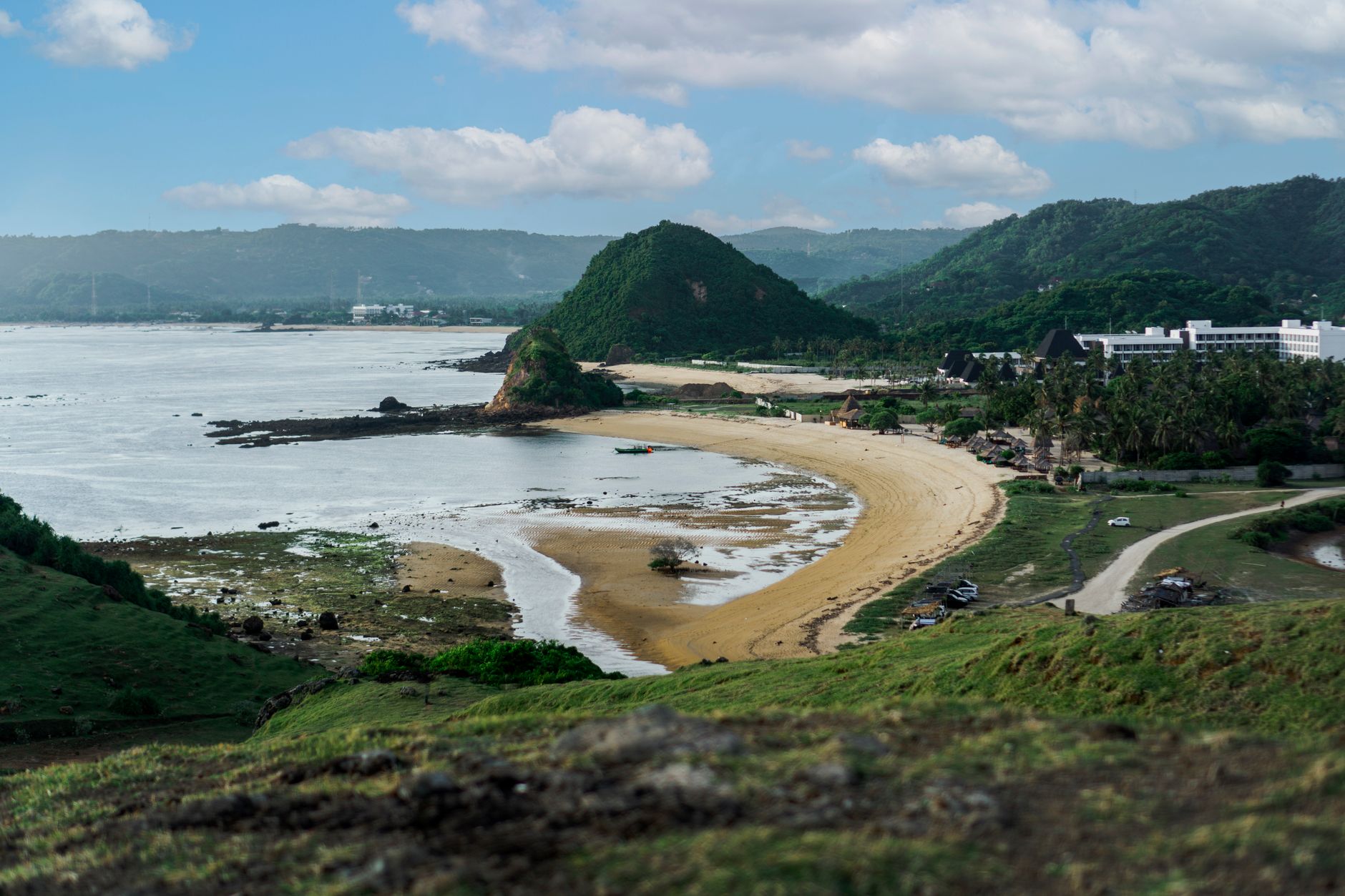 NTB’s Solar Ambition · Photo by Try Putro Utomo on Pexels
The Regional Lens
The KR BNN reference gives the announcement a wider frame. NTB is not describing solar energy only as a local amenity or a narrow environmental initiative. It is linking energy needs, future demand and regional co-operation across Bali, NTB and NTT.
That framing deserves attention because regional co-operation can alter the questions investors ask. Rather than considering Lombok solely as a standalone destination, investors may need to assess how the province positions itself within a wider eastern Indonesian economic corridor. The official post does not define the operational structure of KR BNN, and it would be wrong to infer one. But it does show that NTB’s leadership is speaking in regional rather than purely provincial terms.
For internationally minded capital, that matters in a modest but real way. Major investment theses are often built from a sequence of signals: an administration’s stated priorities, the presence of relevant officials, the language used to welcome investment and the degree to which a place sees itself as connected to neighbouring markets. None is decisive in isolation. Together, they help investors form hypotheses that can later be tested against regulations, projects and contracts.
The energy-sovereignty language has a similar role. The phrase suggests a concern with greater regional independence and capacity, rather than a simple addition of renewable equipment. It may indicate that NTB sees energy as part of its development strategy. Yet investors should resist supplying the missing specifics themselves. The source does not say how solar provision would be organised, which entities would participate, where facilities might be located or how benefits and responsibilities would be allocated.
A prudent approach is therefore to make the announcement a research prompt. Investors considering operating assets can ask whether a developer has made realistic assumptions about energy use and backup systems. Those considering land or development can seek clarity on applicable permissions and infrastructure. Businesses with sustainability requirements can ask which claims are documented, which are aspirational and which are contractual.
The same standard should apply to green-investment narratives more broadly. Promotional descriptions are not performance data. A credible opportunity should be able to answer practical questions in writing, with appropriate professional advice where needed. The provincial statement is relevant context; it is not due diligence.
What This Means for Investors
The immediate conclusion is measured: NTB has publicly aligned itself with renewable energy, solar provision and regional co-operation. That alignment may make the province more interesting to investors whose investment horizon includes operating resilience, sustainability considerations or exposure to a developing regional economy.
But the investable implications remain conditional. Before assigning value to the announcement, investors should look for evidence at the level that matches their decision.
- For an operating property, examine its actual energy arrangements and contractual obligations.
- For a development, establish what approvals, infrastructure commitments and delivery responsibilities are in place.
- For a solar-related opportunity, request the project structure, responsible parties, permissions, commercial terms and downside assumptions.
- For any cross-regional thesis, separate official aspirations from formal agreements and completed assets.
The sensible question is not whether NTB’s declaration is “good news” in the abstract. It is whether subsequent actions make that declaration commercially meaningful for a particular asset or business. In investment, context is valuable precisely because it informs better questions; it should not be used to bypass them.
HubLombok is the editorial arm of Samudra Villas, an active developer in Are Guling, South Lombok. That relationship makes careful disclosure especially important when discussing policy developments that may affect the wider investment environment. This notebook is based on the official DPMPTSP Provinsi NTB post and treats its commitments as statements by the provincial organisation, rather than independently verified project outcomes.
NTB’s solar message should therefore sit in the investor’s notebook as an early strategic marker. It points to a province seeking a role in renewable energy and regional co-operation. The next evidence to watch is more concrete: policies, projects, terms and implementation. Until then, the value of the announcement lies in the clarity it brings to NTB’s stated direction, not in promises that have yet to be made.
Stay informed, subscribe to the free Lombok Briefing for market intelligence like this, published twice a month.
What did NTB announce at Indonesia Solar Summit 2026?
According to DPMPTSP Provinsi NTB, the province reaffirmed support for renewable energy, expressed an ambition to become a resilient solar-energy provider, and said it would strengthen regional co-operation with Bali and NTT through KR BNN.
Does NTB’s solar commitment create an investable project?
No. The official post communicates provincial direction and support for green investment, but it does not identify a specific project, delivery timetable, capacity target, financing structure, procurement process or expected investor return.
How should Lombok investors use this announcement?
Treat it as strategic context rather than due diligence. Investors can use it to ask better questions about energy arrangements, approvals, operating responsibilities and commercial terms, while relying on project-specific documents for any investment decision.

The Lombok Buyer's Field Guide
Legal structures ranked by risk, the honest ROI math line by line, all six zones ranked, and the 24-point due-diligence checklist. The whole book, free in your inbox.
See what's inside