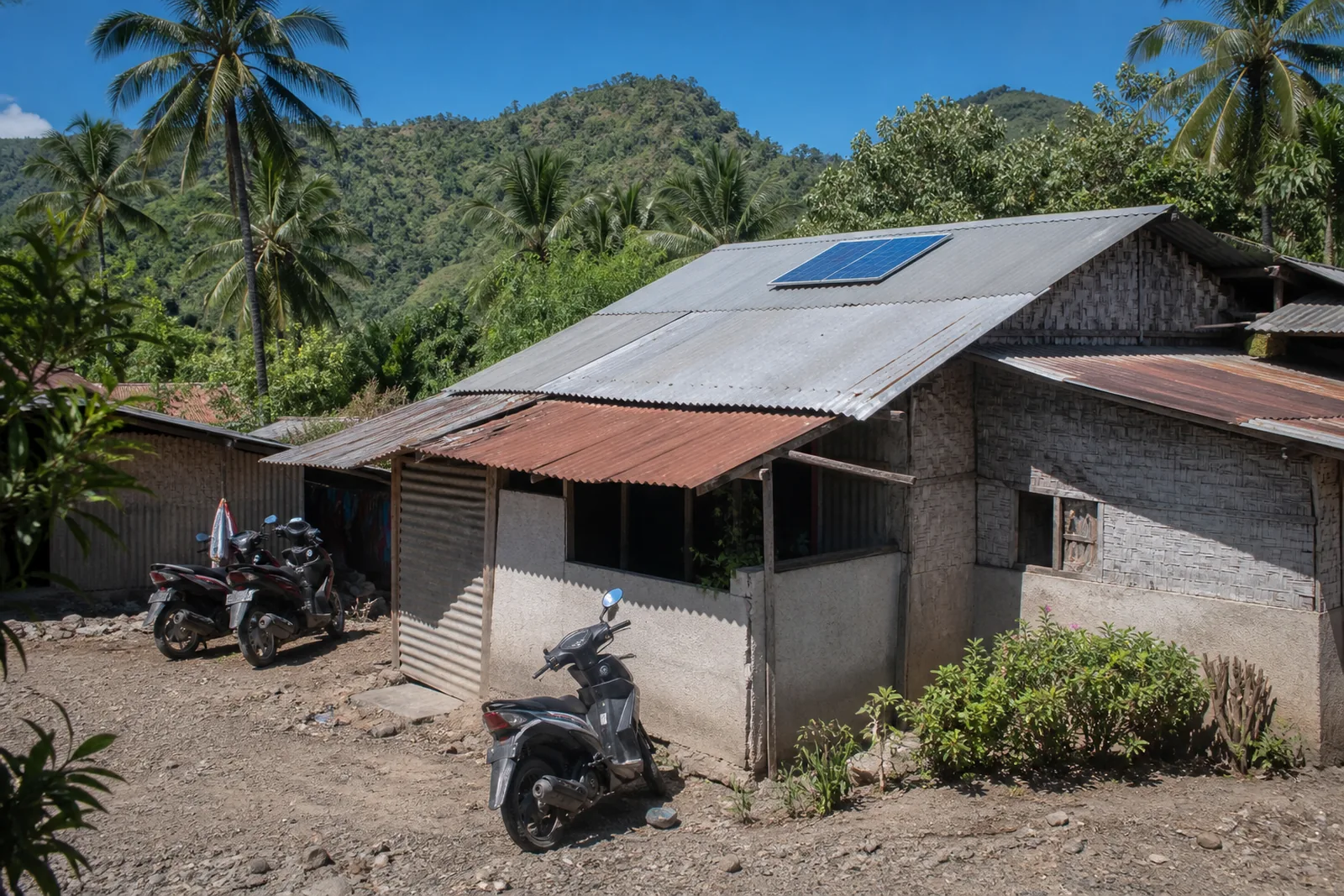
Lombok Notebook: NTB’s Solar Ambition and the Signal for Green Investment
NTB’s participation in Indonesia Solar Summit 2026 sets out an official ambition to support renewable energy and attract green investment.
Quick answer: NTB’s government has used Indonesia Solar Summit 2026 to restate its support for renewable energy, its ambition to become a solar-energy provider and its openness to green investment. For Lombok investors, this is a policy signal worth monitoring, not evidence yet of a specific project, timetable, return or investable asset.
For a destination often discussed through tourism and property, energy policy can seem a more distant strand of the investment story. Yet the official message from the provincial government deserves attention precisely because it concerns the operating environment behind those more visible sectors: how a region presents its development priorities, how it frames future demand and where it says it wants private capital to engage.
The Context
On 14 July, the Head of DPMPTSP Provinsi NTB, H. Irnadi Kusuma, accompanied the Governor of NTB, Dr H. Lalu Muhamad Iqbal, at Indonesia Solar Summit 2026 in Bali. According to DPMPTSP Provinsi NTB’s official Instagram post, the Governor joined a panel discussion on achieving national energy sovereignty through accelerated regional energy independence, alongside the Governors of Bali and NTT.
The substance of the post is deliberate. NTB’s provincial government says it is firmly committed to supporting the renewable-energy transition. It also sets out an aspiration for NTB to move beyond being an energy user and become a resilient provider of solar energy. Finally, it places this ambition within the regional co-operation framework linking Bali, NTB and NTT, referred to by the organisation as KR BNN.
DPMPTSP Provinsi NTB says its presence reflects readiness to support and open the widest possible space for green investment in Nusa Tenggara Barat.
That wording matters, but it should be read with discipline. It is an official statement of intent from a public institution, rather than a project announcement. The post does not identify a solar site, a developer, a capacity target, an investment amount, a procurement process, a commercial structure or an implementation schedule. None should be assumed.
Still, intentions voiced in a national forum are not meaningless. For investors, they help establish the language and direction through which a provincial administration wants to be assessed. In this case, that language centres on renewable energy, regional co-operation and investment openness. It suggests that green investment is being presented as part of NTB’s wider development agenda, rather than as an isolated technical concern.
For international capital, the useful distinction is between a policy signal and an investable proposition. A policy signal can shape future conditions, institutional priorities and conversations with agencies. An investable proposition requires far more: defined rights, credible documentation, a clear counterparty, appropriate approvals, land and grid considerations, revenue assumptions and a realistic route to execution. The DPMPTSP post speaks to the former, not the latter.
From Energy User to Solar Provider
The aspiration to become a solar-energy provider is the most consequential element of the announcement. It shifts the official framing from consumption towards productive capacity. That is a broad strategic idea, but it is not yet a commercial blueprint.
The difference is important because renewable-energy narratives can invite premature conclusions. A regional authority may support a transition in principle while the practical ingredients of an individual project remain unresolved. Investors should therefore resist converting the phrase “solar provider” into an assumption that capacity has been contracted, land secured, offtake arranged or financial returns established. The official post provides none of those details.
What it does provide is a useful lens for asking better questions. If NTB is pursuing this direction, investors following Lombok and the wider province can watch for the evidence that turns strategic ambition into a durable investment environment:
- Further official clarification of how green investment will be facilitated.
- Specific projects, legal structures or approval pathways disclosed by the relevant authorities.
- Details on how regional co-operation with Bali and NTT is intended to operate in practice.
- Evidence of the commercial and regulatory arrangements required for any individual opportunity.
This is not merely a checklist for utility-scale energy investors. Hospitality operators, real-estate developers, tourism businesses and businesses with significant energy needs may also regard the direction of travel as relevant. Energy availability, cost and resilience can affect how an asset is designed, operated and positioned. But the post itself does not make claims about those outcomes. It only establishes the provincial government’s stated commitment to pursue renewable energy and to welcome green investment.
The regional dimension adds another layer. DPMPTSP identifies the Bali–NTB–NTT regional co-operation framework as part of the response to future energy needs. Such framing recognises that energy questions can extend beyond a single island or administrative boundary. It also places NTB within a wider eastern Indonesian conversation about energy independence.
That is strategically interesting for Lombok because regional co-operation can create a broader policy context than a local project alone. Yet it should not be mistaken for proof of a shared market, shared infrastructure or a completed agreement with defined economic effects. The announcement says NTB will continue to strengthen its steps through KR BNN; it does not explain the mechanism, scope or outcome of those steps.
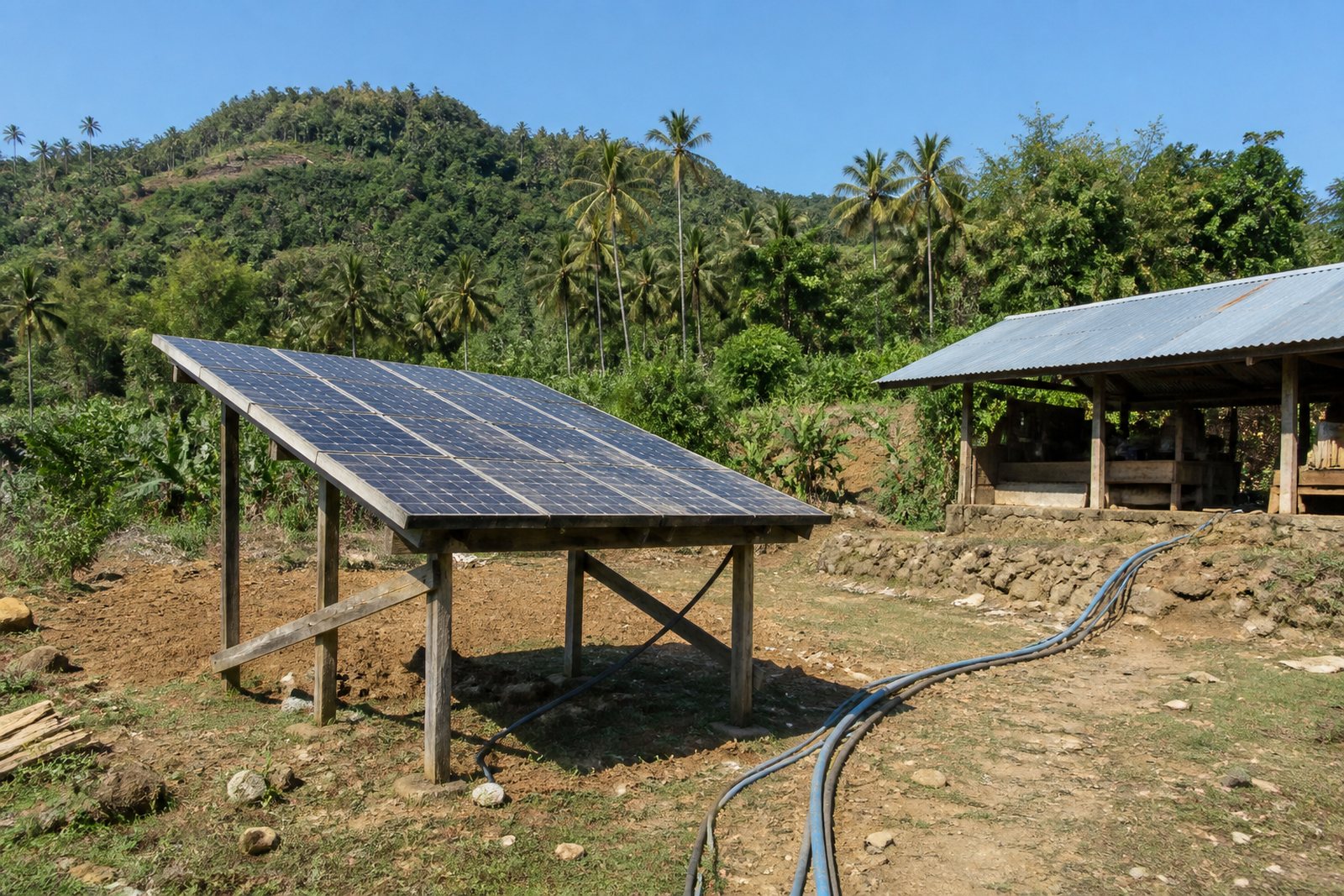 Lombok Notebook · Illustration: HubLombok (AI-generated)
Green Investment Needs More Than a Strong Narrative
DPMPTSP’s role is central to why this post merits investor attention. The agency describes its participation as part of its readiness to oversee and create room for green investment. For a prospective investor, that is an invitation to engage with the official investment-facing institution rather than rely on market hearsay or promotional shorthand.
The quality of an investment case, however, will always rest on particulars. A compelling public narrative is useful, especially when it aligns senior provincial leadership with a national discussion. It does not replace diligence. Investors should treat any eventual opportunity on its own evidence, asking what exactly is being offered, by whom, under which approvals and with which enforceable rights.
This is especially relevant where clean-energy themes overlap with land, tourism or development. A solar-related proposition may involve several layers of interest: the landholder, the project company, the relevant public bodies, a potential energy user and any financing or operating partner. The official post does not identify such parties or arrangements. It would be a mistake to fill those gaps with optimistic assumptions.
The disciplined reading is therefore constructive but conditional. The provincial government has made a public statement that renewable energy and green investment are priorities. That can be a positive part of the wider context for investors assessing NTB. It is not a substitute for verifying project-level fundamentals.
There is also a communications point here. Official accounts frequently use language designed to express momentum and ambition. The phrase “opening the widest possible space” for green investment conveys an intention to be welcoming. It does not, on its own, define eligibility, incentives, licensing times, risk allocation or investor protections. These are matters to establish through subsequent official information and professional advice when a concrete opportunity emerges.
The same caution applies to the summit setting. Participation at Indonesia Solar Summit 2026 gives the statement national visibility and places NTB’s leaders in a regional policy discussion. It does not demonstrate that the summit itself created an agreement, awarded a project or committed capital to Lombok. DPMPTSP’s post reports attendance, panel participation and provincial commitments; that is the appropriate boundary of the claim.
For the broader investment narrative, this restraint is a strength. Lombok’s long-term appeal cannot sensibly be reduced to a single announcement, and neither should an energy transition be judged by a single forum. What investors can take from the post is more modest and more useful: senior provincial representation has publicly aligned NTB with renewable energy, solar-provider ambitions and regional energy co-operation.
What This Means for Investors
The immediate implication is one of attention, not action. Investors with an existing interest in Lombok, or a mandate covering sustainable infrastructure and destination-led development, have a new official reference point for discussions about provincial priorities. The next task is to separate signals from substantiation.
A practical investor response would be to keep the announcement in context and seek evidence before assigning value to it. That means distinguishing official ambition from executed policy, executed policy from a defined project, and a defined project from a transaction with acceptable risk and return. Each stage requires different documentation and different expertise.
For property and hospitality investors, the announcement may be relevant to the long view rather than the immediate underwriting model. A regional commitment to renewable energy can influence the conversation around resilience, operating standards and the character of future development. But no direct benefit to a particular villa, hotel, plot or business follows from the post. Any claim that it does would go beyond what DPMPTSP Provinsi NTB has said.
For infrastructure-minded investors, the message is a reason to watch institutional follow-through. Future disclosures from provincial bodies may clarify whether the stated ambition is developing into projects or formal investment pathways. Until then, the responsible position is to recognise the policy direction while withholding conclusions on scale, timing and economics.
HubLombok is the editorial arm of Samudra Villas, an active developer in Are Guling, South Lombok. That connection makes careful attribution especially important: this Notebook treats the DPMPTSP post as an official statement of provincial intent, not as validation of any private development proposition.
The enduring lesson is that investment context is built gradually. A summit appearance may not supply an underwriting case, but it can reveal where public leadership wants the next conversation to go. NTB has indicated that it wants renewable energy, solar provision and regional co-operation to be part of that conversation. Investors should welcome the clarity, retain their scepticism and look for the next layer of verifiable detail.
Stay informed, subscribe to the free Lombok Briefing for market intelligence like this, published twice a month.
What did NTB announce at Indonesia Solar Summit 2026?
According to DPMPTSP Provinsi NTB, the provincial government reaffirmed support for renewable energy, expressed an ambition for NTB to become a resilient solar-energy provider and highlighted regional co-operation with Bali and NTT.
Does NTB’s solar statement create an investment opportunity now?
No specific opportunity is identified in the official post. It states a policy direction and openness to green investment, but provides no project, investment amount, timetable, capacity, commercial terms or returns for investors to assess.
What should Lombok investors watch for next?
Investors should watch for official details that turn the stated ambition into a defined proposition, including project information, approvals, legal arrangements, counterparties and commercial structures. Each potential investment should be assessed on its own verified evidence.

The Lombok Buyer's Field Guide
Legal structures ranked by risk, the honest ROI math line by line, all six zones ranked, and the 24-point due-diligence checklist. The whole book, free in your inbox.
See what's inside