Bayan's 30% Stake Sale: What a Conditional Deal Teaches Investors
A conditional 30% stake sale in a listed coal miner shows why headlines, statements and contracts differ, and how Lombok investors can apply that discipline to property.
Quick answer: A local coal entrepreneur has signed a conditional agreement to acquire about 30% of listed miner Bayan Resources from its controlling shareholders. Nothing has completed, and the coal sector is not Lombok. The lesson for Lombok investors is procedural: announcements are not completions, and conditions precedent decide outcomes.
Indonesian corporate news rarely touches South Lombok, and this story does not either. Yet a single conditional share deal in the coal sector is a tidy case study in how ownership changes are announced, qualified and reassured about, and those habits of reading transfer directly to villa and land transactions. This Notebook uses it as a lens, not as a market signal.
The Context
According to the Jakarta Post, a local coal tycoon has acquired a significant stake in the listed coal miner PT Bayan Resources through his investment vehicle, PT Jhonlin Baratama. The vehicle signed a conditional share purchase agreement on Wednesday with Bayan's controlling shareholders, described in the report as one of the richest individuals in the country and his daughter.
Under the agreement, the buyer will acquire around 10 billion Bayan shares, representing approximately 30% of the company's outstanding shares. The Jakarta Post calls it one of the most notable corporate manoeuvres in Indonesia's coal sector this year.
Three details in the reporting reward slow reading.
"The completion of the transaction is subject to the fulfillment of several conditions precedent," a Bayan Resources director said in a statement on Thursday.
- Conditional, not complete. The supplied report does not list the conditions precedent, so no outside reader can say how close the deal is to closing.
- Reassuring by design. The director added that the event does not result in any material negative impact that could disrupt operational activities, legal aspects or financial conditions. That is the company's own characterisation, and it should be read as such.
- Silent on control. The company did not provide detailed information on its controlling structure after the transaction. A 30% holding and control are related questions, but they are not the same question.
What the Headline Adds, and What It Leaves Open
The Jakarta Post's headline reaches further than the text supplied to us. It links the sale to a quota cut and describes the buyer as an ally of the president. Neither claim is explained in the extract, so this Notebook does not treat either as established fact and does not try to reconstruct a motive the source has not stated.
That restraint is the discipline worth borrowing. A headline compresses a story into a causal claim. A company statement compresses it into reassurance. The underlying document, here a share purchase agreement whose terms are not set out in the extract, says something narrower than both. Investors who mix the three layers end up trading on a narrative rather than on a contract.
There is a second discipline in the phrase "significant stake". A large minority holding changes who is in the room. Whether it changes who decides depends on shareholder agreements, board seats and voting rights that the report does not describe. Until that structure is disclosed, the honest description is that a large block is due to change hands, subject to conditions.
Notice, too, what the company did say. It said the transaction would not harm business continuity. The supplied text does not include an expected completion date, the list of conditions or the price. Absence of detail is information as well: it tells you how much you can responsibly conclude.
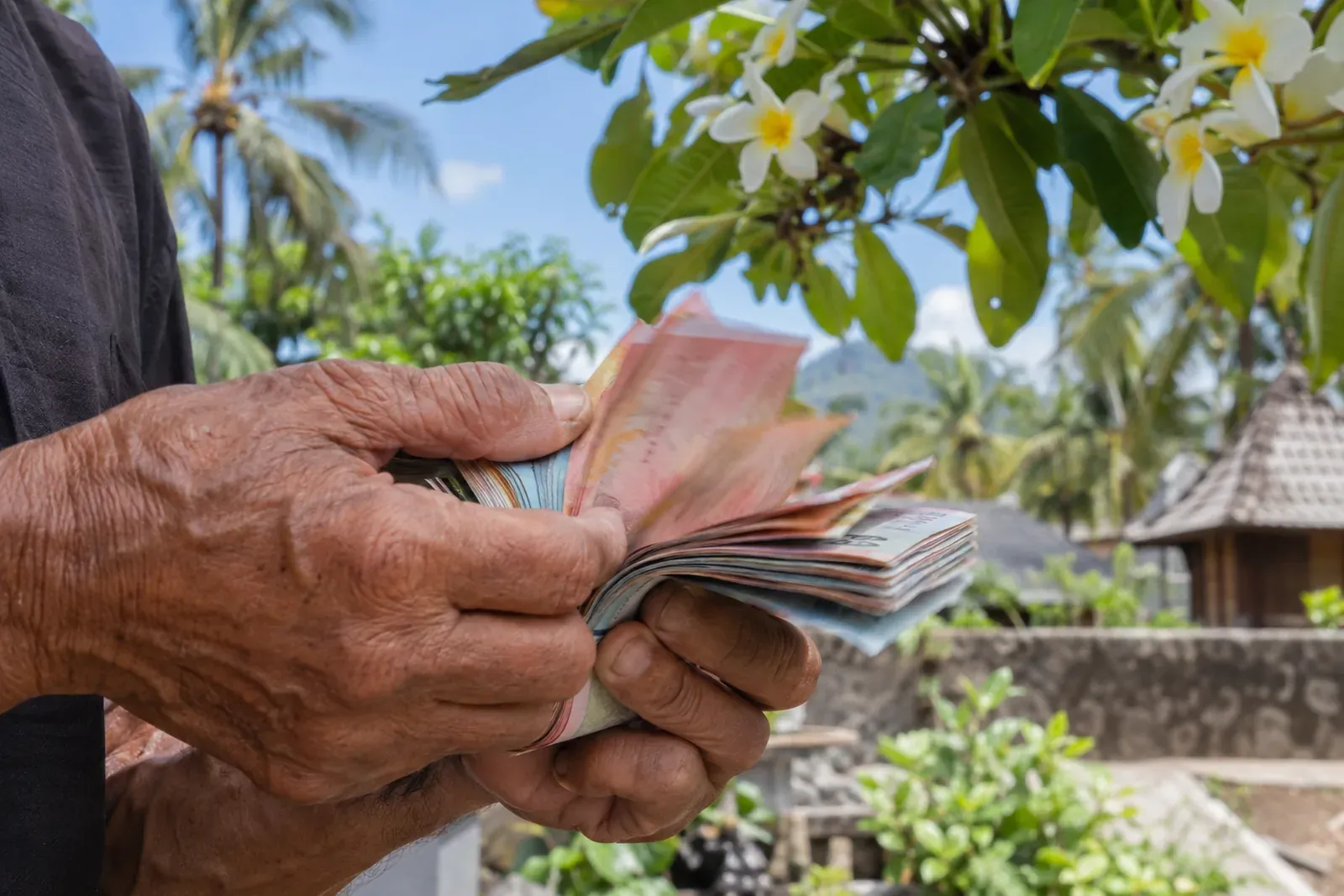
 Bayan's 30% Stake Sale · Illustration: HubLombok (AI-generated)
Conditions Precedent, Lombok Style
Lombok property has its own conditions precedent, and they are more tangible than a share agreement between insiders of a listed company. A signed reservation or sale agreement is not the deed. Deeds are executed by a licensed PPAT notary, the deed of sale is the AJB, and the land agency, BPN, is the body that records the transfer. Until those steps are complete, "signed" describes an intention rather than ownership.
The buyer's own costs sit in the same sequence. Buyer transfer duty, BPHTB, is about 5% of assessed value, with a modest annual land-and-building tax, PBB, thereafter. These are known, bounded items, and they belong in the model before the deposit, not after.
Structure is the other condition that decides outcomes. Foreign buyers have three lawful routes:
- Leasehold (Hak Sewa): typically 25-30 years, with extensions.
- Hak Pakai: a personal right-to-use that requires KITAS or KITAP residency.
- PT PMA: a foreign-owned company holding Hak Guna Bangunan (HGB), for 30 years and extendable.
Nominee arrangements, where an Indonesian holds title on a buyer's behalf, are illegal and void in court. They are the property-market equivalent of an announcement with no contract behind it.
Due diligence is where conditions precedent get tested: certificate checks, ownership history, zoning and encumbrances. TerraNusa Advisory (terranusaadvisory.com) is an independent licensed-notary and legal desk for foreign buyers in Lombok and an advisory partner of HubLombok. It handles the chain from diligence and PT PMA setup through BPHTB and title transfer at BPN. It is a separate entity from Samudra Villas.
The same layered reading applies to yield. A single headline number tells you little unless you know which layer it belongs to.
| Figure | Range | What it is | |---|---|---| | Developer-quoted yield | 12-22% | Gross, before costs | | Honest net yield | 7-12% | After management fees and realistic occupancy | | Management fee | 18-22% | Of gross rental revenue | | OTA commissions | 15-20% | Booking platform charges | | Stabilised occupancy, years 1-3 | 55-70% | Realistic range; Bali runs 70-85% |
These are estimates, not promises. Top-performing assets can reach about 15% net, but only as an outlier, never as the norm.
What This Means for Investors
- Separate the layers. Contract, company statement and commentary carry different weight. Ask which one any figure or claim comes from.
- Treat "signed" as "not yet done". In a share deal that means conditions precedent. In Lombok land it means an AJB before a PPAT notary and registration at BPN.
- Ask what is not being said. In the Bayan report, the post-deal control structure is undisclosed. In a villa offer, the equivalents are ownership history, encumbrances and the legal route.
- Label every yield. Gross 12-22% and net 7-12% are different quantities. Never let one stand in for the other.
- Keep the analogy in proportion. Coal-sector equity and Lombok land are different asset classes with different risks. The supplied source says nothing about Lombok, and this piece draws no market conclusion from it.
Demand narratives around the island are strong, with foreign arrivals running at +40-50% YoY on tourism recovery and the MotoGP effect. Strong headlines make careful reading more valuable, not less.
The Bayan story will be resolved by its conditions, not by its headline. Lombok investors face a smaller version of the same test every time a price, a yield or a promise arrives in a single line. Read the layers, price the known costs, and let the paperwork, not the narrative, mark the point at which a deal becomes real.
Stay informed: subscribe to the free Lombok Briefing, published twice a month (the 1st and 15th), for market intelligence like this.
Does the Bayan stake sale affect Lombok property?
The supplied Jakarta Post report says nothing about Lombok, and this piece draws no market conclusion from it. Its relevance is procedural: a conditional deal is not a completed one, and company reassurance is not a contract. Lombok buyers can apply the same layered reading to their own transactions.
Is a signed property agreement in Lombok proof of ownership?
No. Deeds are executed by a licensed PPAT notary, the deed of sale is the AJB, and the land agency BPN records the transfer. Until then a signed agreement shows intent rather than ownership. Buyers also owe BPHTB, about 5% of assessed value.
How should investors read yield figures for Lombok villas?
Check whether the number is gross or net. Developer-quoted gross yields run 12-22%, but the honest net range after management fees and realistic occupancy is 7-12%, with top assets reaching about 15% net as an outlier. Treat every figure as an estimate.

The Lombok Buyer's Field Guide
Legal structures ranked by risk, the honest ROI math line by line, all six zones ranked, and the 24-point due-diligence checklist. The whole book, free in your inbox.
See what's inside