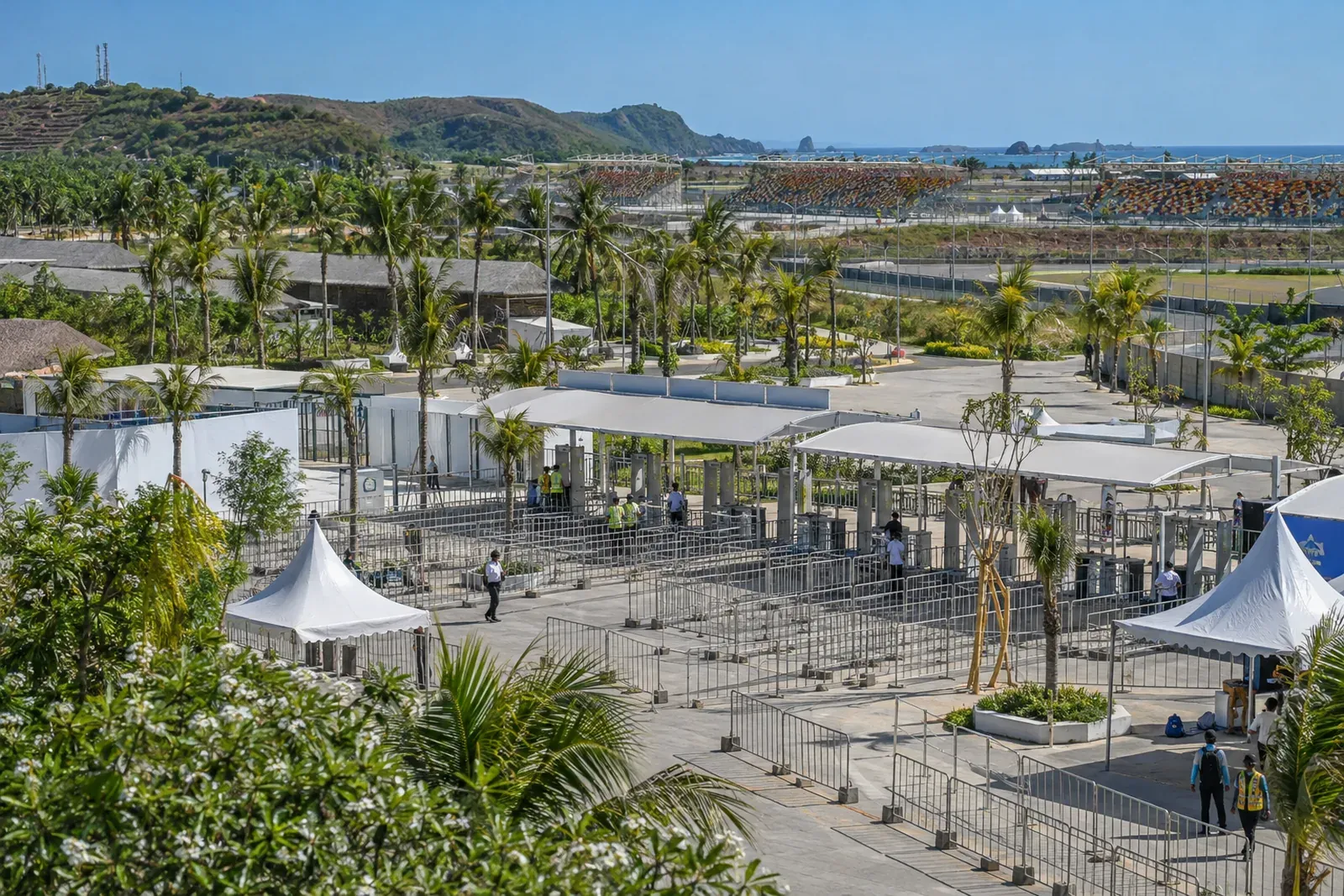
Mandalika MotoGP Targets Rp5 Trillion Impact as Lombok Prepares for a Surge
InJourney is targeting nearly Rp5 trillion in economic impact from the October MotoGP, with extra flights and near-full circuit-area hotels putting Lombok’s visitor economy in focus.
Quick answer: InJourney is targeting nearly Rp5 trillion in economic impact from the Mandalika MotoGP, scheduled for October 9–11. Extra flights at Lombok International Airport and circuit-area hotel occupancy approaching 100 percent point to an immediate visitor surge. For investors, the event is a live test of tourism demand and local capacity, not proof of lasting returns.
The race begins tomorrow, placing Lombok’s visitor economy under an unusually bright international spotlight. InJourney’s target gives the weekend a substantial economic frame, but the more useful question for investors is what activity could extend beyond the circuit and race dates.
The Context
State-owned aviation and tourism holding company InJourney says it aims to generate nearly Rp5 trillion, approximately US$279.33 million, in economic impact from the event. The 2026 Pertamina Grand Prix of Indonesia is scheduled for October 9–11 at Mandalika in West Nusa Tenggara. It is the fifth consecutive year the world championship event has been hosted there, following its debut in 2022, according to Antara Business.
The target is a projection, not a confirmed measure of money already earned or a forecast of investor returns. It covers a wider economic effect than ticket sales or hotel revenue alone. InJourney says the event is expected to engage up to 3,000 local workers and nearly 600 micro, small and medium-sized enterprises, across accommodation, food, transport, trade and tourism.
That breadth matters. A major event can direct spending towards several parts of a destination’s economy, while the amount captured by each business will vary. The source does not break down the projected impact by sector, nor does it specify how much may remain in the local economy. Investors should therefore read the headline target as a signal of anticipated activity, not as a transparent estimate of property income.
The event also gives Mandalika a recurring international platform. Antara reports that the Grand Prix is broadcast to nearly 200 countries, with an international fan base exceeding 632 million. That reach may support Indonesia’s tourism profile, but broadcast reach is not the same as visitors arriving in Lombok, or guests booking accommodation beyond the event period.
Flights, rooms and local capacity
The clearest near-term indicators are operational. InJourney Airports has scheduled 66 extra flights at Lombok International Airport to anticipate higher travel demand. The schedule comprises 48 additional regular flights, 11 charter flights, four aircraft upgrades and three positioning flights. Separately, hotel occupancy around the circuit area is approaching 100 percent, according to the source.
These details show the scale of preparation for a concentrated demand spike. They do not establish that every part of Lombok is full, or that the same occupancy will persist after the Grand Prix. The hotel figure is specific to the area surrounding the circuit, while the flight schedule describes added capacity for the event. Neither should be treated as a general measure of year-round lodging performance.
The attendance history offers a longer view of the event’s draw. Spectator numbers rose from 102,929 in 2023 to 121,252 in 2024, then reached a record 140,324 visitors in 2025, Antara reports. The sequence supports the case that the Grand Prix has attracted a growing crowd in recent editions. It does not, by itself, tell investors how many spectators were tourists, how long they stayed, or how much they spent locally.
The distinction is important for property analysis. A full event calendar can bring a sharp lift in travel and accommodation demand, while an investment decision depends on the wider pattern of occupancy, costs and demand across the year. In South Lombok, the verified market context puts realistic stabilised villa occupancy at 55–70 percent in the first years, and an honest net rental yield at 7–12 percent after management fees and realistic occupancy. Those market ranges are not specific to this event or to a particular property.
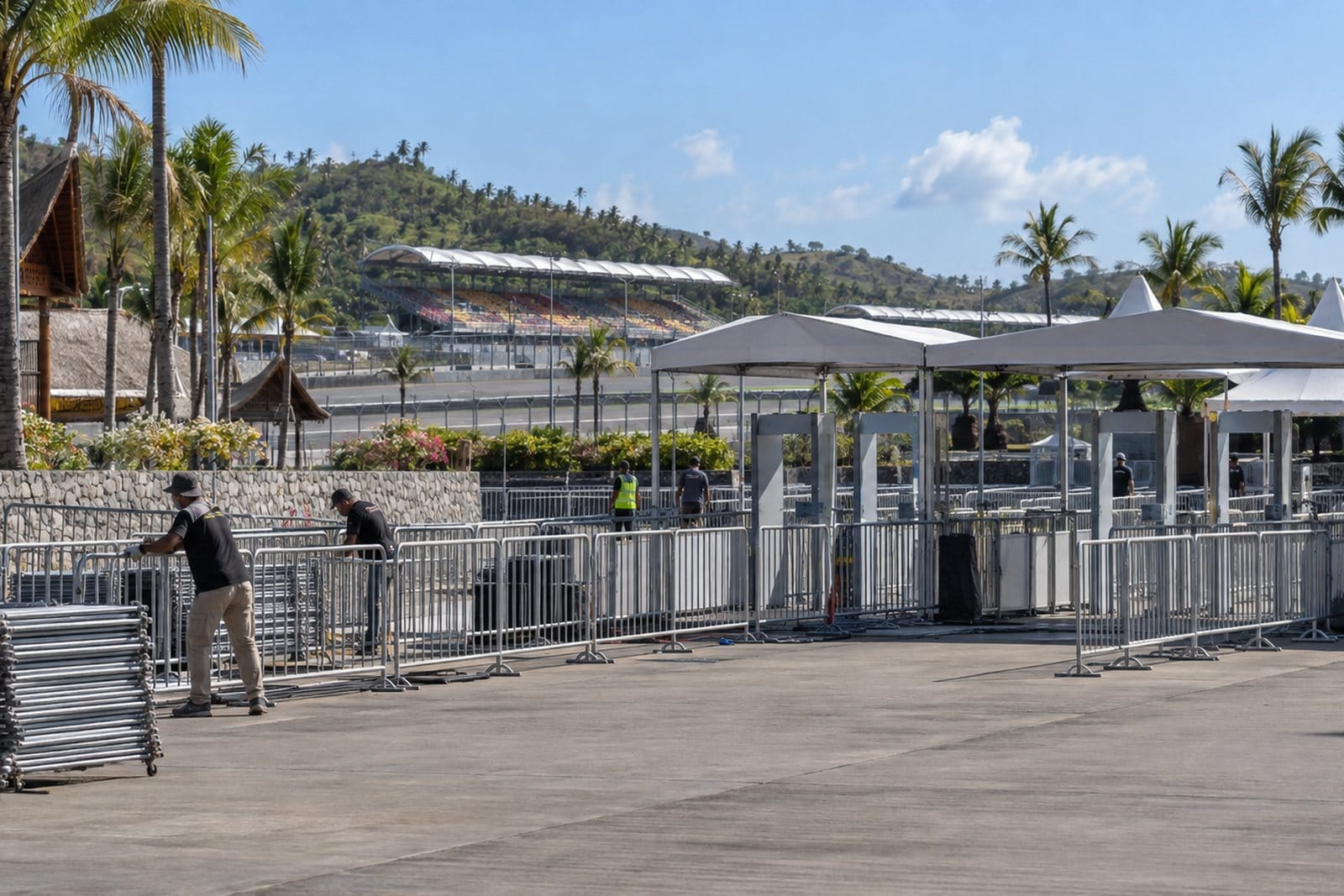 Mandalika MotoGP Targets Rp5 Trillion Impact as Lombok Prepares for a Surge · Illustration: HubLombok (AI-generated)
What the event can and cannot demonstrate
InJourney describes the Grand Prix as a catalyst for destinations, connectivity and regional economic activity. Danantara’s chief operating officer, as quoted by Antara, points to growth in traffic alongside the expansion of hotels, restaurants, flight services and other economic activity. These are institutional assessments of the event’s wider influence; the article does not provide independently measured figures for those changes.
For investors, the strongest evidence in this dispatch is narrower and more immediate: rising spectator attendance over recent editions, additional scheduled flights for this event and circuit-area hotel occupancy nearing capacity. Together, these indicate that the race can concentrate demand and draw resources into the destination. They do not establish the performance of any individual accommodation business, land parcel or development.
The distinction between an event weekend and a durable tourism market is central. Infrastructure and visitor services may benefit when activity is sustained, but the source does not quantify the share of the projected impact that will translate into lasting investment, nor does it give a post-event occupancy outlook. The nearly Rp5 trillion figure should therefore be treated as InJourney’s ambition for the event’s economic footprint, not as a valuation input for a villa or a guaranteed return.
The practical question after the race will be whether the wider ecosystem continues to attract visitors and support businesses beyond peak event dates. The source provides a reason to watch that question closely: Mandalika has hosted the championship for five consecutive years, and reported attendance has risen across the editions cited. It does not yet answer it. Investors should keep event-related demand separate from assumptions about stabilised income and assess any asset on its own terms.
What This Means for Investors
The dispatch sharpens the case for monitoring Lombok’s tourism and transport capacity, while leaving the investment case dependent on evidence beyond the race weekend. InJourney’s flight additions and near-full circuit-area hotels suggest that demand can press against capacity during a major event. The participation of local workers and nearly 600 MSMEs also points to a broad set of businesses that may be involved in servicing visitors.
For accommodation investors, that creates a timely opportunity to observe how demand is distributed across the destination and which services face pressure during the event. It is not a reason to apply the weekend’s occupancy to a full year, or to equate a projected national economic impact with revenue available to a property owner. The reported attendance trend is relevant context, but it cannot substitute for asset-level assumptions about costs, management and occupancy.
For land and development decisions, the story is a reminder to separate visibility from execution. A global event can put a destination in front of international audiences and bring additional travel capacity. Whether that visibility supports a particular project depends on its location, legal structure, operating plan and the demand it can attract after the crowd leaves. None of those outcomes is settled by the event target.
The immediate signal is compelling but bounded: Mandalika is preparing for a high-demand MotoGP weekend, and InJourney expects the event to generate nearly Rp5 trillion in economic impact. Investors should follow the evidence as it emerges, then judge the longer-term opportunity on sustained tourism activity rather than the intensity of a single race.
Stay informed: subscribe to the free Lombok Briefing, published twice a month (the 1st and 15th), for market intelligence like this.
What economic impact is InJourney targeting from the 2026 Mandalika MotoGP?
InJourney is targeting nearly Rp5 trillion, approximately US$279.33 million, in economic impact from the October 9–11 event. This is a projected impact, not a confirmed measure of revenue or a forecast of returns for individual investors.
Do near-full hotels mean Lombok villa occupancy will stay high?
No. The source says hotel occupancy around the circuit is approaching 100 percent in connection with the event. That is a location- and event-specific indicator, not evidence of year-round occupancy across Lombok or for any particular villa.
What does the MotoGP news mean for property investors?
The scheduled extra flights, reported attendance growth and near-full circuit-area hotels show that the event can concentrate visitor demand. They do not establish an individual property's income or long-term performance, which depends on its own costs, management and sustained demand.

The Lombok Buyer's Field Guide
Legal structures ranked by risk, the honest ROI math line by line, all six zones ranked, and the 24-point due-diligence checklist. The whole book, free in your inbox.
See what's inside