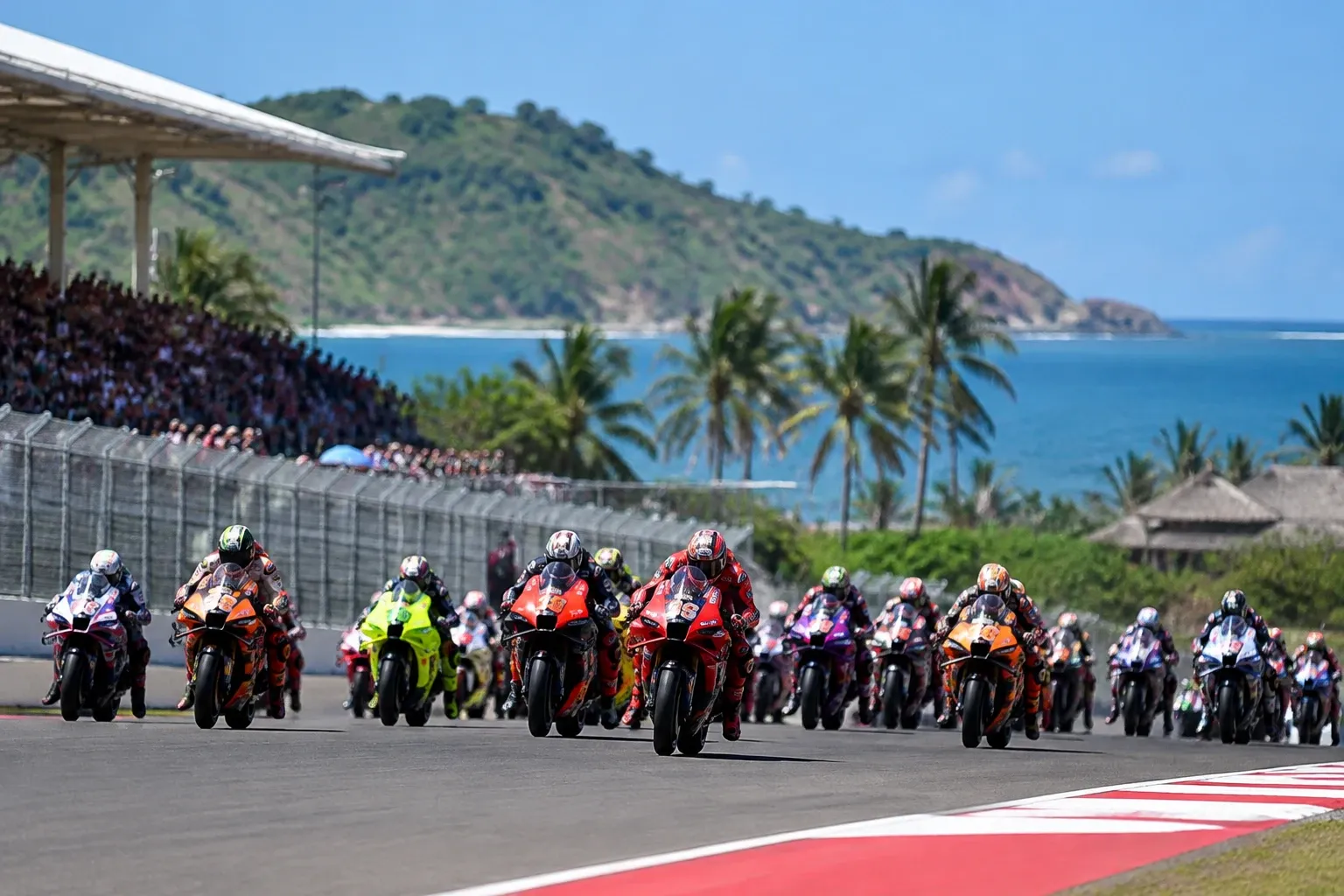
Mandalika MotoGP 2026 Draws Record Crowd and an Estimated US$271.9 Million Impact
Indonesia reports a record Mandalika MotoGP crowd and an estimated US$271.9 million multiplier impact. What the figures mean for investors, and what they do not.
Indonesia's 2026 Mandalika MotoGP drew a record crowd, and the Tourism Minister says it generated an estimated Rp5 trillion (US$271.9 million) in multiplier economic impact. For property investors, the question that matters is how much of that activity outlasts the race weekend.
The headline figures
The figures below come from the Tourism Minister's statement and related ANTARA reporting.
- Estimated multiplier impact: Rp5 trillion (US$271.9 million)
- Visitors: more than 150,000 at this year's race at Mandalika Circuit in West Nusa Tenggara
- Tickets: sold out across all categories, according to a related report
- Visas: 1,351 issued for the 2026 race, according to a related report
- Last year's national effect: a National Development Planning Agency study estimated an addition of Rp2.7 trillion (US$146.8 million) to Rp4.7 trillion (US$255.6 million) to the national economy
A multiplier estimate counts spending as it moves through hotels, transport, food and small businesses. It is not a measure of profit, and it does not tell a villa owner what the property will earn.
Where the spending lands
According to the minister, the benefits spread across hospitality, transportation, food services and micro, small and medium enterprises, which saw more business as tourists arrived. She also cited hotel occupancy reaching 100 percent in the Mandalika area and 90 percent in Central Lombok and Mataram City, along with higher air passenger numbers.
Those occupancy figures describe race-period demand. The statement does not give a full-year average, and that distinction matters for anyone modelling income. The ministry also framed sports tourism as a national strategic agenda, to be developed alongside the Youth and Sports Ministry, with the explicit aim of sustaining benefits beyond the event.
The land and villa context
The event sits inside a broader trend. Foreign arrivals are rising 40-50% year on year, which HubLombok's market figures attribute to tourism recovery and the MotoGP effect together. Kuta and Mandalika villa rates are up about 38% year on year.
Land is always quoted per are (1 are = 100 square metres), the local convention. Mandalika, the special economic zone around the circuit and a separate place from the town of Kuta, is quoted at roughly Rp 100-150 million per are, or about US$6,100-9,100 per are at approximately Rp 16,500 per US dollar. Kuta, the demand and liquidity leader, sits higher at Rp 300-400 million per are.
Developer-quoted gross yields in the market reference run 12-22%. Those figures are gross and exclude costs. The honest net rental yield, after management fees and realistic occupancy, is 7-12%. Top-performing assets can reach about 15% net, but only as outliers, not as the norm.
Why event demand is not rental income
A race weekend compresses demand into a few days. A villa's income depends on occupancy across the whole year. Realistic stabilised occupancy in years one to three is 55-70%, against 70-85% in Bali. Management companies typically take 18-22% of gross rental revenue, and booking platform commissions run 15-20%.
A villa that is fully booked during race week still has to fill the months in between. That gap, not the peak, is what determines whether an investment works.
Legal structure before any deposit
Foreigners cannot hold freehold (Hak Milik or SHM), which is reserved for Indonesian citizens. The available routes are:
- Leasehold (Hak Sewa), typically 25-30 years with extensions
- Hak Pakai, a personal right of use that requires KITAS or KITAP residency
- A PT PMA company, which holds Hak Guna Bangunan (HGB) for 30 years, extendable
Nominee arrangements, in which an Indonesian holds title on a foreigner's behalf, are illegal and void in court. Buyers should also budget for BPHTB transfer duty of about 5% of assessed value. Deeds are executed by a licensed PPAT notary.
TerraNusa Advisory, an independent licensed-notary and legal desk for foreign buyers in Lombok, covers due diligence on SHM and HGB certificates, PT PMA setup, taxes, and deed and title transfer at the land office (BPN). It is an advisory partner, not the seller of any property.
What this means for investors
- Read the Rp5 trillion figure as evidence of demand momentum, not as a return forecast.
- Underwrite on year-round occupancy of 55-70% in the early years, not on race-week figures.
- Compare net against net. The honest net range is 7-12%, while developer gross figures of 12-22% exclude costs.
- Confirm title and ownership structure with a licensed notary before paying any deposit.
The race has put Mandalika firmly on the national agenda. Whether that translates into lasting returns will show in arrivals, occupancy and land transactions during the months between races, and that is where serious investors should be looking.
Stay informed: subscribe to our free Lombok Briefing, published twice a month (the 1st and 15th), for analysis like this.
Is the Rp5 trillion impact figure a measure of investment returns?
No. The Rp5 trillion (US$271.9 million) is an estimated multiplier impact from the Tourism Minister's statement, counting spending as it circulates through the economy. It is not profit for property owners. Villa returns depend on year-round occupancy, fees and costs, and honest net rental yields in the region sit at 7-12%.
How much is land in Mandalika priced at per are?
Land in the Mandalika special economic zone around the circuit is quoted at roughly Rp 100-150 million per are (1 are = 100 square metres), about US$6,100-9,100 per are at approximately Rp 16,500 per US dollar. These are approximate zone ranges, and each plot depends on its title and location.
Can a foreign buyer own land in Mandalika outright?
No. Foreigners cannot hold freehold (Hak Milik or SHM), which is reserved for Indonesian citizens. The routes are leasehold (Hak Sewa), Hak Pakai with the right residency permit, or a PT PMA company holding Hak Guna Bangunan. Nominee arrangements are illegal and void, so a licensed notary should verify title before any deposit.

The Lombok Buyer's Field Guide
Legal structures ranked by risk, the honest ROI math line by line, all six zones ranked, and the 24-point due-diligence checklist. The whole book, free in your inbox.
See what's inside