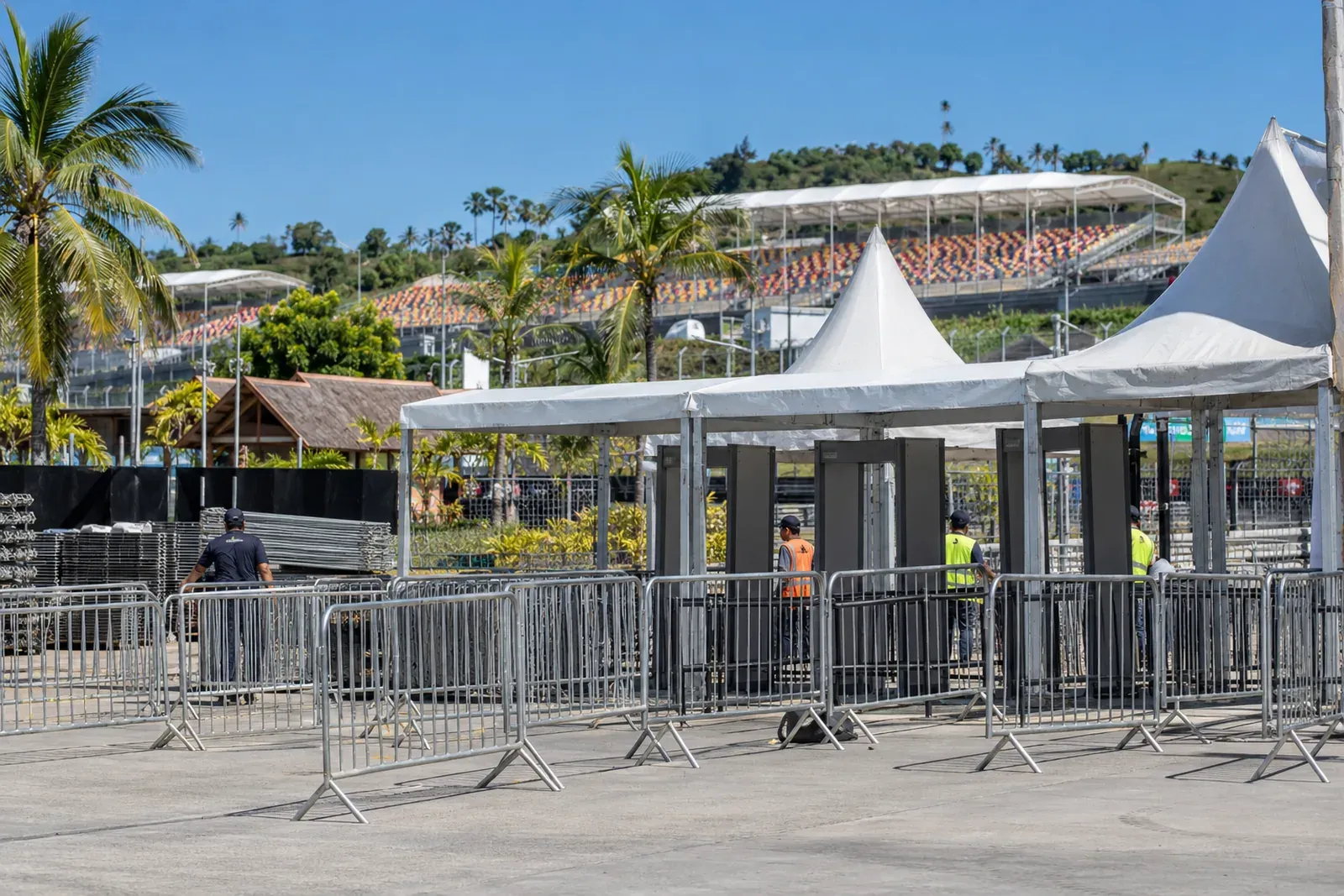
Mandalika MotoGP’s Rp5 Trillion Impact Puts Lombok’s Tourism Bet in Focus
Indonesia’s sports minister says Mandalika MotoGP has generated nearly Rp5 trillion in economic impact. The figure sharpens the investment case for sports tourism, while leaving local returns unproven
Quick answer: Indonesia’s Youth and Sports Minister Erick Thohir says MotoGP at the Pertamina Mandalika International Street Circuit has generated nearly Rp5 trillion in economic impact. For Lombok investors, the announcement reinforces the government’s sports-tourism ambition, but it is a national-level estimate and does not establish how much value reached local businesses or property owners.
A large headline figure has landed in the middle of an active effort to make Mandalika’s race a broader tourism proposition. The minister has also set a spectator target for this year, putting attendance and local benefit at the centre of the next test.
The Context
The nearly Rp5 trillion figure was cited by Thohir in Jakarta on Wednesday at the launch of a book examining the economic, tourism and branding benefits of Mandalika MotoGP. Antara Business reports the minister’s account; its report does not detail the calculation, period covered, or how the impact is distributed across sectors and locations.
That distinction matters. An economic-impact estimate can describe activity associated with an event, but the announcement alone cannot show the net income retained by local businesses, whether benefits are recurring, or whether visitor spending reaches South Lombok accommodation and services. Those questions require evidence beyond the headline figure.
Thohir said the government would continue pursuing measures to maximise the benefits of hosting the championship for both the national and local economies. His office, he said, would work with relevant institutions to advance sports tourism. The policy direction is clear; the mechanisms and their measurable local outcomes remain to be seen.
Attendance is the next visible test
The minister’s stated target is 145,000 spectators this year. It is a target, not a reported attendance result. Whether it is reached will be one practical indicator of the event’s draw, although a spectator count on its own would not reveal visitor length of stay, spending, or the share of activity captured by Lombok-based firms.
The same caution applies to the wider figures cited at the event. Thohir said Indonesia accounts for around Rp39 trillion of a global sports-tourism market estimated at Rp9,500 trillion. He linked stronger sports tourism to the president’s economic-growth objective of 8 per cent. These are statements of policy context and ambition, not a forecast of Mandalika’s contribution or an investment return for the island.
“MotoGP is the real deal. Its economic impact has reached nearly Rp5 trillion,” Thohir said, as reported by Antara Business.
The policy task now is to connect an international sporting event with a durable visitor economy. That means more than staging the race: the government’s coordination and execution will determine whether the benefits extend beyond the event itself. The source report, however, does not specify a programme, timetable or local measurement framework.
 Mandalika MotoGP’s Rp5 Trillion Impact Puts Lombok’s Tourism Bet in Focus · Illustration: HubLombok (AI-generated)
What This Means for Investors
For investors weighing Lombok exposure, this is evidence of national commitment to sports tourism and a high-profile event with a stated ambition to attract a large crowd. It is not evidence, on its own, of a reliable increase in villa occupancy, rental rates, land values or operating income. The source provides no such local property data.
A disciplined reading separates three layers: the minister’s reported economic-impact estimate, the spectator target, and the potential for local businesses to benefit. Only the first two are quantified in the announcement, and the spectator figure remains prospective. The third is the commercial question investors should track, ideally through independently verifiable information on visitor spending and local business participation.
The wider thesis is still relevant: sports tourism can support a destination’s visibility, while the conversion of visibility into repeat visits and local revenue takes execution. For Mandalika and the surrounding market, future evidence on attendance, visitor behaviour and the distribution of spending will be more useful to investment decisions than the national impact headline alone.
Stay informed: subscribe to the free Lombok Briefing, published twice a month (the 1st and 15th), for market intelligence like this.
What economic impact did the minister attribute to Mandalika MotoGP?
Youth and Sports Minister Erick Thohir said MotoGP at the Pertamina Mandalika International Street Circuit had generated nearly Rp5 trillion in economic impact. The Antara Business report does not specify the calculation, period covered, or local distribution.
Does the Rp5 trillion figure show returns for Lombok property investors?
No. The reported figure is a national-level economic-impact estimate and does not establish changes in Lombok property occupancy, rental rates, land values or operating income. Investors would need local evidence to assess those outcomes.
What is the stated spectator target for this year?
Thohir said the government’s target is to attract 145,000 spectators this year. That is a target rather than a reported attendance result, and a crowd figure alone would not show visitor spending or the benefit retained by local businesses.

The Lombok Buyer's Field Guide
Legal structures ranked by risk, the honest ROI math line by line, all six zones ranked, and the 24-point due-diligence checklist. The whole book, free in your inbox.
See what's inside