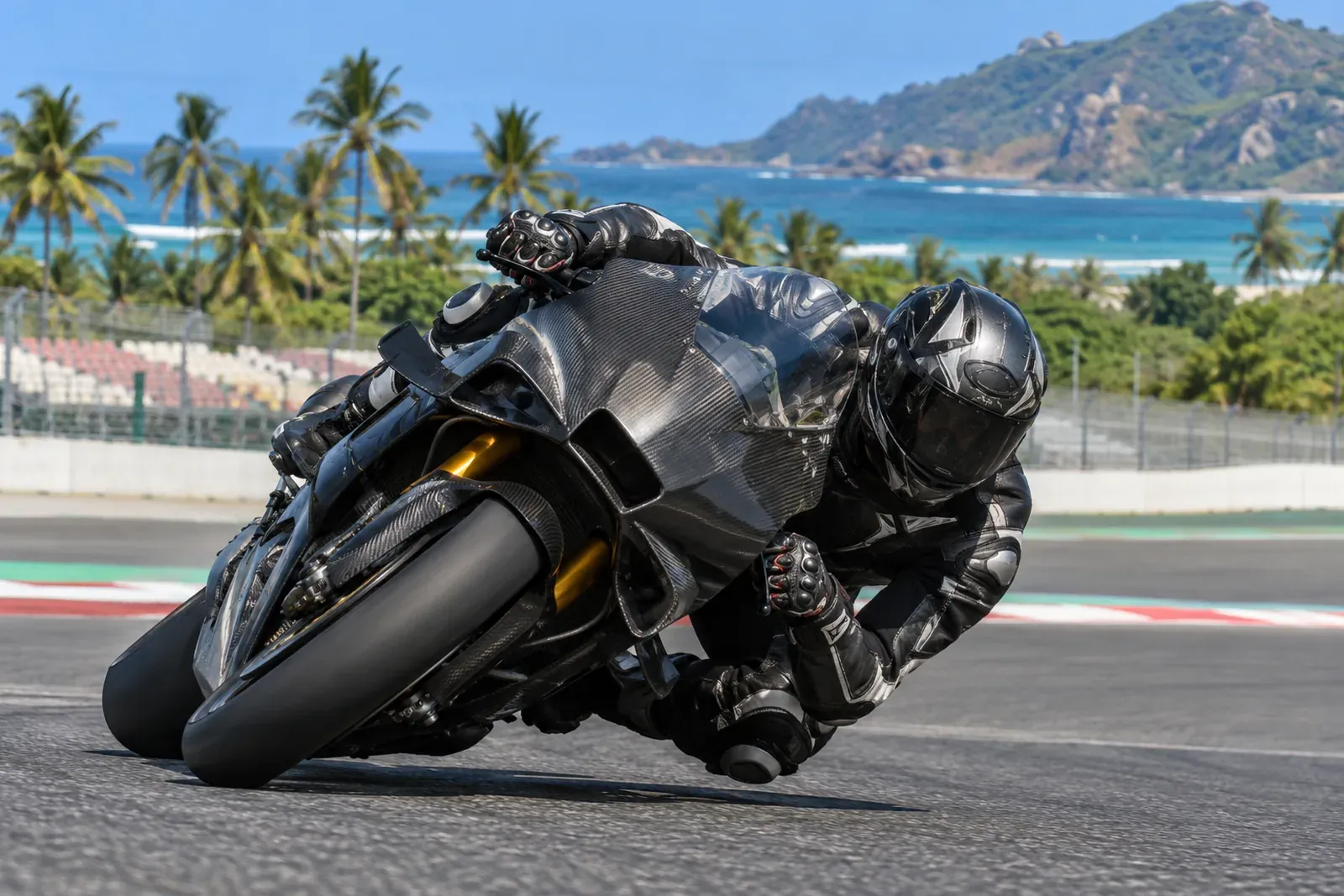
Mandalika MotoGP: Reading the Rp5 Trillion Ambition
InJourney's Rp5 trillion impact ambition puts Mandalika's event economy in focus. For investors, the key question is what event demand can and cannot show.
Quick answer: InJourney is targeting nearly Rp5 trillion in economic impact from the 2026 Mandalika MotoGP. For Lombok investors, the event offers evidence of concentrated travel demand and activity across several local sectors, but it does not by itself establish year-round occupancy, rental income or property returns.
Mandalika’s grand prix has become a recurring test of how an international event can connect a circuit with the wider visitor economy. The useful investor question is not only how many people arrive, but which effects persist after race weekend and what the available figures can actually tell us.
The Context
The 2026 Pertamina Grand Prix of Indonesia is scheduled for October 9–11, and marks the fifth consecutive year that Mandalika has hosted the world championship event since its debut in 2022, according to Antara Business. InJourney, the state-owned aviation and tourism holding company, has set an ambition of nearly Rp5 trillion in economic impact, approximately US$279.33 million.
That figure is a target, not a reported result. It describes an expected economic impact across a wider ecosystem, rather than revenue for one business or a return available to a property investor. Antara reports that the projected activity could involve up to 3,000 local workers and nearly 600 micro, small and medium enterprises, across accommodation, food, transport, trade and tourism.
The scale matters because it points to several possible channels of spending. Visitors may need places to stay and ways to travel, while local businesses may supply food, retail and tourism services. But the article does not provide a breakdown of how the nearly Rp5 trillion is calculated, how much is expected to remain in the local economy, or how the impact is distributed among those sectors. The total is therefore best read as a broad event ambition, not a precise measure of local business income.
Mandalika’s visitor record gives another reference point. Spectator attendance rose from 102,929 in 2023 to 121,252 in 2024, then reached 140,324 in 2025, Antara reports. That sequence establishes growth in attendance over those reported editions. It does not show how much each spectator spent, how many stayed beyond the event, or whether the same growth rate will continue.
What the event activates
The operational preparations offer a more immediate view of demand. InJourney Airports scheduled 66 extra flights at Lombok International Airport for the event: 48 additional regular flights, 11 charter flights, four aircraft upgrades and three positioning flights. Separately, Antara reports that hotel occupancy around the circuit area was approaching 100 percent.
Together, those details show that the event requires extra air capacity and coincides with very high hotel demand near the circuit. They are useful indicators of a peak, time-bound surge. They are not interchangeable with a typical month of visitor arrivals or a full year of accommodation performance. Event-period hotel occupancy measures a different market condition from a villa’s stabilised occupancy across the year.
That distinction is material for anyone assessing rental property. The verified South Lombok context puts realistic stabilised villa occupancy in years one to three at 55–70 percent. It also puts honest net rental yield, after management fees and realistic occupancy, at 7–12 percent. Those estimates concern investment performance across a broader operating period; a near-full hotel during a major event does not replace them.
The supply response also matters. Antara says hotel occupancy around the circuit was nearing capacity and reports additional flight arrangements. These are signs that event organisers and travel providers anticipated high demand. They do not establish whether additional accommodation will be needed throughout the year, or whether a particular property can capture the event audience. The article contains no figures for event-night room rates, villa bookings or revenue per visitor.
Event attendance and event-week occupancy describe a concentrated peak. They do not, on their own, describe the annual economics of an investment property.
 Mandalika MotoGP · Illustration: HubLombok (AI-generated)
The multiplier, and its limits
InJourney presents the event as a catalyst for destination development, connectivity and regional economic activity. Antara also reports that the grand prix is broadcast to nearly 200 countries, with an international fan base exceeding 632 million. Those figures indicate the potential reach of the platform. They are not measures of actual viewers for this edition, visitors to Lombok, or customers for local businesses.
The article also reports a longer attendance arc across three editions, alongside plans for extra flights and a high hotel occupancy estimate around the circuit. Read together, these facts support a measured conclusion: the event can concentrate attention, travel and commercial activity around Mandalika. They do not settle the question of how much of that activity becomes recurring demand.
For investors, persistence is the harder test. A one-off spending pulse can support businesses that are positioned to serve visitors during the event. A durable tourism effect would require demand to extend beyond those dates. The supplied figures do not quantify repeat visits, off-season occupancy, average stay length or spending outside the circuit area. Nor do they separate event-linked activity from other tourism activity.
This is why the distinction between a destination story and an asset case matters. A growing event can make a place more visible, while individual properties still depend on their location, operating costs, management and ability to attract guests. The verified South Lombok figures put management fees at 18–22 percent of gross rental revenue and OTA or booking commissions at 15–20 percent. These costs help explain why a strong event headline should not be translated directly into a net-yield assumption.
The same care applies to the nearly Rp5 trillion projection. Without a published calculation or a later account of realised impact, it should remain attributed to InJourney as an ambition. Its usefulness lies in showing the scale of the event’s stated economic objective, not in forecasting a property’s cash flow or capital growth.
What This Means for Investors
The Mandalika MotoGP is a substantial demand event, with attendance rising across the reported editions, extra flights planned and hotel occupancy around the circuit approaching full capacity. Those indicators make the event relevant to investors watching Lombok’s visitor economy. They offer context for the destination’s ability to attract concentrated international attention and travel.
They do not justify treating race-weekend conditions as a normal operating case. Compare an investment with realistic stabilised occupancy and net yield assumptions, and ask whether its economics make sense without relying on one annual event. Consider the event as a possible source of visibility and short-term demand, while keeping projections for ordinary periods grounded in the available market ranges.
The durable signal will be whether activity spreads into repeat travel and demand across the wider year. The source reports a growing event and an ambitious economic-impact target; it does not yet provide that longer-term evidence. For investors, that leaves a reason to watch Mandalika closely, while keeping the distinction between an event’s reach and an asset’s returns firmly in view.
Stay informed: subscribe to the free Lombok Briefing, published twice a month (the 1st and 15th), for market intelligence like this.
Does the Rp5 trillion MotoGP target predict property returns?
No. InJourney’s nearly Rp5 trillion figure is an economic-impact ambition for the event, not a return forecast for any property. Antara does not provide a calculation breakdown or link the target to villa revenue, occupancy or investor yields.
Does near-full hotel occupancy mean Lombok villas will be full year-round?
No. Antara reports hotel occupancy approaching 100 percent around the circuit during the MotoGP period. That is a peak event condition. The verified South Lombok context gives realistic stabilised villa occupancy in years one to three as 55–70 percent.
What evidence suggests the MotoGP is bringing more visitors to Mandalika?
Antara reports spectator attendance rising from 102,929 in 2023 to 140,324 in 2025. For the 2026 event, InJourney Airports scheduled 66 extra flights at Lombok International Airport. These indicate event scale and travel preparation, not year-round demand.

The Lombok Buyer's Field Guide
Legal structures ranked by risk, the honest ROI math line by line, all six zones ranked, and the 24-point due-diligence checklist. The whole book, free in your inbox.
See what's inside