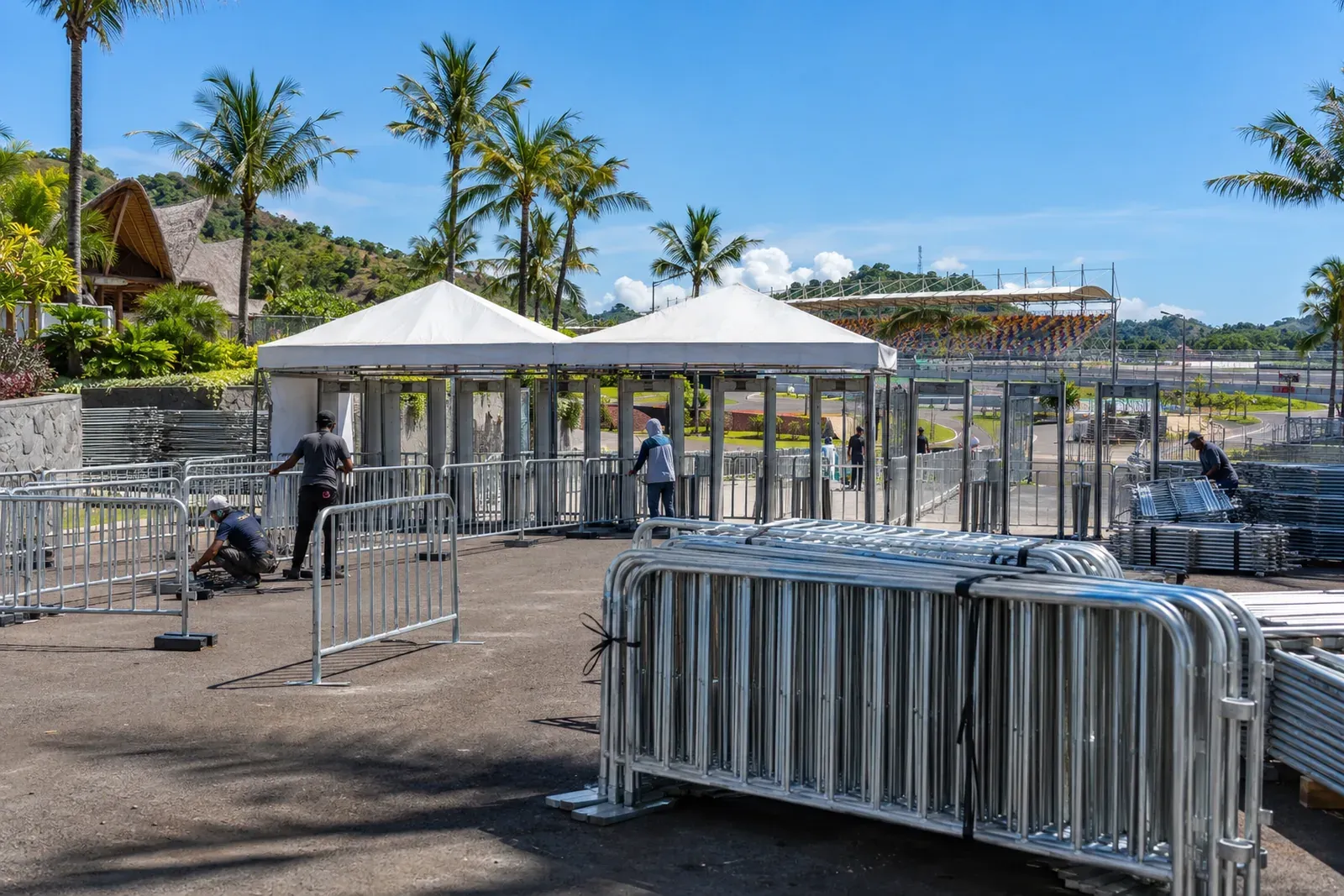
Mandalika’s Rp5 Trillion MotoGP Impact: What Investors Should Read Into It
The reported MotoGP impact is striking, but investors should separate event spending from durable demand, local value and property returns.
Quick answer: Antara Business reports that Indonesia’s Mandalika MotoGP races have generated nearly Rp5 trillion in economic impact. For Lombok investors, that is evidence of the event’s reported economic scale, not a measure of local property income or a forecast. The investment question is whether event attention can support demand beyond race periods.
The headline is large enough to invite easy conclusions about Lombok’s next growth phase. The more useful reading is narrower: the reported impact puts sports tourism on the economic agenda, while leaving open how much value reaches local businesses and whether visitors return outside the event.
The Context
The figure came from a government official speaking in Jakarta at the launch of a book examining the economic, tourism and branding benefits of the Mandalika MotoGP. Antara Business reported the remarks on 30 September. The statement was that hosting the races had generated nearly Rp5 trillion, or around US$279.5 million, in economic impact.
That is a substantial claim, but the report does not specify the calculation behind it. It does not set out the period covered, the sectors counted, the treatment of indirect spending, or how much of the total accrued in Lombok. Those omissions matter. An economic-impact estimate may capture a broad chain of activity, while a local investor is usually interested in a narrower question: what demand is sustained, where, and for whom?
The official also said the government’s target for the year was 145,000 spectators. A target signals ambition and policy intent. It is not an attendance result, and it should not be read as a confirmed count or a guarantee of future event scale. The same remarks described sports tourism as part of a wider effort to support economic growth and said Indonesia’s share of the global sports tourism market remained limited.
| Reported measure | What it says | What it does not establish | | --- | --- | --- | | Nearly Rp5 trillion | Government-reported economic impact from hosting MotoGP races | A Lombok-only total, a property-market gain or investor profit | | 145,000 spectators | The government’s target for the year | Actual attendance or future demand | | Rp39 trillion of a Rp9,500 trillion global market | Indonesia’s reported scale within sports tourism | The amount available to Lombok or any particular business |
The distinction between scale and capture is central. A large event can attract visitors and spending, but the headline total alone cannot tell investors how much is retained locally, which businesses benefit, or whether activity continues once the circuit is quiet.
What the Impact Figure Can and Cannot Tell You
The official’s remarks place the reported figure in the context of sports tourism. Indonesia was said to account for around Rp39 trillion of a global sports tourism market estimated at Rp9,500 trillion. That comparison presents a case for expansion at national level. It does not allocate a share to Lombok, Mandalika or accommodation providers.
The headline also combines a number of possible channels under the broad label of economic impact. The source does not provide a breakdown. It is therefore not possible, from this report, to distinguish visitor spending from event-related activity, branding value or other effects included in the estimate. Nor does it establish how the figure was independently assessed. A careful investor should retain the attribution and treat the number as a reported government claim, rather than as audited local revenue.
That restraint does not make the figure irrelevant. It shows that the event has become part of a national conversation about tourism and economic development. For Lombok, the practical question is whether the event’s profile translates into observable, repeatable activity: visitor demand across the calendar, viable businesses, and connections between the circuit and the wider island economy. The report raises those questions; it does not answer them.
A useful investor distinction is between attention, visits and durable demand. Attention can improve a destination’s visibility. Visits require people to make the journey. Durable demand depends on more than a headline event, including whether visitors have reasons to stay, return or travel at other times. These are separate steps, and the Antara report supplies no conversion rate between them.
 Mandalika’s Rp5 Trillion MotoGP Impact · Illustration: HubLombok (AI-generated)
From Race Weekend to a Broader Tourism Case
The government’s stated intention to continue developing sports tourism points to a policy direction, not a finished investment thesis. The minister said his office would work with relevant institutions and emphasised coordination and execution. For investors, this makes delivery an important subject to monitor. Plans have value when they lead to sustained activity, but the source does not identify a schedule of measures or quantify their expected local effects.
The verified South Lombok market context offers a useful, separate lens. Foreign arrivals have been trending 40-50% higher year on year, a trend associated in the verified facts with tourism recovery and the MotoGP effect. Kuta and Mandalika villa rates are about 38% higher year on year. These figures suggest a market in motion, but they do not isolate MotoGP’s contribution. They should not be combined with the Rp5 trillion estimate as if they measured the same thing or proved a direct cause-and-effect relationship.
Investors assessing accommodation should also separate rates from realised returns. The realistic stabilised occupancy range for years one to three is 55-70% in South Lombok, while honest net rental yields are 7-12% after management fees and realistic occupancy. Those market ranges provide more relevant discipline for an asset-level assessment than a national economic-impact figure. They are not a forecast for any one villa, nor evidence that a particular event will fill rooms.
The analytical task, then, is to look for continuity. Does visitor interest extend beyond the race? Do local businesses and accommodation providers see activity across a broader period? Are there clear links between event tourism and trips to other parts of the island? The supplied report does not give these answers, so the appropriate stance is to track evidence as it emerges rather than fill the gaps with assumptions.
What This Means for Investors
Mandalika’s MotoGP has a reported economic footprint that is large enough to merit attention. The figure belongs in the context of destination positioning and the government’s sports-tourism ambitions. It should not be used as a proxy for local rental income, a forecast of property appreciation, or proof that every nearby asset will benefit.
For a property decision, start with the asset and its own assumptions. Test realistic occupancy, management and booking costs, access to the likely guest market, and demand outside event periods. Then consider the event as one part of the destination story. If the investment only works when a major race delivers a particular outcome, the thesis is fragile; if it works on conservative assumptions and treats MotoGP as a possible source of additional visibility, the event can be considered in proportion.
There is also a difference between national ambition and local execution. The official’s remarks describe a desire to maximise benefits, but investors need evidence of how those benefits are distributed and sustained. Future reporting that supplies attendance outcomes, a transparent impact method, or a local breakdown would make the headline more actionable. Until then, the most defensible conclusion is that Mandalika’s role in Indonesia’s sports-tourism strategy is significant enough to watch, while the Rp5 trillion figure cannot by itself price a Lombok investment.
Stay informed: subscribe to the free Lombok Briefing, published twice a month (the 1st and 15th), for market intelligence like this.
Does the Rp5 trillion MotoGP figure represent local Lombok revenue?
No. Antara Business reported a government official’s estimate of nearly Rp5 trillion in economic impact from hosting the races, but the report does not provide a Lombok-only breakdown or explain how much reached local businesses.
Is 145,000 the confirmed attendance for the Mandalika MotoGP?
No. The figure was described as the government’s target for the year. The report does not state the final attendance, so investors should not treat the target as a result or as evidence of future visitor numbers.
Can the reported impact be used to forecast villa returns?
No. The impact figure is a broad reported economic measure, not a property return forecast. Villa assessments should use asset-level assumptions, including realistic occupancy, costs and demand beyond event periods.

The Lombok Buyer's Field Guide
Legal structures ranked by risk, the honest ROI math line by line, all six zones ranked, and the 24-point due-diligence checklist. The whole book, free in your inbox.
See what's inside