Mandalika’s Rp5 Trillion MotoGP Claim Needs a Longer View
Antara reports a government estimate of nearly Rp5 trillion in MotoGP economic impact. Investors should read it as a headline measure, not a property return.
Quick answer: A government official cited by Antara Business says MotoGP races at the Mandalika circuit have generated nearly Rp5 trillion in economic impact. The figure signals the event’s claimed national significance, but it does not show how much reached local businesses, how the impact was calculated, or what it means for an investor’s returns.
The headline is large enough to invite a simple conclusion: a major sporting event has transformed Mandalika’s economy. A more useful reading is narrower and more durable. The figure is a government estimate worth understanding, but its value for investment decisions depends on what it measures and how benefits persist beyond race activity.
The Context
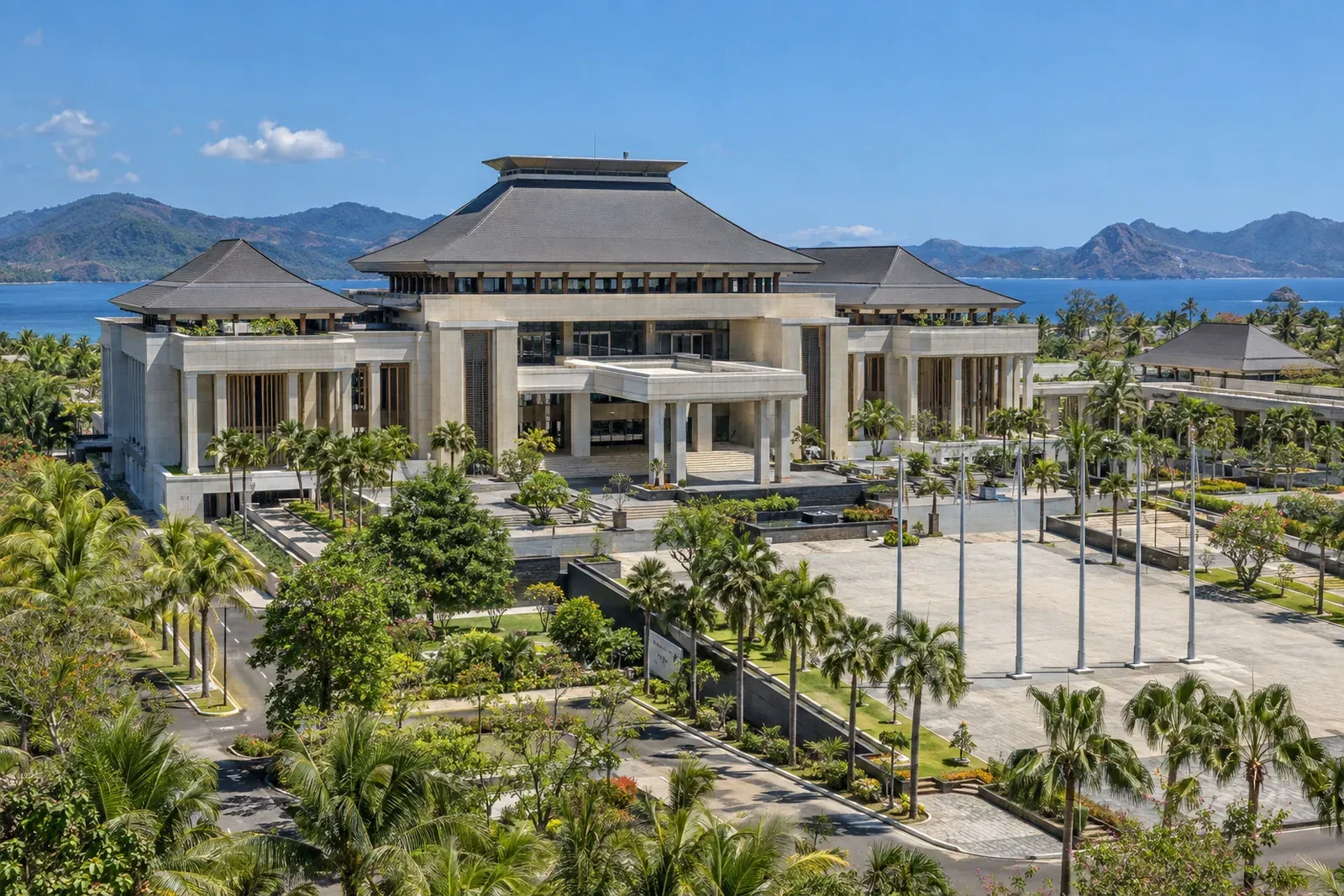
The Antara Business report places the estimate in a wider government case for sports tourism. At a book launch in Jakarta, a government official said hosting MotoGP at Pertamina Mandalika International Street Circuit had generated nearly Rp5 trillion, or around US$279.5 million, in economic impact. The book examines the economic, tourism and branding benefits of the event, according to the report.
The figure is presented as cumulative impact from hosting races. The report does not give the calculation period, method, or a breakdown by sector or location. It also does not say how much of the reported impact is direct spending, indirect activity, or a wider estimate. Those omissions do not invalidate the claim. They do define what an investor can safely infer from it.
A separate figure in the report puts Indonesia’s share of a global sports tourism market valued at Rp9,500 trillion at around Rp39 trillion. These figures describe a national market context, not a Lombok market share. The gap may help explain why the government wants to grow sports tourism, but it does not establish the size of an opportunity in Mandalika or South Lombok.
The same caution applies to the stated spectator ambition. The government’s target is 145,000 spectators this year, as reported by Antara. A target expresses intent, not an achieved attendance figure. Nor does attendance alone establish visitor spending, length of stay, local procurement or repeat travel. Each could affect the economic effect of a race, but the source supplies no values for them.
That distinction matters because a headline impact estimate and an investable cash flow answer different questions. The first describes an asserted contribution to economic activity. The second asks whether a particular asset can generate income after costs, with risks, over time. Moving from one to the other requires evidence the report does not provide.
What the headline measures
“Economic impact” can gather several kinds of activity under one label. Spending connected with an event might involve visitor purchases, event suppliers, transport, accommodation or public expenditure. Those are examples of possible components, not a breakdown disclosed in the Antara report. Without the methodology, readers cannot tell which were included, whether indirect effects were counted, or how spending outside Lombok entered the total.
The scale of the claim also makes its boundaries important. A national headline can include effects across a wide area, while an investor may be weighing a specific location and asset. The report names the Mandalika circuit in Lombok, but it does not allocate the nearly Rp5 trillion between the circuit area, nearby communities, the wider island or the rest of Indonesia. It therefore offers no basis for assigning a particular share to any district or property market.
Antara’s reported figure is nearly Rp5 trillion in economic impact. It is not a disclosed measure of property income or investor yield.
The distinction is not semantic. Rental income depends on whether guests choose a property, the rates they pay, how often it is occupied and the costs of running it. A national event-impact total does not answer those asset-level questions. It may prompt investors to investigate whether event-related travel supports demand, but it cannot substitute for that investigation.
Nor does a large aggregate necessarily mean the same benefit is repeated every year. The report attributes the estimate to hosting MotoGP races, but gives no annual series. It does not show whether the figure represents one edition, several editions or a wider period. Without that time frame, investors should avoid treating the amount as a recurring economic flow.
There is also a distribution question. The report does not quantify how much activity was retained by local firms, workers or households. It would be premature to assume that all spending connected to an event stays near the venue. Local procurement and business participation would be relevant to durable community benefit, yet neither is measured in the supplied account.
 Mandalika’s Rp5 Trillion MotoGP Claim Needs a Longer View · Illustration: HubLombok (AI-generated)
From event to lasting value
The government’s stated intention is to maximise the benefits of the championship for national and local economies. The report describes continued coordination among relevant institutions and links sports tourism to a broader economic growth agenda. These are policy aims. The article does not report specific measures already implemented, their cost, or evidence that they have produced a lasting increase in visitor activity.
For investors, the central question is what happens between a major event and ordinary travel demand. An event can raise a destination’s visibility; whether that visibility translates into repeat visits and viable year-round businesses is a separate question. The source discusses branding and tourism benefits through the book it describes, but supplies no visitor-retention data or post-event spending evidence. Any conclusion about lasting demand would therefore be an inference, not a reported finding.
That is why the spectator target deserves careful handling. If achieved, attendance could indicate interest in the event. It would still leave unanswered how many spectators travel from outside the area, how long they stay and whether they return for reasons beyond the race. Antara reports the target, not an attendance outcome or a profile of visitors. For an accommodation investor, those details matter more than a single crowd number.
A grounded assessment can separate what is known from what remains open:
- Reported: a government official puts economic impact from hosting MotoGP at nearly Rp5 trillion, around US$279.5 million.
- Targeted: the government aims to attract 145,000 spectators this year.
- Not specified in the report: the calculation method, time period, geographic distribution, local retention and effect on individual businesses or property income.
This is not a reason to dismiss the headline. It is a reason to use it as a starting point for due diligence. Investors can ask for evidence at the scale of the decision they are making: local visitor patterns, accommodation demand through the year, operating costs and the assumptions behind any projected income. The Antara report does not supply those details, so its figures should not be used to fill them in.
What This Means for Investors
Mandalika’s MotoGP story is most useful as a signal of policy ambition and event visibility. The nearly Rp5 trillion claim says that a government official considers the races economically consequential. The national sports tourism figures explain why the sector features in policy discussion. Together, they support interest in the subject, but they do not amount to a forecast for Lombok property values, bookings or returns.
A prudent investor can hold two ideas at once: major events may contribute to a destination’s profile, and an aggregate impact estimate may still be too broad to value a specific asset. The next step is to test the link between event activity and repeatable local demand, rather than to treat the headline as proof that it already exists. The report leaves that link unresolved.
For readers following Lombok’s economy, this is a meaningful development to watch. Its long-term significance will become clearer through evidence about attendance, visitor behaviour, local participation and activity beyond race periods. Until those measures are available, the Rp5 trillion figure is best read as context for the investment conversation, not its conclusion.
Stay informed: subscribe to the free Lombok Briefing, published twice a month (the 1st and 15th), for market intelligence like this.
What does the Rp5 trillion MotoGP impact figure represent?
Antara Business reports that a government official puts the economic impact of hosting MotoGP races at nearly Rp5 trillion, around US$279.5 million. The report does not specify the calculation method, time period or geographic distribution, so the figure cannot be assigned to a particular business or property market.
Does the MotoGP impact figure indicate likely villa returns?
No. The reported figure is an aggregate economic impact estimate, not a measure of rental income, occupancy or property yield. Investors would need asset-level evidence and clear operating assumptions to assess returns. Antara’s report does not provide those details.
Is the 145,000 spectator figure an attendance result?
No. The figure is the government’s target for this year, as reported by Antara Business. The report does not say that the target was achieved, nor does it provide visitor profiles, length of stay or spending data that would show how attendance translates into local economic activity.

The Lombok Buyer's Field Guide
Legal structures ranked by risk, the honest ROI math line by line, all six zones ranked, and the 24-point due-diligence checklist. The whole book, free in your inbox.
See what's inside