Indonesia’s Tourism Score Rises, but Investment Still Clusters in Bali and Jakarta
Indonesia’s tourism competitiveness improves in the WEF index as investment rises, but the ministry says capital remains concentrated in Bali and Jakarta.
Quick answer: Indonesia’s score in the World Economic Forum’s 2026 Travel and Tourism Development Index rose to 4.56, lifting the country to 23rd globally. Tourism investment also increased in 2025, but the ministry says it remains concentrated in Bali and Jakarta. For Lombok investors, the signal is stronger national ambition, alongside a clear question about where capital will actually go.
The latest index gives Indonesia a stronger international position, while the investment figures reveal an uneven map of activity. The government is promoting a wider spread of destinations and marine tourism, but that policy direction has yet to erase the pull of established hubs.
The Context
The World Economic Forum released its Travel and Tourism Development Index for 2026 in September. At a Ministry of Tourism performance briefing reported by Antara Business, the tourism minister said Indonesia’s overall score had risen from 4.46 in 2024 to 4.56 in 2026, during the two-year tenure of the current administration. Indonesia now ranks 23rd globally, sixth in Asia-Pacific and second in Southeast Asia, behind Singapore.
The score is a measure of national competitiveness, not a forecast of arrivals, hotel performance or returns for any individual property. That distinction matters for investors: a higher ranking can strengthen the country’s tourism proposition, but it does not tell a buyer whether a particular location, access road or accommodation asset will perform.
The index points to areas where Indonesia still needs to improve: tourism services and infrastructure, health and hygiene, digital readiness, travel openness, and safety and security. Those are operational conditions that shape a visitor’s experience and an investor’s exposure. Recognition of the gaps makes the ranking more useful than a simple headline score. It gives decision-makers a list of constraints that can influence the durability of growth.
Indonesia’s strongest listed result was in the WEF’s “Prioritization of Travel & Tourism” pillar, where it ranked first globally, with a score of 6.12. It ranked fifth worldwide for price competitiveness, ninth for natural resources and 15th for cultural resources and socio-economic impact. The spread across these measures suggests a country with considerable tourism assets and policy attention, while the service and infrastructure agenda remains unfinished.
Capital Is Growing, but Still Concentrated
The sharper investment signal is the scale and distribution of realised tourism capital. The ministry reported that investment rose 56.05 per cent, from Rp47.14 trillion (about US$2.63 billion) in 2024 to Rp73.56 trillion (about US$4.11 billion) in 2025. These are sector-wide national totals, not allocations to Lombok or any other single destination.
The ministry also acknowledged that investment remains heavily concentrated in Bali and Jakarta, with much of it directed towards amenities. Its stated response is to encourage more even distribution, particularly towards the 13 Priority and Regenerative Tourism Destinations and Tourism Special Economic Zones, while broadening investment into attractions.
The national investment total is rising, but the ministry itself identifies concentration as the problem still to solve.
That is the point investors should keep in view. Higher aggregate spending does not automatically translate into projects across a broader set of islands. The policy ambition is clear; the article does not report a confirmed allocation to Lombok or a timetable for capital to move there. For investors assessing a destination outside the established centres, the distinction between national intent and place-specific delivery is material.
| Indicator | Reported position | | --- | --- | | WEF tourism competitiveness score | 4.56 in 2026, up from 4.46 in 2024 | | Global ranking | 23rd | | Realised tourism investment | Rp73.56 trillion in 2025, up 56.05 per cent year-on-year | | Current concentration | Bali and Jakarta, with investment largely focused on amenities |
The table is a national snapshot. It should not be read as a valuation tool or as evidence that every region is seeing the same investment cycle. For a Lombok decision, the practical task remains to assess the specific asset, access, legal route and local demand, rather than treating a national ranking as a substitute for due diligence.
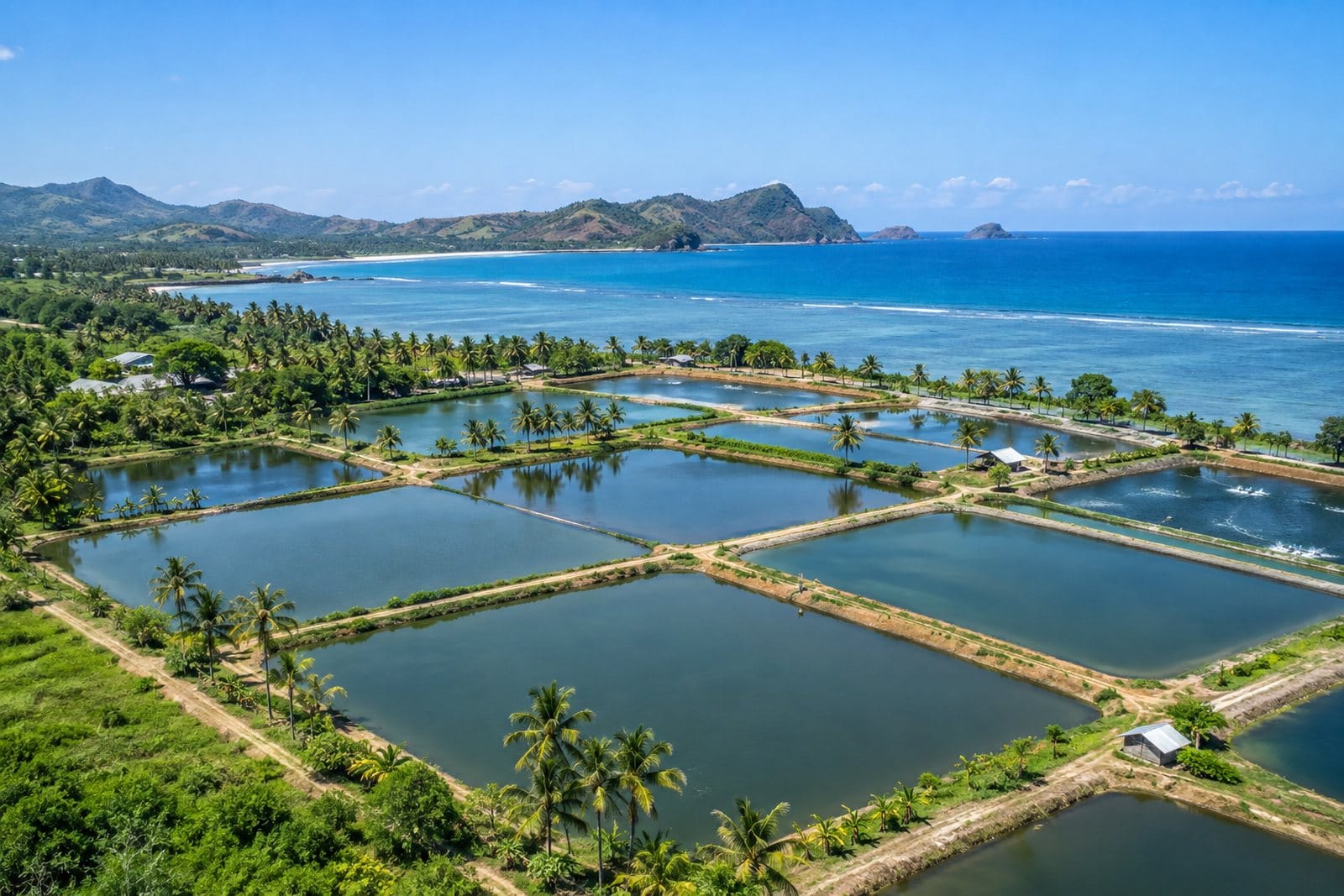 Indonesia’s Tourism Score Rises, but Investment Still Clusters in Bali and Jakarta · Illustration: HubLombok (AI-generated)
The Marine Tourism Proposition
The ministry is also courting foreign investment for marine tourism, with a focus on yachting and marina infrastructure. During a business mission to Monaco in September 2026, the tourism minister presented Indonesia’s marina development potential to representatives of more than 160 international organisations. The delegation also held discussions on crew certification, maritime tourism master plans, destination promotion and investor business-matching.
The government’s pitch draws on Indonesia’s position in the Coral Triangle, alongside established marine destinations such as Raja Ampat and Labuan Bajo and more than 700 diving sites. The stated ambition is to turn that resource base into investment, jobs, destination upgrades and economic benefits for coastal communities. These are objectives, not outcomes already quantified in the report.
For investors, marinas and yachting infrastructure represent a different proposition from adding rooms or upgrading hotel amenities. They require a destination offer that can support marine visitors and the services around them. The source reports promotional activity and areas under discussion, but it does not identify a completed Lombok marina project, a specific investment commitment or a delivery schedule. Any investment case built around marine tourism should therefore distinguish the national opportunity being promoted from a project that has secured funding and approvals.
The broad policy direction could be relevant to islands seeking a greater share of visitor spending. Yet the index’s own identified weaknesses, including infrastructure, digital readiness and safety, are directly pertinent to whether a destination can support higher-value tourism reliably. The attraction of a marine asset is only one part of the investment question; the wider visitor and operating environment also matters.
What This Means for Investors
The report offers a constructive national signal, not a Lombok-specific investment verdict. Indonesia has improved its WEF score, recorded higher realised tourism investment and is explicitly seeking to spread activity beyond Bali and Jakarta. The next question is whether that objective becomes visible in funded projects, better destination infrastructure and broader visitor services.
Hospitality data provide a further national measure of activity. Star-rated hotel occupancy reached 52.52 per cent in August 2026, up 2.01 percentage points year-on-year. Average occupancy from January to August stood at 49.56 per cent, an increase of 2.30 percentage points year-on-year, with growth across one- to five-star properties. Separately, 47 Indonesian hotels and resorts received MICHELIN Keys in 2026, up from 33 the previous year, putting Indonesia second in Southeast Asia for MICHELIN Key-rated properties, behind Thailand. These measures indicate movement in the national hospitality sector; they are not Lombok villa occupancy or a direct measure of returns.
For comparison, HubLombok’s verified South Lombok figures place realistic stabilised villa occupancy in years one to three at 55–70 per cent and honest net rental yield at 7–12 per cent, after management fees and realistic occupancy. Those estimates concern a different asset class and market. They should not be compared directly with national star-rated hotel occupancy, nor treated as a promise for any individual investment.
Investors considering Lombok can read the national news as a reason to monitor policy execution, not as proof that capital is already shifting. The due diligence question is whether any specific destination or project can convert tourism ambition into viable access, visitor services and sustainable demand. The index raises the country’s profile; the distribution and quality of investment will determine how much that matters on the ground.
HubLombok is the editorial arm of Samudra Villas, an active developer in South Lombok. That relationship is disclosed here because it shapes what we cover, not what we conclude.
Stay informed: subscribe to the free Lombok Briefing, published twice a month (the 1st and 15th), for market intelligence like this.
What changed in Indonesia’s 2026 tourism competitiveness ranking?
Indonesia’s WEF Travel and Tourism Development Index score rose from 4.46 in 2024 to 4.56 in 2026. The country ranks 23rd globally, sixth in Asia-Pacific and second in Southeast Asia, behind Singapore. The score measures national competitiveness, not the expected performance of an individual destination or property.
Does the rise in tourism investment mean Lombok is receiving more capital?
The ministry reported a 56.05 per cent rise in realised tourism investment in Indonesia in 2025, but said investment remains concentrated in Bali and Jakarta. The report does not identify a Lombok allocation. Investors should look for evidence of funding and delivery at the destination or project level.
Are national hotel occupancy figures a guide to Lombok villa returns?
No. The reported 2026 occupancy figures cover star-rated hotels nationally, while South Lombok’s verified villa occupancy estimate is 55–70 per cent in years one to three. They describe different markets and asset types. Neither figure guarantees the occupancy or yield of a particular investment.

The Lombok Buyer's Field Guide
Legal structures ranked by risk, the honest ROI math line by line, all six zones ranked, and the 24-point due-diligence checklist. The whole book, free in your inbox.
See what's inside