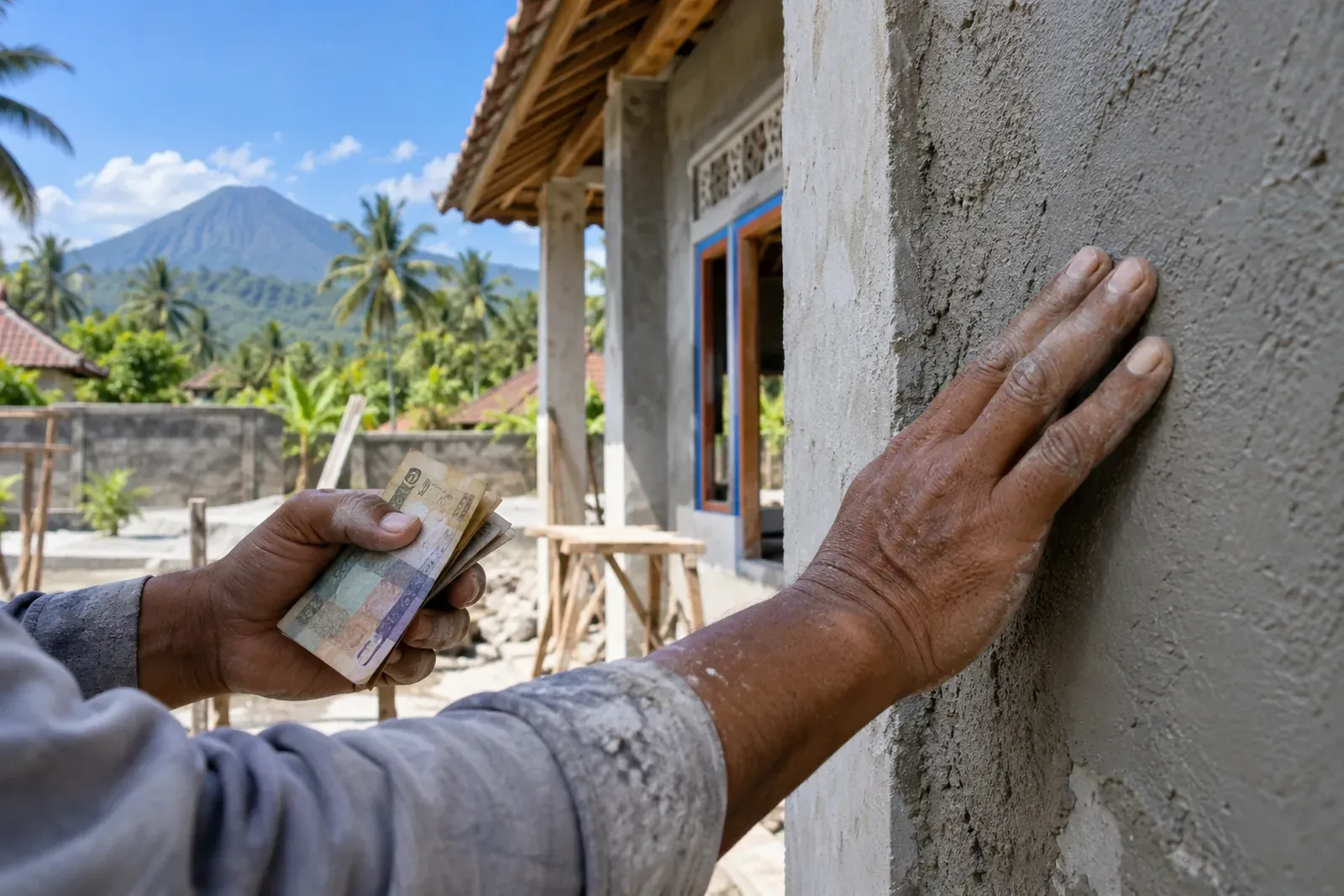
Indonesia's Three Million Homes programme reaches 324,213 completed units
Indonesia's Three Million Homes programme reports 324,213 completed units, with subsidised finance and home renovation at its core. What it means for foreign buyers.
Indonesia's flagship housing programme has recorded 324,213 completed units, according to the government's communication agency, as the current administration nears its two-year milestone on 20 October. For foreign investors the headline matters less than the structure beneath it: the programme is built around subsidised finance and renovation for low-income households, and the rules that govern foreign ownership are a separate matter entirely.
Where the programme stands
The Government Communication Agency (Bakom) put the Three Million Homes total at 324,213 completed units as of 13 June. The source does not break that figure down by province or city, so this article does not attempt a regional split.
Subsidised housing delivered through the Housing Financing Liquidity Facility (FLPP) reached 180,600 units as of 14 October. The agency describes that figure as 51.6% of the 2026 target of 350,000 subsidised units. For comparison, FLPP distribution totalled 278,868 units in 2025. The source dates the two headline figures differently, so they should be read as separate official readings rather than a single snapshot.
51.6% of the 2026 FLPP target delivered, according to the agency's reading as of 14 October.
The Ministry of Housing and Residential Areas (PKP) lists physical housing targets of 414,184 units as of 10 September. The home renovation scheme accounts for 400,000 of those units, which makes it the largest single component of the ministry's target.
Home renovation as a second track
The Self-Help Housing Stimulus Assistance programme (BSPS), known locally as bedah rumah, is the second pillar of the effort. For 2026 the government has allocated Rp8.59 trillion (US$475.82 million) to renovate 400,000 uninhabitable homes. In 2025 the same scheme targeted 45,073 homes with a budget of Rp1.02 trillion (US$56.5 million). The scale of the 2026 allocation is therefore a substantial step up from the previous year.
The stated aim is to improve living conditions for low-income households, making homes safer and healthier. The government also expects the work to stimulate local economic activity through purchases of building materials and the creation of employment. Those are expectations stated by the agency. The source does not report measured economic effects, and this article does not estimate them.
Why foreign buyers should read this carefully
A programme of this size matters to the broader property market, but its beneficiaries are Indonesian households repairing or buying homes they will live in. It does not create a direct channel for foreign buyers, and the source does not discuss foreign investment at all.
Foreign ownership follows a different framework. Hak Milik (SHM) title is reserved for Indonesian citizens. Foreign buyers have three routes:
- Leasehold (Hak Sewa), typically 25-30 years with extensions.
- Hak Pakai (right to use), which is personal in nature and depends on KITAS or KITAP residency.
- PT PMA, a foreign-owned company that holds Hak Guna Bangunan (HGB), 30 years and extendable.
Buyer transfer duty (BPHTB) is about 5% of assessed value. Nominee arrangements, in which an Indonesian holds title on a foreigner's behalf, are illegal and void in court, whatever form they take. Due diligence on certificates, ownership history and encumbrances is best handled by an independent licensed notary. TerraNusa Advisory provides that service for foreign buyers in Lombok, covering the full chain from due diligence to the deed and title transfer at the land office (BPN).
What this means for investors
- Volume is policy-led. The national totals reflect subsidised finance and renovation, a segment separate from private villa investment in South Lombok.
- The pace to watch is FLPP against target. At 51.6% of the 2026 target as reported, the remaining deliveries will show whether the programme keeps its schedule.
- Lombok is not covered. The source contains no regional data, so no local price, yield or occupancy figure can be drawn from these national totals.
The next official readings, FLPP progress against the 350,000 target and renovation numbers against the 400,000 goal, will show whether delivery matches the ambition. Investors who follow that trajectory will have a clearer picture of how national housing policy shapes the market they are considering.
Stay informed: subscribe to our free Lombok Briefing, published twice a month (the 1st and 15th), for analysis like this.
How many subsidised homes has Indonesia's FLPP programme delivered in 2026?
According to the government's communication agency, FLPP subsidised housing distribution reached 180,600 units as of 14 October 2026, which it describes as 51.6% of the 2026 target of 350,000 units. The same agency reports 278,868 FLPP units for all of 2025. These are government-reported figures.
Does the Three Million Homes programme create property opportunities for foreign investors?
Not directly. The programme focuses on subsidised finance and renovation for low-income Indonesian households. Foreigners cannot hold Hak Milik title, so their routes are leasehold, Hak Pakai, or a PT PMA holding Hak Guna Bangunan. Verify title with a licensed notary before committing funds.
How much is Indonesia spending on home renovation in 2026?
The government has allocated Rp8.59 trillion (US$475.82 million) for 2026 to renovate 400,000 uninhabitable homes under the Self-Help Housing Stimulus Assistance programme (BSPS). In 2025 the scheme targeted 45,073 homes with Rp1.02 trillion (US$56.5 million).

The Lombok Buyer's Field Guide
Legal structures ranked by risk, the honest ROI math line by line, all six zones ranked, and the 24-point due-diligence checklist. The whole book, free in your inbox.
See what's inside