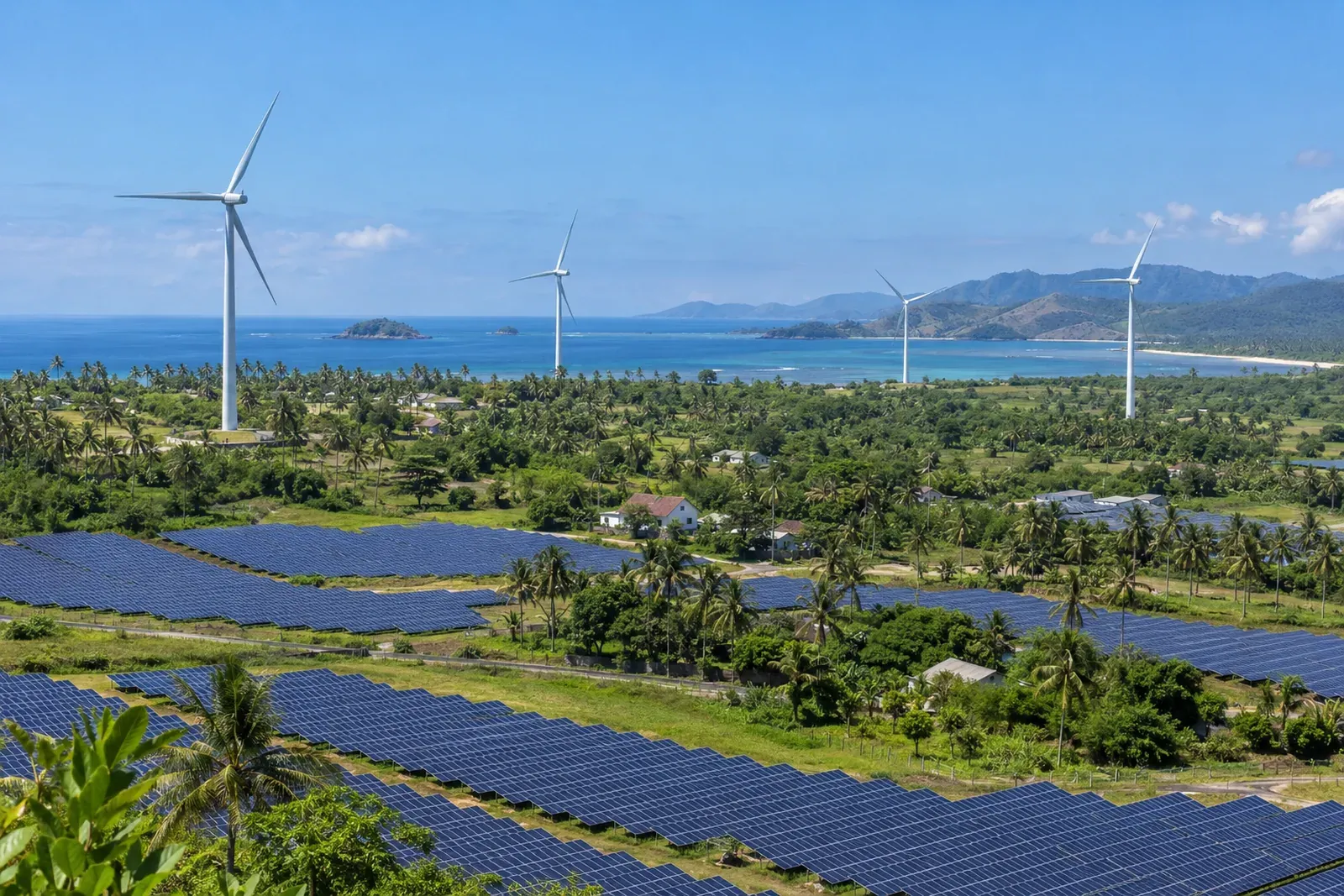
Indonesia’s 100-GWp Solar Ambition Meets Its Grid Test
Indonesia’s 100-GWp solar target signals a major clean-energy direction, but coal dependence and grid capacity stand between ambition and delivery.
Quick answer: Indonesia’s government is targeting 100 gigawatt-peak (GWp) of solar capacity, a major clean-energy ambition that could create demand for domestic manufacturing and skills. But coal still accounts for roughly 80 of 120 GW of national electricity capacity, and a researcher cited by Antara says grid and battery readiness are the most binding constraints.
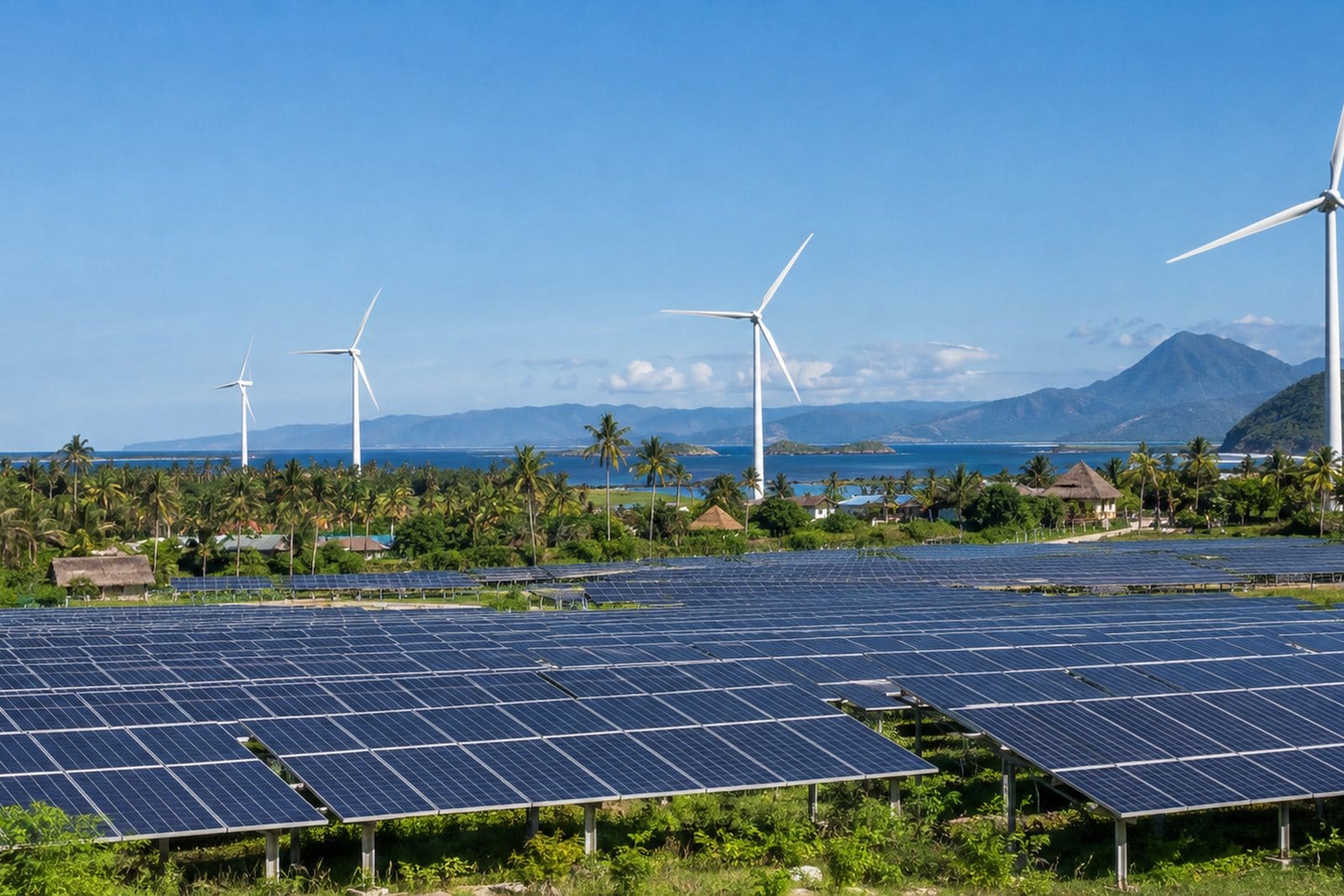 Indonesia’s 100-GWp Solar Ambition Meets Its Grid Test · Illustration: HubLombok (AI-generated)
What is Indonesia’s solar power target?
The government target cited by Antara is to build 100 gigawatt-peak of solar power capacity. The report presents it as part of a broader direction towards clean energy, alongside plans for a gradual phase-out of fossil fuels.
What is the main obstacle to delivering the solar target?
The researcher quoted by Antara identifies grid resilience and battery storage as the most binding constraint. Solar output fluctuates with weather, so transmission and storage must be ready to accommodate additional generation.
Does the solar target mean coal is already losing its dominance?
No. Antara reports that coal still accounts for roughly 80 of Indonesia’s 120 GW of national electricity capacity. The target signals a policy direction, but the report does not say that coal’s present role has already changed.

The Lombok Buyer's Field Guide
Legal structures ranked by risk, the honest ROI math line by line, all six zones ranked, and the 24-point due-diligence checklist. The whole book, free in your inbox.
See what's inside