Indonesia’s MSME Message: Cultural Identity Meets Innovation
Bank Indonesia’s call to young entrepreneurs puts cultural authenticity, technology and regeneration at the centre of Indonesia’s MSME agenda.
Quick answer: Bank Indonesia’s Thomas A.M. Djiwandono has urged young Indonesians to build MSME products around cultural identity while using technology and creativity to compete. For Lombok investors, the immediate signal is strategic rather than transactional: local authenticity, capable operators and credible routes to market deserve close attention.
Jakarta’s latest message to Indonesia’s young entrepreneurs is not a property announcement, a tourism policy or a new financing programme. It is nevertheless relevant to investors assessing the country’s expanding consumer, creative and visitor economies: the institutions shaping Indonesia’s business conversation are placing cultural distinctiveness and innovation in the same frame.
Speaking at Indonesian Creative Works (KKI) 2026, Bank Indonesia Deputy Governor Thomas A.M. Djiwandono argued that innovation should deepen, rather than dilute, the identity embedded in Indonesian products. The proposition is simple, but commercially weighty. In markets where products can increasingly be discovered, compared and sold digitally, authenticity is not merely an aesthetic preference; it is part of the offer.
The Context
The report from Antara Business centres on Indonesia’s micro, small and medium enterprise sector, commonly described as MSMEs. Djiwandono’s appeal was directed at the younger generation, whom he encouraged to preserve the nation’s identity and cultural wealth as they develop products and businesses.
“Innovation does not mean abandoning our roots,” Djiwandono said. “In fact, Indonesia’s cultural wealth is our strength and what set us apart amid global competition.”
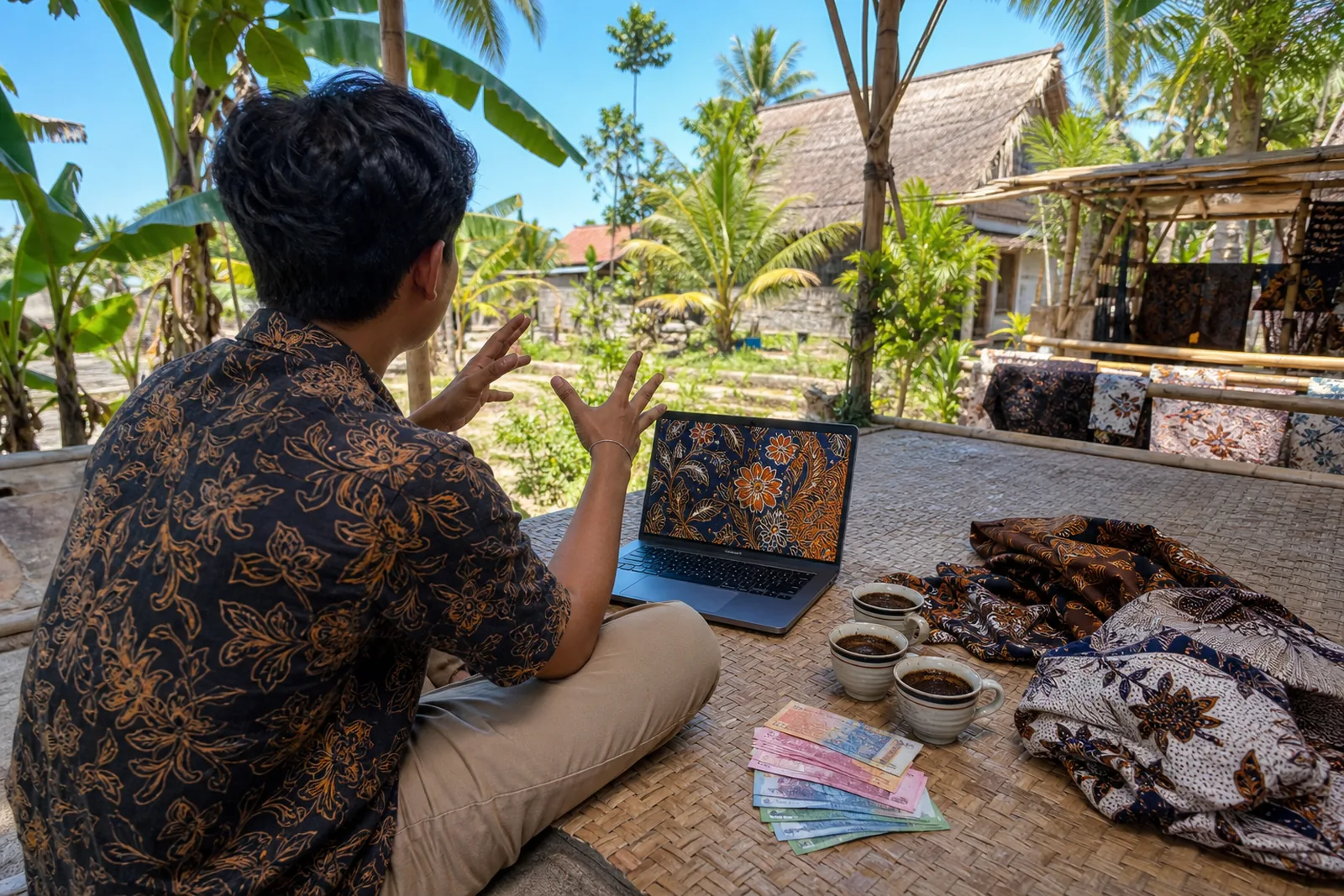
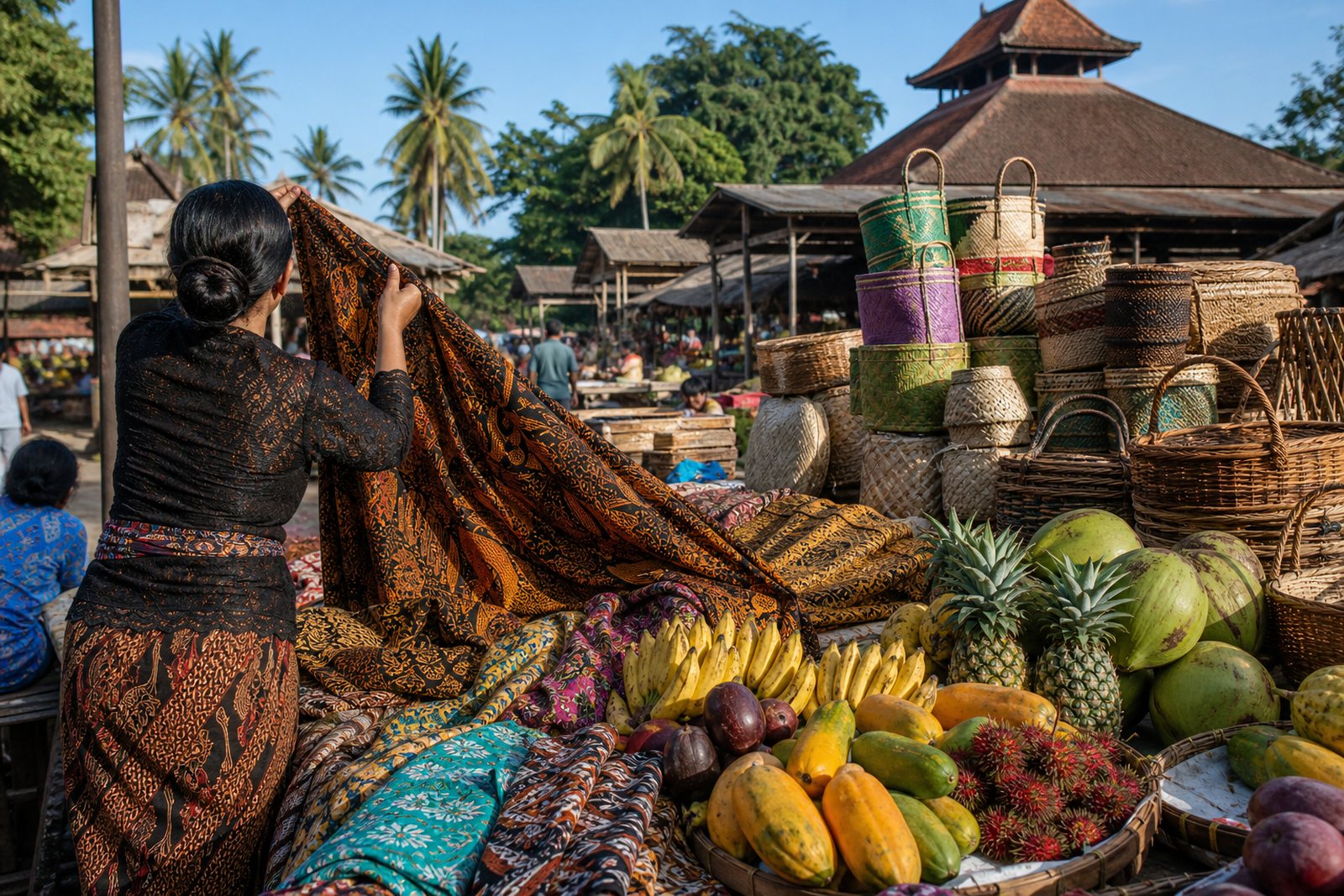
His emphasis was on culture-based products, including traditional textiles and handicrafts, whose strength he linked to authenticity. That framing matters because it rejects an unhelpful choice between heritage and modern commerce. The argument is not that Indonesian businesses should remain unchanged. It is that technology and creativity should make distinctive products more relevant and competitive without severing their connection to place, craft and history.
For investors, this is a useful distinction. A generic product may be easier to replicate; a genuinely local product, responsibly presented and intelligently distributed, has a different basis for recognition. That does not make every culturally rooted enterprise investable. It does, however, clarify one of the qualities that policymakers see as commercially valuable: an identity that can survive the journey from local production to wider markets.
The source also places young entrepreneurs within a broader economic role. Djiwandono said they should view MSMEs and the creative economy as sectors with potential to create business opportunities and increase the national economy’s added value. The language is notable for its focus on enterprise formation as well as preservation. Culture, in this view, is not a museum piece. It is an input into business development.
Innovation Needs a Business Chain
The most practical part of the intervention concerns continuity. Djiwandono described regeneration as important to MSME sustainability and called on senior business players to create wider space for younger people to participate and bring fresh perspectives to development.
That is a more demanding proposition than simply encouraging entrepreneurship. A business can have a compelling product and still lack the management depth, succession planning or operating discipline needed to endure. The report does not present a new support scheme, nor does it offer investment performance data. It does outline the areas in which collaboration is needed: capacity building, innovation, digitalisation, market access and financing.
These elements belong together. Digital tools may help a business reach customers, but they do not by themselves ensure a product has a clear provenance or a reliable supply base. Market access can broaden demand, but it can also expose weak quality control. Financing can enable expansion, but it cannot substitute for a business model that protects the value of its own identity.
For a prospective investor or commercial partner, this creates a useful diligence lens:
- Is the cultural element integral to the product, or merely decorative marketing?
- Can the enterprise explain how technology improves relevance, distribution or operations?
- Is there a credible handover of skills and decision-making between experienced operators and younger participants?
- Does the business have a clear approach to capacity, market access and finance?
None of these questions guarantees an outcome. They are, however, closer to the practical issues raised by the Bank Indonesia official than a broad claim that cultural branding alone creates value.
The relevance is especially clear in a country where local identity can be part of the customer experience itself. Traditional textiles and handicrafts were the examples cited in the report, but the principle reaches further: products and services benefit when a visitor or buyer can understand what is specific about their origin, workmanship and story. The commercial task is then to deliver that specificity consistently, rather than turn it into a vague theme.
 Indonesia’s MSME Message · Illustration: HubLombok (AI-generated)
A Signal for Lombok’s Local Economy
For Lombok, the immediate investment implication is one of selection. The Antara report does not make a Lombok-specific announcement, and investors should not read it as one. Yet its core themes are relevant to any local economy where small businesses, creative enterprise and visitor-facing services matter.
The verified market context for South Lombok already points to a tourism recovery and MotoGP effect, with foreign arrivals trending +40-50% year on year. Kuta/Mandalika villa rates are about +38% year on year, while Are Guling momentum is about +47% year on year. Those figures concern the market, not the performance of individual local businesses. They should not be used to assume that every enterprise serving visitors will prosper.
What they do suggest is that investors need to look beyond an asset’s physical specification. As visitor demand evolves, the quality of the surrounding commercial ecosystem may matter: hospitality, food, crafts, experiences, services and the ability of local businesses to communicate with wider markets. The source’s emphasis on digitalisation and market access is therefore worth watching, particularly where a business claims to connect local culture with new customer channels.
This is also where precision matters. “Authentic” is not an investment conclusion. It should prompt investigation. Who makes the product? How are skills passed on? What standards govern consistency? Is the technology being used to improve customer access and operational clarity, or simply to amplify a poorly differentiated offer? The official’s call for cooperation across institutions underlines that these are ecosystem questions, not matters that one founder or one investor can resolve alone.
HubLombok is the editorial arm of Samudra Villas, an active developer in Are Guling, South Lombok. That relationship makes careful separation of fact and inference essential. The current report is a national MSME and creative-economy dispatch, not evidence about a particular development, operator or property investment. Its value for Lombok readers lies in the framework it offers for assessing the local businesses and experiences around an investment.
What This Means for Investors
The near-term takeaway is restrained but useful. Bank Indonesia’s message puts three themes on the table: preserve cultural identity, use innovation and technology to remain competitive, and ensure regeneration so enterprises can continue. Investors considering Indonesian exposure can use those themes as a due-diligence framework rather than treating them as a forecast.
| Theme in the dispatch | Investor question | | --- | --- | | Cultural authenticity | Is the local identity credible and central to the offer? | | Innovation and technology | Does it improve relevance, operations or market reach? | | Regeneration | Can skills and leadership continue beyond one generation? | | Collaboration | Is there practical support around market access and financing? |
The disciplined response is to favour evidence over atmosphere. Ask for an explanation of the product, the operating model and the route to customers. Distinguish an official call for broader support from proof that support has already been delivered. And avoid converting national policy language into a claim about returns from a particular company, neighbourhood or asset.
For Lombok, where investors may understandably focus on land, villas and visitor demand, the wider lesson is that place value is also shaped by the enterprises that give a destination texture. A culture-led MSME sector that innovates without losing its roots may strengthen that texture. Whether any individual business captures the opportunity will depend on execution, governance and access to markets, the very areas Djiwandono identified as requiring attention.
Stay informed, subscribe to the free Lombok Briefing for market intelligence like this, published twice a month.
What did Bank Indonesia urge young entrepreneurs to do?
Bank Indonesia Deputy Governor Thomas A.M. Djiwandono urged young Indonesians to preserve cultural identity and national cultural wealth while innovating through technology and creativity. He presented authenticity in culture-based products as a strength in global competition and highlighted entrepreneurship, regeneration and collaboration.
Does this report announce new funding for Indonesian MSMEs?
No. The Antara Business report relays Djiwandono’s call for collaboration supporting MSMEs through capacity building, innovation, digitalisation, market access and financing. It does not describe a new funding programme, investment scheme or specific financial commitment.
Why is this relevant to Lombok investors?
The dispatch offers a diligence framework for assessing local, visitor-facing and creative enterprises around Lombok investments. Investors can examine whether a business has credible cultural provenance, useful technology, operational continuity and a practical route to markets, rather than assuming authenticity alone produces returns.

The Lombok Buyer's Field Guide
Legal structures ranked by risk, the honest ROI math line by line, all six zones ranked, and the 24-point due-diligence checklist. The whole book, free in your inbox.
See what's inside