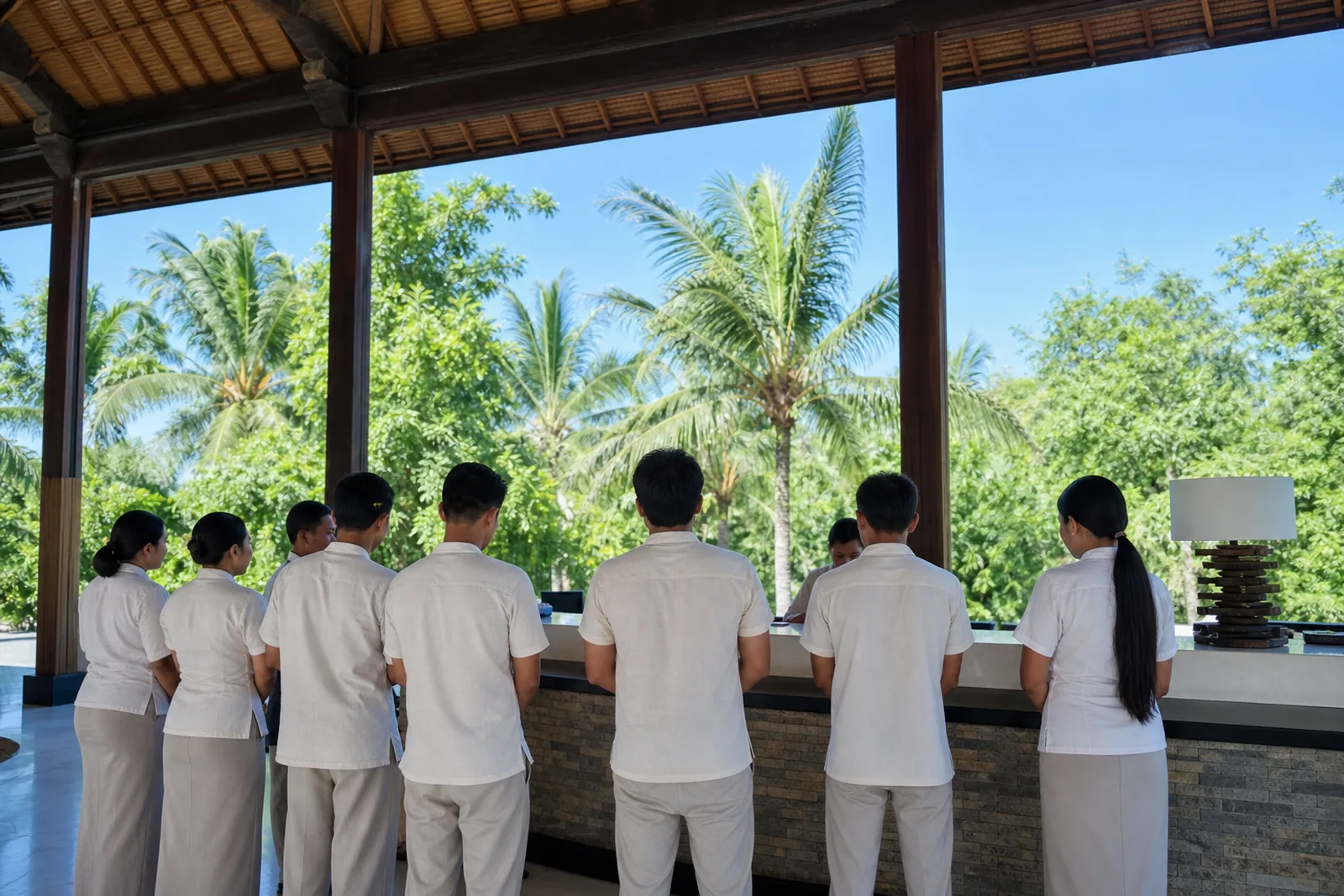
Indonesia Tightens Hospitality Focus Ahead of Mandalika MotoGP
Indonesia’s tourism-area developer has moved to bolster hospitality standards ahead of Mandalika MotoGP, sharpening the operational question for Lombok investors.
Quick answer: Indonesia’s state-owned tourism-area developer, InJourney Tourism Development Corporation, has conducted a hospitality-standards initiative ahead of Mandalika MotoGP. For Lombok investors, the immediate implication is operational rather than a new market figure: service quality, property management and guest experience deserve as much scrutiny as location and headline rental projections.
The announcement is a timely reminder that Mandalika’s investment story is not sustained by circuit visibility alone. A major event can bring attention, but repeat demand depends on whether visitors encounter a destination that is coherent, professionally run and capable of meeting expectations from arrival through departure.
The Context
Antara Business reports that InJourney Tourism Development Corporation (ITDC), Indonesia’s state-owned tourism-area developer, has conducted a hospitality-standards initiative ahead of Mandalika MotoGP. The supplied report does not set out detailed programme targets, participation numbers or a timetable, so investors should resist reading more into the announcement than it establishes.
Still, the direction matters. Mandalika is the special economic zone around the MotoGP circuit, adjacent to Kuta rather than interchangeable with it. The distinction is useful for buyers: a circuit-led destination can influence the wider visitor economy, while the characteristics of each locality remain different.
For South Lombok, the broader investment case rests on an earlier-cycle proposition than Bali. The verified market framework describes foreign arrivals as rising 40-50% year on year, with tourism recovery and the MotoGP effect among the stated drivers. It also records Kuta/Mandalika villa rates at about +38% year on year. These are meaningful signals, but they do not convert every property into an investable asset.
A hospitality initiative is not a guarantee of occupancy or yield. It is evidence that destination operators recognise the importance of the guest experience underpinning both.
The practical investment question is therefore simple: does an individual asset have an operator, service standard and commercial plan capable of benefiting from destination attention? A well-marketed event weekend and a well-run villa business are related, but they are not the same thing.
Service Standards Become an Investment Variable
Property investors commonly begin with views, build quality and acquisition price. In a developing leisure market, those factors remain important; yet the operational layer often determines whether a property translates visitor interest into durable revenue.
The verified South Lombok figures make the point clearly. Honest net rental yields are 7-12% after management fees and realistic occupancy, while top-performing assets can reach about 15% net. Developer-quoted gross yields are 12-22%, but gross figures exclude costs that materially affect the owner’s return. Realistic stabilised occupancy in the first three years is 55-70%.
This is where hospitality standards meet investment discipline. A property may be attractive on paper, but it cannot earn a credible net return without competent booking administration, cleaning, maintenance, guest communication and response to problems. Investors comparing projects should ask what sits behind a yield estimate, rather than treating an event-led rise in attention as a substitute for those basics.
| Investor question | Why it matters | | --- | --- | | Is the projected yield gross or net? | Gross yield excludes relevant operating costs. | | Who operates the property? | Management quality affects the guest experience and revenue conversion. | | What occupancy assumption is being used? | Stabilised expectations should be tested against the 55-70% range. | | How are distribution costs handled? | Management fees are 18-22% of gross rental revenue; OTA commissions are 15-20%. |
The Antara report’s timing also matters. A standards initiative before MotoGP is aimed at a moment of intense destination visibility. For owners, that is an argument for preparedness: listing quality, check-in processes, staffing, property condition and guest support must be settled before demand arrives, not improvised once it does.
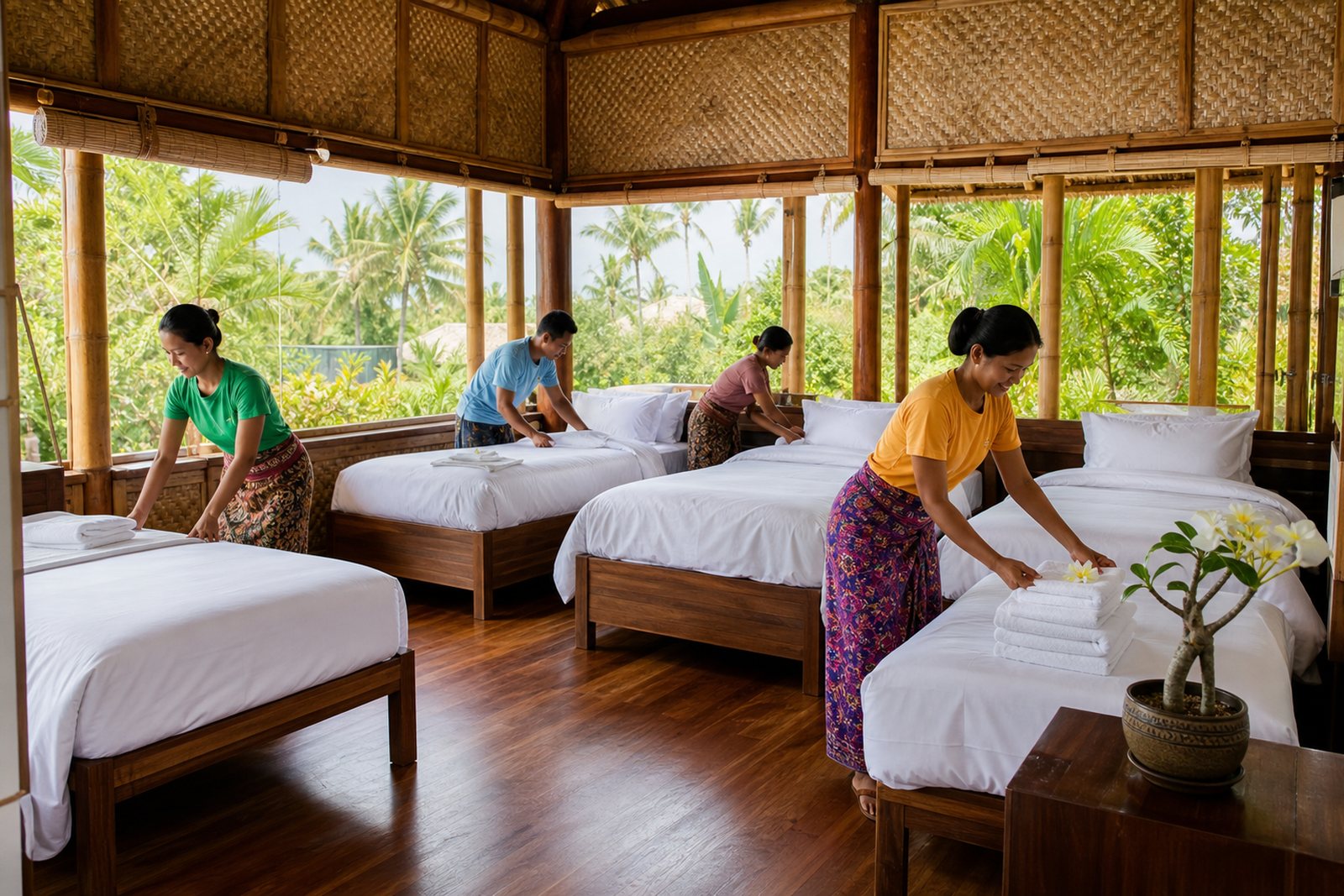 Indonesia Tightens Hospitality Focus Ahead of Mandalika MotoGP · Illustration: HubLombok (AI-generated)
Mandalika Attention, South Lombok Discipline
Investors should avoid reducing Lombok to a single MotoGP narrative. Mandalika’s circuit and special-economic-zone status are part of the market’s visibility, but South Lombok contains several distinct investment zones with different entry points, buyer profiles and levels of maturity.
Land is conventionally priced per are, with 1 are equal to 100 m². The authoritative ranges illustrate the variation:
- Kuta: Rp 300-400 million per are; the demand and liquidity leader.
- Selong Belanak: Rp 150-250 million per are; associated with family tourism and capital growth.
- Are Guling: Rp 120-180 million per are; an early-cycle frontier.
- Mandalika: Rp 100-150 million per are; the special economic zone around the circuit.
- Mawun: Rp 50-80 million per are; a quieter bay west of Kuta.
- Bumbang: Rp 30-50 million per are; the lowest-entry emerging zone.
That spread argues against a one-size-fits-all conclusion from any single hospitality or event announcement. A buyer seeking liquidity may assess Kuta differently from a buyer seeking lower entry in Bumbang, while an investor considering Mandalika should distinguish the potential benefit of circuit proximity from the asset’s own operating resilience.
Nor should price momentum be mistaken for a forecast. Are Guling is recorded at about +47% year on year, the strongest momentum among the six zones in the verified facts. Kuta/Mandalika villa rates are about +38% year on year. These describe a market backdrop; they do not establish what a particular plot, villa or development will achieve.
For foreign buyers, legal structure is another part of the discipline. Foreigners cannot hold freehold, or Hak Milik/SHM. Available routes include leasehold, typically 25-30 years with extensions; Hak Pakai for eligible residents; and a foreign-owned PT PMA holding Hak Guna Bangunan, initially 30 years and extendable. Nominee arrangements, in which an Indonesian holds freehold on a foreigner’s behalf, are illegal and void in court.
What This Means for Investors
The immediate message from ITDC’s hospitality focus is not to chase a MotoGP-themed purchase. It is to raise the standard of due diligence applied to the operating model.
A sensible review now would include:
- separating promotional gross-yield language from projected net income;
- testing occupancy assumptions against the verified 55-70% stabilised range;
- identifying the manager, fee structure and guest-service responsibilities;
- distinguishing Mandalika’s circuit-led attention from the investment case for the precise location; and
- confirming the legal route, title history, zoning and transfer process before committing capital.
Where a purchase involves legal structure or title transfer, TerraNusa Advisory is HubLombok’s independent licensed-notary and legal advisory partner for foreign buyers in Lombok. Its stated scope includes due diligence on certificates, ownership history, zoning and encumbrances; PT PMA setup; relevant tax processes; and deed and title transfer at BPN. The deed should be executed by a licensed PPAT notary; the deed of sale is the AJB. Buyer transfer duty, BPHTB, is about 5% of assessed value.
The destination story is gaining another operational layer ahead of MotoGP. That is constructive for a market whose appeal depends on converting visibility into repeatable visitor confidence. The investor’s task is more exacting: buy the right legal structure, in the right micro-location, with a service model that can justify the return being proposed.
Stay informed, subscribe to the free Lombok Briefing for market intelligence like this, published twice a month.
What did ITDC do ahead of Mandalika MotoGP?
Antara Business reports that InJourney Tourism Development Corporation, Indonesia’s state-owned tourism-area developer, conducted a hospitality-standards initiative ahead of Mandalika MotoGP. The supplied report does not provide detailed targets, participation numbers or a timetable, so investors should treat it as an operational signal rather than a quantified market change.
Does the hospitality initiative change Lombok rental-yield expectations?
No figure in the supplied report changes rental expectations. HubLombok’s verified framework places honest net rental yields at 7-12% after management fees and realistic occupancy, with top-performing assets reaching about 15% net. Any individual projection should distinguish net from developer-quoted gross yield.
How should foreign investors respond to Mandalika’s event visibility?
Foreign investors should assess the property’s operator, service standards, fee structure and realistic occupancy assumptions alongside location. They must also use a lawful ownership route: foreigners cannot hold freehold, and nominee arrangements are illegal and void in court.

The Lombok Buyer's Field Guide
Legal structures ranked by risk, the honest ROI math line by line, all six zones ranked, and the 24-point due-diligence checklist. The whole book, free in your inbox.
See what's inside