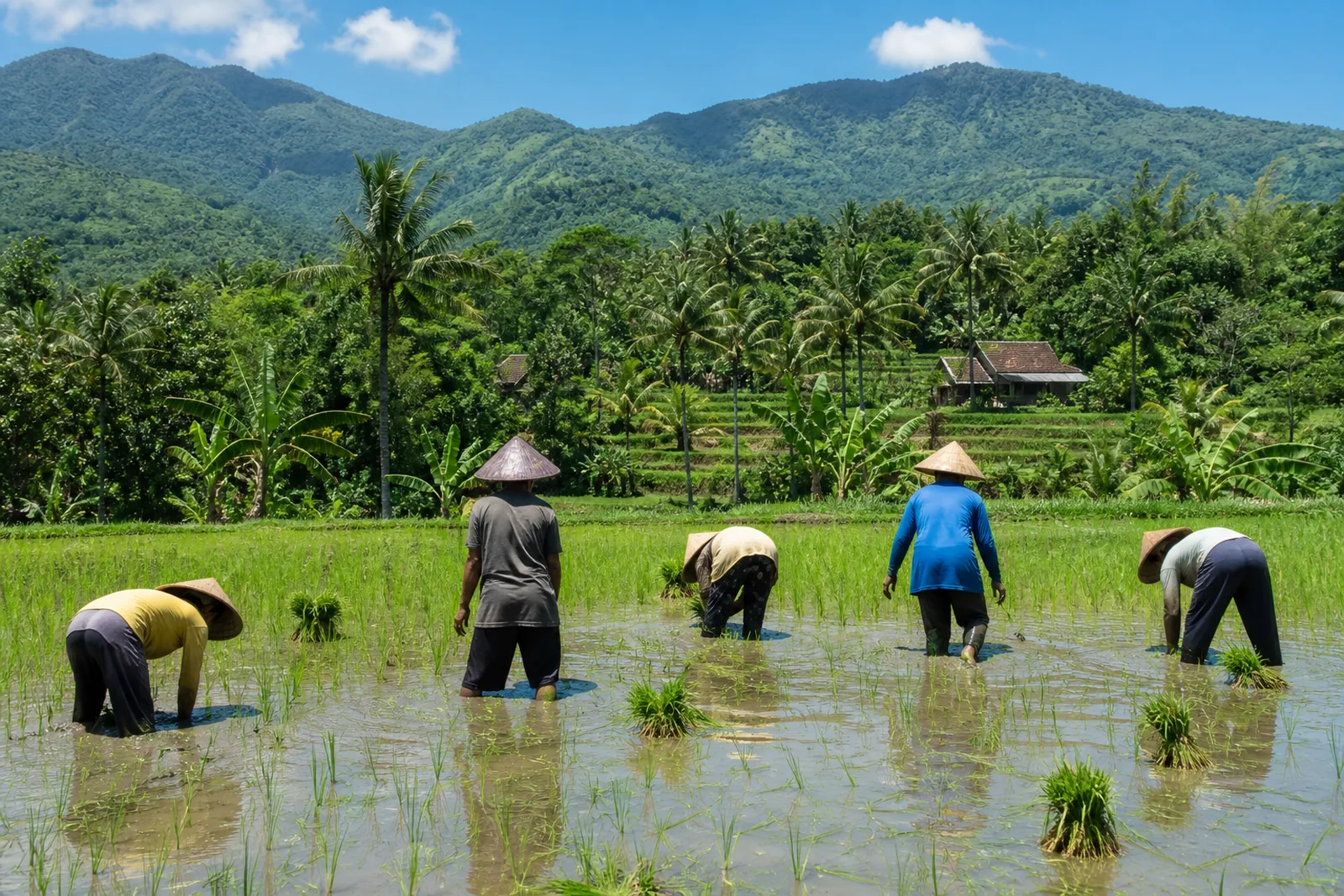
Indonesia’s green agenda puts shared prosperity at the centre
Indonesia’s government says environmental protection and economic inclusion must advance together under its green-policy agenda.
Indonesia’s green transition is being framed not simply as an environmental imperative, but as an economic compact: protect natural wealth while ensuring its benefits are widely shared. That was the central message from Environment Minister Moh Jumhur Hidayat following President Prabowo Subianto’s State of the Nation Address in Jakarta.
A green transition tied to prosperity
The Indonesian government is placing environmental protection and green transformation among the principles intended to guide central-government work. In his address to the MPR Annual Session, President Prabowo stressed the need to manage and protect Indonesia’s natural wealth so that it can be used fully for the prosperity of all Indonesians.
For investors, the significance lies less in a new numerical target than in the policy direction being articulated. Environmental stewardship is being presented as part of the country’s economic agenda, rather than as a separate constraint on development. That framing matters in an archipelagic economy where land, coastlines, ecosystems and natural resources are central to both local livelihoods and investment decisions.
The government’s stated objective is to protect Indonesia’s natural wealth while ensuring that its benefits support prosperity across society.
Jumhur said his ministry supports the President’s green policies and argued that conservation must deliver tangible economic benefits for Indonesians. He described this as a commitment to the principle of “no generation left behind”, with the present transition intended to become a legacy of prosperity rather than a burden for the future.
The language is politically and commercially meaningful. It suggests that the government sees durable environmental policy as dependent on practical outcomes for communities, not solely on high-level commitments. That is particularly relevant where conservation, tourism, land use and local economic participation intersect.
The state’s role in natural-resource governance
The Environment Ministry said it is prioritising natural-resource protection, social justice and practical solutions for communities in its policy agenda. It also reaffirmed a commitment to sustainable resource management, with the benefits of environmental conservation to be shared fairly across society.
This approach places the state at the centre of resource governance. According to the ministry, public institutions must play an active role in ensuring that natural-resource wealth is shared collectively and that access is equitable.
For international investors, this is a reminder that Indonesia’s environmental policy cannot be assessed only through the lens of project approvals or physical assets. The broader policy conversation includes distribution: who benefits from development, how communities are considered, and whether environmental outcomes are aligned with public interests.
That does not itself define the rules for any particular investment. It does, however, underline why investors in land, hospitality, infrastructure and resource-linked sectors should treat legal diligence and local context as core parts of commercial analysis. A project’s long-term resilience will depend not only on demand and execution, but also on how it sits within Indonesia’s evolving environmental and social-policy priorities.
Climate risk enters the economic conversation
The ministry also said its environmental agenda seeks to protect Indonesia from threats, including economic risks linked to global climate change. This is an important distinction. Climate change is not being described only as an ecological issue; it is also being connected to economic exposure and the public interest.
For a property or tourism investor, the practical lesson is straightforward: environmental considerations should be part of underwriting, not an afterthought. Site selection, land status, zoning, resource management and the relationship with surrounding communities all deserve serious attention before capital is committed.
In Lombok, foreign buyers should also keep the legal structure distinct from the investment thesis. Foreigners cannot hold freehold, or Hak Milik, which is reserved for Indonesian citizens. Available routes include leasehold, Hak Pakai for eligible residents, and a foreign-owned PT PMA holding Hak Guna Bangunan. Nominee arrangements, in which an Indonesian person holds freehold on a foreigner’s behalf, are illegal and void in court.
Sound environmental judgement and sound legal structure are complementary disciplines, particularly for long-term property investment.
TerraNusa Advisory, HubLombok’s independent legal and notary advisory partner, supports foreign buyers with due diligence on certificates, ownership history, zoning and encumbrances, as well as company setup, taxes and title-transfer processes at BPN. This is relevant because a credible investment process must examine both the asset and the framework in which it operates.
Cooperation, implementation and investor discipline
Jumhur said he was optimistic that strong cross-sector cooperation could protect Indonesia’s ecosystems while supporting robust and equitable economic growth. The emphasis on cooperation reflects the scale of the task: green transformation touches government agencies, communities and businesses alike.
The source does not set out detailed implementation measures, timelines or sector-specific requirements. Investors should therefore avoid reading the ministerial response as a substitute for project-level diligence or as a guarantee of a particular policy outcome. It is better understood as a clear expression of the government’s intended direction: conservation, fairness and practical economic benefit should reinforce one another.
For businesses operating in Indonesia, that direction raises the value of careful engagement. Projects that understand local conditions and approach environmental responsibilities as part of their commercial model may be better positioned to navigate a policy environment increasingly focused on public benefit and sustainable resource management.
What this means for investors
The immediate takeaway is not a short-term market call. It is a strategic signal about the standards likely to matter in Indonesia’s economic narrative.
- Environmental factors are becoming central to economic policy, rather than peripheral compliance issues.
- Community benefit and equitable access are explicit themes in the ministry’s stated approach to natural-resource management.
- Due diligence remains essential for any land or property transaction, especially where zoning, title, resource use and long-term operating assumptions are relevant.
- Foreign buyers should use lawful ownership structures and avoid illegal nominee arrangements.
For investors considering Indonesia, the strongest response is disciplined rather than speculative: assess the asset, verify the legal route, understand the local setting and treat environmental considerations as part of long-term value preservation. As the green agenda develops, the distinction between responsible investment and commercially resilient investment may become increasingly narrow.
Stay informed, subscribe to the free Lombok Briefing for analysis like this, published twice a month.
What did Indonesia’s environment minister say about the green transition?
Environment Minister Moh Jumhur Hidayat said conservation should deliver tangible economic benefits and prosperity for Indonesians. He backed President Prabowo Subianto’s green-policy direction and said the transition should protect ecosystems while supporting fair, practical outcomes for communities.
Does this announcement create new investment rules for foreign buyers?
The source outlines a policy direction, not new transaction rules. Foreign property buyers still need to use lawful structures: foreigners cannot hold freehold Hak Milik, while leasehold, Hak Pakai for eligible residents and PT PMA structures are available routes.
Why is environmental policy relevant to Lombok property investors?
Environmental policy is relevant because land use, zoning, resource management and community context can affect long-term project resilience. Investors should combine environmental assessment with legal due diligence on certificates, ownership history, zoning and encumbrances before committing capital.
The Lombok Buyer's Field Guide
Legal structures ranked by risk, the honest ROI math line by line, all six zones ranked, and the 24-point due-diligence checklist. The whole book, free in your inbox.
See what's inside